
TRAVEL TALES
Watching An Avalanche Come Off a Mountain While Hiking Near New Zealand’s Tallest
A daunting and fascinating spectacle at the same time
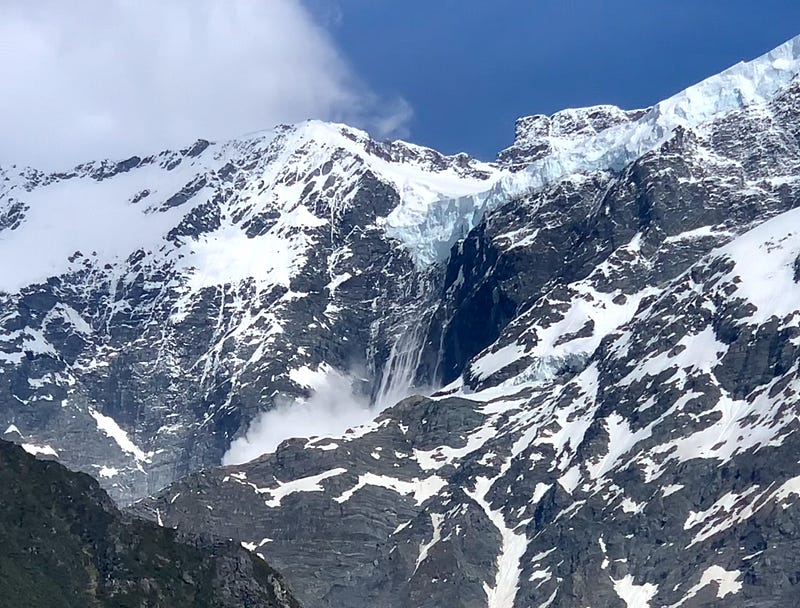
We watched a piece of ice break off the mountain ahead and then crash down into the valley throwing up a lot of snow spraying through the air like dust. And only then, the sound of the avalanche reached us. It was amazing to realize how ‘slow’ sound travels.
We arrived the day before in Twizel, the heart of the Mackenzie Basin and our base for hikes around Aoraki/Mt. Cook, New Zealand’s tallest mountain. No rain was predicted but gale-force winds with gusts above 40 knots.
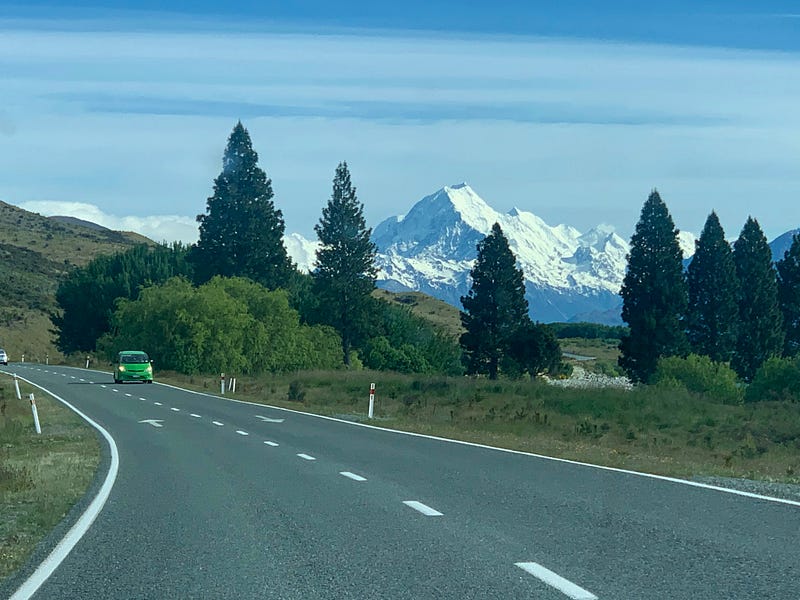
That didn’t stop us from sticking to our plan and doing the very touristy but scenic hike to Hooker Lake at the base of the mountain. After a quick breakfast, we were on the road before 9 am and as soon as we hit the highway out of town, we saw the beauty.
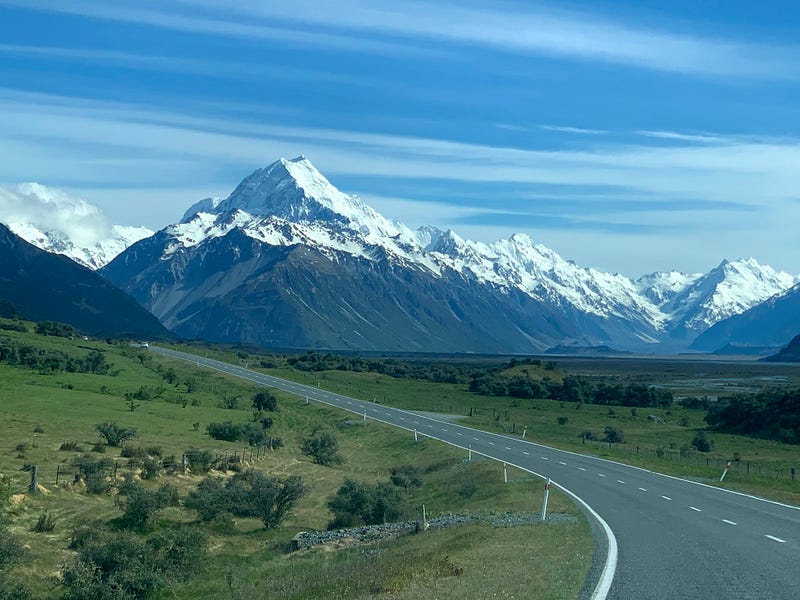
Shining tall and clear in white, Aoraki stands out from surrounding mountain ranges and low-hanging clouds in the valley. Being just that much taller than the others, this majestic peak was not to be missed.
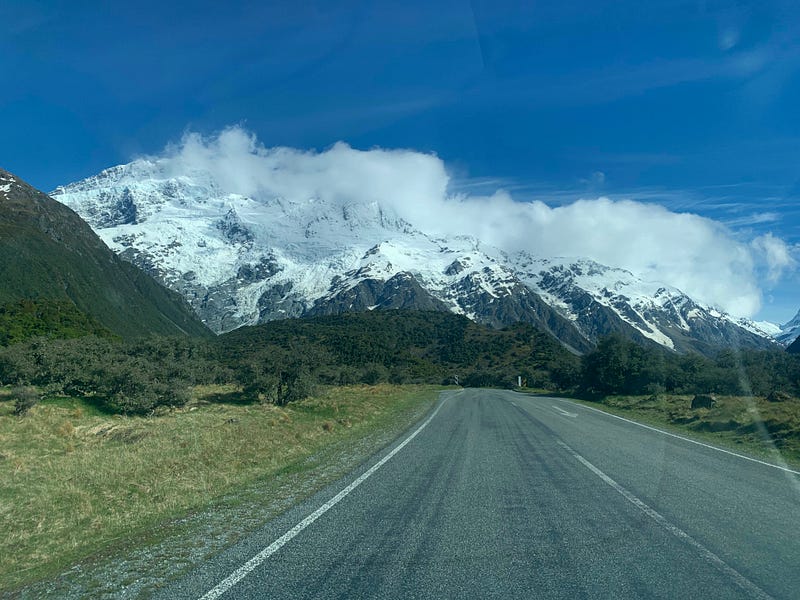
Mount Sefton is a mountain in the Aroarokaehe Range just South of Mount Cook and was blanketed with a soft layer of cloud showing the end of the weather moving from the West Coast across the Southern Alps.
While David was driving, my eyes were glued to the windscreen admiring these spectacular views ahead with the turquoise-blue Lake Pukaki to our right.
Reaching the car park we were surprised to see how many vehicles were parked already attempting the easy but not-so-short hike despite the stormy wind conditions.
We grabbed our backpack, the jackets and all our warm clothes and headed off. A well-marked trail led into the bushes with lush green vegetation surrounding us and clean white mountain slopes ahead.
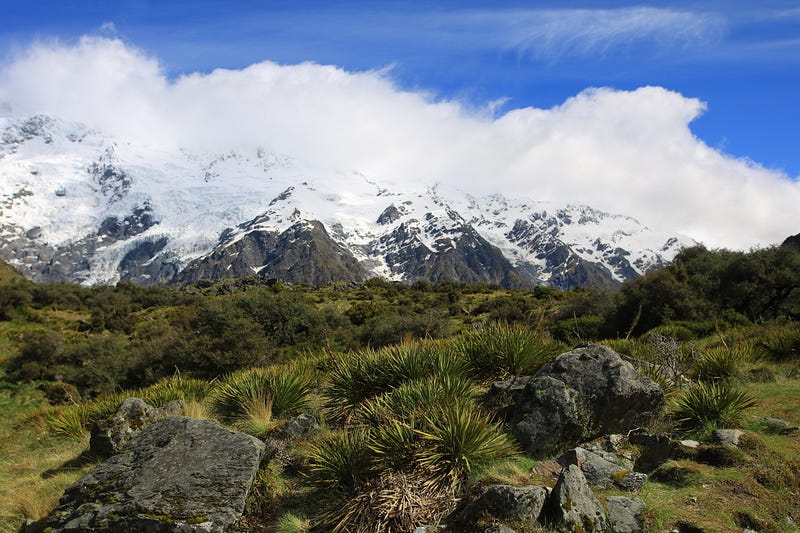
It didn’t take us long to overtake the first tourists and soon we reached Mueller Lake and the river flowing down into the valley fed with glacier water.
We stopped to take in the beauty of the massive mountain range ahead still layered with ice atop. The massive rock formation covered in snow and ice certainly looked daunting. But daunting in a beautiful way.
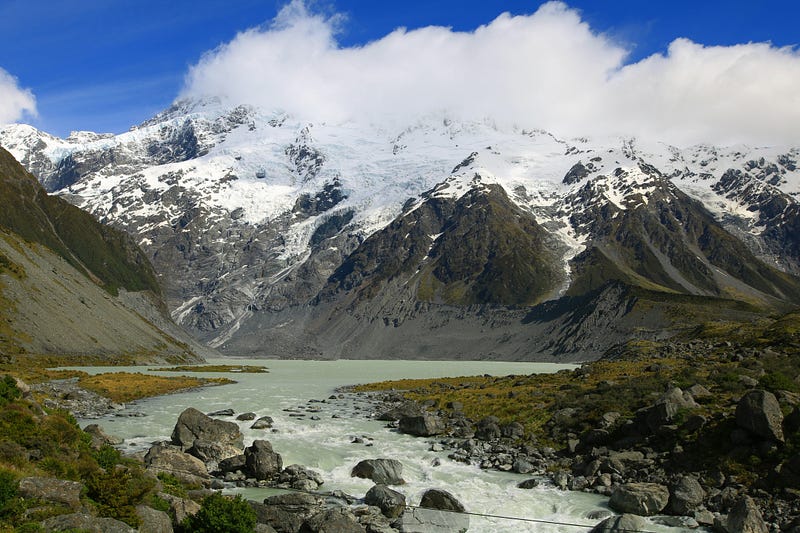
Crossing the river from Mueller Lake, we walked the first of three suspension bridges built along the Hooker Trail. While they looked impressive and sturdy, it felt funny walking across the wobbly construction.
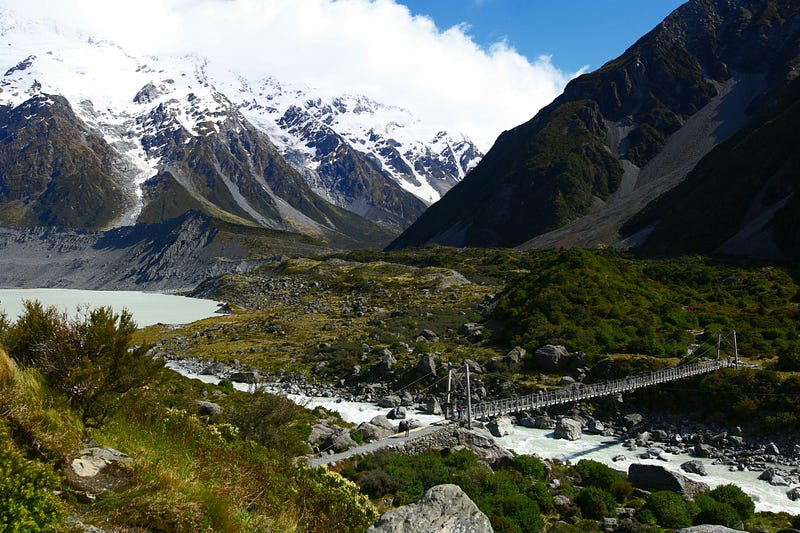
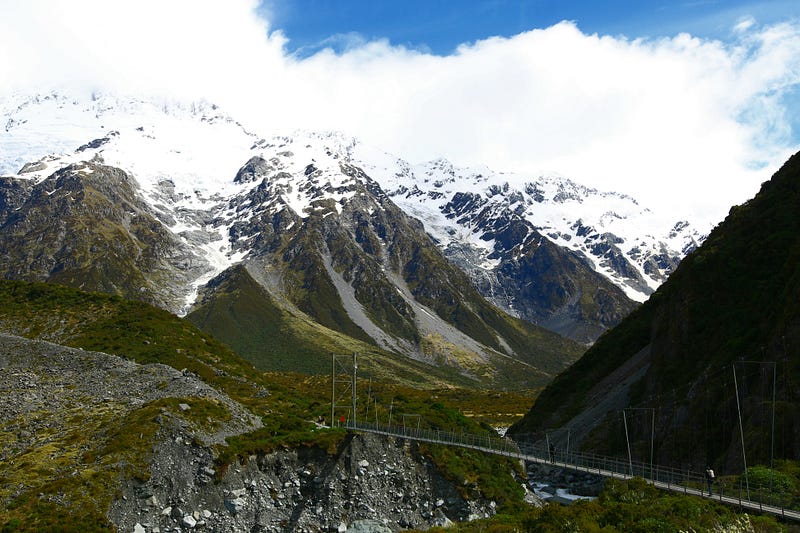
And then there she was. We weren't sure if a mountain is female or male and David said one probably needs to use the term 'it' but he kept on referring to Mt. Cook as 'big boy' while I called her a beauty.
Also, I’m sure you are wondering what is the story behind the two names I’ve been using interchangeably in this article. While Mt. Cook was named after Captain James Cook who surveyed the islands of New Zealand in 1770, he never actually saw the mountain himself.
And of course, before European settlers walked onto this island, the Māori people who had arrived way before with canoes from East Polynesia had been around for a lot longer and had named places. These days the government does a lot to give back to the people native to the land and part of it is honoring their language and names.
“Aoraki / Mount Cook became known to Māori after their arrival in New Zealand some time around the 14th century CE. The first Europeans who may have seen Aoraki / Mount Cook were members of Abel Tasman’s crew, who saw a “large land uplifted high” (probably some part of the Southern Alps) while off the west coast of the South Island, just north of present-day Greymouth on 13 December 1642 during Tasman’s first Pacific voyage. […] The name of the mountain was officially changed from Mount Cook to Aoraki/Mount Cook to incorporate its historic Māori name.” — Wikipedia
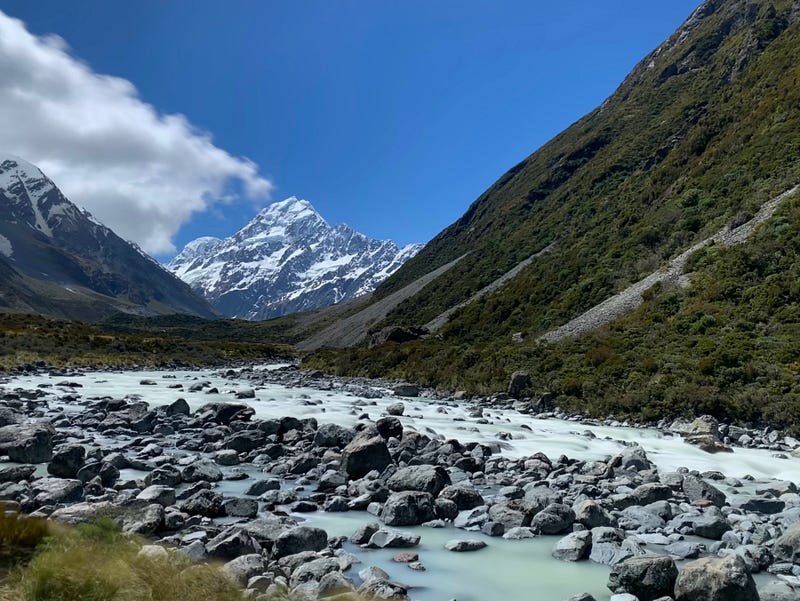
Coming around the corner after the second bridge was the first glimpse we got of the mountain after having seen her from the road and a distance only.
And as if we had a feeling of something happening soon, we kept on looking to our left at Mount Sefton and the ice still held on the mountain range while walking on the well-maintained trail not requiring our eyes and attention on the steps below.
That was when we both, at the same time, screamed aloud as we watched a massive piece of ice break loose, slide down the cliffs, and crash down into the valley. A massive white dust cloud rose above the avalanche making its way into Mueller Lake.
And only then, we heard the sound of the initial crash. A lot later than anticipated and a lot louder than expected. Sound does travel indeed a lot slower than light. We could see this with our own eyes.
Gaping at the mountain and the scene that just happened we pulled some attention and other tourists stopped behind us looking in the same direction hoping to find what we saw.
And they did as another piece of ice broke loose just minutes later causing the same amount of snow to travel down the mountain. What an impressive event to witness.
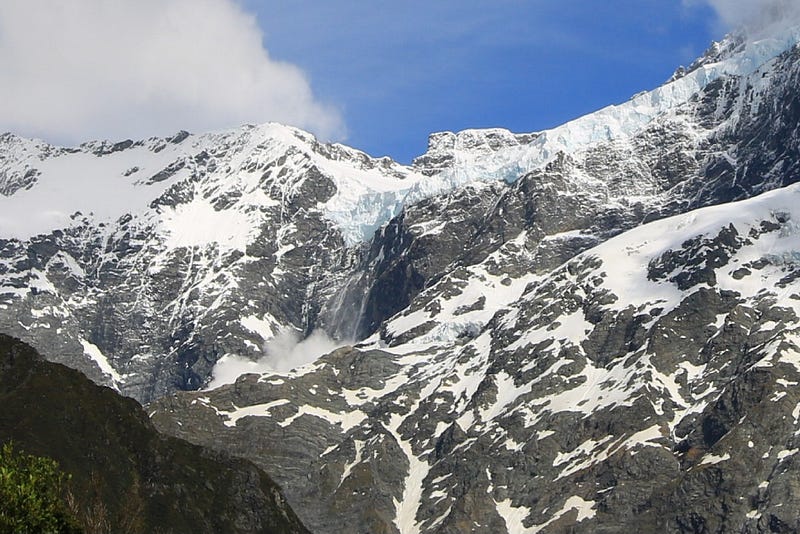
We continued our hike up in the valley not without lifting our heads every now and then to look at this mountain range and witnessed three more avalanches come off that exact spot.
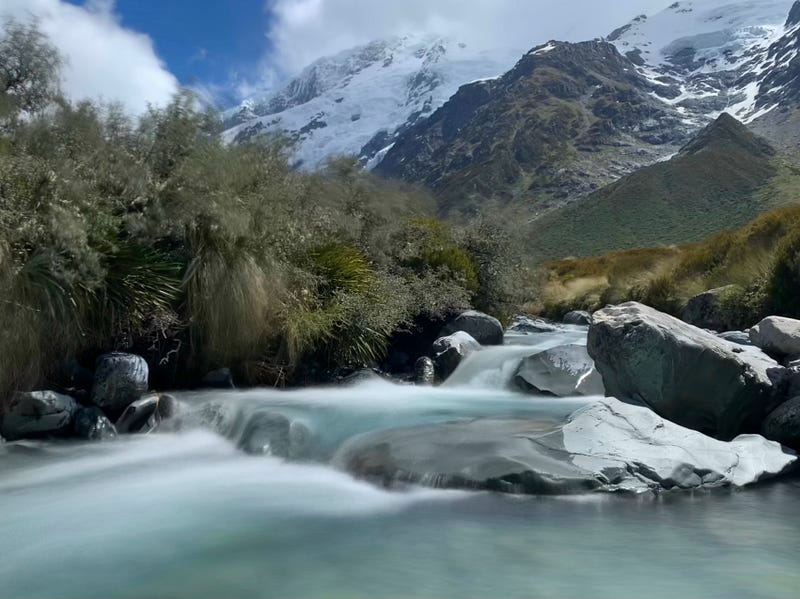
The trail now continued on a wooden boardwalk raised a few feet above the ground and I tried to imagine Tim Ward walking along this stretch while everything was covered in snow. Or so he described and showed in his piece written just a few months ago.
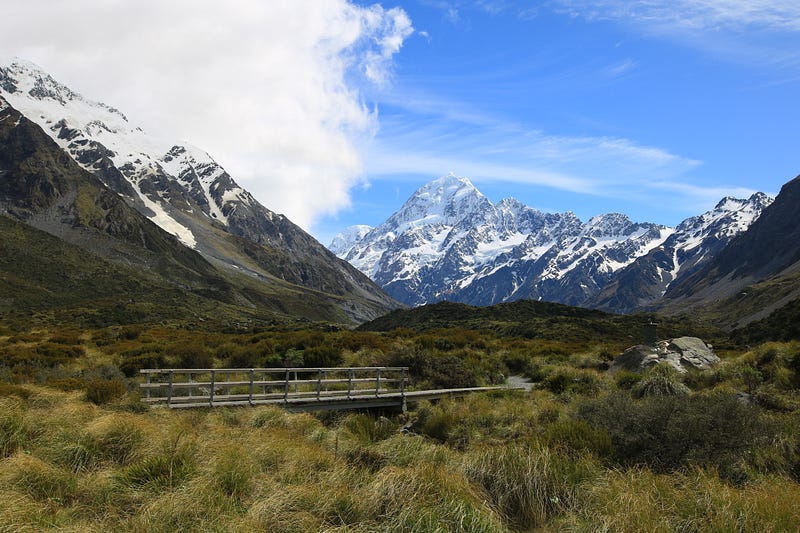
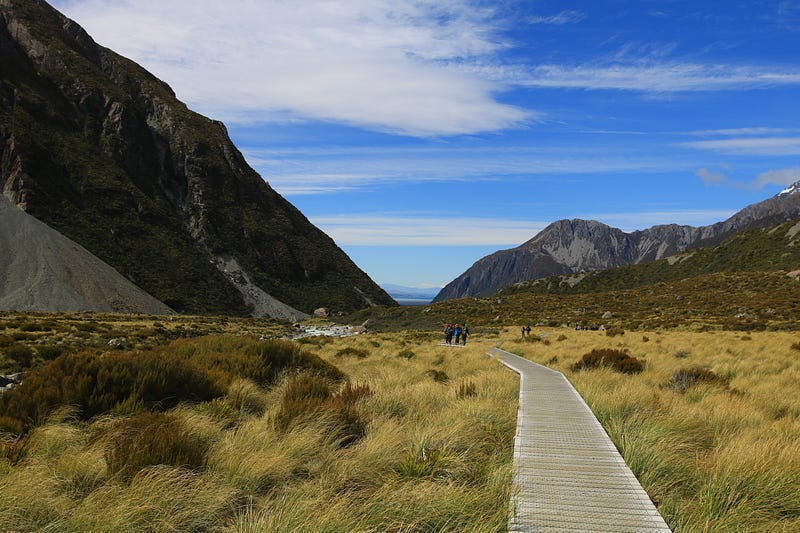
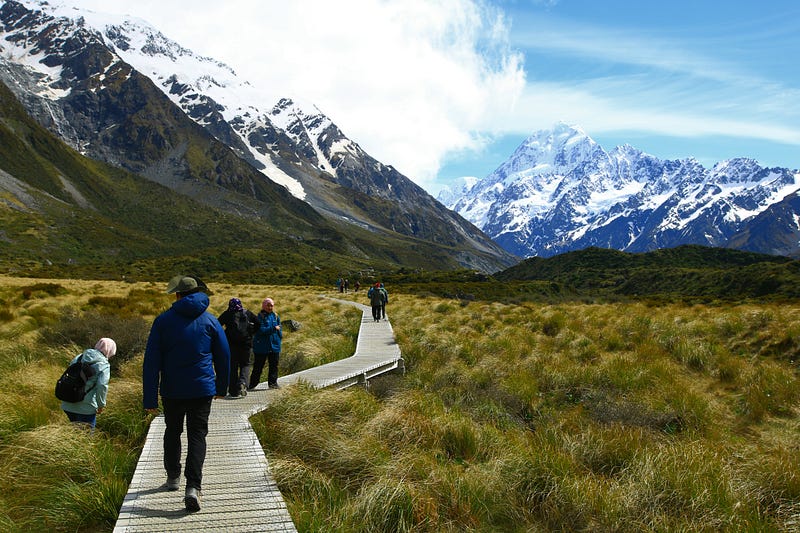
The third and last suspension bridge was coming and just as we walked onto it a massive gust hit throwing everyone on the bridge off balance and forcing us to reach for the life-saving metal strings and bars.
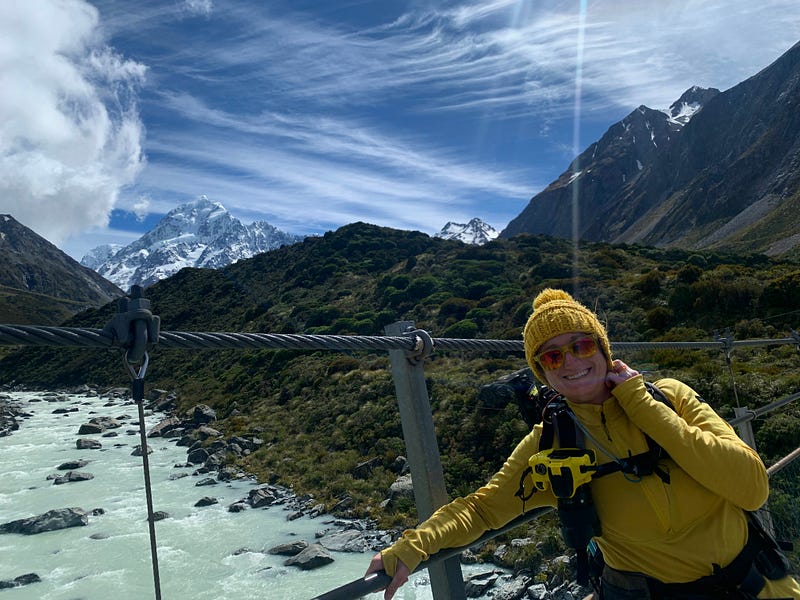
And few steps and a few minutes later we reached our destination. Or at least the official end of the hike.
Hooker Lake.
A massive lake located below Aoraki with now milky water from all the avalanches and melting snow and ice feeding it a mirky mixture of liquids.
At first, I didn't even notice the glacier thinking it must have retraced a lot to be unvisible from this point until I spotted the turquoise-blue ice below a layer of gravel. The entire stretch covering the valley above Hooker Lake was ice.
Hooker Glacier.
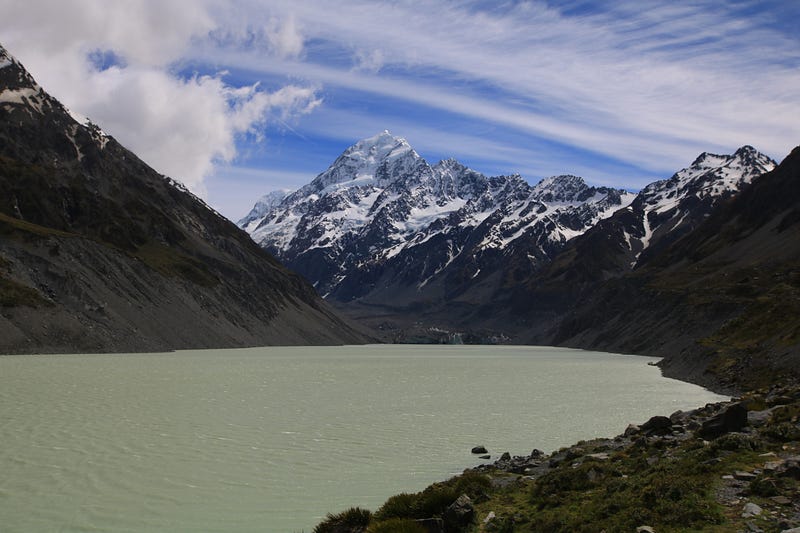
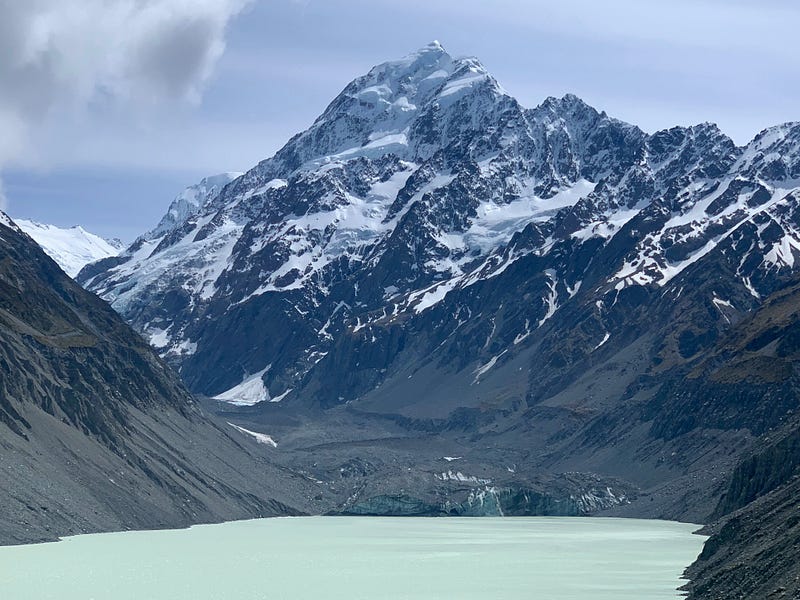
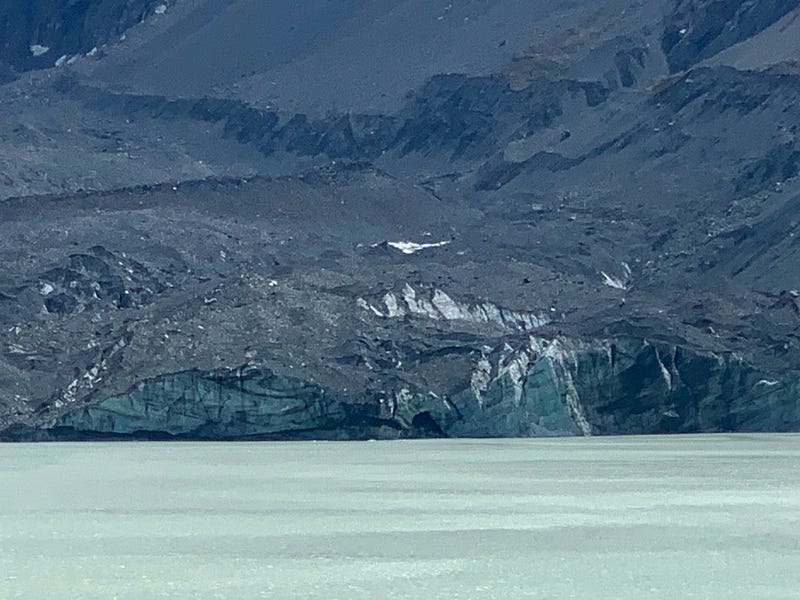
But we weren't happy. Or let's correct that, we were happy all day long but just felt like we could go a little further. Seeing a faint sign of an old trail leading to the right around the lake we scrambled across the large boulders and rocks bringing more and more distance between us and the other tourists who stopped at the viewpoint of the lake.
But the wind got even stronger and the gusts more intense. If a serious gust was coming toward us catching me standing on one foot (as I was moving), it threw me completely off-balance forcing me to jump a meter to the side until I found solid ground again.
The difference between the constant wind and the gusts was just so big. When there was no gust coming through it was seriously pleasant to walk but when that wall of wind hit you, you wanted to have two feet solid on the ground not moving until it ebbed away.
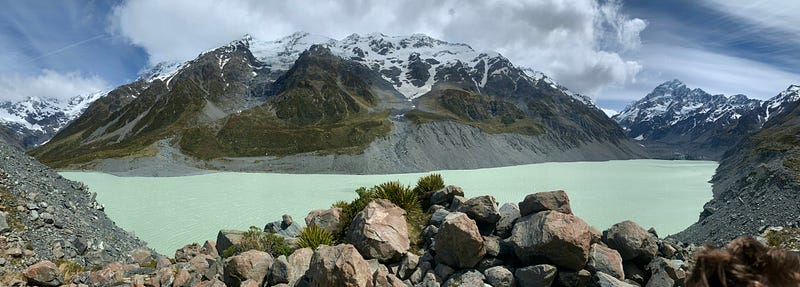
At this point, we were reaching a valley to our left caused by avalanches creating a moraine out of rocks and boulders. Having lost the faint trail we kept on scouting out a way to cross and probably lost about half an hour while also debating if we should continue or not.
Later on, we learned we were following an unmarked and not-maintained trail to the Ball Pass, a difficult crossing in the southern Alps. While we never intended to get far up on this route, we just wanted to hike a little further and higher until tired enough and hungry enough to settle for a lunch spot which turned out to be more difficult than expected as we didn't want to be exposed in these winds.
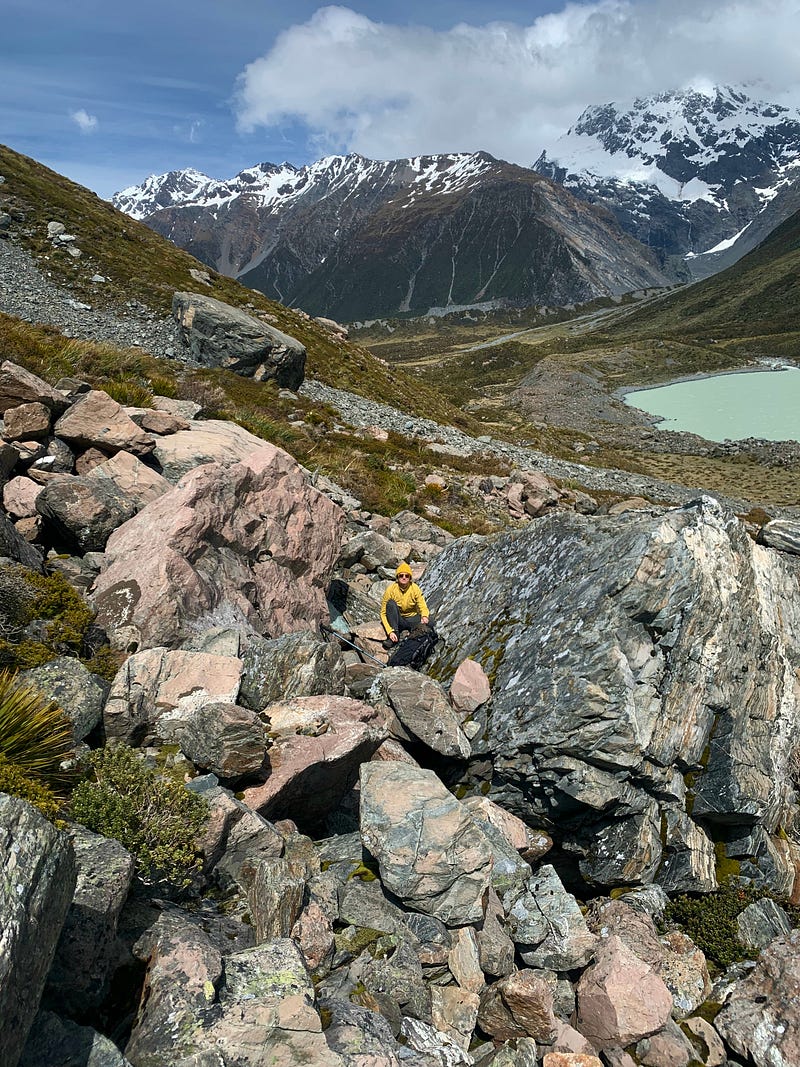
Giving up our fight and search for the trail, we settled on a gap between two large boulders protecting us from the wind while still offering spectacular views of Aoraki.
And yes, she is a beauty. And she does look like one hell of a mountain. I can imagine and understand why one Nepalese Sherpa said this mountain is technically more difficult to ascent than Everest.
Still fascinating though as the mountain is so much lower.
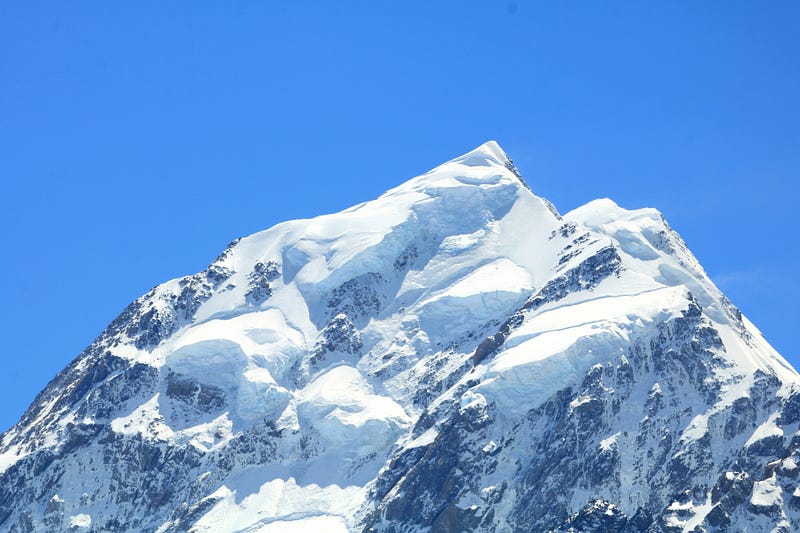
Putting back on all clothes and jackets, we threw a last glance onto the mountain before scrambling back across the boulders hiking back down to Lake Hooker and further down on the tourist trail.
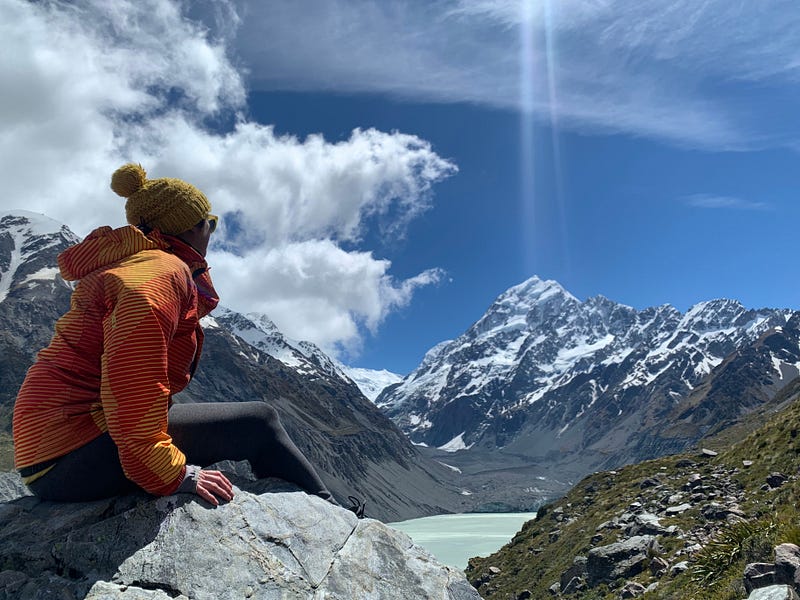
The Mackenzie Basin now being in our views as were hiking out of the valley, the flat surface building such a stark contrast to the spiky and snowy mountains behind us.
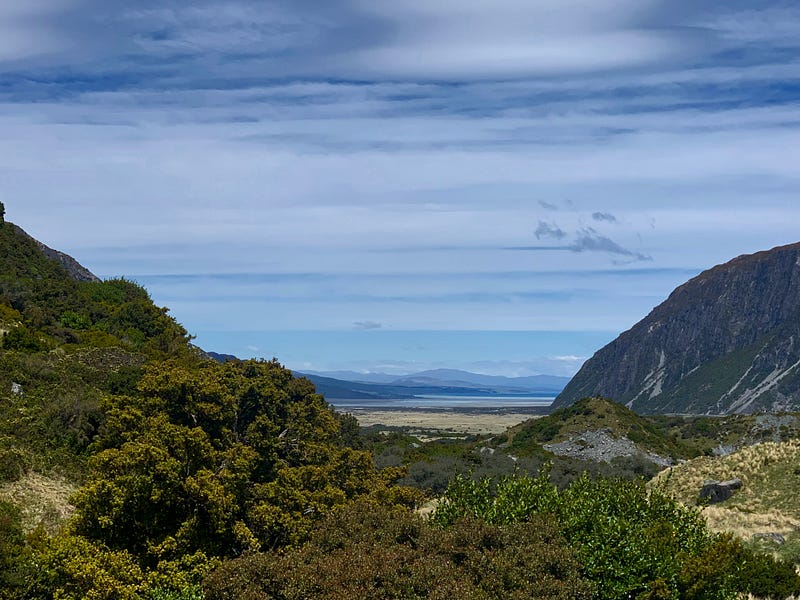
It didn't take long as we were now hungry and thirsty and had a solid pace on, to get back to the car park. What a hike it had been and such challenging conditions but still worth every minute of it.
And don't forget those avalanches we saw going off at a distance. Absolutely spectacular to witness.
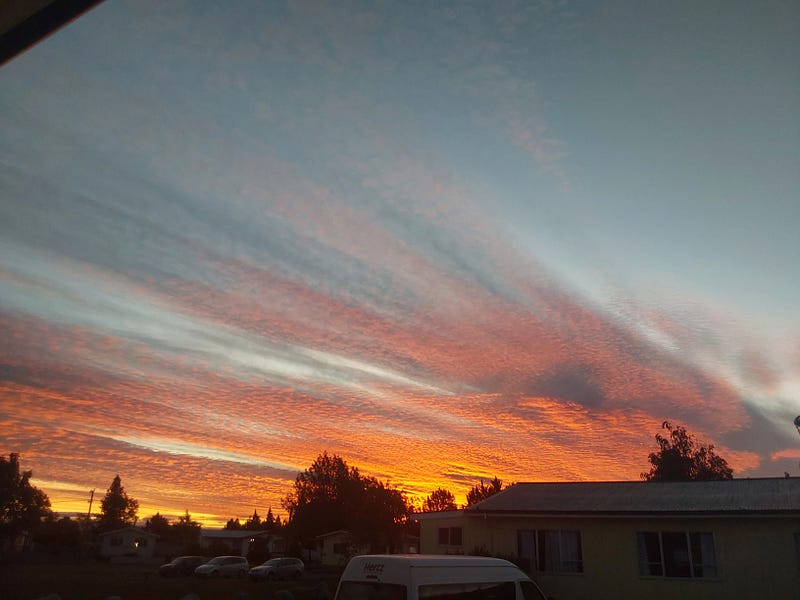
Just like the sunset back in Twizel painting the sky in different shades of yellow, orange and red before we were heading out for dinner.
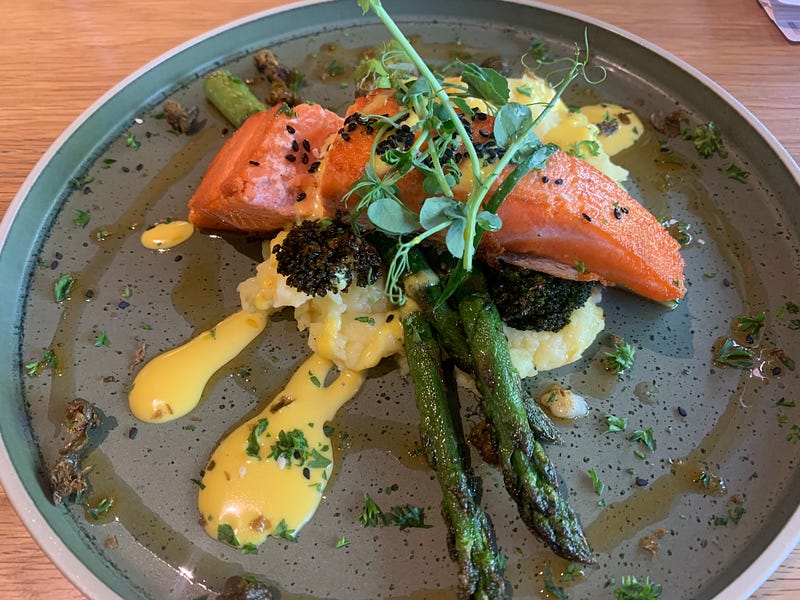
I treated myself to what looked like a small plate but incredibly delicious fresh salmon. Possibly the best salmon fillet I had ever eaten which makes sense as this salmon came from the farm just a five-minute drive away and probably never even saw the inside of a freezer.
If you’re interested in my New Zealand adventures, subscribe to my newsletter to stay updated or check in on my new list regularly. Join my email list here if you would like to read more photo essays.
Shutterstock | Instagram | YouTube | Mailchimp | Amazon | Redbubble


