
War in Ukraine boosts the EU’s energy transition
The impacts of the war in Ukraine will also impact our future energy sources, climate action, and renewable energy investments.
This week feels like living in November 1989 or September 2001; the news cycle moves so fast that you can’t keep track. So you follow every newsflash but miss the time to put it all in perspective.
I remember listening non-stop to the BBC on the night that the Berlin Wall fell. Friends wanted to witness this moment and asked me to join them, but I couldn’t since I had just started a new job. But when they came back, they brought me a small piece of the Berlin Wall; I recently had it in my hand again when cleaning out some old boxes (yes, I kept it). I also remember 9/11; I didn’t do much else than watch CNN for days in a row. The television didn’t provide much more new information, but I needed days to absorb the thought that terrorists did commit a crime at such an unimaginable scale and that this was not a bad dream.
We will all experience moments in our lives where we know that we witness world history unfolding. These are markers of humanity’s meandering path of progress and downfalls on this planet. The brutal Russian invasion of Ukraine is such a marker; a new chapter in the book of the history of the world.
Russian gas independence “as soon as possible”.
Yesterday, Danish Prime Minister Mette Frederiksen announced that the main parliamentary parties had agreed that Denmark should become independent of Russian gas “as soon as possible.”
Meanwhile, in Germany, the Finance Minister announced that Germany had earmarked 200 billion euros ($220 billion) to fund industrial transformation between now and 2026. Christian Lindner added that this includes climate protection, hydrogen technology, and the electric vehicle charging network expansion. This decision follows the announcement last week by German Chancellor Olaf Scholz that Germany had to move quickly to reduce its dependence on Russia as an energy supplier. In addition, Germany also halted its Nord Stream 2 gas pipeline project with Russia. These are just two examples of European countries drastically changing their energy policies, decisions that go hand in hand with radical changes in their defense policies.
IPCC’s report on climate change impacts ignored
The world hardly paid attention to the report that should have put climate change on the front page of all newspapers. Last week, the best climate scientists in the world warned in the latest IPCC report that there remains only “a brief and rapidly closing window of opportunity to secure a liveable and sustainable future for all.”
The next day the president of the world’s most powerful country, and historically and per capita the most significant greenhouse gas emitter, presented his State of the Union speech. President Biden mentioned the word “climate” only twice. Once in the context of modernizing infrastructure to win the international economic competition and provide for more jobs. He referred to climate again when he spoke about cutting energy costs for families an average of $500 a year by combatting climate change. Sadly, it seems that the brief period of optimism of a year ago that the world would finally significantly step up its climate action ambition is one for the history books.
The Russian invasion of Ukraine has dominated the news and pushed the IPCC report from the front pages. The BBC interviewed a leading Ukrainian scientist who is now sheltering with her family in her apartment in Kyiv. Dr. Svitlana Krakovska, a member of the IPCC, said that the war is closing the window of opportunity for the world to prevent the worst impacts of climate change.
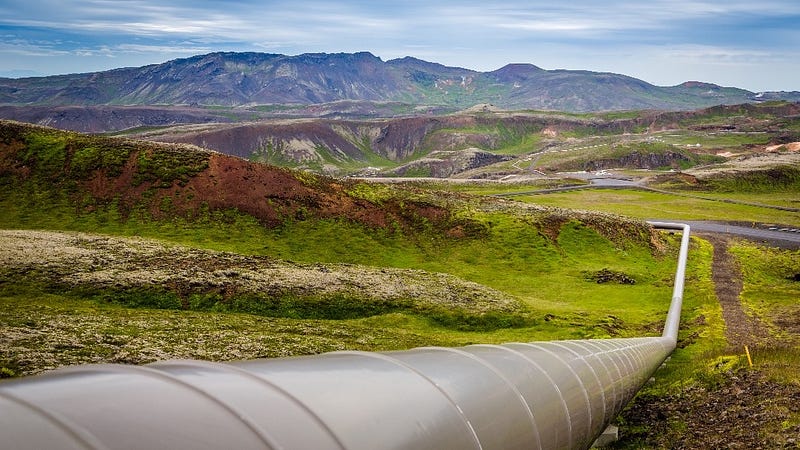
The Russian invasion has also made painfully clear how much the European economy is dependent on Russian fossil fuels; about 40% of the EU’s gas comes from Russia. Such a dependency makes it extremely hard to decide on an embargo on energy imports from Russia. The EU is still addicted to fossil fuels since its leaders systematically ignored the warnings from previous IPCC reports. Such an embargo would have been very effective because the Russian economy depends for more than one-third on oil and gas export.
Germany relies on Russia for 56 percent of its gas imports, about half of its hard coal, and about 30 percent of its oil imports. But the dependency goes even further. More than a third of the German gas storage facilities are in the hands of a subsidiary of Gazprom, Russia’s majority state-owned multinational energy corporation. Deutsche Welle reports that all the sites have one thing in common: they are currently almost empty, with levels at 10% or less of capacity. The German Minister for Economy and Climate Action, Robert Habeck, assumes that the storage facilities have been “systematically emptied” intentionally to drive up gas prices and generate political pressure.
Speeding up energy transition
But even though a decision to stop importing Russian fossil fuels can’t be taken overnight, it doesn’t mean that the Russian oil and gas industry won’t be affected. The massive withdrawal of international energy companies leaves the Russian fossil fuel industry without capital and much-needed expertise. And Europe will focus on rapidly reducing the dependency, whereby one option is speeding up the energy transition to renewable energy.
In a recent podcast, I referred to Denmark’s quest for fossil fuel independence from other countries after the oil crises of the 1970s, when 90 percent of the country’s energy supply was based on imported oil. Some 25 years later, Denmark had become a net energy exporter and had earned a reputation as an innovator for wind turbines.
Let’s give the last word to Dr. Svitlana Krakovska, who said to the BBC from her apartment in Kyiv:
“It’s amazing how the people of Ukraine united against one enemy,” she said.
“If we all unite against climate change, we can survive as a civilization.”
If you find articles like this valuable and want to support my work, consider signing up to Medium. It’s $5 a month, giving you unlimited access to all my articles AND all stories on Medium.
If you sign up using my link, I’ll earn a small commission, at no additional cost to you.