
Our dangerous future of compounding crises: Ukraine, climate, and the pandemic

The world is not in a crisis. It is worse: there are many. Just when some governments hoped that the worst of the pandemic would finally be over in their countries, the war in Ukraine started. And like the previous crisis, this one is such a priority that others, like climate change and biodiversity loss, don’t get the world leaders’ urgent attention they need.
And the list doesn’t stop there; we face an increasing water crisis, a food crisis, an energy crisis, and an inequality crisis. You can easily tick off the 17 Sustainable Development Goals as crises that all need urgent attention.
At first glance, these may seem like independent events, but they are all connected. Worse: they often negatively impact each other. For our political leaders, these complicated problems are their least favorite. They prefer solvable short-term problems and often shy away from tackling long-term interdependent challenges. But pandemics are linked to biodiversity loss, which is related to climate change and thus to energy use, and I could go on for a while.
Energy transition
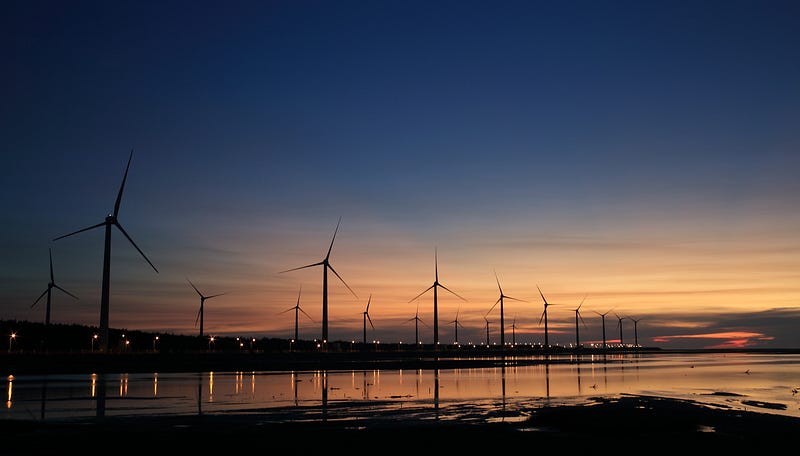
If political leaders had listened to the warnings of climate experts in the 1990s, we would now have far more alternative forms of energy, which would tie our economies less to countries that we prefer not to be dependent upon. But, it’s not too late; we can still make that transition, and if you need to think of an added bonus: now that the prices for fossil fuels go sky-high, you can still get wind and incoming sunlight entirely for free.
Denmark showed the world how that can be done. In 1973, 90% of the country’s energy supply was based on imported oil. It was also the year that the first oil crisis triggered a national debate to change that dependence. As a result, Denmark had already become a net exporter of energy by the turn of the century. Since then, it further developed its reputation as the pioneer of wind energy development in Europe.
We need more proactive long-term approaches to avoid a predictable next crisis. And since we waited so long to tackle many of the predicted risks, it will become an even more enormous challenge for governments to deal with the compounded risks that are the result.
The IPCC report
And against this background, the UN’s Intergovernmental Panel on Climate Change presented today its latest report. All 195 member states approved the text stating that small steps are no longer sufficient to tackle the climate crisis. As Greta Thunberg has already been saying for years: “the house is on fire.” And small buckets of water won’t be enough.
With very high confidence, the IPCC report concludes that:
“The cumulative scientific evidence is unequivocal: Climate change is a threat to human well-being and planetary health. Any further delay in concerted anticipatory global action on adaptation and mitigation will miss a brief and rapidly closing window of opportunity to secure a liveable and sustainable future for all.”
Will the world leaders follow up on this conclusion that they all have just approved by consensus? Of course, at the next Conference of the Parties, COP27, in November in Egypt, nearly every speaker will refer to this report. But will the world’s leaders prioritize the existential crisis during the current Ukraine crisis?
The urgent and the important
As Eisenhower could have told you, if you continue to prioritize the urgent above the important, most of your essential tasks will ultimately end in the urgent & important quadrant, making your challenge even harder. This is the corner of the matrix where the pandemic, Ukraine, climate, and many more crises are now all found.
Any leader who followed a leadership course for beginners knows the urgent-important matrix, but many of them struggle to translate it into efficient decision making. The IPCC report confirms that the short-term results remain the politicians’ favorites. It states that many initiatives prioritize immediate and near-term climate risk reduction, which reduces the opportunity for transformational adaptation. These policies explain the noted “widening disparities between the estimated costs of adaptation and documented finance allocated to adaptation.”
The longer we wait, the more expensive the climate crisis will become.
If you find articles like this valuable and want to support my work, consider signing up to Medium. You get unlimited access to all my articles AND articles from thousands of other writers. If you sign up using my link, I’ll earn a small commission, at no additional cost to you.
The Working Group II contribution to the IPCC Sixth Assessment Report assesses the impacts of climate change, looking at ecosystems, biodiversity, and human communities at global and regional levels. It also reviews vulnerabilities and the capacities and limits of the natural world and human societies to adapt to climate change.
Here, you can download the Summary for Policy Makers (or the entire 3675 pages report).


