avatarDaniel Hopper

Free AI web copilot to create summaries, insights and extended knowledge, download it at here

4508

Abstract

weight regained from the point of maximum weight loss</figcaption></figure><p id="4772">The waist circumference was lower in soda drinkers, the "NNS group losing significantly more girth than the water group."</p><p id="0c01">The researchers also monitored blood markers, with little or no difference between the groups. There were a couple of minor improvements in the diet soda group, such as lower blood pressure and reduced <a href="https://www.mayoclinic.org/diseases-conditions/high-blood-cholesterol/in-depth/triglycerides/art-20048186">Triglycerides</a>, likely an effect of the weight loss.</p><p id="d2c3">The results are looking very favourable to diet soda drinkers. So, is artificial sweeteners the holy grail of weight loss?</p><p id="146a">No. Artificial sweeteners aren't a magic weight loss supplement, so we have to assume drinking diet soda meant they weren't eating other sweet calorie-dense foods and therefore consuming fewer calories. For those drinking water, Instead, if you don't get sweetness through diet soda, look for it elsewhere, such as candy.</p><h2 id="1d1c">Wait, I thought drinking diet soda is bad for your health?</h2><p id="1d6f">There is a general belief that there is an association between diet soda and obese people. The perceived adverse effects of consuming artificial sweeteners include:</p><ul><li><a href="https://www.foodnavigator.com/Article/2016/07/13/Artificial-sweeteners-may-cause-cravings-for-the-real-thing-Study">Increased cravings</a> for sweet foods</li><li><a href="https://www.healthline.com/nutrition/artificial-sweeteners-blood-sugar-insulin#:~:text=The%20sweet%20taste%20of%20artificial,blood%20sugar%20and%20insulin%20levels.">Increased insulin</a> and fat storage</li><li><a href="https://www.ncbi.nlm.nih.gov/pmc/articles/PMC6363527/">Disrupts gut microbiota</a>, increasing <a href="https://www.ncbi.nlm.nih.gov/pmc/articles/PMC7014832/">insulin sensitivity</a></li><li>Obese people or those with type-2 diabetes <a href="https://www.ncbi.nlm.nih.gov/pmc/articles/PMC2862460/">tend to drink more diet soda</a></li></ul><p id="4945">However, the findings that I've discussed suggest that these assumptions are not the case at all. We would have seen some of these effects if they were true after a year.</p><p id="58f8"><a href="https://academic.oup.com/ajcn/article/96/6/1419/4571485?papetoc">Another study</a> linking artificial sweeteners with adverse effects finds an increased risk of <a href="https://www.mayoclinic.org/diseases-conditions/non-hodgkins-lymphoma/symptoms-causes/syc-20375680">non-Hodgkin lymphoma</a>. However, the basis for these findings is doses given to rats, thousands of times higher than humans consume through diet soda.</p><p id="268b">The basis for many of these studies linking artificial sweeteners with adverse effects is anecdotal evidence, which is not absolute.</p><p id="60f1">Observational data can have <a href="https://www.pritikin.com/what-is-reverse-causation">reverse causality</a> — for example, in this case, people who are obese and have pre-existing health issues consume diet soda for weight loss rather than consume diet soda leading to their health issues.</p><p id="df3e">Any scientific evidence should be based on human studies, using <a href="https://emj.bmj.com/content/20/2/164">randomised controlled trials</a>.</p><p id="9256">Like the main study that this article has discussed.</p><figure id="eafe"><img src="https://cdn-images-1.readmedium.com/v2/resize:fit:800/1*NKJVh8djKUUrkLeRMpaosA.jpeg"><figcaption>Photo by <a href="https://unsplash.com/@kamyab3034?utm_source=unsplash&amp;utm_medium=referral&amp;utm_content=creditCopyText">Kamyab Lotfollahyan</a> on <a href="https://unsplash.com/s/photos/diet-soda?utm_source=unsplash&amp;utm_medium=referral&amp;utm_content=creditCopyText">Unsplash</a></figcaption></figure><h2 id="1ba1">But, the American Beverage Association funded the study</h2><p id="da5e"><a href="https://www.americanbeverage.org/">The American Beverage Association</a> (ABA) funded the study, which does seem like a conflict of interest. The ABA is the trade association representing America's non-alcoholic beverage industry but had no direct involvement in the study besides the funding.</p><p id="174b">Furthermore, a third-party audited the data (<a href="https://www.merieuxnutrisciences.com/us/en/services/biofortis-research">Biofortis-Provident</a>) at the researchers' request to check its accuracy and integrity and found the study robust.</p><p id="0

Options

d96">These circumstances are not unusual, as funding for research can often come externally from the institution. Education is still a business.</p><h2 id="99ce">Are there studies with similar findings?</h2><p id="0383">Yes, there are! The study does not stand alone with its findings.</p><p id="2547">A 1997 study by <a href="https://watermark.silverchair.com/409.pdf?token=AQECAHi208BE49Ooan9kkhW_Ercy7Dm3ZL_9Cf3qfKAc485ysgAAAr8wggK7BgkqhkiG9w0BBwagggKsMIICqAIBADCCAqEGCSqGSIb3DQEHATAeBglghkgBZQMEAS4wEQQMDycMwrtfFHZRhGegAgEQgIICcvwc1WmYZM4SCtQgFCZCuFIWJm97sSPI9ur3fd_WZIw_Zodiug8FZfHANzGbH-FLu2__7jI7x6IwuPCroP8hnGcvt2qk5hePas8mDHkSu07rRg9VooQ5HbUx0ZLQZr0MT3NrUEmn7Ef0FtFdak948tKbqaZArlJh7ChBhzXz8z5xrLk28yDBVI_6qtKsvMZ51BYVCTXZql7y92ZxugsI32eVWu_BfiBRbXByu80vLDPicSQY5wOngJT_1_dlUPL2e0IrynkzjWYY_G320PiW8sYX_j8szYdQtuR2PoS9Sid8-2cnHaw0E3iBtlpoECnoAEATSh4IG9aiUvUthrSEydWUtaf6FEd6sdBqNWz3ulyz-JxImibIUjR_Z-FV7PjOudCKsek_0kGtx0K933oEe2tdaUDTu14v1N-mrOXtrZ8gb-qg9XXs7Y7Y_vvujWrTspxVW_AgIyaBRDX6oktL-_nVmEmWxkLdGugrxtXeUNy60eUvVIt5tAQKSkoUsOU54me7v5KyNC_wF81Y71Hkz05oOxWd7gB5hGHwSsTxJ5EbEo1fyLqxjE0dv5r6ITLQqwoADRG5LXgQT5afYe4mFdrPuKGhILCBdjYAaSLnXrQon1t0HYbgymPCsaUDS2srpIwhAdwsoVtVrCr43A0HBQQxiy32YC3Ki_EcUiDcS_CC23nbYdiYADpcUby0Ygn-tXmWFdFBNVs1fOIx8SpnHkD3oV6tY9FTKsHbz6IWs07-zL4ujLboXzLcTKfXFtd9VtOYCuEdW8yxMYVM89tlQSYNMPjo23E0WaRorxNx7ZemIwetdpfwRSS_z0KSwfJm_Y-O">Blackburn et al.</a> looked at the consumption of popular artificial sweetener Aspartame. Over a 19-week weight reduction program, 1-year maintenance program and two-year follow-up period, half of the 163 participants consumed Aspartame and the other half water.</p><p id="a2c9">Those consuming the artificial sweetener lost more weight and maintained more weight loss.</p><p id="9749"><a href="https://academic.oup.com/ajcn/article/95/3/555/4578292?login=true">Tate et al.</a> (2012)<i> </i>compared replacing sugar-based beverages with water or diet beverages. Those participants in the group drinking diet beverages lost more weight and then maintained more weight loss over six months.</p><h1 id="1546">Conclusion</h1><p id="6075">This article has discussed some scientific evidence for diet soda being effective as a part of a weight loss diet.</p><p id="2808">I am not saying you do not drink water, but drinking diet soda is more beneficial to weight loss than drinking water alone, both in the short and long term.</p><p id="aa6f">Don't believe what you hear about artificial sweeteners increasing cravings for sweet food. These findings suggest the opposite. Drinking diet soda helps you feel fuller (<a href="https://www.sciencedirect.com/topics/biochemistry-genetics-and-molecular-biology/satiety">satiated</a>), meaning you don't get as hungry.</p><p id="d580">Another key benefit of drinking diet soda seems to be that it reduces cravings for sweet sugary foods. Either that or artificial sweeteners are magic for weight loss, and the rest of your diet is irrelevant…</p><p id="be05">Finally, there is no scientific evidence that consuming artificial sweeteners is harmful to our health.</p><p id="308a">Now that begs the question, do you prefer Pepsi Max, Coke Zero or Coke No Sugar?</p><p id="5d30"><b>Thank you for reading.</b></p><p id="a034">You might enjoy the article below called Stop Complicating Weight loss if you enjoyed the content.</p><div id="f6e6" class="link-block"> <a href="https://readmedium.com/stop-overcomplicating-weight-loss-7ef4c27a2a49"> <div> <div> <h2>Stop Complicating Weight Loss</h2> <div><h3>The number of calories we eat literally controls our weight.</h3></div> <div><p>medium.com</p></div> </div> <div> <div style="background-image: url(https://miro.readmedium.com/v2/resize:fit:320/1*67Ymd3aGvOpSsl27_dUcrQ.jpeg)"></div> </div> </div> </a> </div><h1 id="e6a8">Read More Medium Articles</h1><p id="21fd"><i>Non-Medium members can only read 3 articles a month — become a Medium Member for unlimited access.</i></p><p id="2079"><i>If you would like to read more articles like this one, <a href="https://brand-yourself-better.medium.com/membership"><b>sign up to become a Medium member</b></a><b> </b>for only<b> $5 a month.</b></i></p><p id="6230"><a href="https://brand-yourself-better.medium.com/subscribe"><b><i>Subscribe</i></b></a><b><i> </i></b><i>to be notified when I publish new content.</i></p></article></body>

Drink Diet Soda to Help Lose Weight

Science suggests that drinking diet soda is more beneficial to weight loss than water.
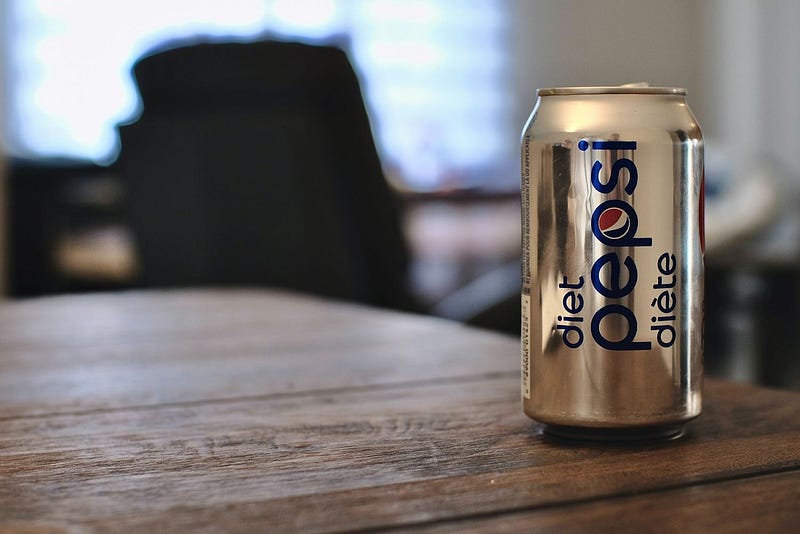
Photo by Andrew George on Unsplash

Want to lose weight and then keep it off? Drink diet Soda.

Diet soda is no worse for your health than drinking water. In fact, drinking diet soda could be more beneficial than drinking water alone.

Research suggests that consuming diet beverages with artificial sweeteners helps us avoid binging on sweet foods. Therefore, we consume fewer calories and lose weight.

Thus, diet soda is an effective tool for weight loss and maintenance.

Read on for the evidence.

Diet Soda Improves Weight loss?

Yes! According to research.

The study below evaluated whether there was any difference between the body weight of people drinking water and those drinking diet soda or "beverages sweetened with non-nutritive sweeteners (NNS)".
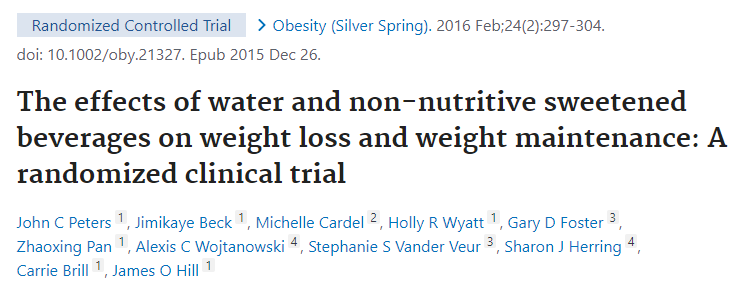
Peters et al., 2016

The study classifies low-calorie sweeteners, artificial sweeteners, and noncaloric sweeteners as non-nutritive sweeteners. They have no nutritional benefits such as vitamins or minerals; their only function is to replace sugar with a low-calorie alternative. NNSs approved by the FDA include Aspartame and Sucralose.

The study had two groups of participants. All were overweight and wanted to lose weight. The first group drank two cans of diet soda daily and the rest water and weren't allowed any diet soda.
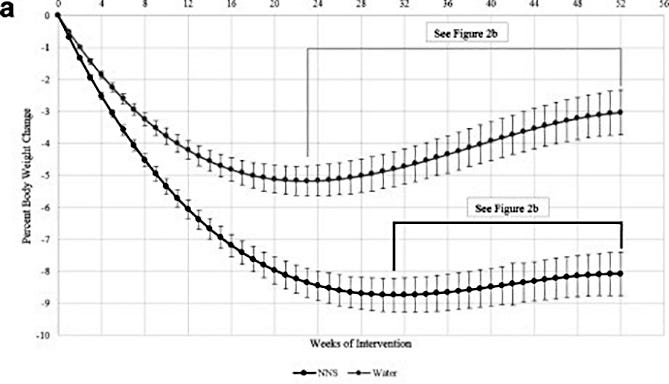
Mean % body weight change over time

The study's findings

The researchers had hypothesised there would be no difference between the water drinkers and diet soda drinkers. However, the diet soda group lost more weight and kept it off.

“Water and NNS beverages were not equivalent for weight loss and maintenance during a 1-year behavioral treatment program. NNS beverages were superior for weight loss and weight maintenance…” — (Peters et al., 2016)

Just over 300 participants completed the initial 12 weeks of the study, and 73% of them completed the full year-long trial.

After the 12 weeks, those who Drank water lost 4% of their body weight, while those in the study drinking diet soda lost 6%.

At the end of the year, water drinkers had lost 3% of their body weight on average, and diet soda drinkers lost 8%—a 5% difference in favour of diet soda drinkers.

The water drinkers had lost more weight at 12 weeks than after the entire year, which means they struggled to keep to their diets.

“At 1-year subjects receiving water had maintained a 2.45 ± 5.59 kg weight loss while those receiving NNS beverages maintained a loss of 6.21 ± 7.65 kg.” — (Peters et al., 2016)

The mean maximum weight loss for the water drinks was 5.5kg at week 20, whilst the mean peak weight loss for the diet soda drinkers was 8.6 kg at week 28. Both groups regained weight after reaching the maximum weight loss.

The graph below illustrates the amount of weight regained after peak weight loss. The thicker line at the bottom is from the diet soda drinkers, and you can see that the rate of weight gain was significantly less for the diet soda group.
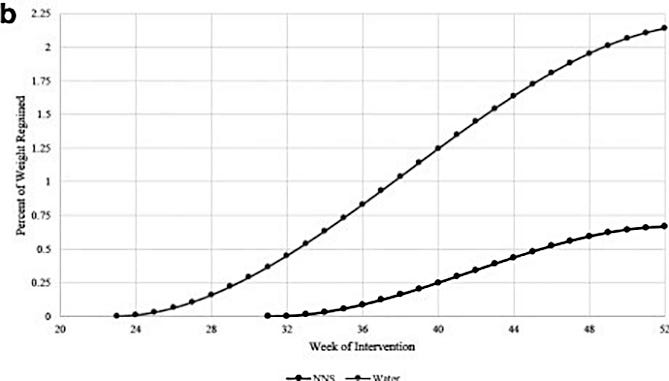
Mean percentage of body weight regained from the point of maximum weight loss

The waist circumference was lower in soda drinkers, the "NNS group losing significantly more girth than the water group."

The researchers also monitored blood markers, with little or no difference between the groups. There were a couple of minor improvements in the diet soda group, such as lower blood pressure and reduced Triglycerides, likely an effect of the weight loss.

The results are looking very favourable to diet soda drinkers. So, is artificial sweeteners the holy grail of weight loss?

No. Artificial sweeteners aren't a magic weight loss supplement, so we have to assume drinking diet soda meant they weren't eating other sweet calorie-dense foods and therefore consuming fewer calories. For those drinking water, Instead, if you don't get sweetness through diet soda, look for it elsewhere, such as candy.

Wait, I thought drinking diet soda is bad for your health?

There is a general belief that there is an association between diet soda and obese people. The perceived adverse effects of consuming artificial sweeteners include:

However, the findings that I've discussed suggest that these assumptions are not the case at all. We would have seen some of these effects if they were true after a year.

Another study linking artificial sweeteners with adverse effects finds an increased risk of non-Hodgkin lymphoma. However, the basis for these findings is doses given to rats, thousands of times higher than humans consume through diet soda.

The basis for many of these studies linking artificial sweeteners with adverse effects is anecdotal evidence, which is not absolute.

Observational data can have reverse causality — for example, in this case, people who are obese and have pre-existing health issues consume diet soda for weight loss rather than consume diet soda leading to their health issues.

Any scientific evidence should be based on human studies, using randomised controlled trials.

Like the main study that this article has discussed.
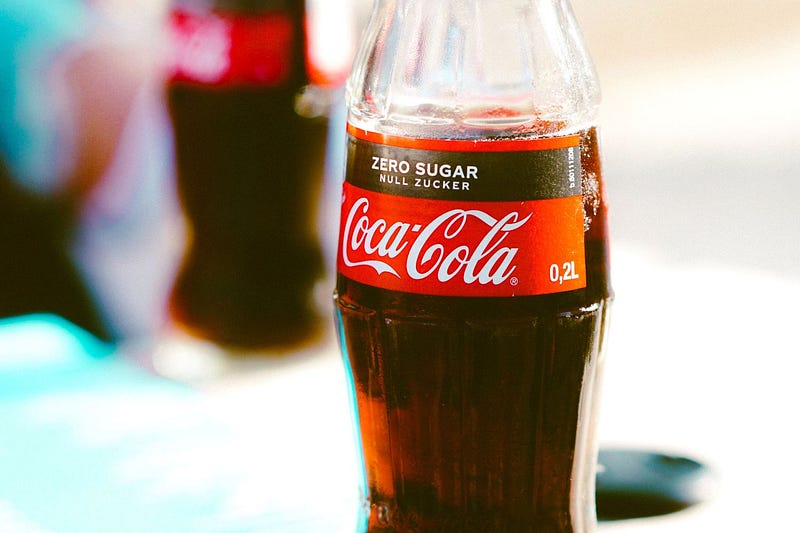
Photo by Kamyab Lotfollahyan on Unsplash

But, the American Beverage Association funded the study

The American Beverage Association (ABA) funded the study, which does seem like a conflict of interest. The ABA is the trade association representing America's non-alcoholic beverage industry but had no direct involvement in the study besides the funding.

Furthermore, a third-party audited the data (Biofortis-Provident) at the researchers' request to check its accuracy and integrity and found the study robust.

These circumstances are not unusual, as funding for research can often come externally from the institution. Education is still a business.

Are there studies with similar findings?

Yes, there are! The study does not stand alone with its findings.

A 1997 study by Blackburn et al. looked at the consumption of popular artificial sweetener Aspartame. Over a 19-week weight reduction program, 1-year maintenance program and two-year follow-up period, half of the 163 participants consumed Aspartame and the other half water.

Those consuming the artificial sweetener lost more weight and maintained more weight loss.

Tate et al. (2012) compared replacing sugar-based beverages with water or diet beverages. Those participants in the group drinking diet beverages lost more weight and then maintained more weight loss over six months.

Conclusion

This article has discussed some scientific evidence for diet soda being effective as a part of a weight loss diet.

I am not saying you do not drink water, but drinking diet soda is more beneficial to weight loss than drinking water alone, both in the short and long term.

Don't believe what you hear about artificial sweeteners increasing cravings for sweet food. These findings suggest the opposite. Drinking diet soda helps you feel fuller (satiated), meaning you don't get as hungry.

Another key benefit of drinking diet soda seems to be that it reduces cravings for sweet sugary foods. Either that or artificial sweeteners are magic for weight loss, and the rest of your diet is irrelevant…

Finally, there is no scientific evidence that consuming artificial sweeteners is harmful to our health.

Now that begs the question, do you prefer Pepsi Max, Coke Zero or Coke No Sugar?

Thank you for reading.

You might enjoy the article below called Stop Complicating Weight loss if you enjoyed the content.

Read More Medium Articles

Non-Medium members can only read 3 articles a month — become a Medium Member for unlimited access.

If you would like to read more articles like this one, sign up to become a Medium member for only $5 a month.

Subscribe to be notified when I publish new content.

Weight Loss
Health
Diet
Advice
Fitness
Recommended from ReadMedium