avatarAvi Kotzer

Free AI web copilot to create summaries, insights and extended knowledge, download it at here

3272

Abstract

“a variant of the [indigenous] Algonkian word for trap or container of odds and ends.”</p><p id="df83">However, that explanation does not really contradict the one given by Merriam-Webster (again, I’m not sure if it’s Merriam or Webster who wrote it) because Ojibwa is part of the Algonquian language family. And as for the original meaning, “pit” and “trap” are pretty interchangeable when you’re discussing catching animals with your pals.</p><p id="c473">In any case, one theory holds that the Voyageurs (the canoe-paddling fur traders of Canada in the 18th and 19th centuries) used a wooden box to store their valuables. Similar boxes found their way into logging camps eventually.</p><p id="25fe">The typical <i>wannigan</i> is a <a href="https://en.wikipedia.org/wiki/Cuboid">cuboid</a>, or rectangular prism made of wood, although plastic ones are also sold today. But if you’re gonna buy plastic, aren’t you just buying an expensive cooler? Solid pine wood and plywood can be used, although other types of wood are also acceptable. The important consideration here is weight, as you want a <i>wanigan</i> that you can carry around without getting a hernia.</p><p id="a420">Unless you have a surgical kit inside the <i>wannigan</i> with which to fix that hernia.</p><p id="bb35"><i>Wannigans</i> must also fit in your canoe, so measure thrice before you buy or you’ll end up like Chief Brody in this meme:</p><figure id="4784"><img src="https://cdn-images-1.readmedium.com/v2/resize:fit:800/0*4h4HRpOSHQq8nclt"><figcaption>Screenshotted by Iva Reztok</figcaption></figure><p id="db94">So far I’ve told a lot without showing, a big no-no for writers, <a href="https://www.masterclass.com/articles/how-to-write-effective-exposition">supposedly</a>. So here’s me showing you a <i>wannigan</i> instead of telling you about it:</p><figure id="fb2d"><img src="https://cdn-images-1.readmedium.com/v2/resize:fit:800/0*SHriu9-bZ_vcGT6o.jpg"><figcaption>Credit: poleandpaddle.com</figcaption></figure><p id="2ac8">The above <i>wannigan</i> retails for $95 at <a href="http://poleandpaddle.com/merchandise/wannigans">Pole and Paddle Canoe</a>. Though they caveat — that’s right, I’m turning the warning word into a verb — that it does not come with the tumpline. A tumpline is not a former president’s phone, but “a <a href="https://www.merriam-webster.com/dictionary/tumpline">sling</a> formed by a strap slung over the forehead or chest and used for carrying or helping to support a pack on the back or in hauling loads”.</p><p id="4dc5">In other words, that strapping strap you see in the photo. It makes it easier to lug around a wooden box filled with pounds and pounds of food and camping gear. Like this:</p><figure id="63a0"><img src="https://cdn-images-1.readmedium.com/v2/resize:fit:800/0*nu1mrtp1fab05Mgw"><figcaption>Credit: mensjournal.com</figcaption></figure><p id="9488">Again, I’m not sure if that’s Canoe or Kayak carrying the <i>wannigan</i>.</p><h2 id="2c1e">Shades of meaning</h2><p id="e247">Both Merriam and Webster seem to agree that wannigan has two more definitions, although I could only find out more information about one of them. The other is “debts incurred by lumbermen at a company store”, which sounds completely off and unrelated to a woode

Options

n storage box in a canoe.</p><p id="5c35">However, the second definition, “a shelter for sleeping, eating, storage, or office space often mounted on wheels or crawler tracks and towed by tractor or mounted on a raft or boat”, has to do with logging. How?</p><p id="6c77">Well, log drivers — people who moved sawed tree trunks from forests to sawmills and pulp mills downstream — fitted on one of their rafts huge shelters, often used as kitchens. This raft would follow them up and down the river, providing up to four meals a day. It also stocked tents, blankets and other gear for the workers. Sometimes there was also a separate commissary wagon that sold clothing, tobacco, patent medicine, and other goods. This was called a <i>wangan</i>, likely derived from the <i>wanigan</i> spelling of the original word.</p><p id="bc64">So the meaning of “debts incurred” probably came from the commissary. Perhaps one of the loggers decided to refer to the money he owed the <i>wanigan</i> as “wanigan”, saying something like “Gosh dang it, I got such a huge wanigan”. This probably turned the heads of many a woman… who later was extremely disappointed when she found out <i>wanigan</i> meant “debt” and not something else that also starts with a “d”.</p><p id="977d">Okay, then. Here’s a photo of a log driver:</p><figure id="962f"><img src="https://cdn-images-1.readmedium.com/v2/resize:fit:800/0*whHDRRM9wj9dt_nl.jpg"><figcaption>Credit: wikipedia.com</figcaption></figure><p id="1e1e">I don’t know if he was the guy responsible for the story I just told.</p><p id="e318">What I do know is that <i>wannigan</i>, with or without the extra “n”, is a word. Millions of canoe-paddling Canadians can attest to that. However, the editors of the Spelling Bee decided that <i>wannigan</i> is<i> </i>a <a href="https://www.merriam-webster.com/words-at-play/dord-a-ghost-word"><b>dord</b></a><b>.</b></p><p id="9ebb">You can check out my previous entry on another <b>dord </b>here:</p><div id="de53" class="link-block"> <a href="https://readmedium.com/romal-d1c2cf06a3c9"> <div> <div> <h2>Romal</h2> <div><h3>The Spelling Bee reigned in its enthusiasm about this word</h3></div> <div><p>medium.com</p></div> </div> <div> <div style="background-image: url(https://miro.readmedium.com/v2/resize:fit:320/1*ergceK5az8OCpooOV9EXoA.jpeg)"></div> </div> </div> </a> </div><p id="c512">*What the heck is a <b>dord, </b>you ask? Here’s the answer:</p><div id="8fd3" class="link-block"> <a href="https://www.merriam-webster.com/words-at-play/dord-a-ghost-word"> <div> <div> <h2>'Dord': A Ghost Word</h2> <div><h3>One of the questions people like to ask lexicographers is this: Can you sneak something into the dictionary? Can you…</h3></div> <div><p>www.merriam-webster.com</p></div> </div> <div> <div style="background-image: url(https://miro.readmedium.com/v2/resize:fit:320/0*jxNyQ0GI4Zb-R4_e)"></div> </div> </div> </a> </div></article></body>

Wan(n)igan

One or two n’s don’t make no difference; this word is still a dord*
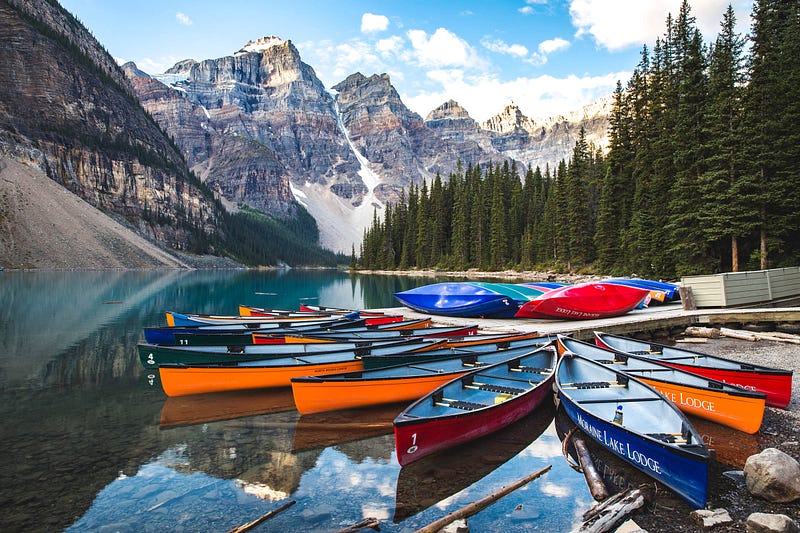
Photo by Justin Roy on Unsplash

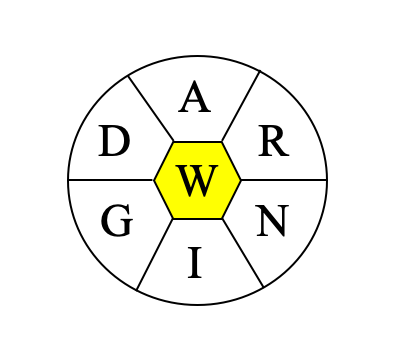
Today’s New York Times Spelling Bee letters:
Art: Iva Reztok

A, D, G, I, N, R, and center W (all words must include W)

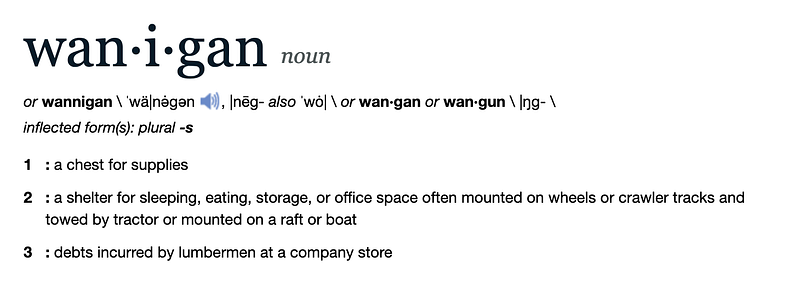
Merriam-Webster says…
Credit: merriam-webster.com

Silly little dictionary! Don’t you know that wanigan can’t possibly be a word if the New York Times says it ain’t?

For further fascinating facts, check out the Spelling Bee Master.

What’s your favorite dord* from today’s puzzle?

My Two Cents

What do the canoes in the photo above all have in common? That’s right, they’re missing a wannigan! Of course, one could argue they are missing a lot of things: people, for starters, and paddles, and a faithful golden lab that goes wherever you do, even if it’s dangerous whitewater rafting.

Also missing is food, water, plates, cooking utensils, camping gear… which could all fit inside a nice wooden box that you would use for storing and carrying all that stuff.

In other words, a wanigan.

That canoe’s a beauty, eh?

It’s likely most Canadian readers are familiar with the word wannigan, while fewer Americans are. Not sure about Brits, Aussies, and other members of the English-speaking world.

The dictionary tells us the word’s origin is from the Ojibwa wa·nikka·n, meaning “pit”, and that its first recorded use was in 1890. That seems not as long ago as I would have thought, considering at least 500 years of contact between European settlers and Native Americans. Then again, maybe the operative word here is “recorded”. Although probably not on tape or video, since those arrived much later than 1890.

However, as I was doing my usual deep and thorough fifteen-minute research, I stumbled upon an article in Men’s Journal written by Canoe & Kayak. I’m serious, that is what’s listed in the byline. Check here if you don’t believe me. Anyhoo, Canoe… or Kayak — I’m not sure which one — writes that, according to author Brian Back, “wangan” is, wanigan was “a variant of the [indigenous] Algonkian word for trap or container of odds and ends.”

However, that explanation does not really contradict the one given by Merriam-Webster (again, I’m not sure if it’s Merriam or Webster who wrote it) because Ojibwa is part of the Algonquian language family. And as for the original meaning, “pit” and “trap” are pretty interchangeable when you’re discussing catching animals with your pals.

In any case, one theory holds that the Voyageurs (the canoe-paddling fur traders of Canada in the 18th and 19th centuries) used a wooden box to store their valuables. Similar boxes found their way into logging camps eventually.

The typical wannigan is a cuboid, or rectangular prism made of wood, although plastic ones are also sold today. But if you’re gonna buy plastic, aren’t you just buying an expensive cooler? Solid pine wood and plywood can be used, although other types of wood are also acceptable. The important consideration here is weight, as you want a wanigan that you can carry around without getting a hernia.

Unless you have a surgical kit inside the wannigan with which to fix that hernia.

Wannigans must also fit in your canoe, so measure thrice before you buy or you’ll end up like Chief Brody in this meme:

Screenshotted by Iva Reztok

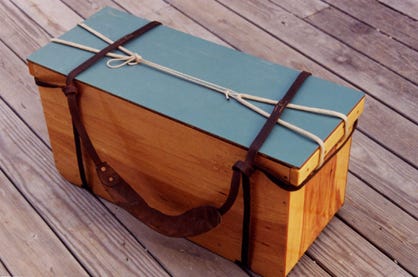
So far I’ve told a lot without showing, a big no-no for writers, supposedly. So here’s me showing you a wannigan instead of telling you about it:
Credit: poleandpaddle.com

The above wannigan retails for $95 at Pole and Paddle Canoe. Though they caveat — that’s right, I’m turning the warning word into a verb — that it does not come with the tumpline. A tumpline is not a former president’s phone, but “a sling formed by a strap slung over the forehead or chest and used for carrying or helping to support a pack on the back or in hauling loads”.

In other words, that strapping strap you see in the photo. It makes it easier to lug around a wooden box filled with pounds and pounds of food and camping gear. Like this:
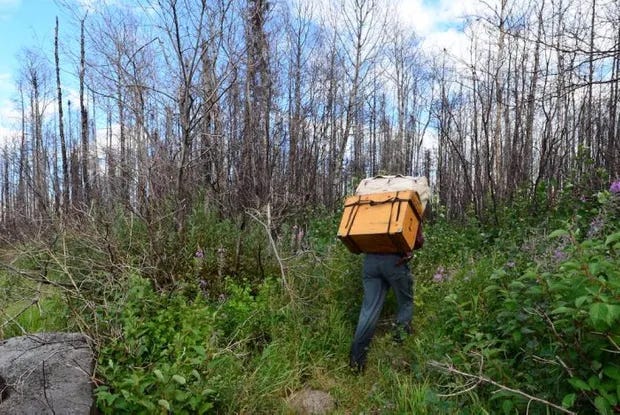
Credit: mensjournal.com

Again, I’m not sure if that’s Canoe or Kayak carrying the wannigan.

Shades of meaning

Both Merriam and Webster seem to agree that wannigan has two more definitions, although I could only find out more information about one of them. The other is “debts incurred by lumbermen at a company store”, which sounds completely off and unrelated to a wooden storage box in a canoe.

However, the second definition, “a shelter for sleeping, eating, storage, or office space often mounted on wheels or crawler tracks and towed by tractor or mounted on a raft or boat”, has to do with logging. How?

Well, log drivers — people who moved sawed tree trunks from forests to sawmills and pulp mills downstream — fitted on one of their rafts huge shelters, often used as kitchens. This raft would follow them up and down the river, providing up to four meals a day. It also stocked tents, blankets and other gear for the workers. Sometimes there was also a separate commissary wagon that sold clothing, tobacco, patent medicine, and other goods. This was called a wangan, likely derived from the wanigan spelling of the original word.

So the meaning of “debts incurred” probably came from the commissary. Perhaps one of the loggers decided to refer to the money he owed the wanigan as “wanigan”, saying something like “Gosh dang it, I got such a huge wanigan”. This probably turned the heads of many a woman… who later was extremely disappointed when she found out wanigan meant “debt” and not something else that also starts with a “d”.

Okay, then. Here’s a photo of a log driver:
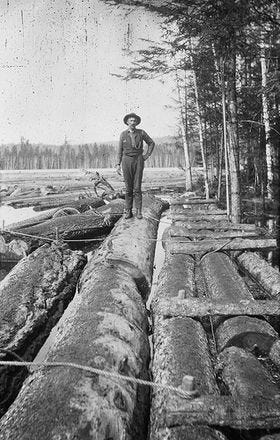
Credit: wikipedia.com

I don’t know if he was the guy responsible for the story I just told.

What I do know is that wannigan, with or without the extra “n”, is a word. Millions of canoe-paddling Canadians can attest to that. However, the editors of the Spelling Bee decided that wannigan is a dord.*

You can check out my previous entry on another dord* here:

*What the heck is a dord, you ask? Here’s the answer:

Spelling Bee
Language
Outdoors
History
Sports
Recommended from ReadMedium