
TRAVEL
Walking Between Countries
Meditations from Remote Mountain Borders
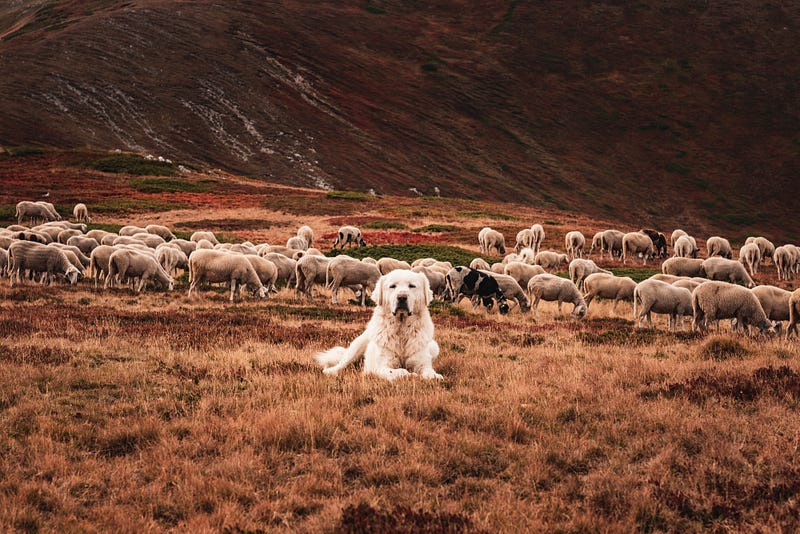
I paused to catch my breath and glanced up the mountainside after hearing the far-off clanging of bells. High above, a shepherd was grazing a flock of sheep that at this distance looked like ants swarming across the grey-green mountain spur. I could easily differentiate between sheep and the hench, mountain sheepdogs that guarded the perimeters of the flock. They patrolled a shifting, invisible line; the uninvited crossing of which was known to warrant dire consequences.
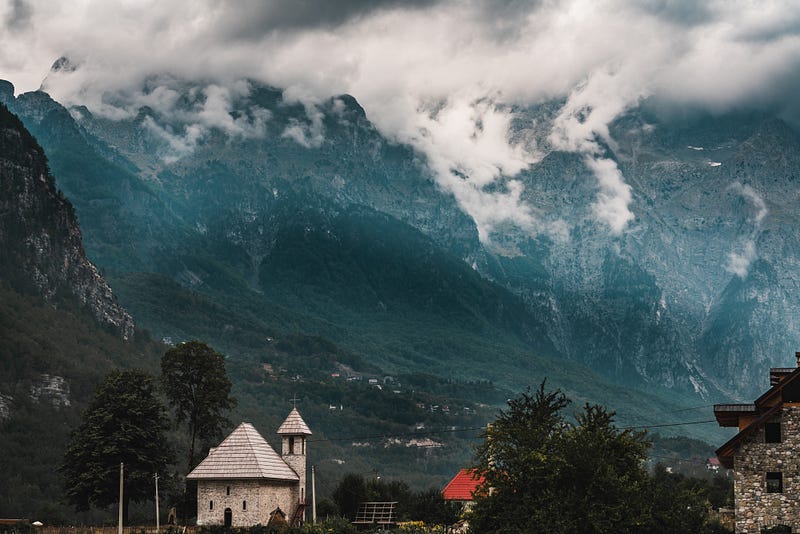
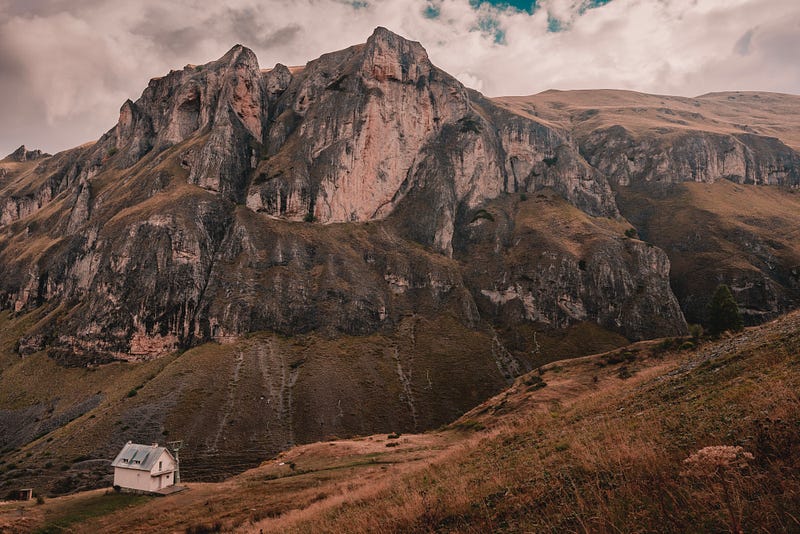
Relieved to find I at least wasn’t alone, deep in Albania’s Accursed Mountains, I continued onward to the unmarked border of Montenegro, where I would continue my trek for a few more hours before dropping back down into an Albanian village to spend the night. In a few days, I would be in Kosovo, the third country that I would pass through on an unforgettable and unforgiving ten-day transnational hiking circuit called ‘The Peaks of the Balkans’.
Border-crossing to me has always been an exciting affair. Although that process occurs most often at airport immigration checkpoints, which quickly lose their appeal, I’ve also crossed borders via train, bus, and ferry. These means of transit make the business much more exciting. For example, on a train, you can stay seated as the officers come through each compartment, unlike on buses, where everyone scrambles on and off the bus to wait in line at these sort-of “no man’s land” border stations: shivering in the early hours while passengers chain smoke waiting for the bus to pass through the checkpoint.
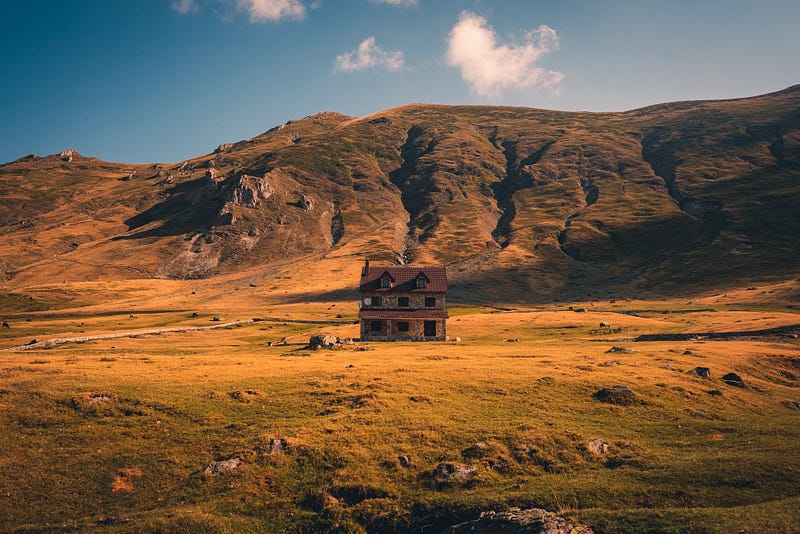
But even better than by plane, train, or ferry, is crossing a border on foot. And better yet, doing so out in a nation’s hinterlands, far from any post or checkpoint with impolite guards to question you with suspicious eyes. The outer reaches of nations show you how arbitrary borders truly are: the capitals of Albania and Montenegro might be as different as night and day, but on their borders, I could not tell where one ends and the other begins.
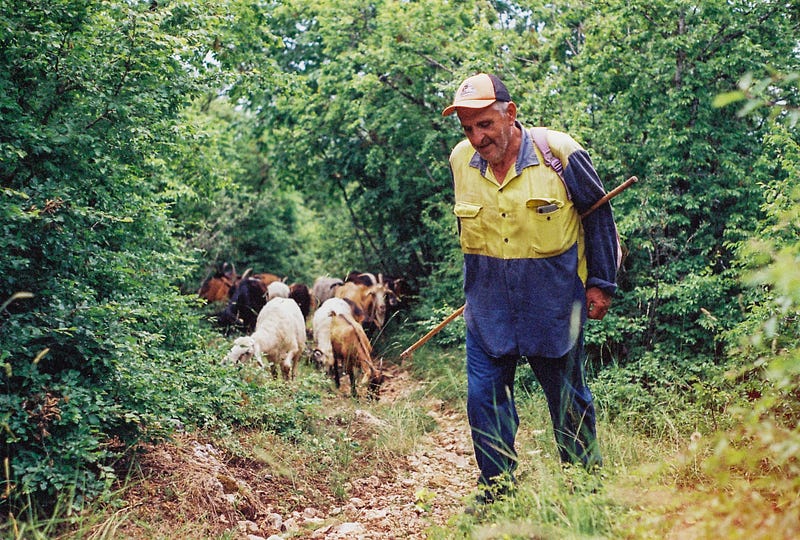
Even the people who live on these marches — the shepherds and villagers of either nation are often speaking the same dialect, and are more akin to each other than their countrymen in the metropolitan hearts of their respective nations. The only indication I occasionally saw would be an old, seemingly indestructible stone marker, with the letters ‘R.P.S.S.’ engraved in brutal font into the weathered stone. ‘Republika Popullore Socialiste e Shqipërisë’ (‘The People’s Socialist Republic of Albania,’ as it was called in its days as a more or less secret country under Enver Hoxha’s communist, isolationist regime). Aside from those few markers along the Albanian frontier, only empty leagues of mountains and valleys remained stretching to every horizon.
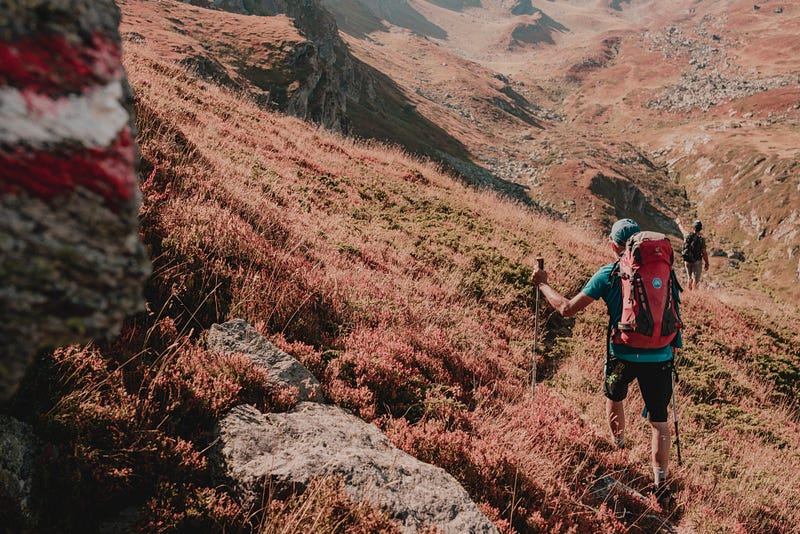
It is also so much more time-consuming and challenging to traverse these frontiers on foot. In the Accursed Mountains, most villages had no cell service, creature comforts were few and far between, and food depended solely on what my host had on hand (seated at a kitchen table in Babino Polje — literally translated to “grandmother’s pasture” in Montenegrin — while watching a huge Montenegrin man who spoke no English frantically cook up sausages and noodles across the room).
Periods of solitude and silence came and went as new companions joined and left the trail. At times it was physically demanding if not excruciating: pushing myself upward into difficult, occasionally exposed, terrain, often scrambling over slippery karst formations of sharp limestone.
There were many times on that particular trek when a song would come to mind as I put on the miles. And more than once, a song called ‘Mearcstapa’, by Fleet Foxes. Being one of my favorite songs for a while now, I had long ago looked up its definition and found it to be an old English word, appearing only in Beowulf, in reference to monsters that dwelt on the fringe of humanity, literally translating to “mark stepper.”: “The grim spirit was called Grendel, the famous mearcstapa, he who held the marshes, fens and strongholds…”
Mearcstapa (now also my Medium handle) is also often interpreted as “boundary crosser” or “border walker”. I loved that theme/image and found it understandable that it came back to me at a pivotal time in my life, walking this path more or less alone just weeks before undertaking my first commissioned photography assignment abroad, scouting a new trail on the borders of Kosovo, Albania, and Macedonia.
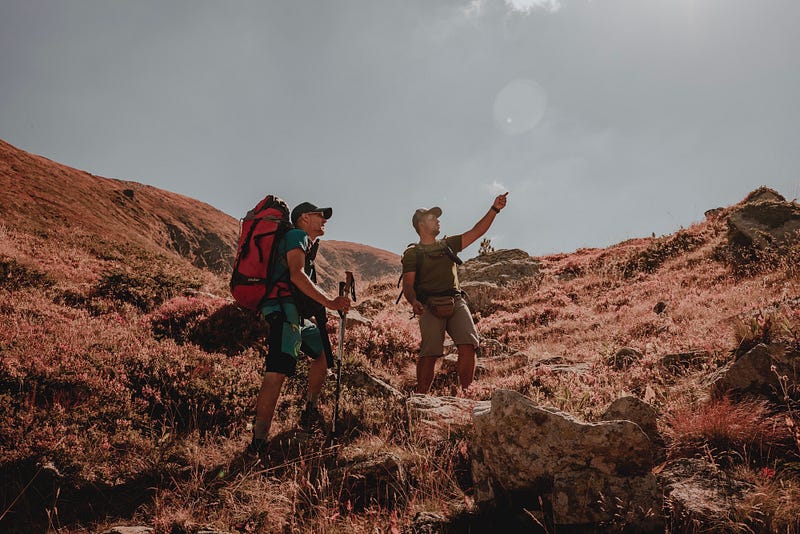
During the ten days on the trail, putting one foot in front of the other for mile after mile, what I came to find is that perhaps even more significant than crossing these international borders was the revelation that I was crossing boundaries within myself. I realized that the moments in life and travel that are most meaningful to me: the most inspiring, are when I’m out of my comfort zone, on the verge of some unknown, in a flow state, pushing myself as I do something I never before thought possible. Achieving that state has always seemed to usher in a period of transformation.
I intend to keep pursuing that feeling, that palpable edge of my soul/self, that inward yet outward expansion, in my travels, writing, and life. And I get the feeling that this is something that isn’t only accessed out in the wilderness. What I’m beginning to believe, is that one doesn’t have to physically travel to find these borders. I desire to explore travel as an inward as well as an outward journey. I’d love it if you’d accompany me.
“At the same time he was vaguely aware of having arrived at the edge of a new period in his existence, an unexplored territory of himself through which he was going to have to pass.” — Paul Bowles, “Let it Come Down.”


