TRAVEL
Lessons from a Macedonian philosopher-shepherd
Figures from the Road, #1
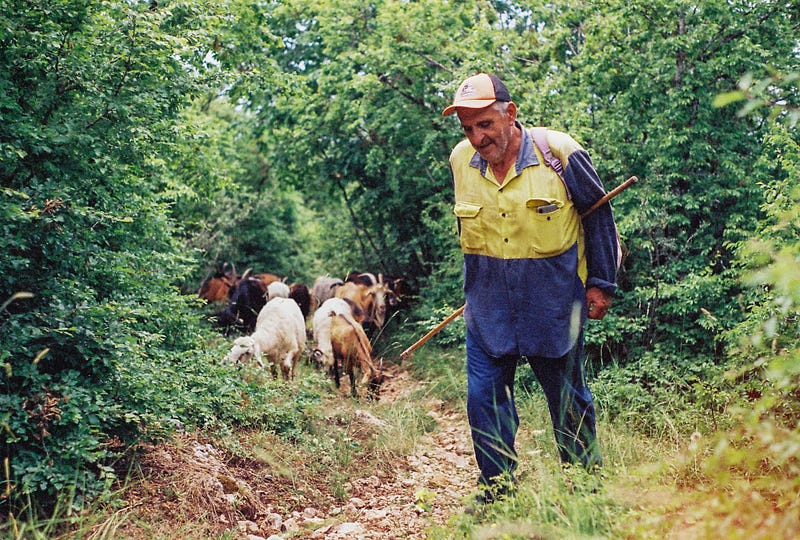
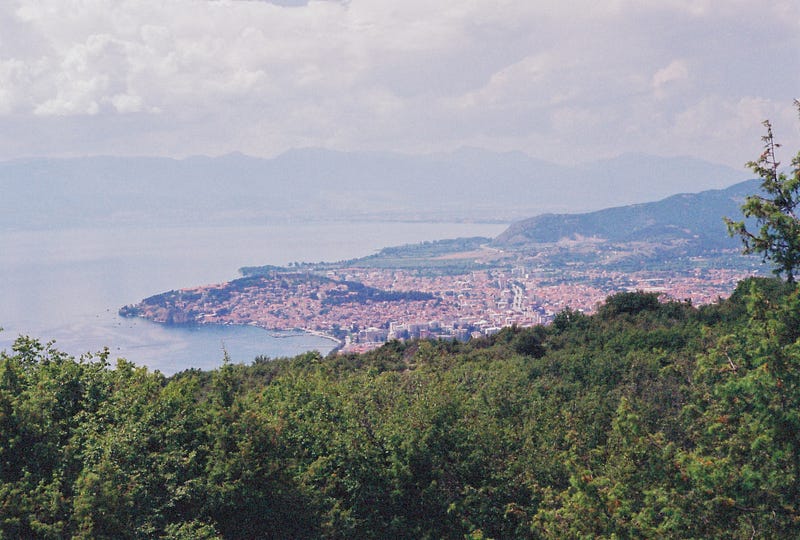
“You see, I’m more American than you are,” Naum tells me tongue in cheek as he leans upon his staff, pausing for a breather on the slopes of North Macedonia’s Galicica National Park. We’ve spent the last few hours walking with his flock of goats and sheep on mountain pastures above the shimmering blue Ohrid Lake. He has been rattling off the names of American authors, movie stars, and songs popular well before my time, proving ever more to me that appearances truly can be deceiving. He’s named for the apostle and writer Saint Naum, or Naum of Ohrid (where he is buried). Legend has it that Naum could cure mental illnesses and speak to animals, so it’s only natural that Naum’s profession finds him so connected to living things.
I first met Naum (aged 61) while walking High Scardus Trail through Kosovo, Albania, and Makedonia. I was struck not only by his expansive personality but also by his familiarity with English literature. He dropped names like Jack London and John Steinbeck, both of whom he had studied in school in Australia, where his family lived until he was 12. I was intrigued by the fact that someone so well-read and well-traveled would choose to be a shepherd. And so I set up a time to pay him a visit soon after.
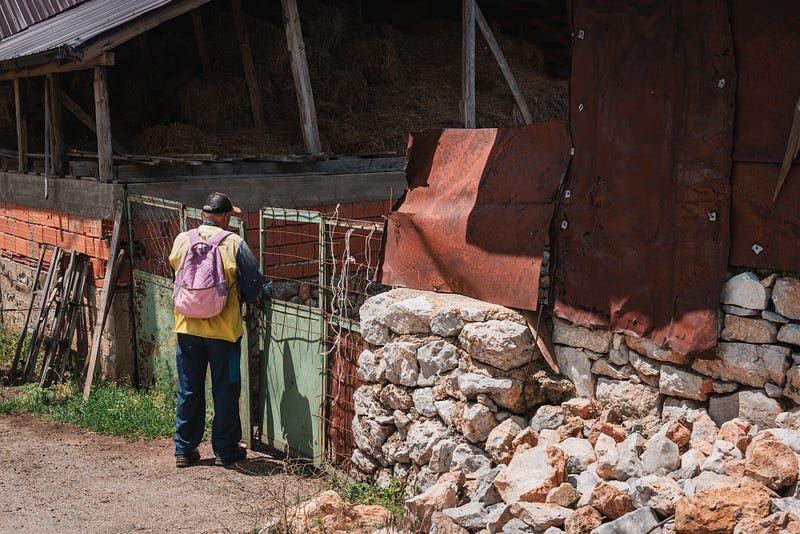
I happened to come and visit him at his stable on St Naum’s Day of all days, and his phone was ringing ceaselessly with well-wish calls from friends and family. Though he’s too busy to pick up the phone. We talk about his daily life as he filters flies and other debris out of freshly gathered milk, which he collects in reused plastic bottles to deliver to customers. “From the outside, it seems attractive and simple. You learn something every day, you know. Something new about everything. About the animals.” We hop into his car with the bottles of farm-fresh milk, and he makes his way to the first delivery, an older woman from the village. She erupts in laughter at something he said as we pulled away down the road. “I told her she forgot to wish me a happy name day,” he says coyly.
We narrowly avoid a couple of head-on car collisions as he drives us down the mountain road to make deliveries and run errands in town. The cashiers at the market all know him, and refer to him diminutively as “Naumche,” which he likened to someone calling me “Mattie.” After bringing back supplies, we sit down at a table outside his home, which he shares with his parents (who are in their 90’s now), his wife, and his sister-in-law. They have a beautiful home, and we share a lunch of salad and fried fish, washed down by beer.
“Is this fish from the lake?” I asked.
“No, it’s frozen. You see, people have all kinds of prejudices about me — they assume I am a hermit or I am poor. But look at all of this,” as he gestures toward the setting around him. He’s not at all sheepish about being a shepherd, in fact, he takes pride in his work. What also surprised me is that he regularly browses TikTok.
Back in the mountains the following day we contemplate philosophy and morality, while Naum’s beastly sheepdog saunters around the flock’s perimeter, panting in the summer heat. I ask about him. “The animals feel a lot safer when he’s around. But don’t try and pet him. He’s known to bite outsiders in the bum.” We eventually discuss the flight of the youth from the villages to the cities. “It’s a big problem. Like they’re fleeing from something. Everyone is searching for something they won’t find.” He and his wife have three children, who are all living in the capital of Skopje, making careers in tech, or studying it.
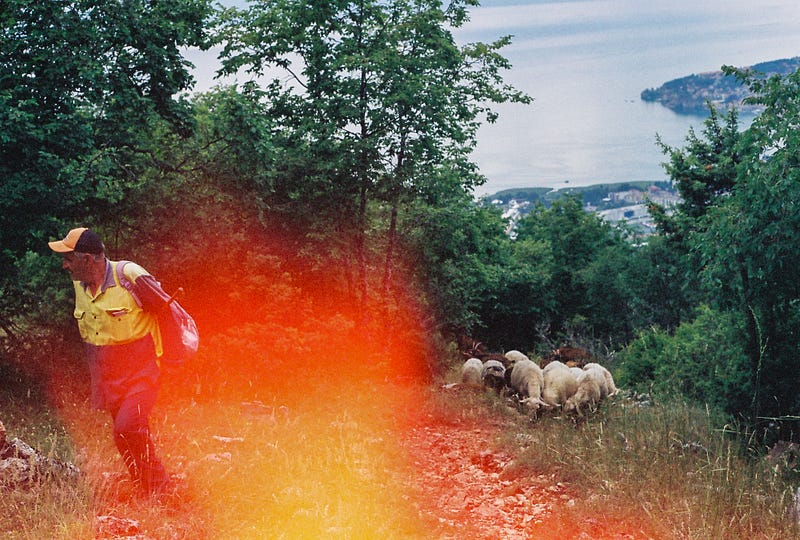
I asked him what he thinks will happen to the animals after he retires and gets his pension. He said he doesn’t focus on that at all. But he admitted he would likely reduce the number of animals in his care, and work around the farm for as long as he can. What he struggles with is not having a team to support him. His wife is a cardiologist at the hospital and helps to make their cheese in her spare time. “I feel like I’m in tatters,” he told me when reflecting on all of his duties. There are a couple of other shepherds in the vicinity who could perhaps take on part of the flock. But he admits he is “a little bit hurt” by the fact that his children in Skopje are often too busy to come back to Ohrid and see him.
I asked him why he chose this life, and he responded by saying that “You never do something for one reason alone. It’s never that simple. I was running a shop [in the village] for twenty years, always stuck in one place. From a practical sense, I needed to support my children in their studies. But also, my stubborn side wanted to be away from the shop, away from society, and so that’s also why I’m here. It’s also good for my mind and body.” The conversation shifted to sacrifice. “You can’t have two goods. You can have one good: doing what you want, but you don’t have time for anything else.” When I asked about loneliness, he replied, “I feel it is better for me to be alone here, than to be surrounded by thousands of people who are even more lonely.”
After seven hours of walking the difficult terrain together, he led his flock back into the stable and prepared to milk the animals before heading home. Before saying goodbye, we reflected on how meaningful it was to have spent a day together in such a fashion. That it is so rare anymore for two strangers to devote the time or attention to really get to know each other on a deeper level. As ‘Naumche’ put it earlier, “I think that life is going too fast, and people can’t follow it anymore… People are so preoccupied with themselves, they don’t have time for each other.”