
Vowz Bar: Japanese Monks Make Heavenly Cocktails For You
Sit back, relax and talk about religions
Recently, I paid a visit to Monk Bar in Shinjuku, Tokyo. Yes, you read it right. There is a bar run by ️some Buddhist monks.
On that day, for another event, I was meeting three kimono friends, one of whom is a Christian. I asked them in advance, “Would anyone like to join me at Monk Bar later in the evening?” They all answered, “Count me in!”
When we visited it, we loved the whole experience. So I am thrilled to share it here, so that you can virtually enjoy it with us, and hopefully learn a few facts about Japanese Buddhism. Gasshō🙏
Let’s dive into the fantastic monk world
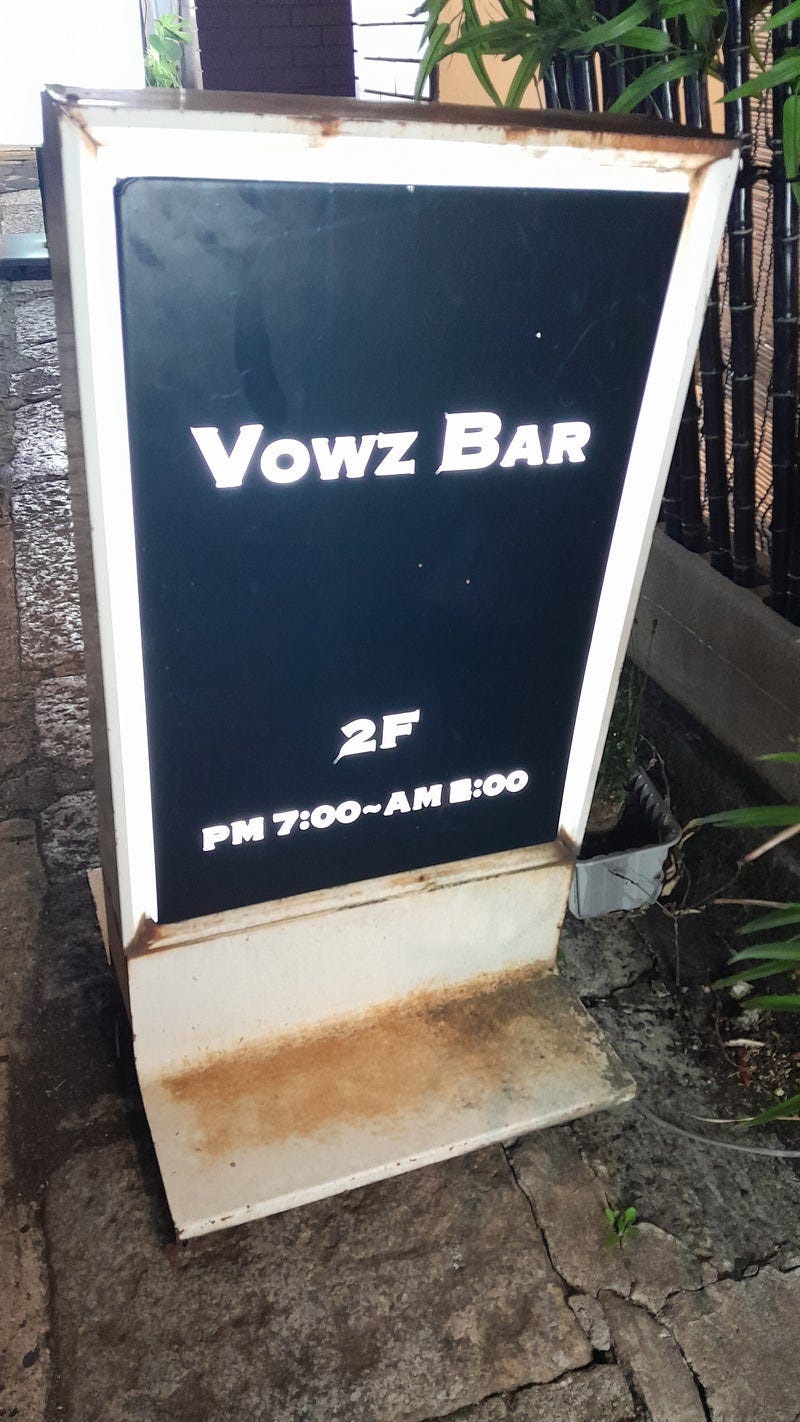
Monk Bar is located in Shinjuku Arakichō, a district with many popular restaurants and bars. In English, it is called Vowz Bar. The English name came from the Buddhist term ‘Original Vows’ and the sound of the Japanese word ‘monk’, pronounced as Bouzu (坊主). Let me add that the term Bouzu could be used derogatorily, so Japanese monks are usually referred to as Sou (僧) or Souryo (僧侶). In that sense, It is a bit similar to the English term cops for police officers.
Monk Bar first opened in Osaka in 1992 and then in Tokyo in 2000. It was created as ‘a place where you can relax and talk about Buddhism or discuss your problems with monks while having a drink’. The monks working at the bar are of various sects — there are 13 Buddhist sects in Japan, and each teaches differently.
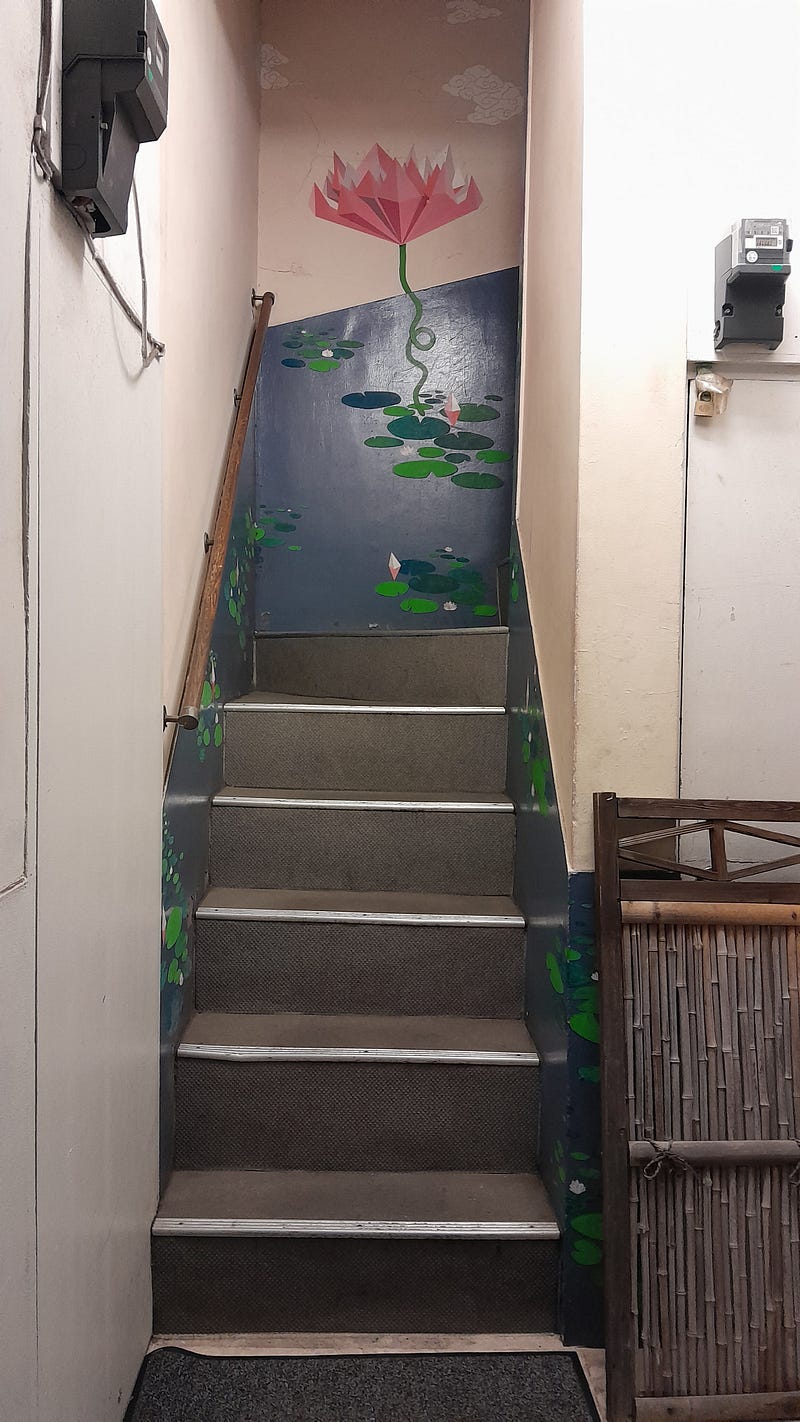
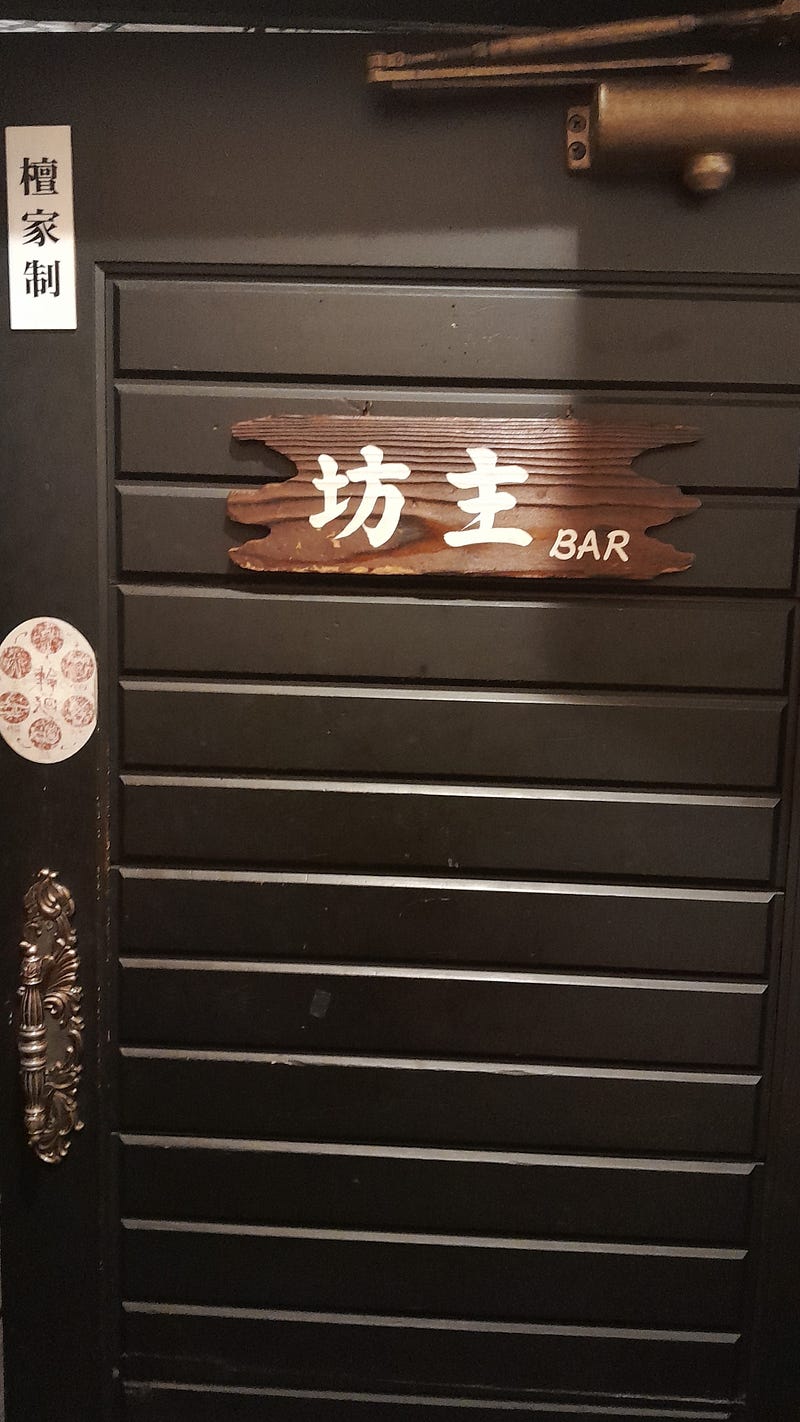
Up the stairs where a lotus flower blooms, a door marked ‘Monk Bar’ appears. The sign says ‘parishioners-only’. But it’s just a monk joke, and anyone is welcome. Above the doorknob is an illustration of a cycle of reincarnation. Will opening this door incarnate me!?
The waiting room is already fun!
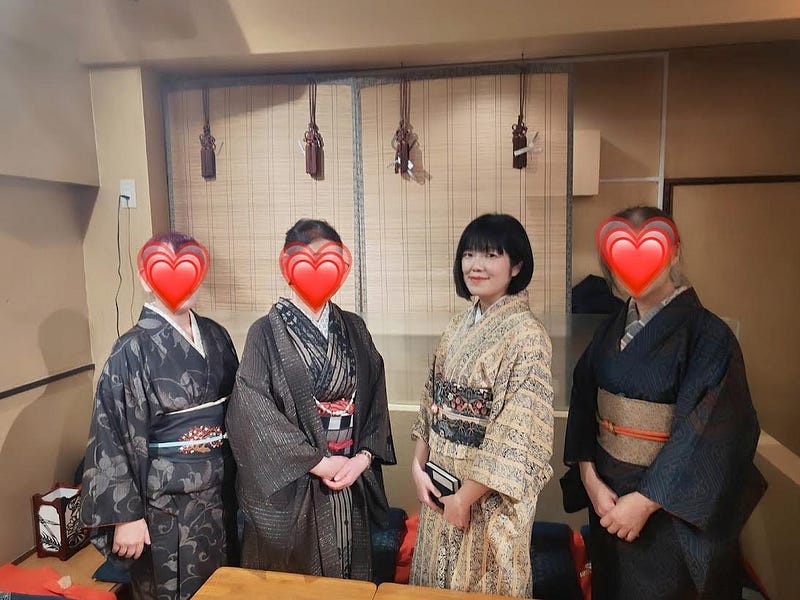
We made a reservation a few weeks ago, which was a good decision. It is a Friday night, and the place is full the whole time. We are told to wait in another room until a table is available in the bar space.
In the waiting room, we take a photo. The book I am holding looks like a sutra book, but it is the menu of Monk Bar.
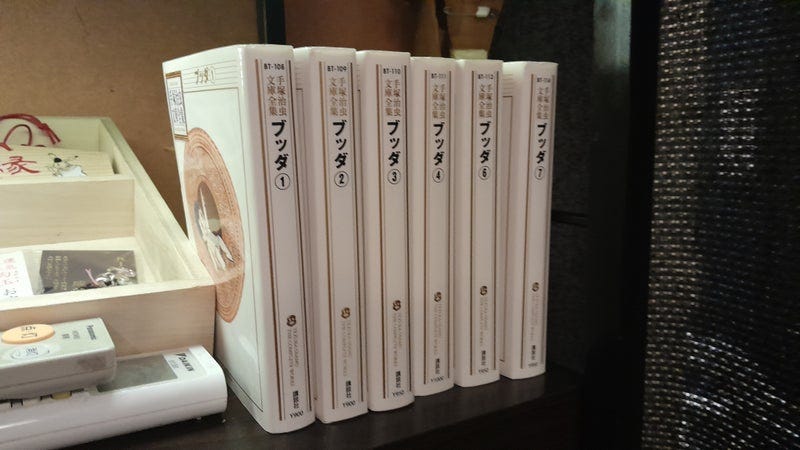
In this room, we find Tezuka Osamu’s famous Manga ’Buddha’, which is also available in English. I highly recommend this series, if you want to learn about the life of Gautama Siddhārtha, widely known as the Buddha, as it tells an engaging story and shows skillful visual expressions. Tezuka Osamu is well-known as ‘The God of the Manga’ in Japan.
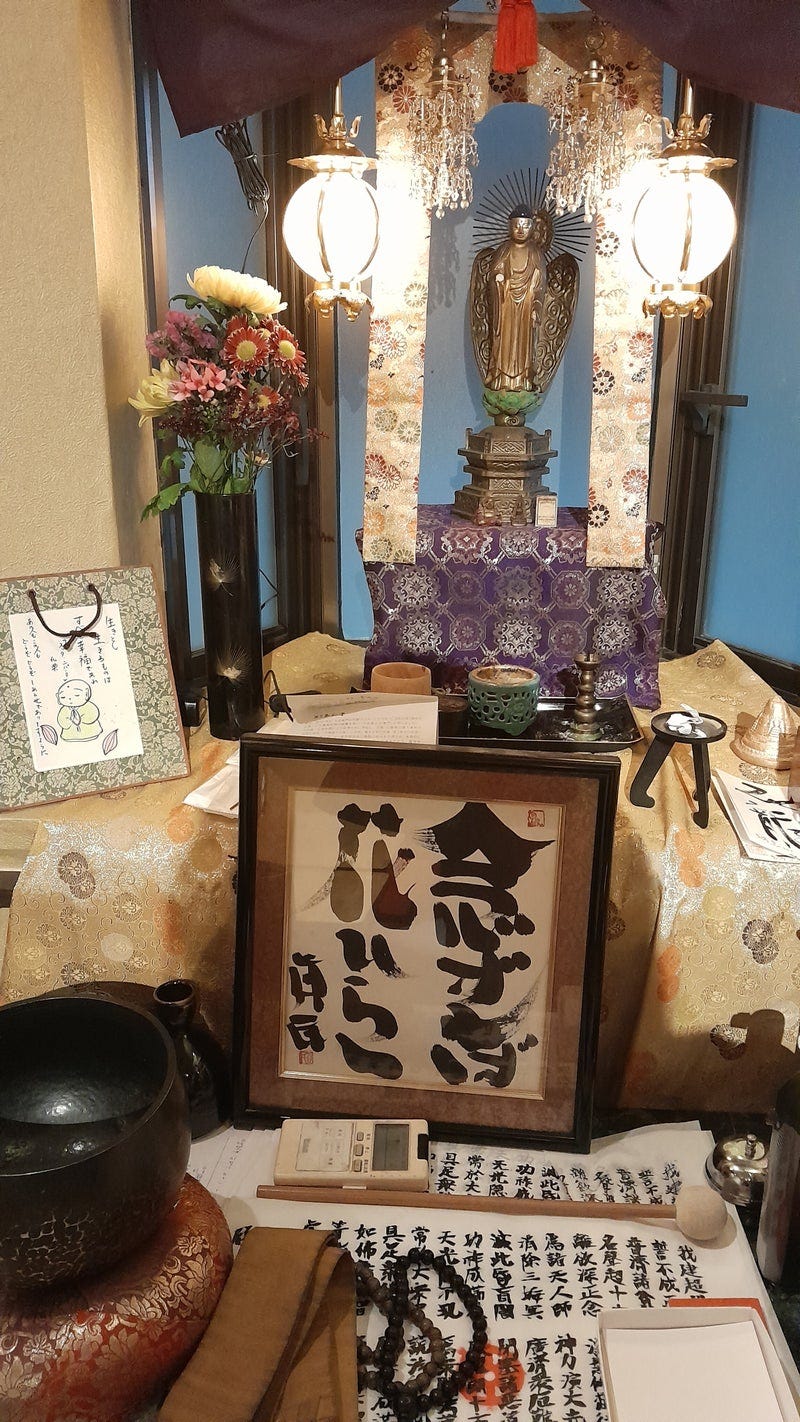
This room also has various Buddha statues from other countries, as well as a stunning Buddhist altar.
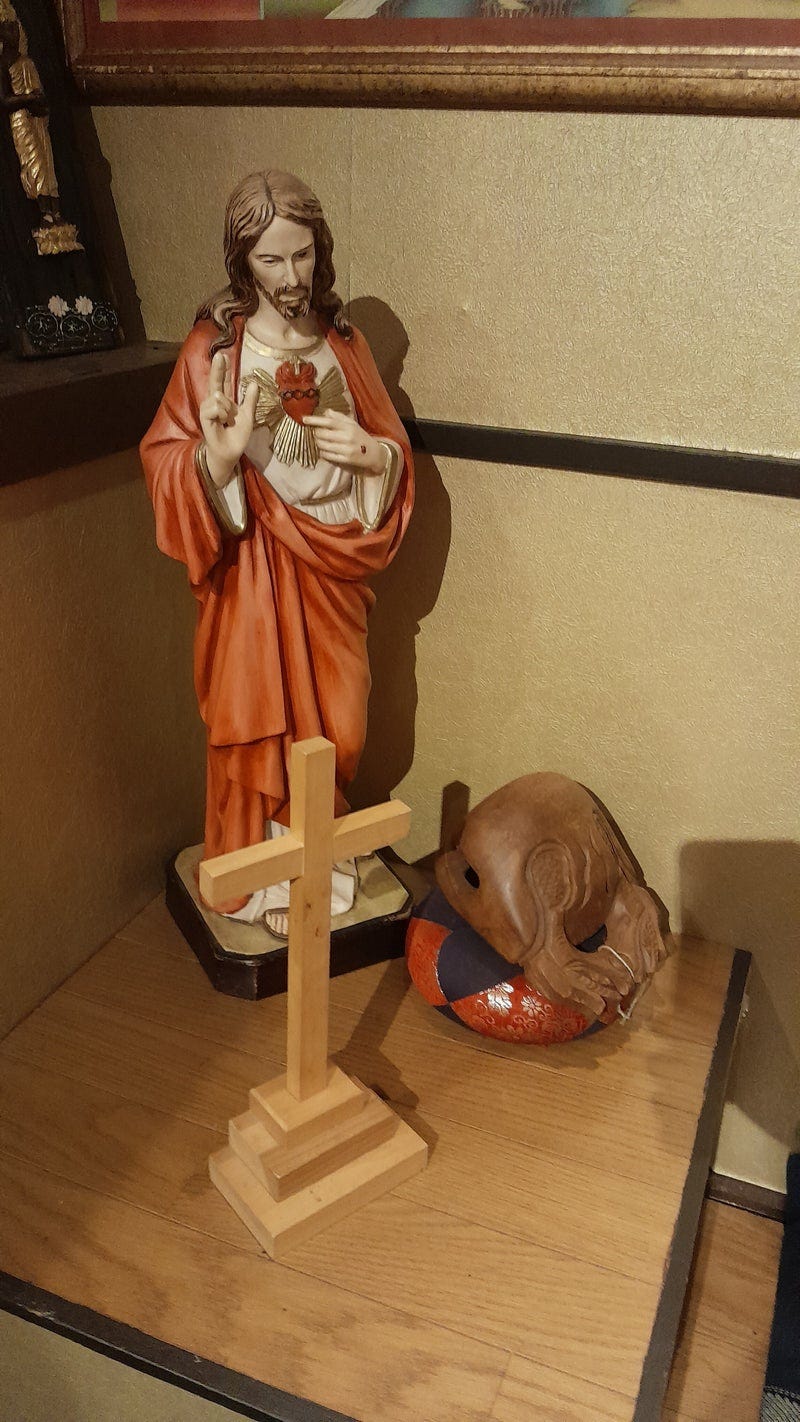
Everywhere looks covered in Buddhism, but what…? Isn’t this Jesus Christ? This is the first time I have seen a statue of Christ standing next to a Buddhist wooden drum. Ha ha. This statue reminds us that this bar is a place for everyone.
Colourful cocktails and vegetarian dishes made by monks
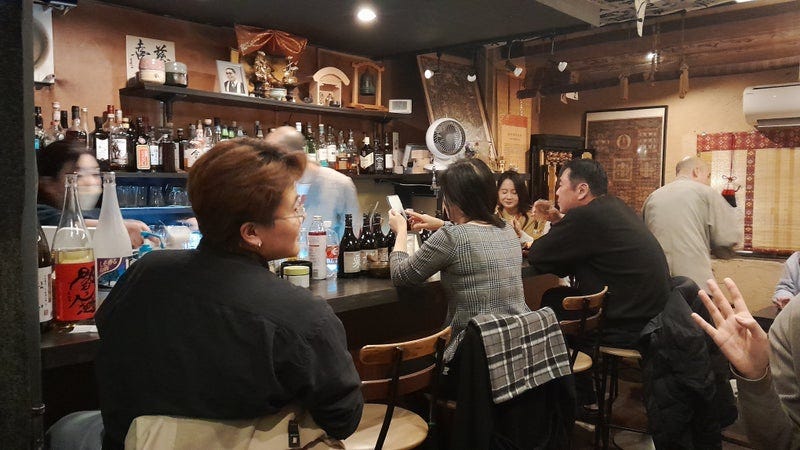
Now that a table is ready, we enter the bar space. It looks like an ordinary bar, doesn’t it?
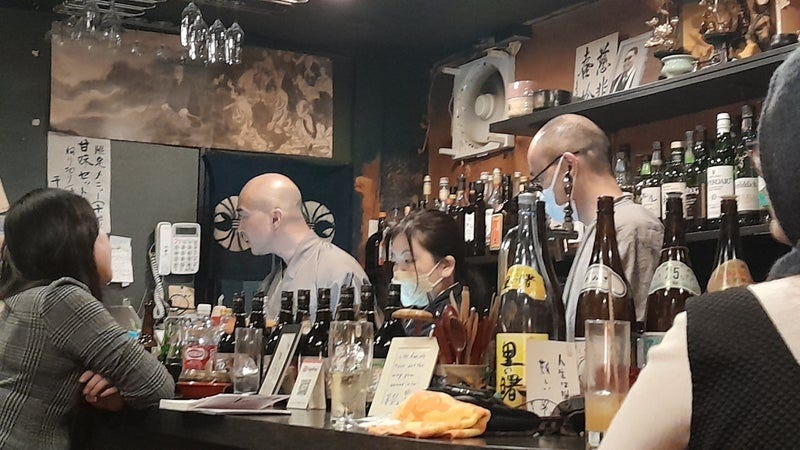
However, behind the bar counter, monks are making cocktails and talking to customers.
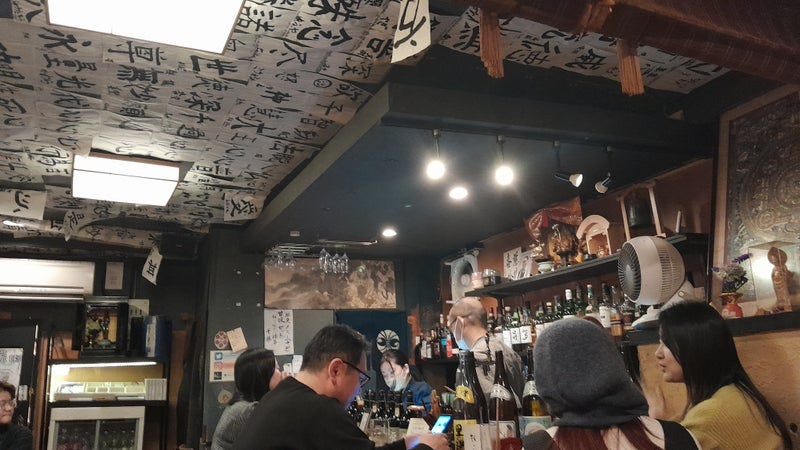
The ceiling is covered with calligraphy paper with many Buddhist-related characters, creating a unique view.
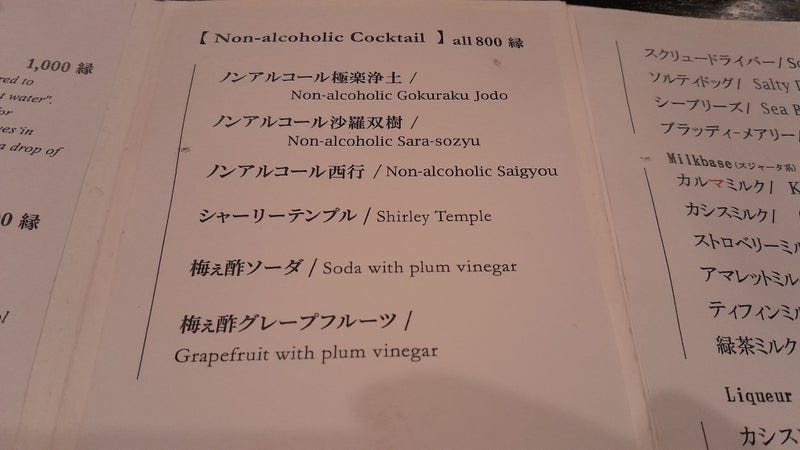
Now, let’s take a look at the menu. We see various Buddhist-inspired cocktails and other beverages. I order a mocktail, as I do not drink alcohol.
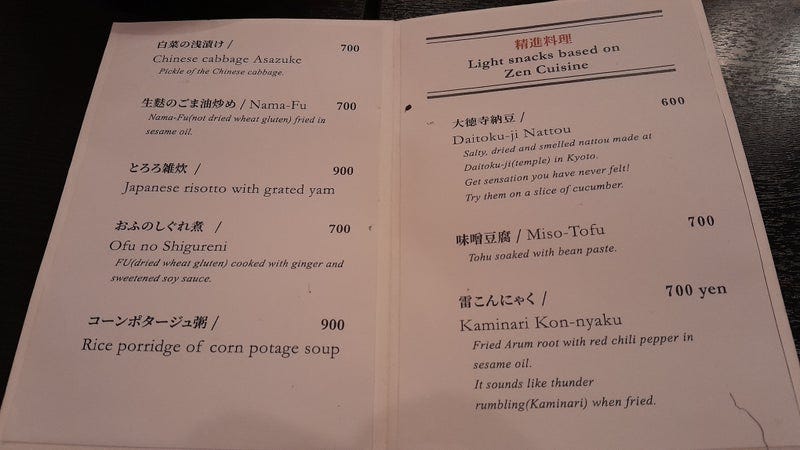
We don’t order anything to eat as we have already had dinner, but you can also have Buddhist vegetarian snacks.
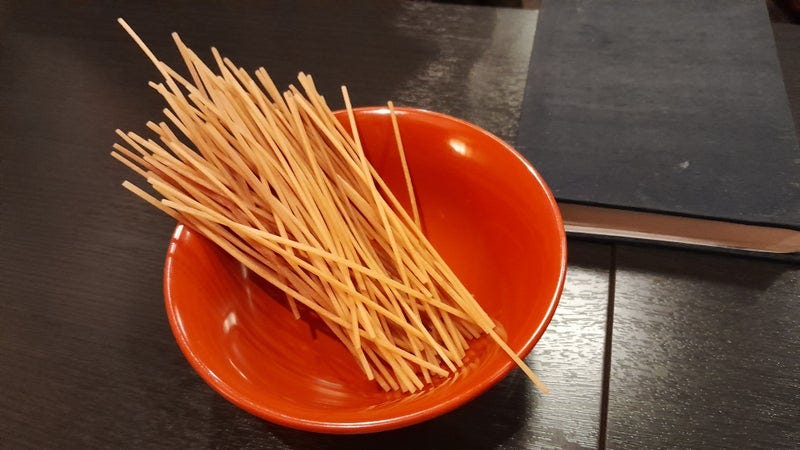
The amuse bouche is deep-fried pasta that resemble Buddhist incense sticks.
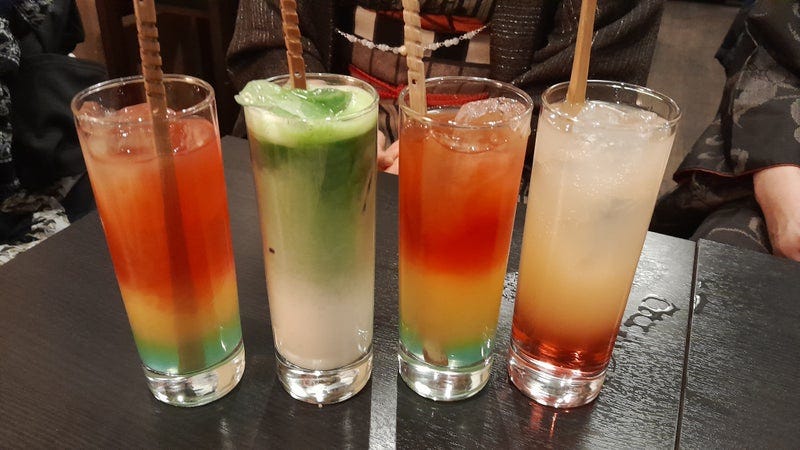
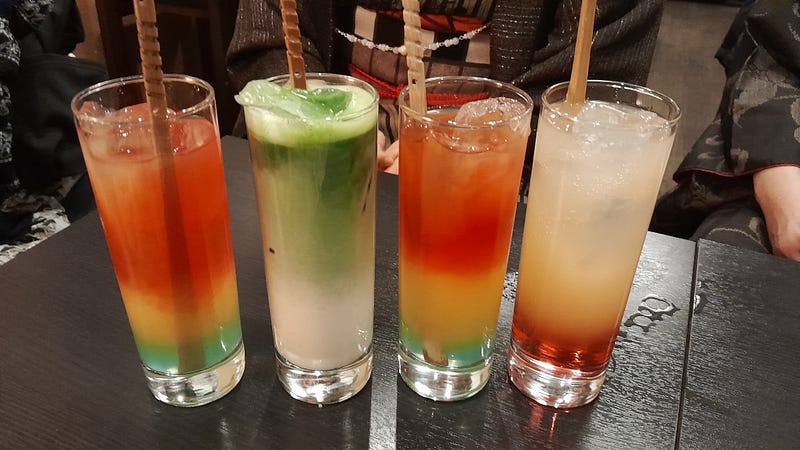
And here are our beautiful drinks! All cocktails are well thought out and taste delicious, too.
Far left and third from left is the Monk Bar’s signature cocktail, Gokuraku Jōdo. As to the explanation of Gokuraku Jōdo, you can see my article, but you may think of it as the Paradise for Buddhists. The monks create it by combining a blue-coloured fruit liqueur Hpnotiq with mango juice and cranberry juice, because in The Shorter Sukhāvatīvyūha Sūtra, the colour of Gokuraku Jōdo is described as red, yellow and blue.
The second from the left is my order of non-alcoholic Sara Souju. Sara Souju or Shorea robusta is the sacred tree for Buddhists. It is basically a Matcha with milk, creating the image of the white flowers and green leaves of Sara Souju.
On the far right is Saigyō, made of cherry blossom liqueur, grapefruit juice and tonic water. Saigyō Hōshi (1118–1190) is a monk famous for his amazing poems expressing his love for nature — he is my favourite Japanese poet. Almost all Japanese people know his Waka poem below, hence this cocktail.
願はくは 花の下にて 春死なむ その如月の 望月のころ
Let me die In spring Under the blooming cherry trees Let it be around the full moon Of Kisaragi month (*around March today)
And Saigyō passed away on the 23rd of March — precisely as he wished.
Shall we read a sutra together?
Monk Bar has a sutra reading time, followed by a brief sermon, a few times a night. If you want to feel the atmosphere, please watch the video.
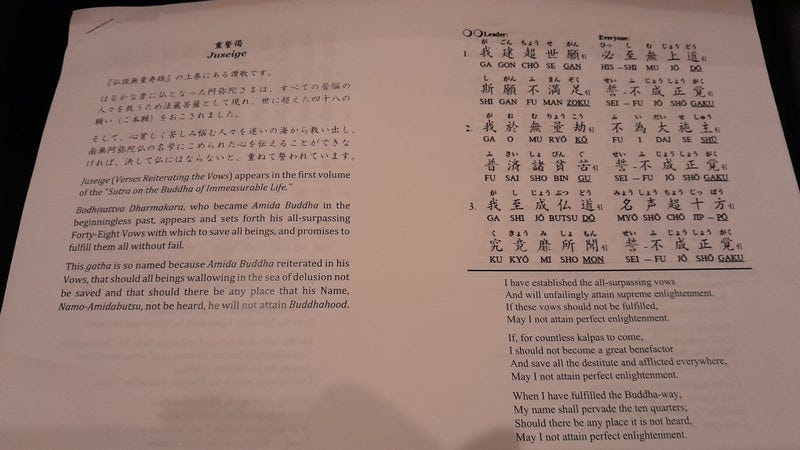
On this day, the monks choose the Juseige (重誓偈) of the Jōdo Shinshū sect. It is also written in the alphabet, so anyone can read it. A monk starts to read the first paragraph, followed by everyone else for the rest. Reading a sutra with different people is a new, good experience for me.
More interesting cocktails. But, is drinking allowed in Buddhism?
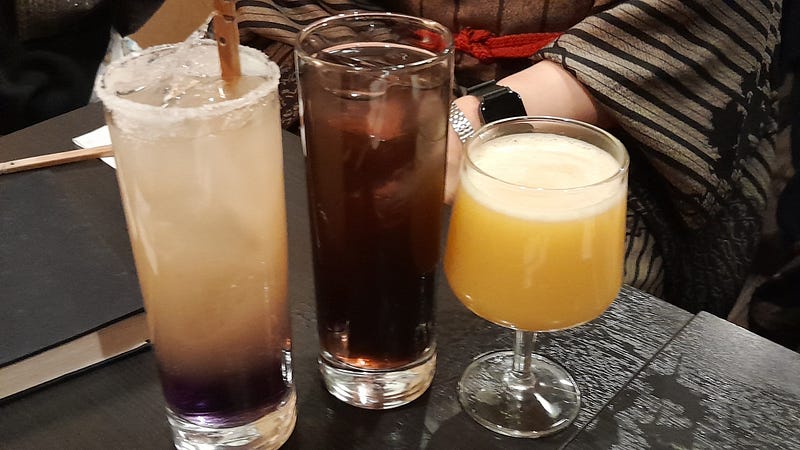
Now, it’s time to have the second drink.
On the left is Jakucho. This is a cocktail inspired by a Buddhist nun and writer, Jakucho Setouchi, with a berry liqueur and ‘Setouchi salt’ used around the rim of the glass like a salty dog.
In the centre is Mugen Jigoku or Eternal Hell. Black vodka, raspberry liqueur, cranberry juice and tonic water give it a dark, hellish appearance.
On the right is Hōryū-ji, made of persimmon liqueur, amaretto and orange juice, as a nod to Masaoka Shiki (1867–1902)’s famous Haiku below.
柿くへば鐘が鳴るなり法隆寺
I eat a persimmon/And the bell rings/At Hōryū-ji Temple
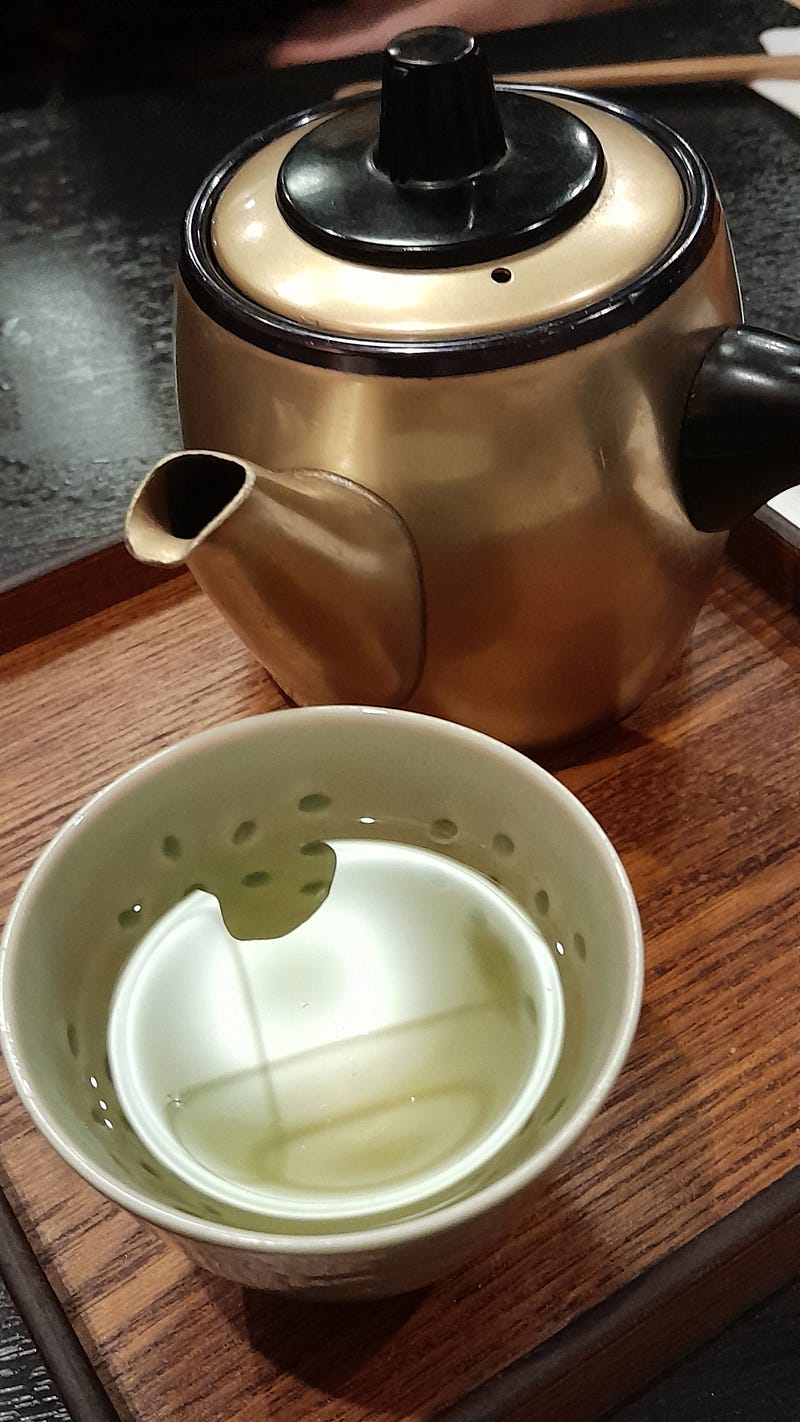
And I chose lotus flower tea.
By the way, you may be thinking, “But drinking is not allowed in Buddhism”. Indeed, The five precepts say no killing, no theft, no sexual misconduct, no lying and no drinking. All the Buddhists should follow them.
However, some Buddhist sects in Japan are relatively relaxed about these rules. This is mainly because there were so many conflicts and famines in the Kamakura period (1185–1333) that some monks hoped to support more people. The primary purpose of Buddhism is to help people not to suffer in this world full of pain and sorrow.
This led a monk named Shinran (親鸞, 1173–1263) to start the Jōdo Shinshū (浄土真宗) sect, telling people that anyone — even the bad ones — who decided to follow Amitābha would be allowed to enter Heaven without strict training. You would not be so surprised to know this sect is now the most popular in Japan.
In the same spirit, Monk Bar opened its door to anyone who hopes to experience Buddhist rituals in a friendly atmosphere, informally consult with monks about their personal problems and ask questions about Buddhism. Yes, drinking is bad, but the bar offers alcoholic beverages as part of its hospitality, intending to make people relaxed when they need some support from monks, probably after their exhausting and stressful day.
In fact, most customers are young people, and about 20% are foreign tourists, so they are a fairly different group from those who often visit temples. They are very relaxed and indeed talking about religions.
A monk sings The Tale of the Heike
You might like a bar with some live music. Monk Bar doesn’t skimp on that either: on this day, after the second sutra reading time, there is a performance of the Satsuma Biwa by a monk. Biwa is a type of lute that was often played by visually impaired monks in Japan.
This song is ‘Gion Shōja’, the famous opening of the The Tale of the Heike. Although it is a military chronicle tale, a strong sense of Buddhism is running through it, especially the impermanence. The large plectrum of the Satsuma Biwa creates dynamic sounds.
祇園精舎の鐘の声、諸行無常の響きあり。沙羅双樹の花の色、盛者必衰の理をあらはす。驕れる人も久しからず、ただ春の夜の夢のごとし。猛き者もつひにはほろびぬ、ひとへに風の前の塵に同じ。
The sound of the Gion Shōja (Jetavana) bells echoes the impermanence of all things; the colour of the Sara Souju flowers reveals the truth that the prosperous shall decline. The proud do not endure, like a dream on a spring night; the mighty fall at last, as dust in the wind.
At Monk Bar, you can enjoy many other Buddhist-related activities, such as copying sutras. If you want to talk with monks, it might be better to choose a day when they may have more time — Friday night is obviously the busiest time for the bar.
Thank you for reading and showing interest in Japanese Buddhism. I hope you enjoyed spending time with us at this unique bar. Gasshō🙏
Useful Links:
The official website of Vowz Bar (Japanese)
Comics series ‘Buddha’ by Tezuka Osamu
About Saigyō
About Masaoka Shiki
The Tale of the Heike


