avatarYuri Minamide

Free AI web copilot to create summaries, insights and extended knowledge, download it at here

5142

Abstract

author)</figcaption></figure><p id="t2YFu">There was also a statue of Matsuo Bashō. He wrote many haiku while travelling, inspired by the local history and nature, which always makes me sympathise with and admire him. And I simply love his brilliant work!</p><h2 id="049a">Chrysanthemum Festival and Morioka Cold Noodles lunch</h2><figure id="22ec"><img src="https://cdn-images-1.readmedium.com/v2/resize:fit:800/0*i10mVW2tYYga9-2_"><figcaption>Chrysanthemum is a national flower of Japan, along with cherry blossoms (Photo by author)</figcaption></figure><p id="KhRET">By the way, when we visited, the Chūson-ji Chrysanthemum Festival was being held. Numerous chrysanthemums lined up in front of the main hall and other areas.</p><figure id="d1de"><img src="https://cdn-images-1.readmedium.com/v2/resize:fit:800/0*PcY0C7ZaCg6kYbAS"><figcaption>Morioka Reimen, a cold and refreshing local treat (Photo by author)</figcaption></figure><p id="iEoES">Then, we went to a restaurant down the Tsukimizaka slope. We had the tasty Morioka Reimen (盛岡冷麺) for lunch, an Iwate speciality. Korean cold noodles are made from buckwheat flour, but these ones are made from wheat flour and potato starch, thus white in colour. They add various fruits depending on the season; this day, it was a pear.</p><h2 id="11f4">Walking to Mōtsū-ji</h2><figure id="59cf"><img src="https://cdn-images-1.readmedium.com/v2/resize:fit:800/0*7ixNIZIch2VyDAU_"><figcaption>A ruin of a temple called <i>Kanjizaiō-in </i>(Photo by author)</figcaption></figure><p id="YpxJ3">From Chūson-ji to Mōtsū-ji (毛越寺) takes just over 20 minutes on foot. Across the road from Mōtsū-ji is <i>Kanjizaiō-in Remains </i>(観自在王院跡), another beautiful site. This temple is said to have been built by the wife of <i>Fujiwara no Motohira </i>(藤原基衡), the third generation of the Northern Fujiwara.</p><figure id="f883"><img src="https://cdn-images-1.readmedium.com/v2/resize:fit:800/0*3WVg2HJhMJyxABrs"><figcaption>The main hall of Mōtsū-ji (Photo by author)</figcaption></figure><p id="Nsl5s">This is the main hall of Mōtsū-ji. On the left is the Treasure House, also open to the public.</p><figure id="52bc"><img src="https://cdn-images-1.readmedium.com/v2/resize:fit:800/0*W4Th_UAWlP2L4BcO"><figcaption>A fortune slip (Photo by author)</figcaption></figure><p id="kS8nx">After giving a money offering and praying, I drew an <i>Omikuji</i> (fortune slip), which said I would have the best of luck! It also said, ‘<i>Be honest and work hard without envying others.’</i> That is an ideal way of life, isn’t it? I would like to put it into practice.</p><figure id="70c1"><img src="https://cdn-images-1.readmedium.com/v2/resize:fit:800/0*GseUY9GlniYIaGge"><figcaption>A pole was provided at Mōtsū-ji (Photo by author)</figcaption></figure><p id="InWoO">And then I tied the fortune slip to this wooden pole, as most people do, believing this would make a good connection between the temple and me.</p><h2 id="4d02">The Pure Land Garden at Mōtsū-ji brought me peace</h2><figure id="8383"><img src="https://cdn-images-1.readmedium.com/v2/resize:fit:800/0*_AI11nXKt9DRvitr"><figcaption>The Pure Land Garden in Mōtsū-ji (Photo by author)</figcaption></figure><p id="3K2q7">Mōtsū-ji is a temple founded in 850, and many of its buildings were constructed by the Northern Fujiwara in the 12th century. With 40 pagodas and 500 monks’ quarters, it was once so magnificent that its presence even surpassed that of Chūson-ji.</p><p id="4541">Although various disasters destroyed buildings after the clan’s fall, this beautiful garden remains as it was in the past. It is said to represent the Pure Land, and just looking at it made me feel peaceful. Also, this garden was created based on Japan’s oldest garden book, <i>Sakuteiki </i>(作庭記), written in the Heian period.</p><p id="740d">While Chūson-ji has a long uphill walk, which felt like a path to the solemn, awe-inspiring Pure Land, this Pure Land Garden in Mōtsū-ji gave a gentler impression. The endless, expansive view of the garden with its large pond was inviting, gently embracing a visitor’s soul.</p><figure id="ce79"><img src="https://cdn-images-1.readmedium.com/v2/resize:fit:800/0*jjGU8EJ1YBJPgU-q"><figcaption>Author in Mōtsū-ji (Photo by author)</figcaption></figure><p id="o3xO2">The autumn leaves were gorgeous here, too.</p><figure id="815f"><img src="https://cdn-images-1.readmedium.com/v2/resize:fit:800/0*hfXUAh-gXjpRyRb4"><figcaption>Iris garden in Mōtsū-ji (Photo by author)</figcaption></figure><p id="8d1Da">The irises at Mōtsū-ji are said to have been shared from <i>Meiji Jingu Shrine </i>(明治神宮) in Tokyo, and the Iris Festival is held from late June to early July when the flowers are in full bloom. It must be a lovely sight.</p><figure id="391f"><img src="https://cdn-images-1.readmedium.com/v2/resize:fit:800/0*Kyix_QQ-lNe153B1"><figcaption>Pine trees in Mōtsū-ji (Photo by author)</figcaption></figure><p id="llzIL">I was also attracted by the impressive pine trees. They are often seen in Europe as well, but the pine trees seen in Japanese shrines and temples are particularly carefully cared for, looking in harmony with the

Options

buildings.</p><figure id="79fc"><img src="https://cdn-images-1.readmedium.com/v2/resize:fit:800/0*ebFkIBsIEvVz0hGt"><figcaption>The Pure Land Garden in Mōtsū-ji (Photo by author)</figcaption></figure><p id="0Rn1s">We slowly walked around the large pond. The place was filled with tranquility and serenity that made me feel as if I were in another world, and that this might indeed be the Pure Land. All the dead, whether those who lost their lives in battles or those who died from natural disasters or illnesses, may be at peace in such a beautiful place. Oh, how good it would be if they were.</p><h2 id="qJ4H8">But we are still alive, so let’s have cake</h2><figure id="a1f8"><img src="https://cdn-images-1.readmedium.com/v2/resize:fit:800/0*P_XrMq0QeAuwqeE0"><figcaption>Cakes at café SATO (Photo by author)</figcaption></figure><p id="cb04">We visited two remarkable ‘Pure Lands’ in Hiraizumi, but we are still living, so let’s return to the secular world for tea and cake!</p><p id="bfb7">Near Hiraizumi Station, a stylish café <a href="https://www.sato2015.com/"><i>called SATO</i></a> stood. The shop owner said, <i>“We are trying to use local products as much as possible</i>.<i></i> The housemade cakes we had used local flour, rapeseed oil, honey, and millet sugar and tasted beautiful and delicate. The fact that my roll cake contained Japanese butterbur and K’s chocolate cake burdock root was also unique, as they are usually used for savoury dishes.</p><p id="GZkCh">As this café demonstrates, Hiraizumi is a surprisingly sophisticated and convenient tourist destination. A visit to this area is highly recommended. You will see traditional Japanese culture that you have never seen before. It will also give you time to reflect on peace, even if you are not a Buddhist.</p><figure id="2d7f"><img src="https://cdn-images-1.readmedium.com/v2/resize:fit:800/1*I4CdcAnsXd-O9CiKqlueKA.jpeg"><figcaption>A scenery in Hiraizumi in summer. Credit: <a href="https://creativecommons.org/licenses/by-sa/2.0">_steffen, CC BY-SA 2.0</a>, via Wikimedia Commons</figcaption></figure><p id="1b5b">Finally, I would like to introduce another Haiku that Matsuo Bashō made in Hiraizumi. This was composed in memory of the Northern Fujiwara, who built up the Hiraizumi culture for 100 years, and of <i>Minamoto no Yoritomo </i>(源頼朝), who felt threatened by their power and destroyed the clan in 1189.</p><p id="3946" type="7">夏草や兵どもが夢の跡</p><p id="d28b" type="7">Summer grasses — all that remains of great soldiers’ dreams</p><p id="ca90">Useful Links</p><div id="b1f7" class="link-block"> <a href="https://en.wikipedia.org/wiki/Pure_Land_Buddhism"> <div> <div> <h2>Pure Land Buddhism - Wikipedia</h2> <div><h3>Pure Land Buddhism is a tradition which is primarily focused on achieving rebirth in a Buddha's "pure land" or…</h3></div> <div><p>en.wikipedia.org</p></div> </div> <div> <div style="background-image: url(https://miro.readmedium.com/v2/resize:fit:320/0*qP-CCWnt8yec56qK)"></div> </div> </div> </a> </div><div id="75bf" class="link-block"> <a href="https://www.chusonji.or.jp/language_en/index.html"> <div> <div> <h2>Chūson-ji Temple</h2> <div><h3>Chūson-ji is a temple complex based in Hiraizumi, with great halls, built by the first Oshu-Fujiwara lord, Kiyohira, in…</h3></div> <div><p>www.chusonji.or.jp</p></div> </div> <div> <div style="background-image: url(https://miro.readmedium.com/v2/resize:fit:320/0*jYpphN1fban__I9o)"></div> </div> </div> </a> </div><div id="628a" class="link-block"> <a href="https://www.motsuji.or.jp/en/"> <div> <div> <h2>Motsuji Temple</h2> <div><h3>The Tendai Special Head Temple Motsuji in Hiraizumi, Iwate Prefecture, is a designated special historic site and…</h3></div> <div><p>www.motsuji.or.jp</p></div> </div> <div> <div style="background-image: url(https://miro.readmedium.com/v2/resize:fit:320/0*UUjwNsBsM0FnIDTz)"></div> </div> </div> </a> </div><div id="30a7" class="link-block"> <a href="https://www.amazon.co.uk/Narrow-North-Travel-Sketches-Classics-ebook/dp/B084RBN7P2/"> <div> <div> <h2>The Narrow Road to the Deep North and Other Travel Sketches (Classics)</h2> <div><h3>The Narrow Road to the Deep North and Other Travel Sketches (Classics) eBook : Basho, Matsuo, Yuasa, Nobuyuki, Yuasa…</h3></div> <div><p>www.amazon.co.uk</p></div> </div> <div> <div style="background-image: url(https://miro.readmedium.com/v2/resize:fit:320/0*eTPVRBjY7aS-orZd)"></div> </div> </div> </a> </div></article></body>

Two Glorious ‘Pure Lands’ Developed in Hiraizumi 800 Years Ago

Chūson-ji Konjiki-dō and Mōtsū-ji — Two of Japan’s most important Buddhist sites
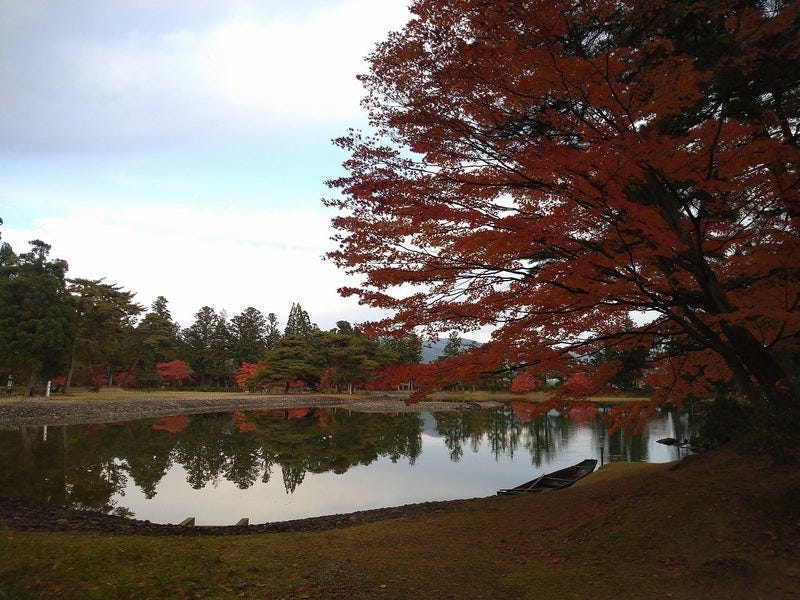
The Pure Land Garden in Mōtsū-ji (Photo by author)

Have you heard of the Buddhist term the Pure Land (極楽浄土)? It refers to a world where people are welcomed after death, free from all suffering. This idea of the Pure Land was introduced to Japan in the first half of the 7th century.

In Hiraizumi, Iwate Prefecture, in the north-eastern part of Japan, there was a family called the Northern Fujiwara (奥州藤原氏), who enjoyed great power in the 11th and 12th centuries. This family believed in Pure Land Buddhism (浄土教). They mourned those who had lost their lives in the battles that once took place there, and wanted to turn the land into a clean world with Amida Nyorai (阿弥陀如来), the principal Buddha of Pure Land Buddhism. They used their tremendous wealth to create two very different, incredibly beautiful Pure Lands in Hiraizumi.

Today, I would like to take you to these two Pure Lands developed in the 12th century. In 2011, the Hiraizumi area, where these two sites are located, was registered as a World Heritage Site, too.

A dazzling golden hall: Chūson-ji Konjiki-dō
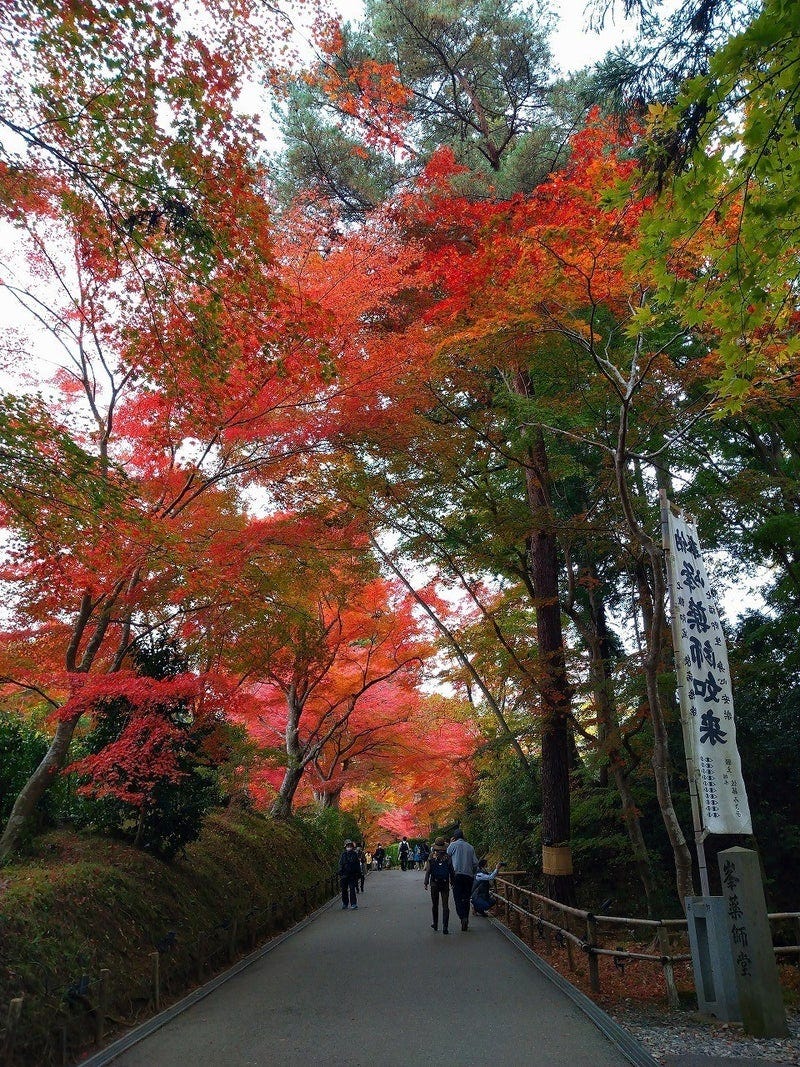
Beautiful coloured leaves welcomed us (Photo by author)

One day in November, a friend living in Iwate and I visited Chūson-ji Konjiki-dō (中尊寺金色堂). Walking along a slope called Tsukimizaka (月見坂) on the way, we enjoyed beautiful autumnal views.
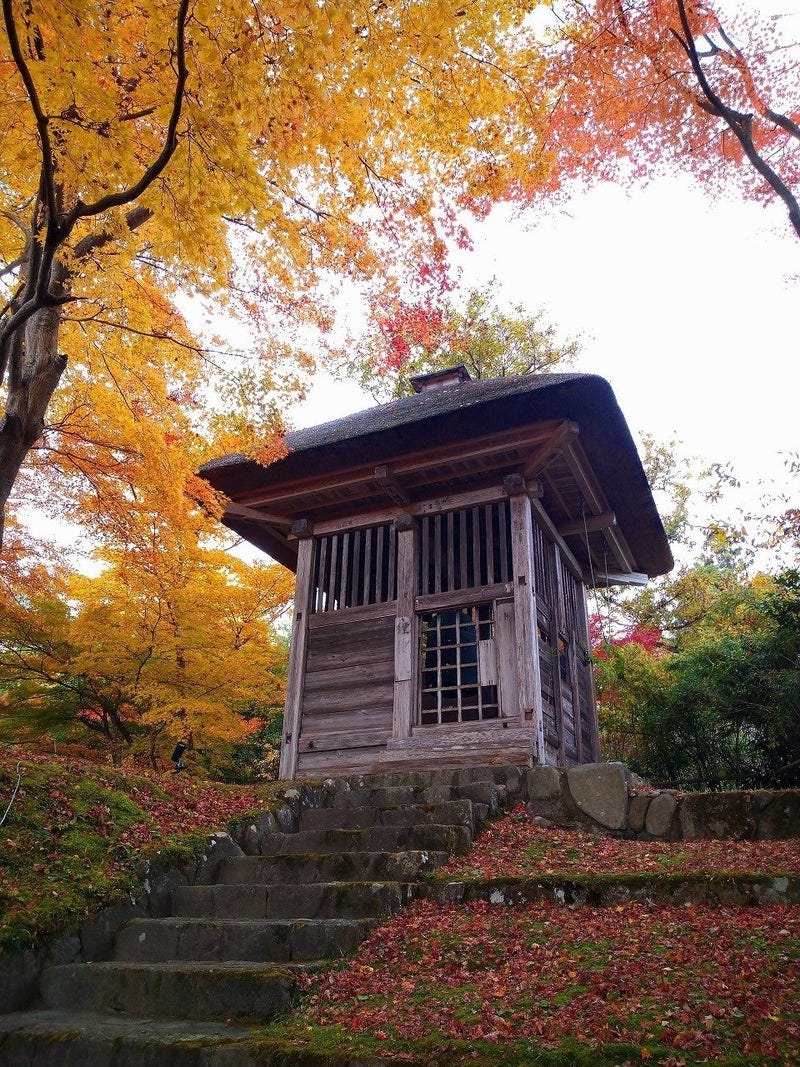
The old bell tower, whose bell was cast in 1343 (Photo by author)

Chūson-ji is a temple with more than ten halls, including Yakushi-dō, Jizo-dō, Benkei-dō and Amida-dō. However, most of these were destroyed after the fall of the Northern Fujiwara in 1189 and rebuilt in later years. Konjiki-dō, which I will introduce today, is the only building that retains its original appearance.
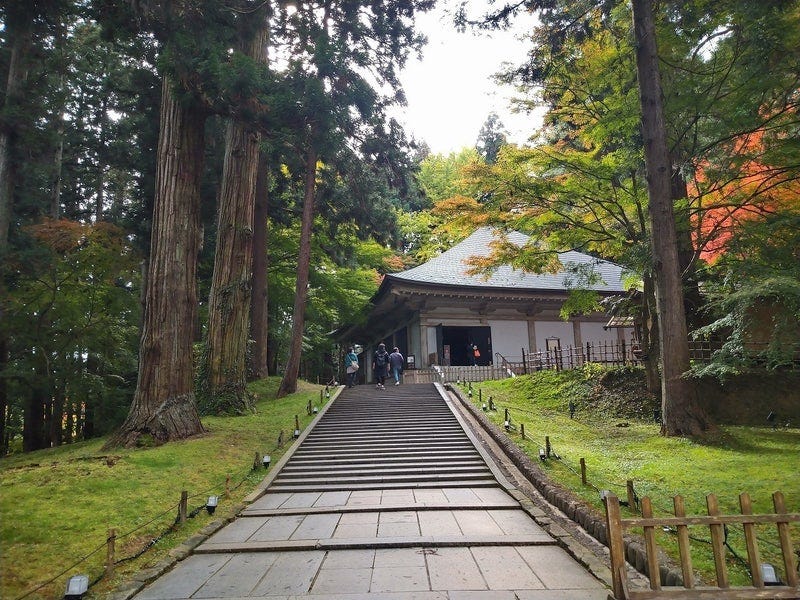
Konjiki-dō Fuku-dō (金色堂覆道) (Photo by author)

Here is the hall built to protect Konjiki-dō from the elements.
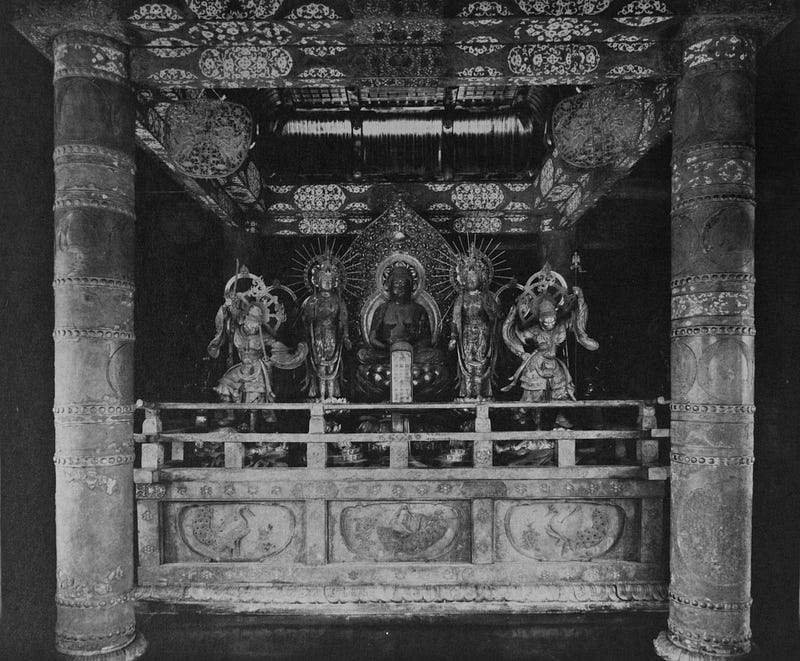
Chūson-ji Konjiki-dō. The building measures five-and-a-half meters on each side and is eight meters tall (Public domain)

Photography is not permitted inside the building, but you can view the photo on its official webpage. Click through, and you will be surprised to see that everything is in a dazzling gold colour. In fact, Konjiki-dō means the Golden Hall in Japanese; indeed, gold leaf was used generously on all surfaces except the roof. It is said that the Northern Fujiwara built up enormous wealth through gold sand and northern trade with the continent.

Konjiki-dō, built in 1124 by Fujiwara no Kiyohira (藤原清衡), the first lord of the clan, is the Pure Land realised with the best of the time’s craftsmanship. I must confess that I had imagined it to be just shiny, but in reality, every detail was incredibly sophisticated. The solemn glow of the gold and the magnificent inlay of green turban snail shells were breathtaking. I felt as if time had stopped.

The mummies of the four Fujiwara lords were placed in gold coffins and remain here today.

A famous Haiku composed by Matsuo Bashō in Hiraizumi
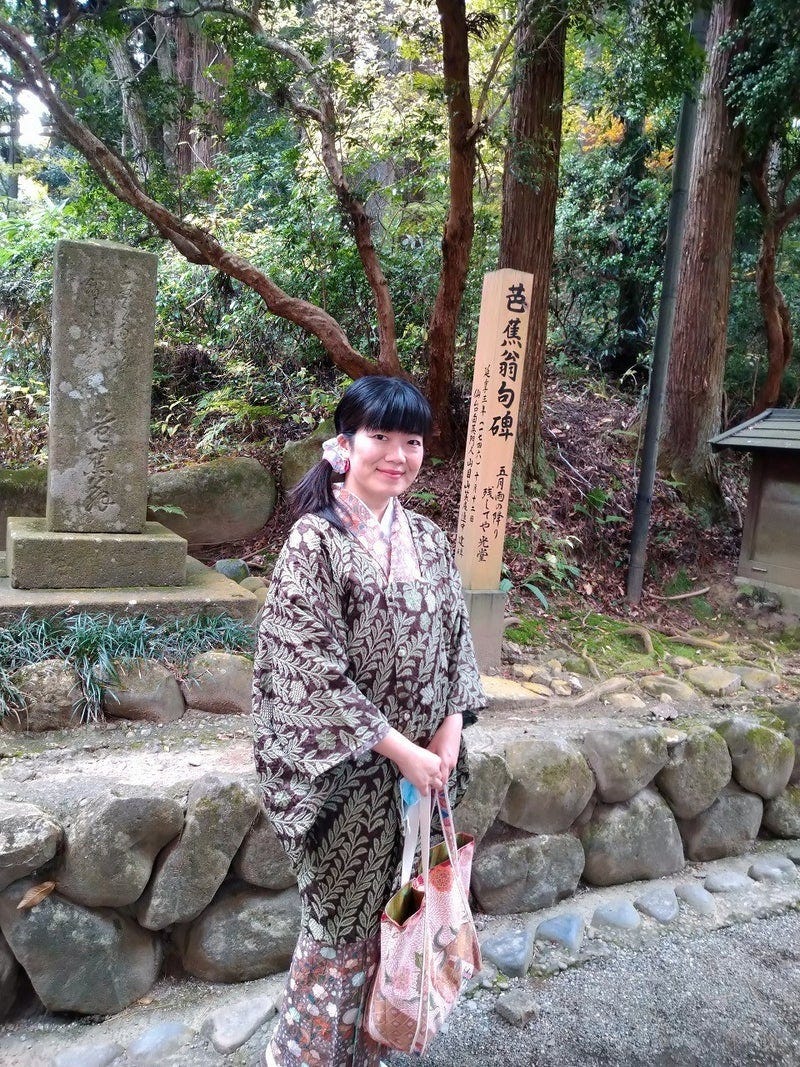
A monument of a Haiku made by Matsuo Bashō, and the author (Photo by author)

I wandered out, feeling as if I were dreaming. Then, I saw a monument of a Haiku made by Matsuo Bashō (松尾芭蕉), the most famous Haiku poet of all time! His work published after his 150-day journey from Edo (now Tokyo) to the Tohoku and Hokuriku regions in 1689 is very well known as ‘The Narrow Road to the Deep North (おくのほそ道). It was during this trip that Bashō visited Hiraizumi, and he made a Haiku here:

五月雨の降り残してや光堂 The long May rain spared this Shining Hall

(Meaning: The May rain fell, but only Konjiki-dō seems untouched and shines beautifully)
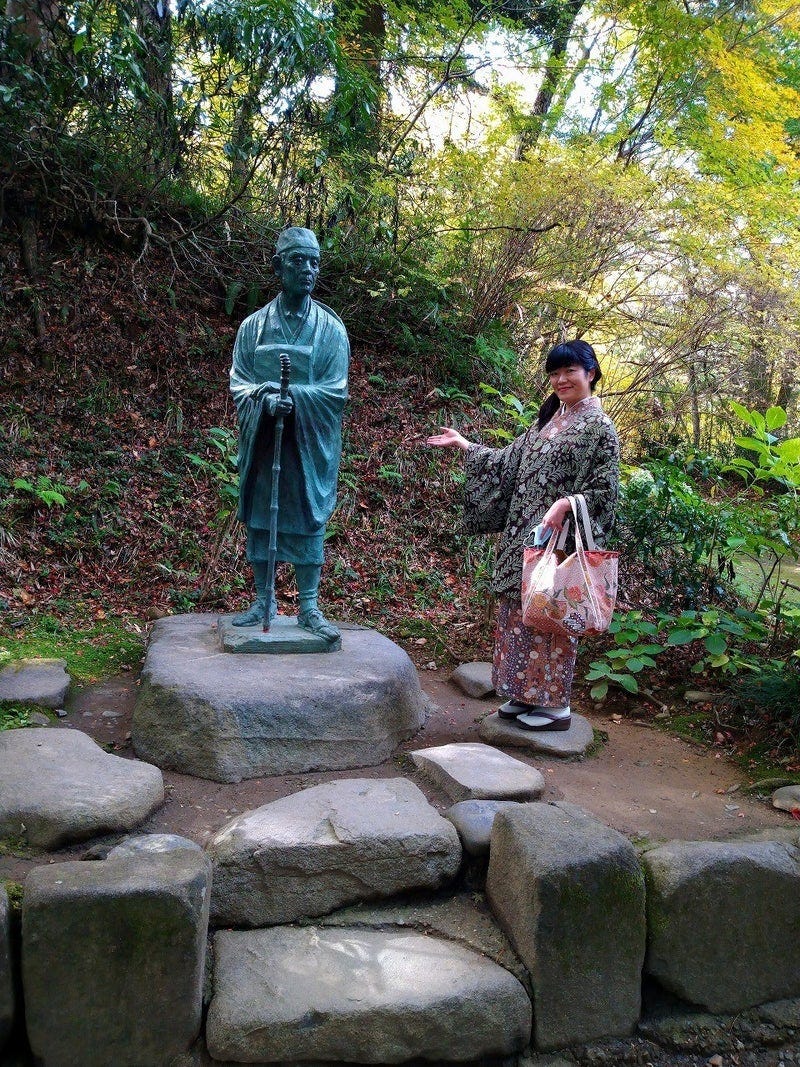
A statue of Matsuo Bashō, the Haiku poet, and the author (Photo by author)

There was also a statue of Matsuo Bashō. He wrote many haiku while travelling, inspired by the local history and nature, which always makes me sympathise with and admire him. And I simply love his brilliant work!

Chrysanthemum Festival and Morioka Cold Noodles lunch
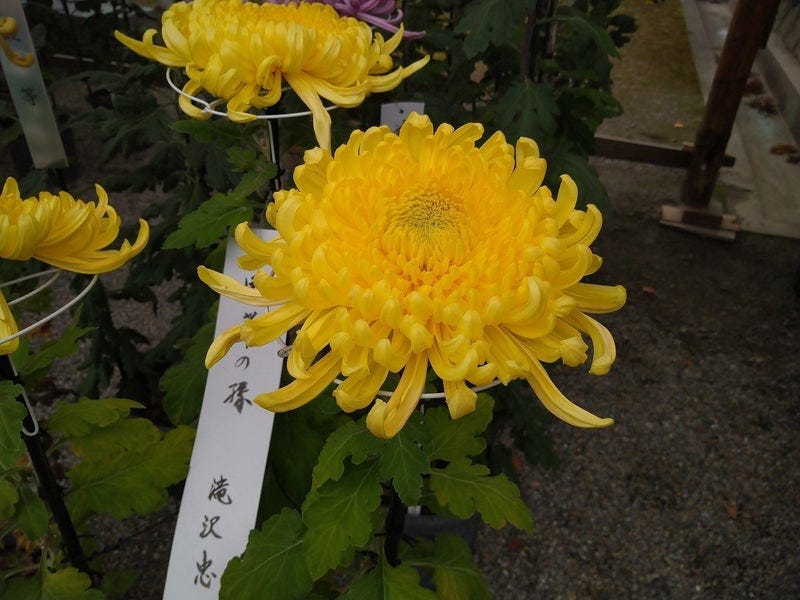
Chrysanthemum is a national flower of Japan, along with cherry blossoms (Photo by author)

By the way, when we visited, the Chūson-ji Chrysanthemum Festival was being held. Numerous chrysanthemums lined up in front of the main hall and other areas.
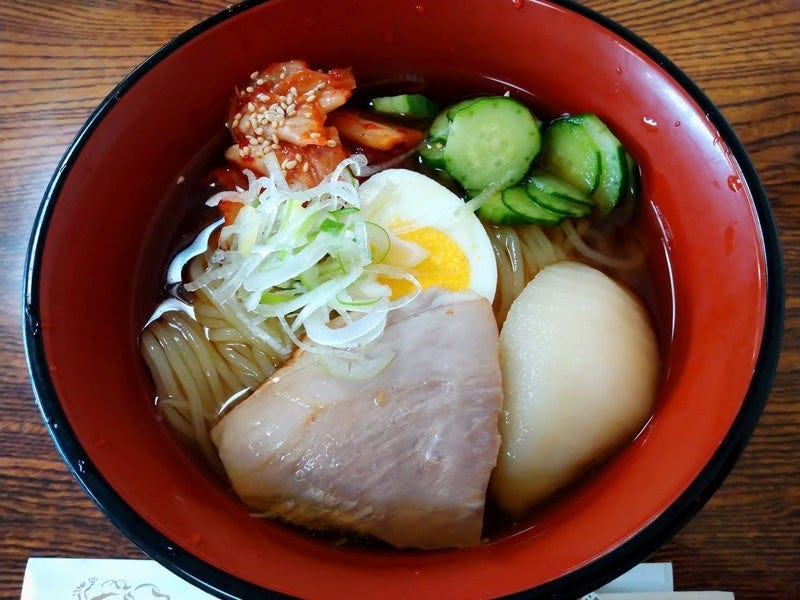
Morioka Reimen, a cold and refreshing local treat (Photo by author)

Then, we went to a restaurant down the Tsukimizaka slope. We had the tasty Morioka Reimen (盛岡冷麺) for lunch, an Iwate speciality. Korean cold noodles are made from buckwheat flour, but these ones are made from wheat flour and potato starch, thus white in colour. They add various fruits depending on the season; this day, it was a pear.

Walking to Mōtsū-ji
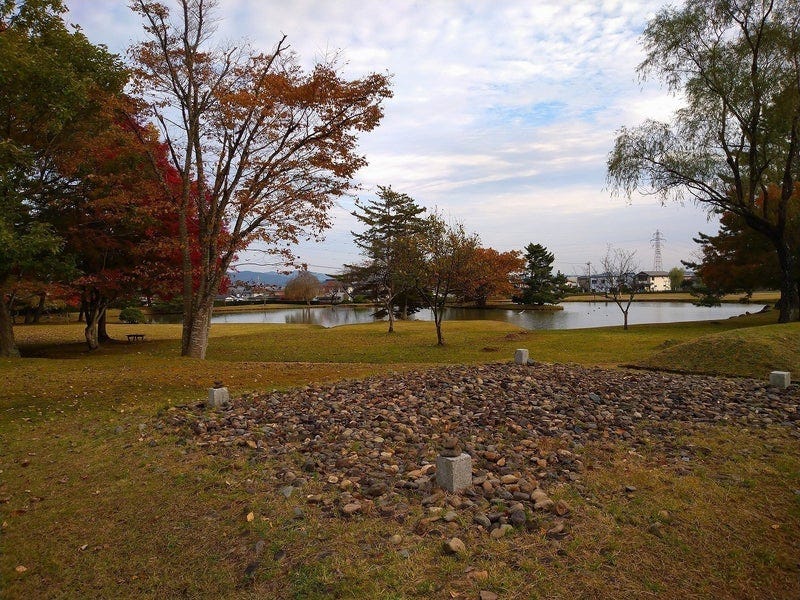
A ruin of a temple called Kanjizaiō-in (Photo by author)

From Chūson-ji to Mōtsū-ji (毛越寺) takes just over 20 minutes on foot. Across the road from Mōtsū-ji is Kanjizaiō-in Remains (観自在王院跡), another beautiful site. This temple is said to have been built by the wife of Fujiwara no Motohira (藤原基衡), the third generation of the Northern Fujiwara.
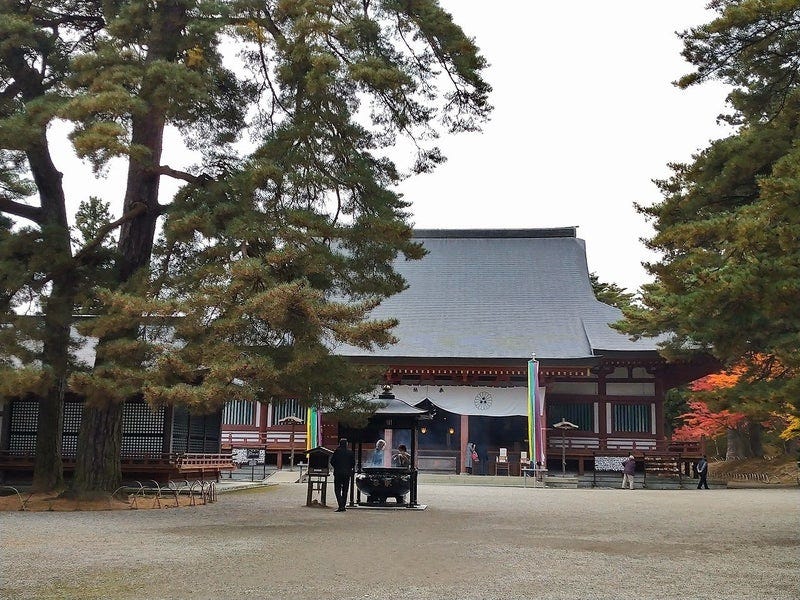
The main hall of Mōtsū-ji (Photo by author)

This is the main hall of Mōtsū-ji. On the left is the Treasure House, also open to the public.
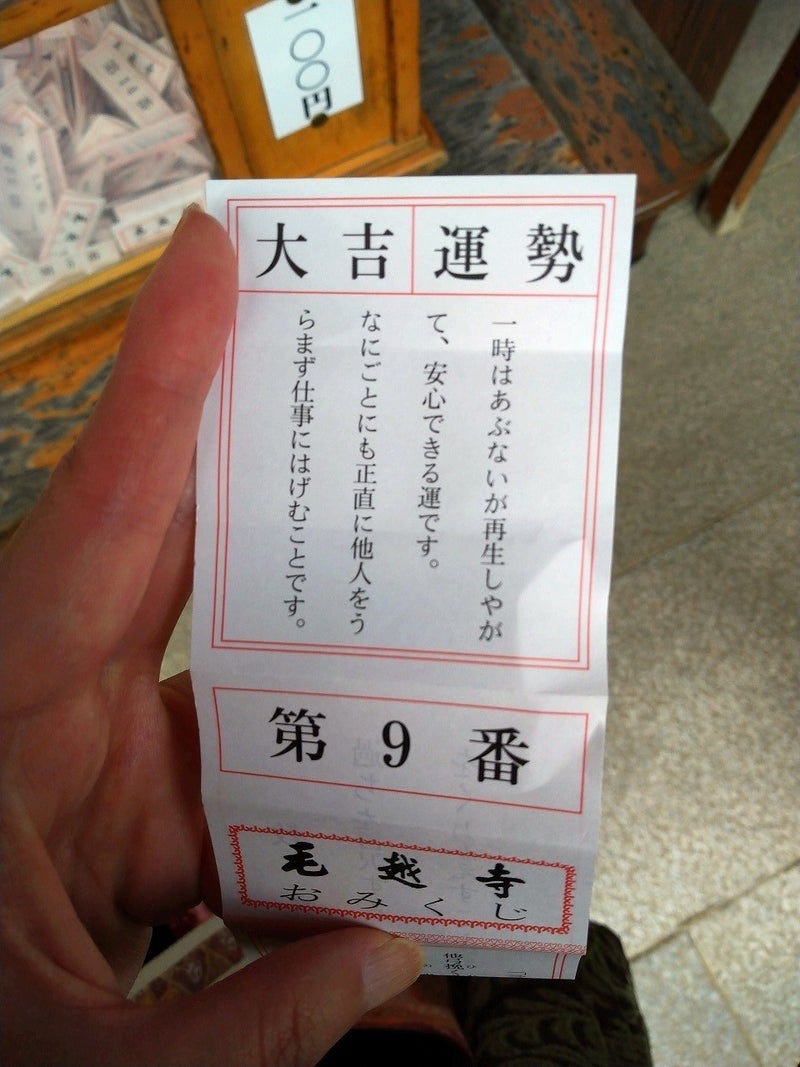
A fortune slip (Photo by author)

After giving a money offering and praying, I drew an Omikuji (fortune slip), which said I would have the best of luck! It also said, ‘Be honest and work hard without envying others.’ That is an ideal way of life, isn’t it? I would like to put it into practice.
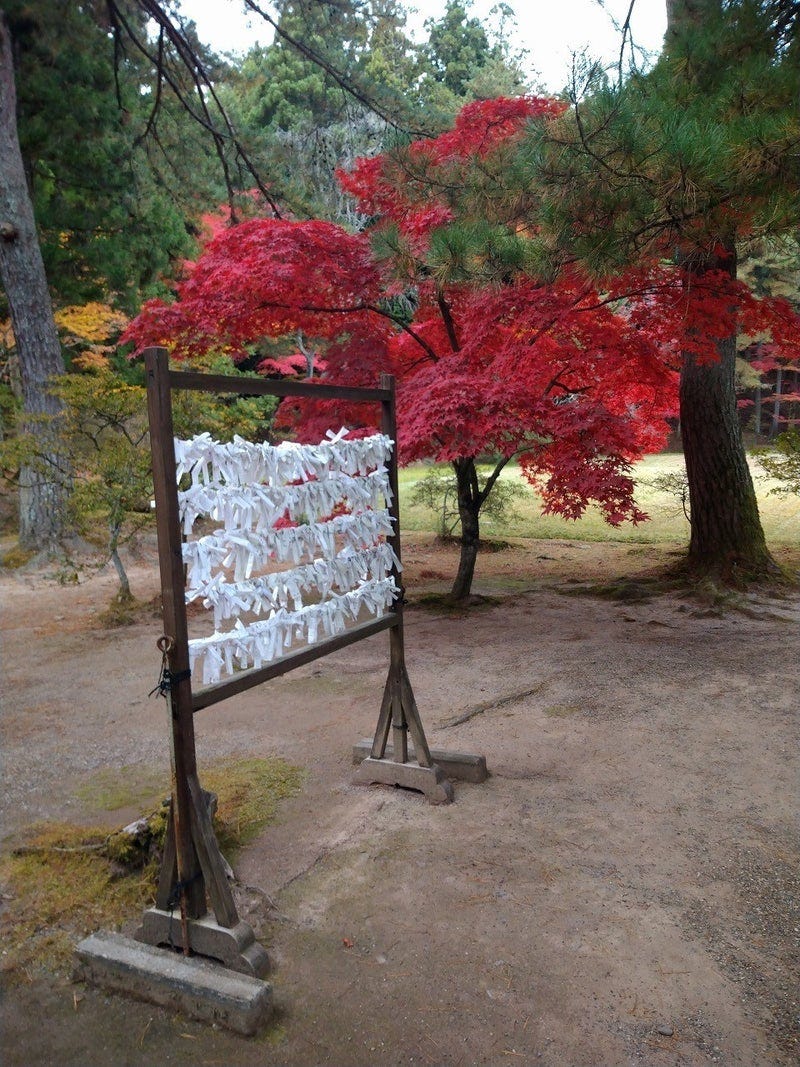
A pole was provided at Mōtsū-ji (Photo by author)

And then I tied the fortune slip to this wooden pole, as most people do, believing this would make a good connection between the temple and me.

The Pure Land Garden at Mōtsū-ji brought me peace

The Pure Land Garden in Mōtsū-ji (Photo by author)

Mōtsū-ji is a temple founded in 850, and many of its buildings were constructed by the Northern Fujiwara in the 12th century. With 40 pagodas and 500 monks’ quarters, it was once so magnificent that its presence even surpassed that of Chūson-ji.

Although various disasters destroyed buildings after the clan’s fall, this beautiful garden remains as it was in the past. It is said to represent the Pure Land, and just looking at it made me feel peaceful. Also, this garden was created based on Japan’s oldest garden book, Sakuteiki (作庭記), written in the Heian period.

While Chūson-ji has a long uphill walk, which felt like a path to the solemn, awe-inspiring Pure Land, this Pure Land Garden in Mōtsū-ji gave a gentler impression. The endless, expansive view of the garden with its large pond was inviting, gently embracing a visitor’s soul.
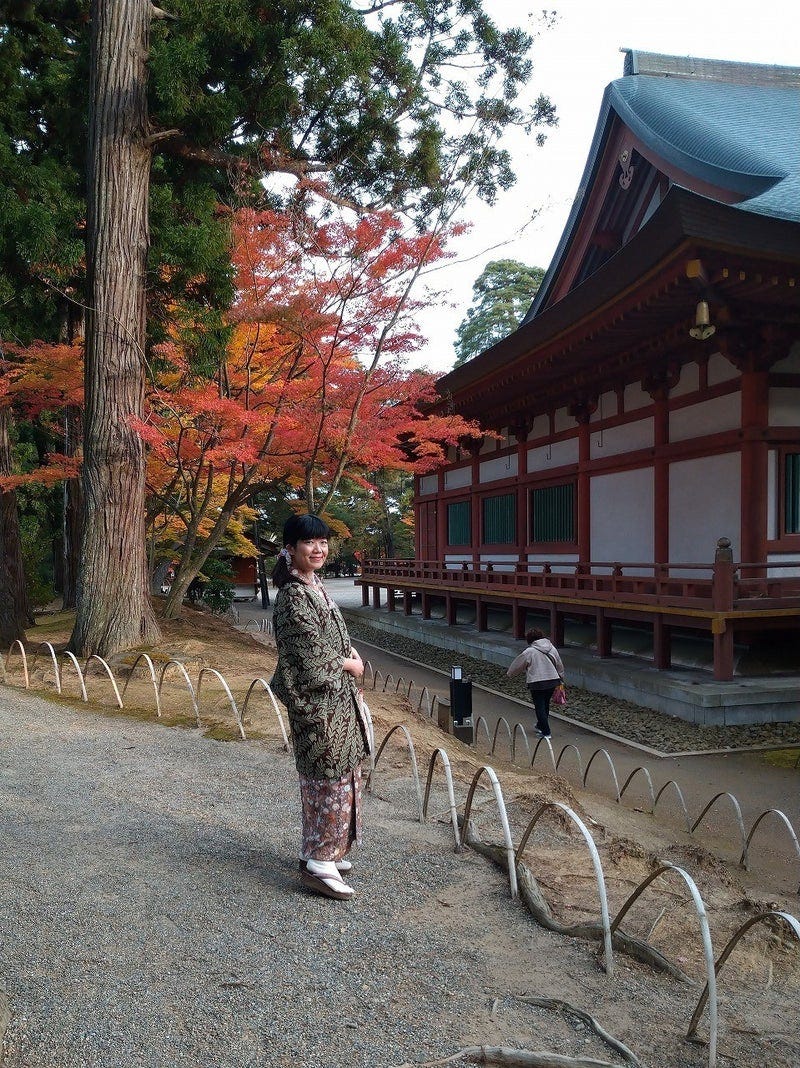
Author in Mōtsū-ji (Photo by author)

The autumn leaves were gorgeous here, too.
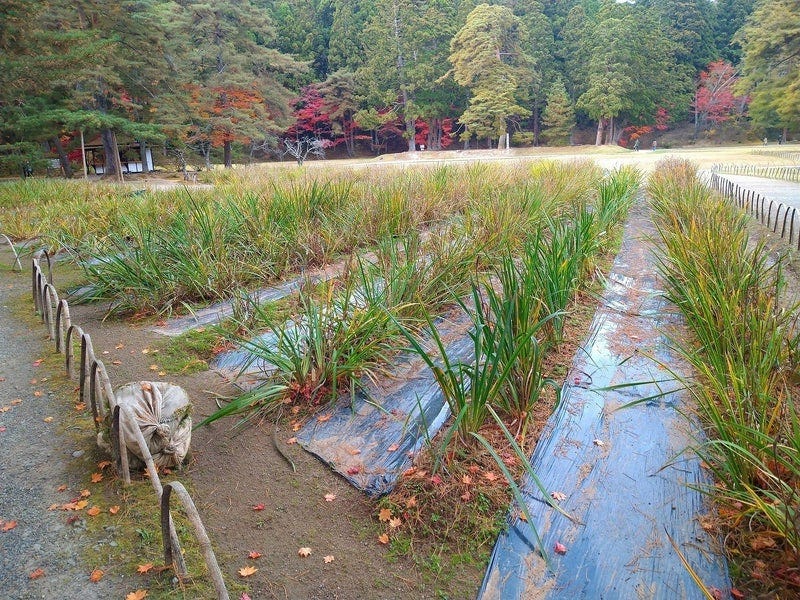
Iris garden in Mōtsū-ji (Photo by author)

The irises at Mōtsū-ji are said to have been shared from Meiji Jingu Shrine (明治神宮) in Tokyo, and the Iris Festival is held from late June to early July when the flowers are in full bloom. It must be a lovely sight.
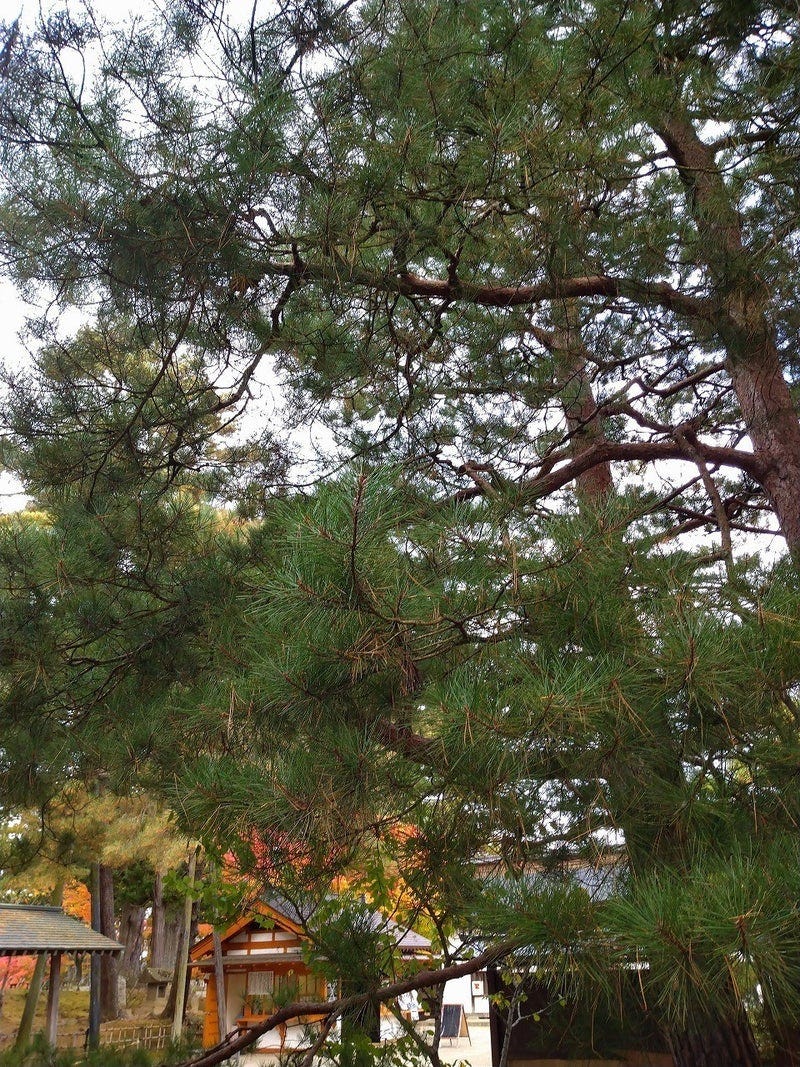
Pine trees in Mōtsū-ji (Photo by author)

I was also attracted by the impressive pine trees. They are often seen in Europe as well, but the pine trees seen in Japanese shrines and temples are particularly carefully cared for, looking in harmony with the buildings.
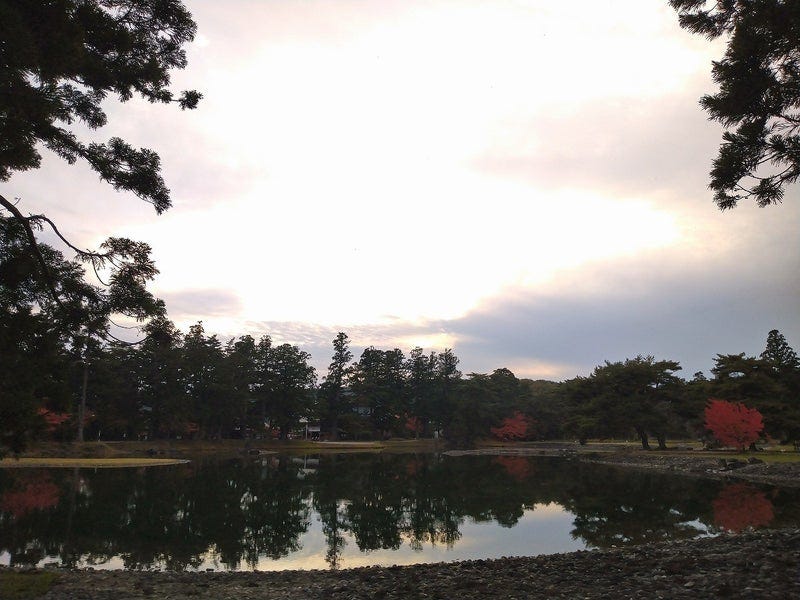
The Pure Land Garden in Mōtsū-ji (Photo by author)

We slowly walked around the large pond. The place was filled with tranquility and serenity that made me feel as if I were in another world, and that this might indeed be the Pure Land. All the dead, whether those who lost their lives in battles or those who died from natural disasters or illnesses, may be at peace in such a beautiful place. Oh, how good it would be if they were.

But we are still alive, so let’s have cake
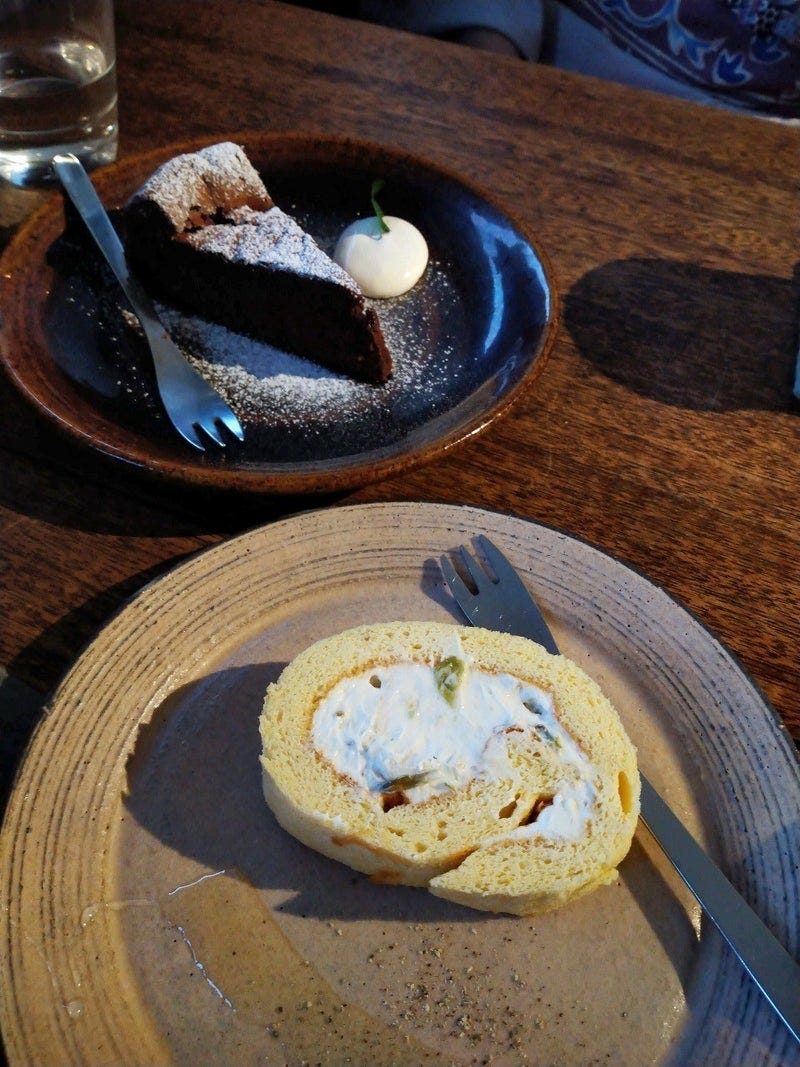
Cakes at café SATO (Photo by author)

We visited two remarkable ‘Pure Lands’ in Hiraizumi, but we are still living, so let’s return to the secular world for tea and cake!

Near Hiraizumi Station, a stylish café called SATO stood. The shop owner said, “We are trying to use local products as much as possible. The housemade cakes we had used local flour, rapeseed oil, honey, and millet sugar and tasted beautiful and delicate. The fact that my roll cake contained Japanese butterbur and K’s chocolate cake burdock root was also unique, as they are usually used for savoury dishes.

As this café demonstrates, Hiraizumi is a surprisingly sophisticated and convenient tourist destination. A visit to this area is highly recommended. You will see traditional Japanese culture that you have never seen before. It will also give you time to reflect on peace, even if you are not a Buddhist.
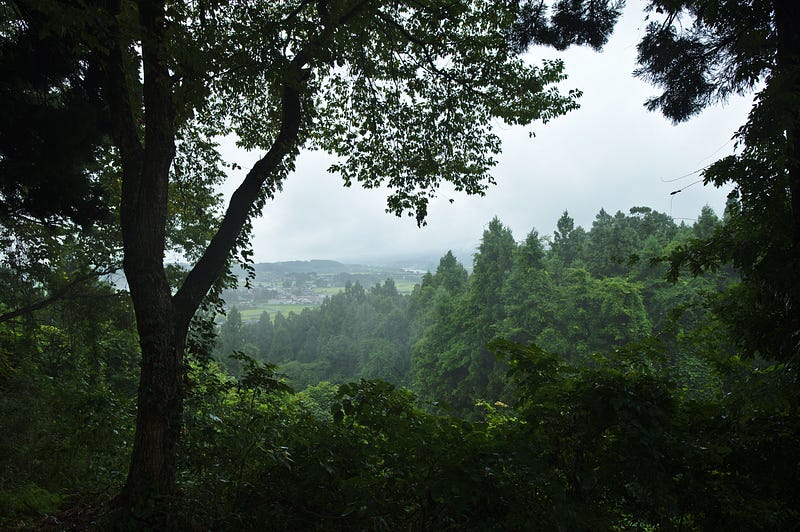
A scenery in Hiraizumi in summer. Credit: _steffen, CC BY-SA 2.0, via Wikimedia Commons

Finally, I would like to introduce another Haiku that Matsuo Bashō made in Hiraizumi. This was composed in memory of the Northern Fujiwara, who built up the Hiraizumi culture for 100 years, and of Minamoto no Yoritomo (源頼朝), who felt threatened by their power and destroyed the clan in 1189.

夏草や兵どもが夢の跡

Summer grasses — all that remains of great soldiers’ dreams

Useful Links

Japan
Buddhism
Culture
History
Travel
Recommended from ReadMedium