
Vlei
A word with multiple meanings, if you add animals to it
Today’s New York Times Spelling Bee letters:
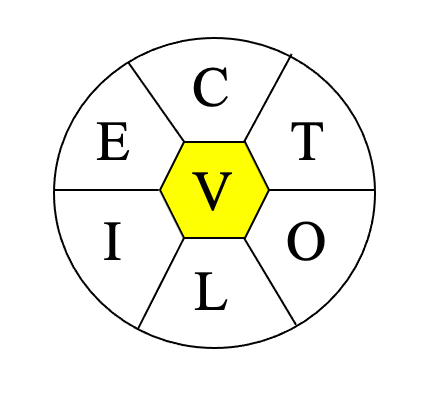
C, E, L, I, O, T, and center V (all words must include V)
Merriam-Webster says…
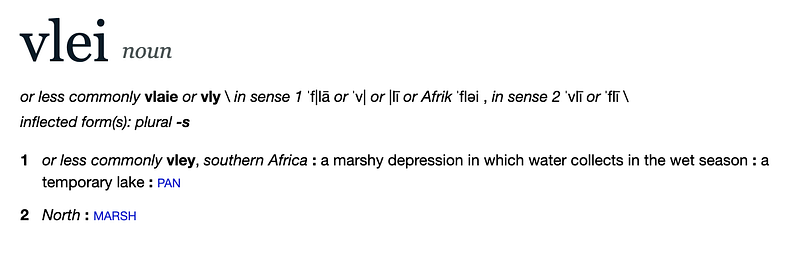
Silly little dictionary! Don’t you know vlei can’t possibly be a word if the New York Times says it ain’t?
For further fascinating facts, check out the Spelling Bee Master.
What’s your favorite dord* from today’s puzzle?
My Two Cents
The word vlei is interesting in that it is used not only to describe a terrain, but also specific animals that live in or near it. Also, it’s a neat word to say, and it can be pronounced as either (roughly) flay or fly. Also vlay or vly, if you prefer the harder consonant sound.
Shallow lake
The dictionary tells us that the word vlei, in sense 1, comes from the Afrikaans vlei, meaning “meadow” or “valley”, from the Middle Dutch word valeye meaning “valley” or “field”, and that term from Old French valee.
Merriam-Webster’s explanation of “temporary lake” goes to the essence of what a vlei is. That’s because the vlei’s size relies upon the presence or absence of water to the point that you may or may not see it depending on the season when you visit the area. During dry season vleis are not really there, or at least their water isn’t. And as we all know, a lake or pond without water is just a depression in the terrain.
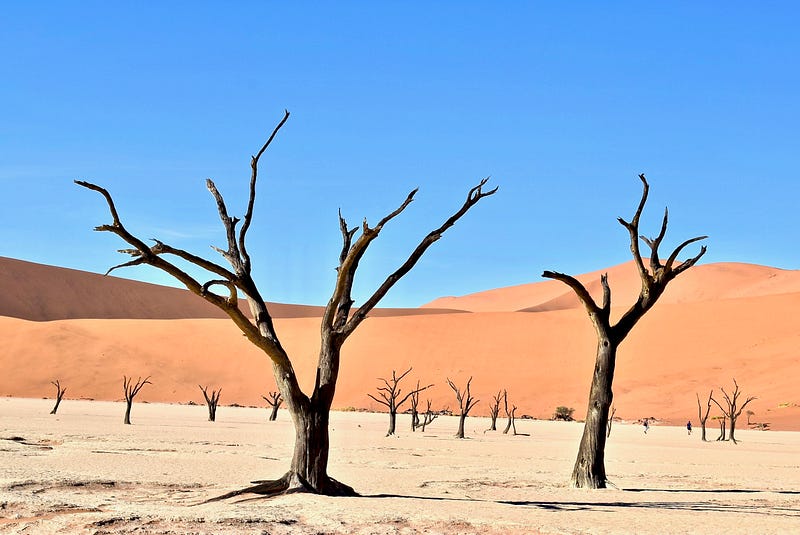
Vlies may look pretty much like any other lake when filled with fresh or salt water; in other words, ordinary. But when dry they become very interesting to look at and photograph. The photo at the top of today’s column is (I think) of the well-known Deadvlei, a white clay pan near the more famous salt pan of Sossusvlei; both are in Namibia’s Namib-Naukluft Park
DeadVlei is sometimes compared to California’s Death Valley, possibly because the names sound similar. But as we just learned today, vlei does not translate as “valley”, but rather as “lake” or “marsh”. (In Afrikaans the word for “valley” is vallei).
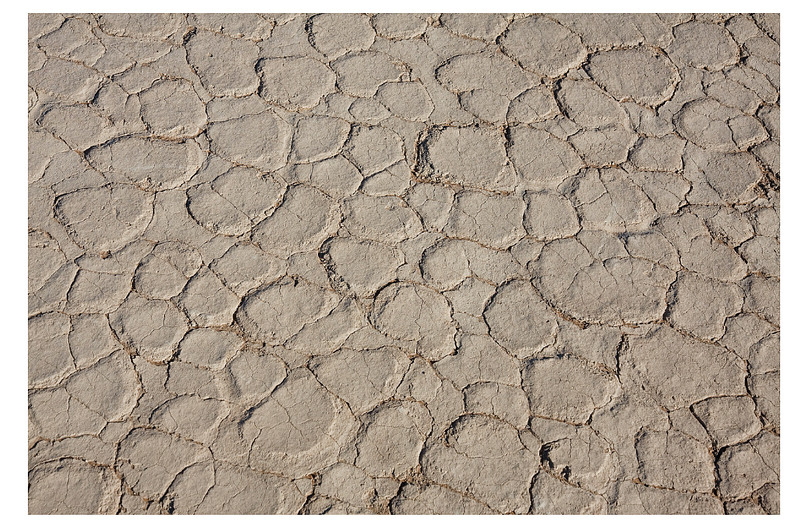
Above is a photo of the parched ground of the DeadVlei during the dry season… which for this vlei is forever. That’s because this marsh was formed after rainfall a long, long time ago, when a river flooded and created shallow pools where camel thorn trees grew. Unfortunately the climate changed creating such a drought that sand dunes formed and surrounded the area, permanently blocking the river waters from ever reaching that area.
With the absence of water came the death of the trees died, although a few species of plants survived. They manage to live off the morning mist and occasional rainfall.
Marsh rats, birds, frogs, and roses
The term vlei has been used as a preface for a few living beings, namely the following:
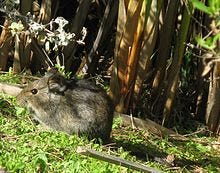
- The vlei rat, also known as groove-toothed rats, compact rodents with a tendency to shorter faces and legs than other types of rats. They live in the marshlands and grasslands of sub-Saharan Africa, feeding on the vegetation of these areas––although probably not on the dead trees.
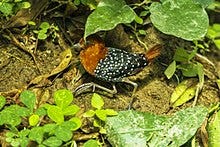
- The vleikuiken (literally “vlei chick”), or flufftails, small birds related to rails whose common name is based on the fact that their short tail have fluffy feathers. These birds are highly secretive and seldom observed, but Francesco Veronesi managed to catch a white-spotted flufftail off-guard. Now I proudly share his photo with you as an exclusive (provided you’ve never heard of wikipedia).
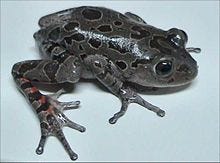
- The vlei frog, or red-legged running frog. As you may surmise, this frog has red coloring on its legs and likes to jog. You may have seen it running a marathon near you… or not. They are also known for “walking” with the back legs instead of hopping around like most frogs do. But that can be expected from a frog that runs competitively in 10Ks near you… or not. In any case, here is a picture so you can identify it next time you go out for a jog around the neighborhood park.
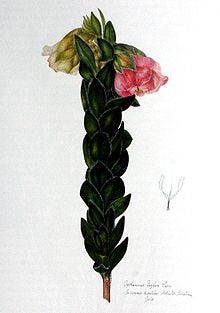
- The vleiroos or “marsh rose”. Its scientific name is Orothamnus zeyheri, the plant is extremely rare and endangered and short-lived, with an average lifespan of 10 years and a maximum of 20 years. The seeds do remain viable for more than three decades underground, which gives us some hope. However, the plant’s pollinating agent is unknown, which may explain why it’s extremely rare and endangered and short-lived.
And, well, I left this one for last so we can end today’s column with a beautiful watercolor of the marsh rose, painted by Jean Villet.
Despite the fact that vlei is obviously in the dictionary and that it inspired the names of three animals and one plant… the editors of the Spelling Bee decided that the word vlei is a dord*.
You can check out my previous entry on another dord* here:
*What the heck is a dord, you ask? Here’s the answer:


