
Visiting One of the Most Iconic Pieces Of Street Art Worldwide
‘’My God, Help Me to Survive This Deadly Love’’
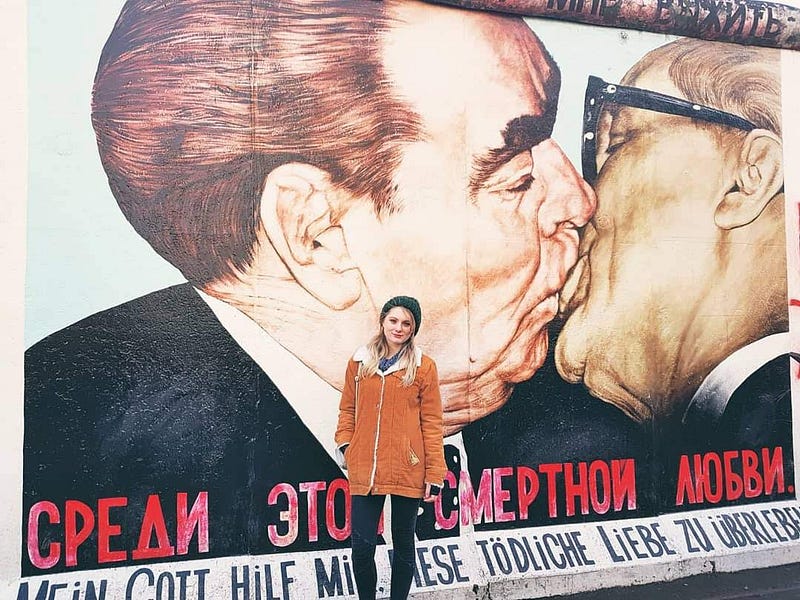
I visited Berlin for New Year's in 2019, my second time in the capital city of my home country and my first time with friends. When I read this month’s challenge, I knew exactly what I wanted to write about but had to honestly dig pretty deep to find these pictures. I look so different in them, it made me laugh when I found them.
Berlin is known to be an arty and eccentric city, with every corner full of stunning pieces of street art. Interestingly, a lot of Berlin’s street art is actually been paid for by the homeowner or the city and artists make a living doing street murals.
Possibly the most iconic murals can be found on the remains of the Berlin Wall, which now boasts a huge open-air art exhibition. Many of the most well-known pieces were painted in 1990, a year after the fall of the Berlin Wall.
One of them is Dmitri Vrubel’s “Fraternal Kiss”, pictured at the top of this article. The painting is also referred to by the inscription below it: “‘’My God, Help Me to Survive This Deadly Love’’.
It’s very interesting that the artist chose this specific line as the kiss itself was supposed to be a socialist greeting of fraternal nature between Leonid Brezhnev, the General Secretary of the Soviet Union at the time, and Erich Honecker, the General Secretary of the Socialist Unity Party of the GDR, nothing more or less.
It is thought that Dmitri was referring to the consequences of this specific political union and the unrest that followed.
All in all, it is a must-stop when visiting Berlin and one of those pinch-me moments seeing it in reality for the first time. The image is as unsettling as it is poignant.
The Berlin Wall hosts many other paintings with just as strong messages and imagery. Some of my favourites are shown below:
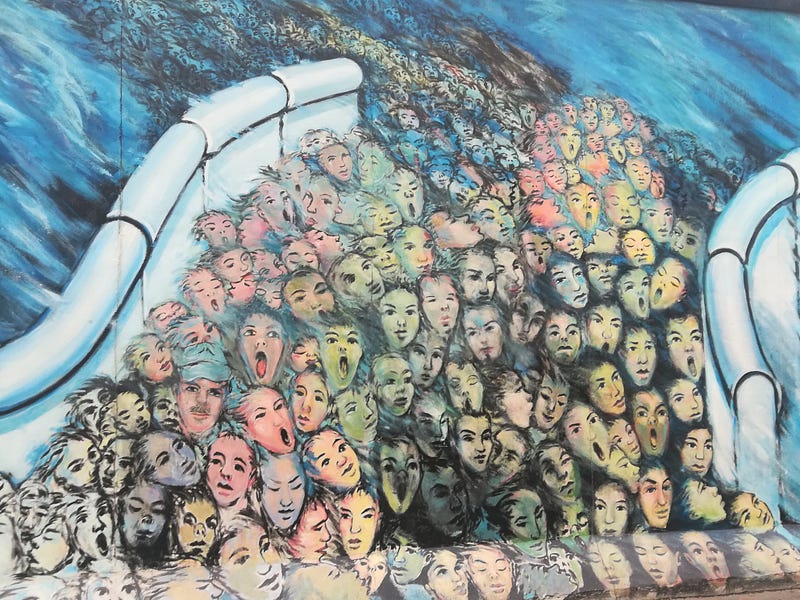
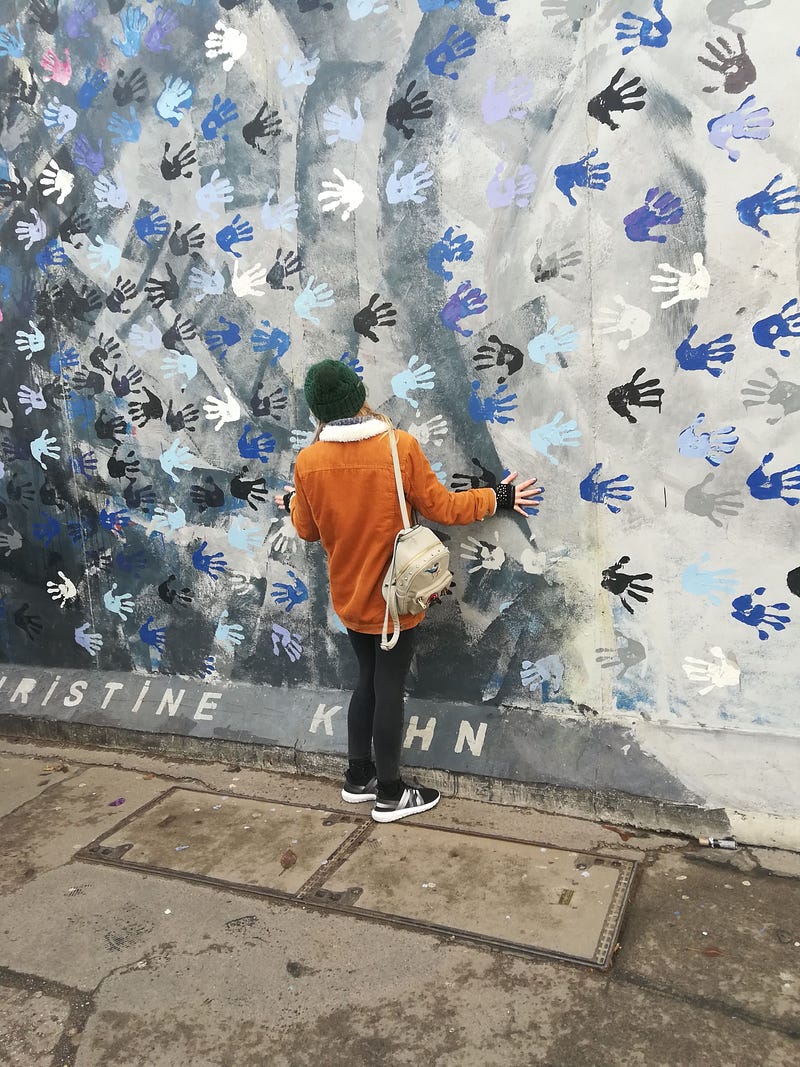
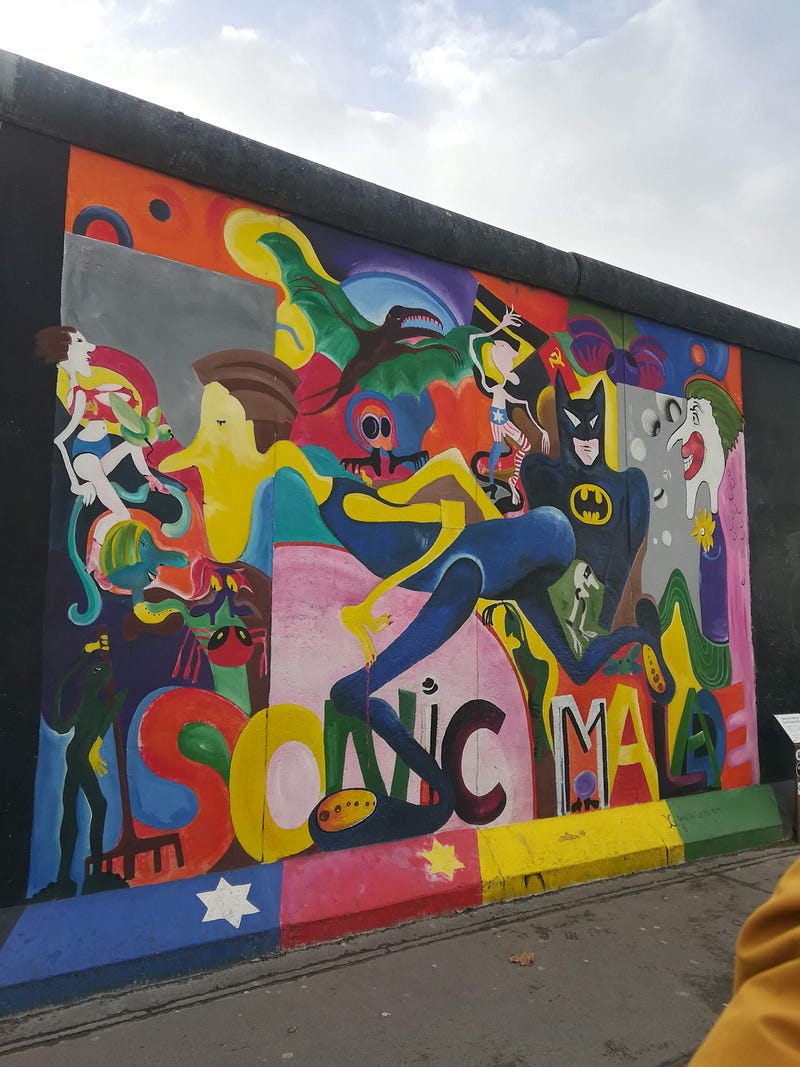
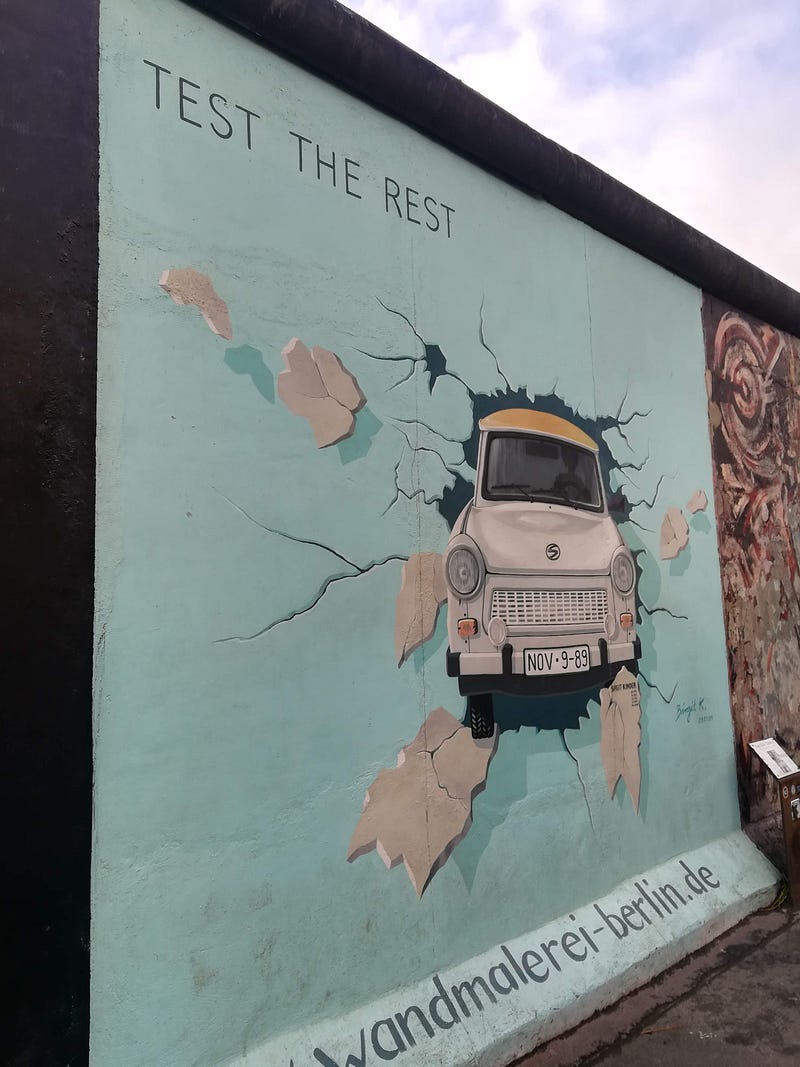
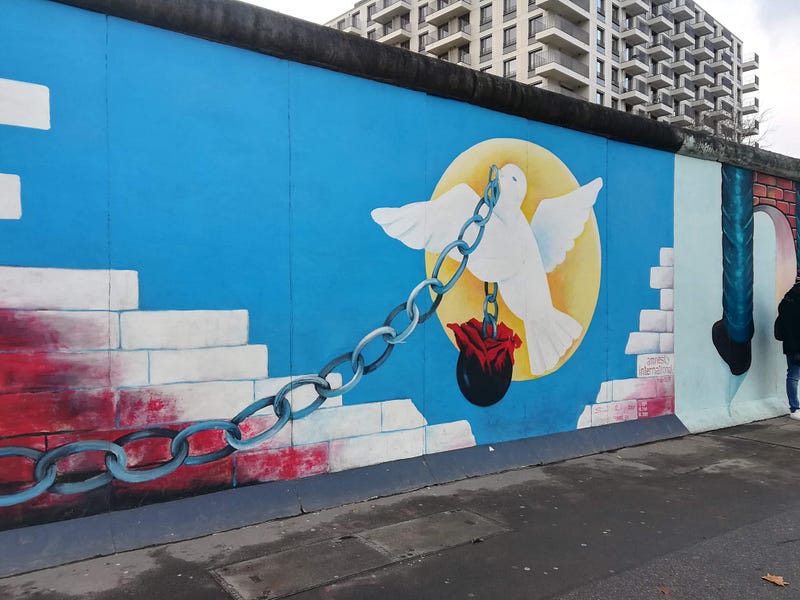
The themes showcased are all in clear relation to the fall of the wall and the years of separation and political oppression prior to it.
The idea of breaking free, of peace and of reuniting is displayed time and time again.
You can also find murals relating to the Second World War, the Nazi regime and the horrific crimes against the Jewish community. Pieces of this history can be found all over Berlin, as an ever-present reminder of what happened and what can NEVER happen again.
Visiting Berlin is interesting as the history is still so vividly present, it gives an almost eery feeling to many tourist attractions. You are able to see the lasting effect of history on communities nowadays and how people deal with this.
As far as street art goes, I think Berlin is a must-visit. The city lives and breathes this free expression of creativity.
Read Martin Scherer's interesting take on Berlin’s street art and its healing qualities to the city’s troubled past:
If you do make it to Germany, make sure not to miss these amazing desserts (Schwarzwälder Kirschtorte is one of my all-time favourites), summarised by Pinar K.:
Sign up to Medium here:


