
Visiting a Summer Resort in Winter: Cape May, New Jersey
One of the East Coast’s most historic beach towns
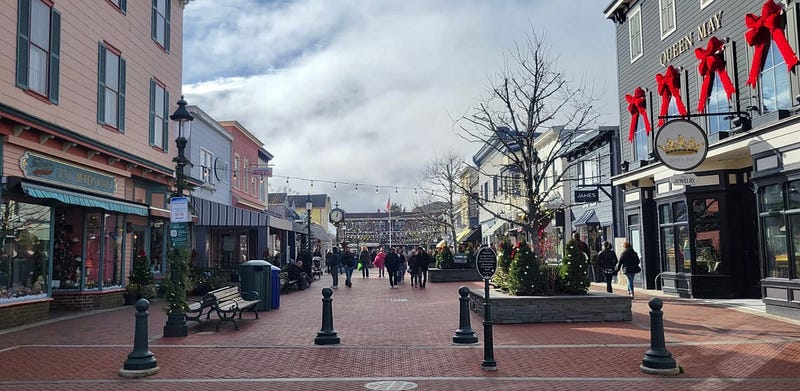
The Jersey Shore is a summer destination. In winter, the beach towns are incredibly quiet. There’s less to do, but one can enjoy empty streets and tranquil beaches that were brimming with people just a few months earlier.
I’m currently visiting my hometown with my partner, so we spent a day in Cape May.
I grew up 40 minutes from this cute little resort town, but I never spent much time there. Jersey Shore residents are loyal to the beach towns that they live in (or closest to) and rarely visit neighboring beaches.
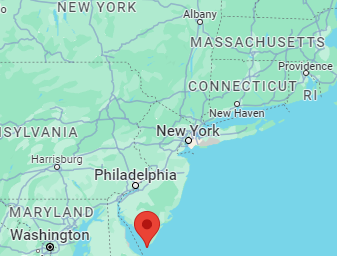
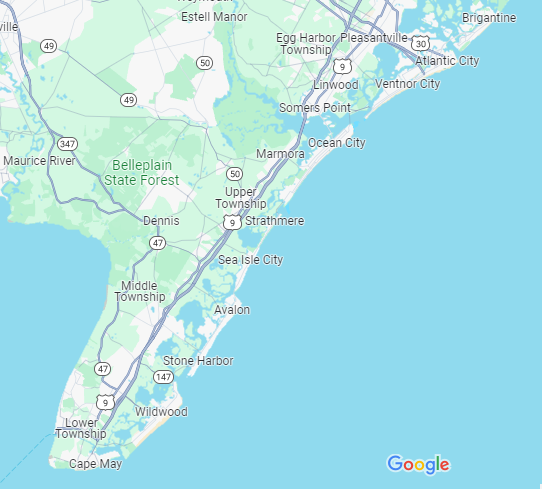
Here’s where Cape May lies on the map, at the southernmost tip of the state.
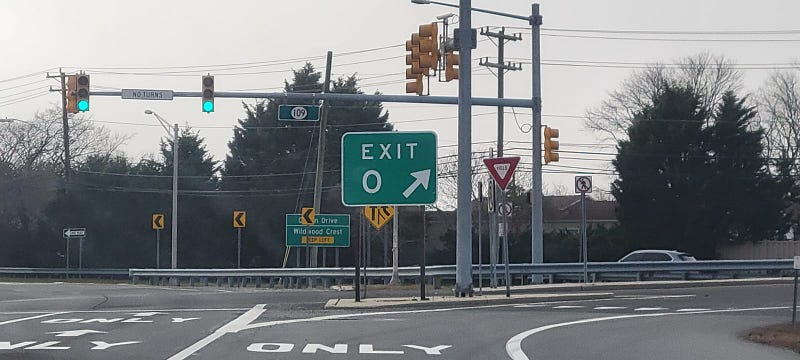
The novelty of a Cape May visit begins with the fact that the city marks Exit 0 of the Garden State Parkway.
Highway exits may be numbered sequentially (the first one is Exit 1, the second is Exit 2, etc.) or based on mile markers from the highway’s origin. The Garden State Parkway’s exits are based on mileage, and the highway begins in Cape May. Thus, Cape May is Exit 0.
Since it’s more common to round up first exits to Exit 1, Exit 0s are rare.
The Jersey Cape was first inhabited by the Lenni-Lenape tribe. Henry Hudson led the first European visit to the area in 1609. In the 1620s, Captain Cornelius Jacobsen May of the Netherlands stopped by and named the landmass after himself.
As early as the mid-1700s, Cape May had established itself as a tourism destination, especially for wealthy Philadelphians. The city was one of the first places to embody the modern conception of a beach vacation resort town. In the 19th century, Presidents Pierce, Buchanan, Grant, and Harrison all vacationed in Cape May during their terms.
During that era, beautiful Victorian homes and hotels were constructed. Many have been well-preserved.

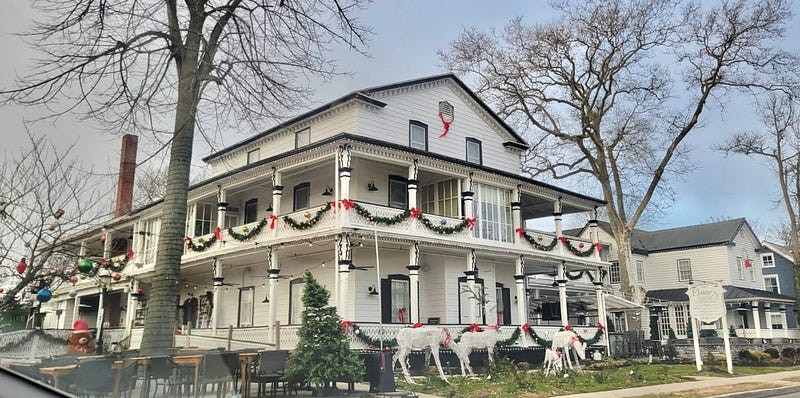
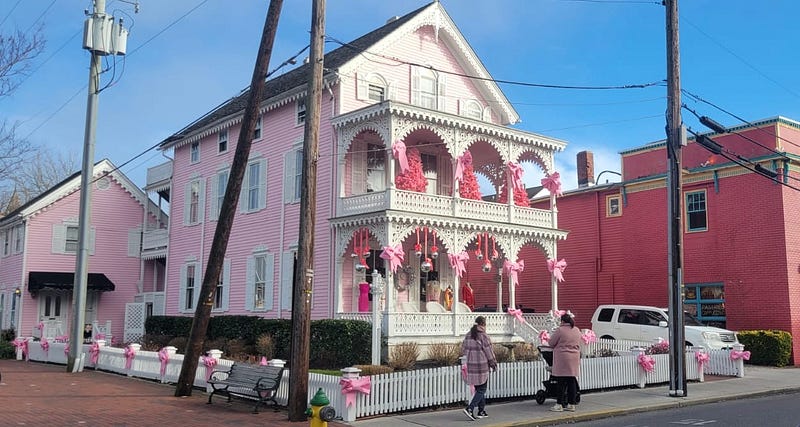
In the city center, there’s the beautiful Our Lady Star of the Sea Catholic church and a lovely little square full of shops and eateries. We enjoyed some hand-whipped fudge, a local favorite throughout the Jersey Shore.


Just outside of the City is Cape May Point State Park, known worldwide as a birdwatching destination. The peninsular shape of the cape acts as a funnel for migratory birds that stop to rest in the coastal wetlands.
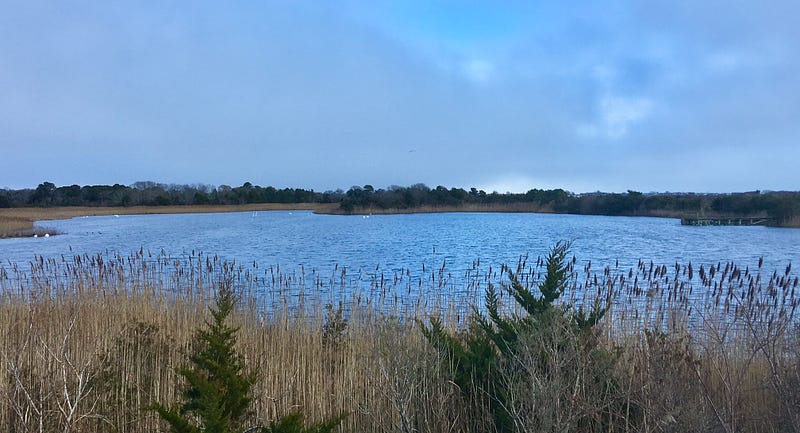
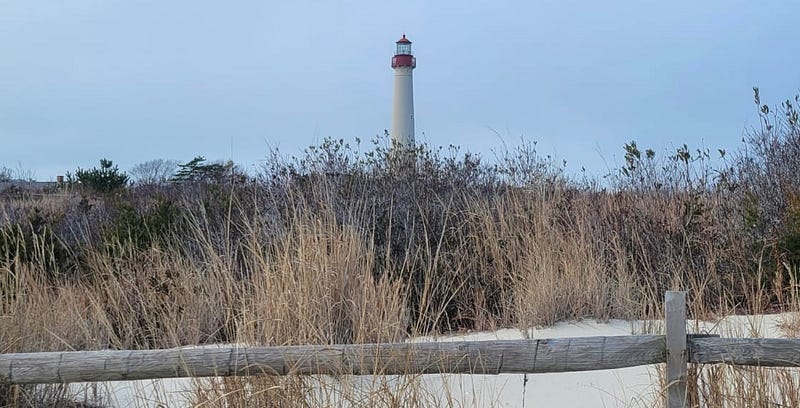
Cape May Point also presents two interesting historic sites: the Cape May Lighthouse and a WWII bunker on the beach.
The lighthouse was built in 1859 and was once an important landmark for runaway slaves who were fleeing north. Formerly powered by whale oil and staffed by keepers who lived on-site, the lighthouse remains helpful today as a navigation aid for boaters.
A stone’s throw from the lighthouse, there’s a strange sight on the beach: Battery 223, a concrete bunker built in 1942. The military constructed the bunker as part of an effort to bolster the USA’s coastal defenses during WWII. The walls are six feet thick, designed to withstand direct hits from battleships or aircraft.
Today, Battery 223 is a reminder of how many corners of the world were touched by the war.
The bunker used to be 900 feet from the shore, but it’s being slowly swallowed by erosion. It’s supported by wood pilings that are now mostly buried. Eventually, the bunker will collapse and disappear.
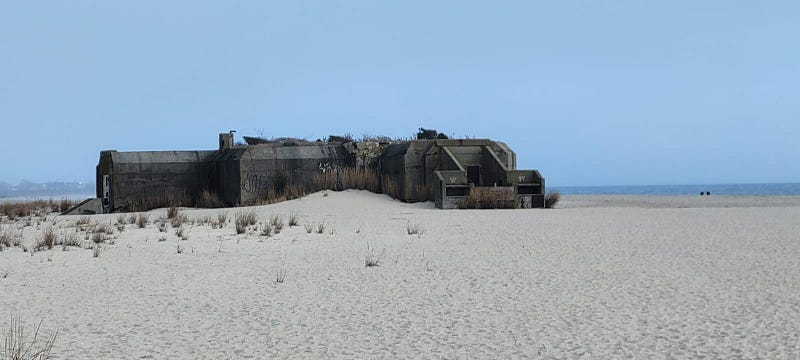
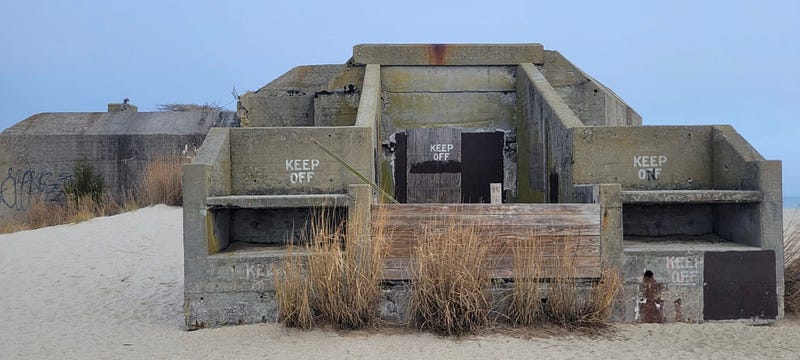
The eeriness of the war bunker caps off the full range of experiences that one can enjoy during a day in Cape May: bits of history, nature, small-town charm, and vintage New Jersey weirdness.
Read more of my NJ-based writing, on a topic I’m passionate about:


