
Hong Kong English/Cantonese (IX)
What Do We Do When We Go to Sweep the Graves of Our Ancestors?
Don’t hesitate to do this before it’s too late
Ching Ming Festival, or tomb-sweeping day falls on 5th April this year. I still had to work here in London. Lucky for people in Hong Kong, they have a public holiday on this specific day and so they can enjoy a day off from work.

Traditionally, people have to do a lot of things when they visit the deceased. For example, they have to bring some food to the graves (some families even have to cook near the graves) so that the ancestors can have some food to eat. People can also bring some flowers to the graves to decorate.
More importantly, people burn fake paper money “to their loved ones” in order not to let them embarrassed because they have no money in their afterlife. (That is also why we say inflation is serious in afterlife because we give them money too easily.)
The problem is, cemeteries in Hong Kong are mostly on the hills. Take a look at the biggest cemetery of Hong Kong: Wo Hop Shek (which is also right next to my home in Hong Kong).
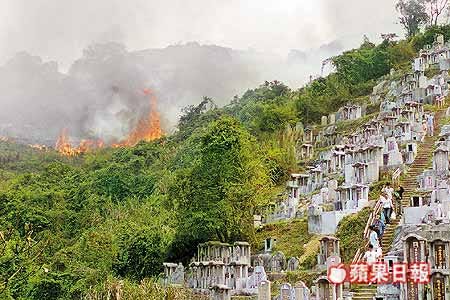
You can see that it can be a great workout in every six months, as we also have a tomb-sweeping day in autumn which is called Chung Yeung Festival.
Well, apart from carrying a lot of food, piles of “paper money” to burn, and a lot of other materials for a hike to your ancestors’ graves, what else can we do when we visit there?
Of course, we can talk. Language is one of the most important differences between human and other animals. When we visit the cemeteries, of course, we can talk to the others. We can talk to them about anything, such as how we are doing at the moment, the weather, and many other things. The others would love to “listen” to you.
What is so good for us to talk to them? Obviously they don’t reply, this can be assured that your words will not turn into an argument with the others. Therefore, you can even say something that no living body usually wants to care/listen to.
The Cantonese phrase “有咩留返拜山先講” (Jyutping: jau5 me1 lau4 faan1 baai3 saan1 sin1 gong2), which means “save your words until you visit the graves”, is very common to utter when people wants somebody to stop talking. Obviously they don’t want to listen to that person (usually a relative of theirs) to talk about bollocks, but it is too rude to tell them to stop. Alternatively, they use this phrase to ask (less rudely) that person to save their words to the deceased, such that they can stop talking right at that moment.
This is usually a useful strategy to stop people talking. But well, if your words are important, don’t hesitate to tell people. Don’t save your words until you visit their graves as it’ll be too late.


