
Poetry, Nature, Impermanence
Violet Ghosts of a Summer Day
Swaying with the moment
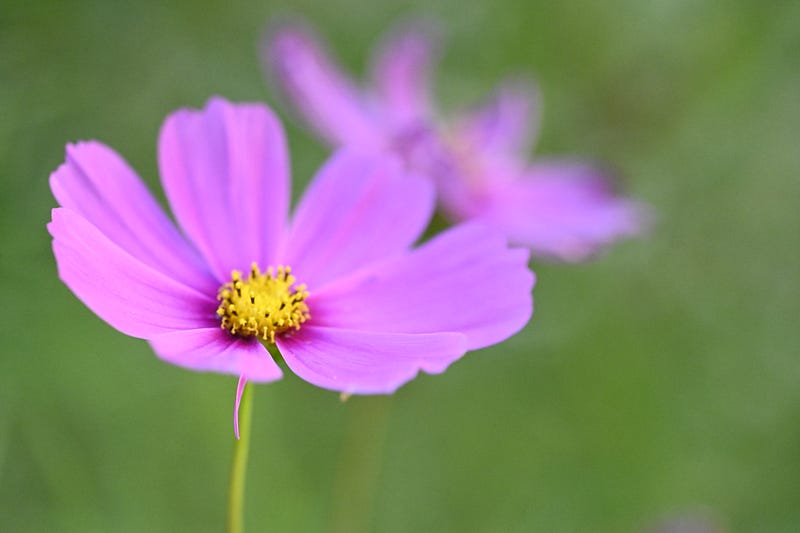
Like violet ghosts of a summer’s day, they sway in the moment when the light has faded and dusk swooshes in, swirling their petals and whispering about impermanence.
The wind, it knows. It’s seen it all,
the rise and fall of civilizations and of glacial fingers clutching the earth, and of century plants, whose flower stalks wither only slightly before the parent dies, after it has thrived for a time span longer than we’ll probably live or even imagine with any accuracy.
But those flowers, do they know that with every kiss of the night breeze they are closer to standing on folded knees and melting back into the earth?
Perhaps it’s only humans who wonder about these things.
I’m not sure that the flowers, or the wind, really cares about anything more than the vacuum of light, or the last dance of a summer evening.
Erika Burkhalter is a yogi, neurophilosopher, cat-mom, photographer, and lover of travel and nature, spreading her love and amazement for Mother Earth’s glories, one photo, poem or story at a time. (MS Neuropsychology, MA Yoga Studies).
You might also enjoy:
Photo and poem ©Erika Burkhalter. All rights reserved.


