
Viking King Brings Rare Byzantine Jesus Coin to Norway
Scientists believe that the coin could have been brought to Norway by King Harald III Hardrada. The golden artifact depicts Jesus Christ and likely originated from Byzantium.
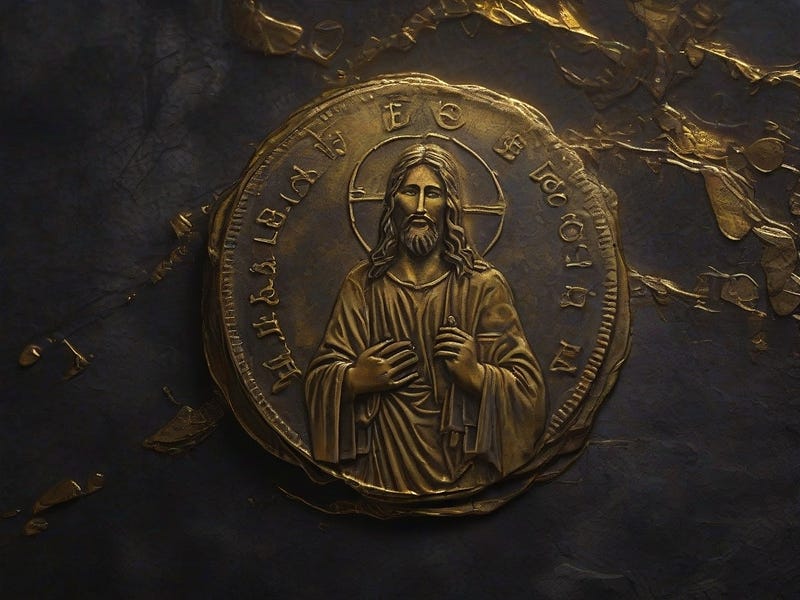
Norwegian archaeologists received a report about an extraordinary find. A treasure hunter was exploring a mountainous region in the Vestre Slidre municipality in southwestern Norway using a metal detector. At one point, the device signaled the presence of a metallic object. The man started digging and unearthed an ancient gold coin. His attention was drawn to the image of Jesus Christ on the obverse side.
The coin displays Jesus Christ
The treasure hunter immediately handed the artifact to archaeologists. Upon analysis, scientists determined that the coin was first minted in Byzantium between 976 and 1025 AD. Scholars suggest it probably originated from Constantinople (today’s Istanbul in Turkey), the capital of the Eastern Roman Empire.
“We receive many splendid artifacts from treasure hunters, but now a particularly significant find has emerged. We’re talking about a very rare Byzantine numismatic relic,” wrote the scientists in a statement.
One side of the coin features Jesus holding the Holy Scripture. On the reverse side, the likely representations are of emperors Basil II (on the left) and Constantine VIII (on the right). Both rulers were brothers. There are also two inscriptions on the coin. One in Latin reads: “Jesus Christ, king of kings.” The other in Greek states: “Basil and Constantine, emperors of the Romans.”
Who brought the coin to Norway?
“The coin was minted towards the end of Basil II’s reign or at the beginning of the subsequent rule, between 976 and 1025 of our era. This is indicated by the dotted, triple-edged design around the coin,” explain archaeologists.
This type of small coin was known as ‘histamenon nomisma’ and was first introduced around 960 AD.
Archaeologists wonder how this Byzantine coin ended up in this part of Norway. Scholars suspect that it might have been brought to the country by Harald III Hardrada, king of the Norwegians from 1045 to 1066. In 1031, still a young man, he participated in a Rus’ expedition against the Polish king, Mieszko II. Three years later, he set off with his 500 warriors to Byzantium. The Vikings became mercenaries in the imperial army.
“In Constantinople, Harald was part of the imperial Varangian Guard, also known as Varangians or ‘guards of Byzantium.’ In older Byzantine sources, Harald is called Araltes. In those times, it was customary for the guards to receive the right, upon the emperor’s death, to take any valuables they wished from his palace. During Harald’s time, three emperors died in Byzantium,” claim Norwegian archaeologists.
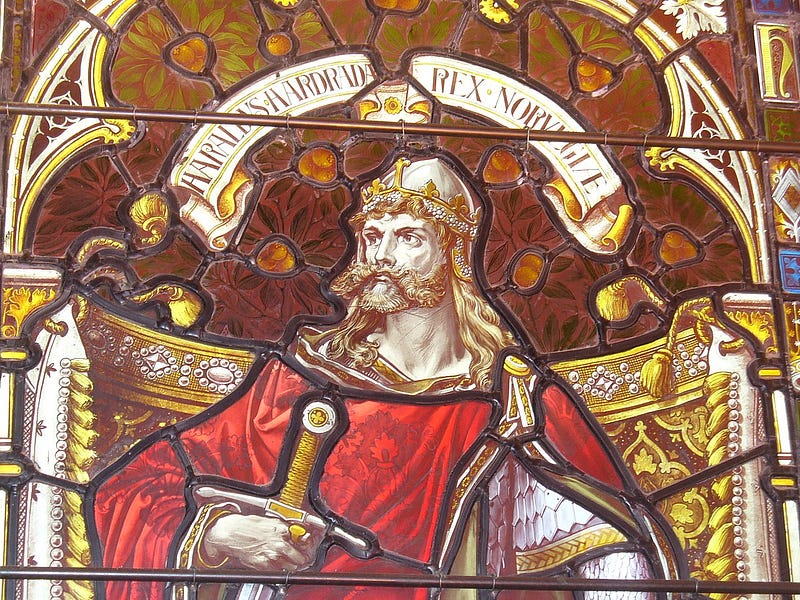
Viking connections to Byzantium
Harald participated in suppressing the Bulgarian uprising from 1040 to 1041. In the spring of 1042, as a commander of the elite Varangian Guard, he took part in the overthrow of Emperor Michael V. In the same year, he decided to leave Byzantium and return to Norway. However, a new emperor, Constantine IX Monomachus, hindered his departure as he didn’t want the skilled Viking to leave.
Interestingly, legend has it that the emperor’s wife influenced Harald’s final decision to stay in Byzantium. Some historians pointed out their alleged romance. In 1043, Harald eventually escaped the empire with an armed force and the loot he acquired during his years of service. He returned to Kievan Rus’ under Yaroslav the Wise’s rule and later made his way back to Norway.
“The treasures he acquired during his service in the imperial guard in Constantinople were given to Grand Prince Yaroslav the Wise. This was partly to enable Harald to marry one of Yaroslav’s daughters, Elizabeth of Kiev,” reads the statement.
The fame and wealth of Harald III Hardrada
According to Viking sagas, Harald and his men amassed a fortune working as mercenaries in Byzantium. In 1045, upon their return to Norway, they arrived with ships laden with gold and other treasures. The entire country heard of their fame. His relative, the then-king of Norway, Magnus I the Good, made him co-ruler for this reason. After a few joint expeditions, Magnus fell ill and died in Jutland, leaving Harald as the sole ruler.
“How did the coin end up in Vestre Slidre? We know that the region was part of the Bjørgvin diocese until 1125. One of the older communication routes is called Bispevegen. It’s possible that the coin was lost during the journey of one of the clergymen,” archaeologists conclude.
Attention all readers!
As content creators on Medium.com, we face minimal compensation for our hard work. If you find value in my articles, please consider supporting me on my “Buy Me a Coffee” page. Your small contributions can make a big difference in fueling my passion for creating quality content. Thank you for your support!


