avatarAvi Kotzer

Free AI web copilot to create summaries, insights and extended knowledge, download it at here

3936

Abstract

e today, I found and began reading <a href="https://www.amazon.com/Josephine-Baker/dp/0060102128/ref=sr_1_4?crid=20RF1ZD7GF13X&amp;dchild=1&amp;keywords=josephine+baker+autobiography&amp;qid=1625164913&amp;sprefix=josephine+baker+auto%2Caps%2C228&amp;sr=8-4"><i>Josephine</i></a>, her autobiography. I was mesmerized by her life story. I highly recommend seeking out the book, although I think it may be out of print.</p><h2 id="1d55">All along the watchtower</h2><p id="59c6"><i>Vedette</i> in Spanish has the same meaning as it does in French. But in English the word has nothing to do with dancing or cabarets. As the dictionary entry explained, a <i>vedette</i> is “a mounted sentinel stationed in advance of pickets to watch an enemy and give notice of danger”. A <i>pickets</i> is “a detached body of soldiers serving to guard an army from surprise”.</p><p id="c2cf">As Merriam-Webster explains, <i>vedette</i> is borrowed from French, going back to Middle French, “watchtower, lookout in an elevated post,” itself borrowed from the Italian <i>vedetta</i>, an alteration (crossed with <i>vedere</i> “to see”) of <i>veletta</i>, possibly borrowed from the Spanish <i>vela</i> “watch, sentinel” (noun derivative of <i>velar</i> “to keep watch,” going back to Latin <i>vigilāre,</i> “to stay awake, be watchful”) + Italian <i>-etta</i>, diminutive suffix.</p><p id="6674"><i>Vedettes</i> were often mounted soldiers who could race on their horses to give warnings. In modern times, soldiers in charge of listening-posts are the equivalent of <i>vedettes</i>. In the Navy the term <i>vedette</i> refers to a small scouting or patrol boat.</p><figure id="0099"><img src="https://cdn-images-1.readmedium.com/v2/resize:fit:800/0*_SdTKfXrbPI9H0t5.jpg"><figcaption>Photo by Thyes</figcaption></figure><p id="29f9">Above is the Gardjola, a prominent guard tower on Maltese forts in Malta and an example of a <i>vedette</i>, in the sense of a place where the <i>vedettes</i> would hang out before… vedetting?</p><h2 id="f827">V for Vedette</h2><p id="8af7">There are a lot more <i>Vedettes</i> with a capital “V” than I expected to find.</p><p id="bbbf">The first one was a British Thoroughbred racehorse foaled in 1854, who won the 2000 Guineas Stakes and two Doncaster Cups. No, he didn’t live to be 150 years old. The 2000 Guineas Stakes refers to the original prize money, not the year. This race is the opening leg of the English Triple Crown.</p><figure id="4c7c"><img src="https://cdn-images-1.readmedium.com/v2/resize:fit:800/0*62pIntvSDuB0zqKX.jpg"><figcaption>Drawing by J. Surgess</figcaption></figure><p id="7516">Not one, but two ships in the U.S. Navy had that name. The first one was yacht built in 1899 and leased by the military at the outbreak of World War I to patrol the North Atlantic Ocean. There she rescued survivors at sea and attacked a German U-boat. At the end of the war she was returned to her owner, railroad executive, financier, and philanthropist <a href="https://en.wikipedia.org/wiki/Frederick_William_Vanderbilt">Frederick W. Vanderbilt</a>.</p><figure id="a068"><img src="https://cdn-images-1.readmedium.com/v2/resize:fit:800/0*VD1PwvJ-NGxMuGj_.jpg"><figcaption>U.S. Naval Historical Center Photograph</figcaption></figure><p id="2bb9">In 1914 the Electric Launch Company from New Jersey happened to build a boat by the name <i>Vedette</i>. She was operating in the Panama Canal Zone when the U.S. Navy bought her to use as a patrol boat, also during World War I. She served right there at the canal for the rest of the war, after which the Navy returned her to the Panama Canal Company.</p><p id="da22">The <a href="http://www.airforce.forces.gc.ca/v2/equip/hst/vedette-eng.asp">Canadian Vickers <i>Vedette</i></a> was a single-engine biplane flying boat, the first aircraft designed and built in Canada to meet a Royal Canadian Air Force demand for a smaller aircraft than they had at the time. It was

Options

used from 1925 to 1941 and, aside from Canadian operators, was also purchased by the Chilean Air Force.</p><figure id="5fe2"><img src="https://cdn-images-1.readmedium.com/v2/resize:fit:800/0*ZiavPAQK1cnJ1Vjw.jpg"><figcaption>Photo by P. U. Blickdomain</figcaption></figure><p id="723d">As with the Navy boats, there were two car brands named <i>Vedette</i> in the 20th century; but both were really sort of the same car. The first was the Ford <i>Vedette</i>, a large care manufactured between 1948 and 1952 at their French plant. Here is the 1952 sedan:</p><figure id="0798"><img src="https://cdn-images-1.readmedium.com/v2/resize:fit:800/0*QQB6eI1ElZxQGADG.JPG"><figcaption>Photo by AlfvanBeem</figcaption></figure><p id="29d2">As Wikipedia explains:</p><blockquote id="581c"><p>Facing unsatisfactory sales results, as well as disruptive strikes at the Poissy plant at the turn of the decade, Ford had been trying to dispose of the factory since shortly after the end of the war. An opportunity arose in 1954, when Henri-Theodore Pigozzi, the founder of the increasingly successful French automaker Simca, was looking for a new plant to expand its operations. Ford France was merged into Simca with both the Poissy plant and the rights to all models manufactured there — including a newly designed Vedette. The new car had debuted in France under the name of Simca Vedette, but was sold as the Ford Vedette in some markets (including Sweden, the Netherlands and Germany) at least until 1956.</p></blockquote><p id="f753">The Simca <i>Vedette</i> was manufactured and sold until 1961. It was also assembled in Australia and Brazil. The photo at the top of today’s column is Brazilian made Simca Chambord, used on the TV series “O Vigilante Rodoviário”.</p><p id="2033">Here is a Simca <i>Vedette</i> station wagon.</p><figure id="39cb"><img src="https://cdn-images-1.readmedium.com/v2/resize:fit:800/0*7t8Qip7E4gfsxVLY.jpg"><figcaption>Photo by Herranderssvensson</figcaption></figure><p id="b138">Finally, <i>Vedette</i> is also the name of a b-side album by Argentine rock group <a href="http://babasonicos.com/musica/babasonica.php">Babasónicos</a>. It contains tracks that didn’t make the cut for their albums<i> Dopádromo</i> and <i>Babasónica</i>.</p><p id="52e5">Well, that about exhausts the list of <i>vedettes</i> for today.</p><p id="4de9">And yet… despite all this plethora of information, the editors of the Spelling Bee decided that <i>vedette</i> is a <a href="https://www.merriam-webster.com/words-at-play/dord-a-ghost-word"><b>dord</b></a><b>.</b></p><p id="1a92">You can check out my previous entry on another <b>dord </b>here:</p><div id="887e" class="link-block"> <a href="https://readmedium.com/babbitt-4c37f1f4ca33"> <div> <div> <h2>Babbitt</h2> <div><h3>Looks like the Spelling Bee is not a fan of soft metal</h3></div> <div><p>medium.com</p></div> </div> <div> <div style="background-image: url(https://miro.readmedium.com/v2/resize:fit:320/0*2bvt6e_hwO8dD6F6)"></div> </div> </div> </a> </div><p id="898a">*What the heck is a <b>dord, </b>you ask? Here’s the answer:</p><div id="ceef" class="link-block"> <a href="https://www.merriam-webster.com/words-at-play/dord-a-ghost-word"> <div> <div> <h2>'Dord': A Ghost Word</h2> <div><h3>One of the questions people like to ask lexicographers is this: Can you sneak something into the dictionary? Can you…</h3></div> <div><p>www.merriam-webster.com</p></div> </div> <div> <div style="background-image: url(https://miro.readmedium.com/v2/resize:fit:320/0*RVRrxFa7fh9plOEq)"></div> </div> </div> </a> </div></article></body>

Vedette

What do a sentry, a car, a ship, a plane, and a showgirl all have in common?
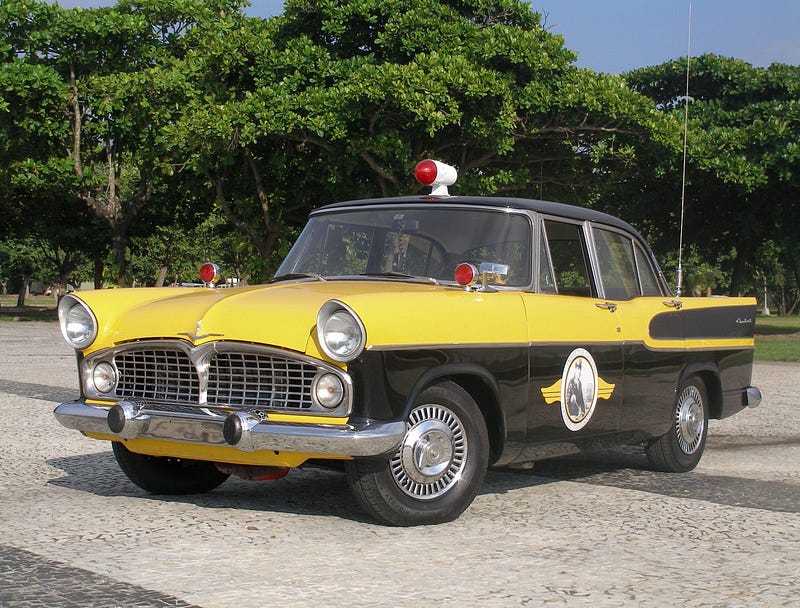
Photo by JasonVogel

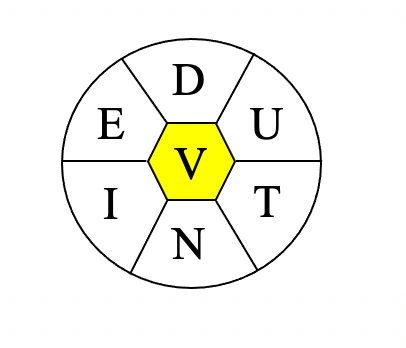
Today’s New York Times Spelling Bee letters:
Art: Iva Reztok

D, E, I, N, T, U, and center V (all words must include V)

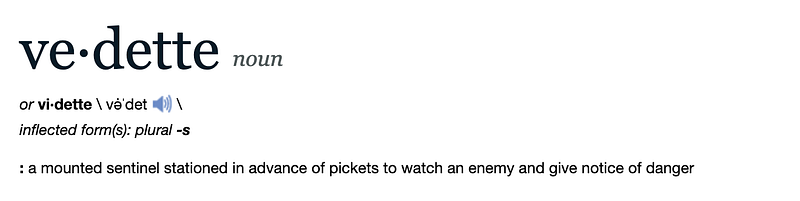
Merriam-Webster says…
Credit: merriam-webster.com

Silly little dictionary! Don’t you know that vedette can’t possibly be a word if the New York Times says it ain’t?

For further fascinating facts, check out the Spelling Bee Master.

What’s your favorite dord* from today’s puzzle?

My Two Cents

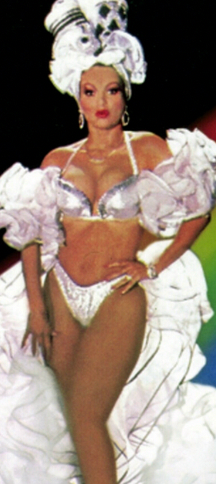
Having grown up in Venezuela, the first thing that comes to mind when I hear or read the word vedette is…
Screenshotted by Iva Reztok

That is Iris Chacón, known throughout Latin America in the 1970s and 80s as “la bomba de Puerto Rico”, or the Puerto Rican Bombshell. Also as “la vedette de América”, or America’s Showgirl. In this case, America referring to the entire single land mass, whether you count it as one, two, or three continents. She did perform in the United States on shows such The Joan Rivers Show, The Merv Griffin Show, Geraldo Rivera Show, and David Letterman. Plus, she appeared at the Radio City Music Hall in New York.

Vedette is a French word that was originally used to designate an artist of great fame and notoriety, but later underwent changes. Mainly in the 20th century, it started being used to refer to the main showgirls in cabarets. This spread from France to Spain and then Latin America, starting in the roaring 1920s.

Perhaps the most famous American vedette was Josephine Baker, who should be remember more for her other historical contributions. Born in St. Louis, Missouri in 1906, she suffered the horrors of hardcore racism in her childhood. She moved to France at age 19 and ended up renouncing her American citizenship in 1937.

Photo: Studio Harcourt

Baker was the first African-American woman to star in a major motion picture (the 1927 silent film Siren of the Tropics); was among the most celebrated performers at the Folies Bergère in Paris; hung out with Ernest Hemingway, was a source of inspiration for painters Pablo Picasso and Henri Matisse; was a war hero who helped the French Resistance during World War II (and was awarded the Legion of Honor by Charles de Gaulle); was a civil rights crusader in the 1950s and 60s, refusing to perform for segregated audiences in the United States; and adopted twelve children of different backgrounds (the “Rainbow Tribe”).

I’d need to write a separate, long article just to summarily cover all the things this amazing woman did. While researching her life today, I found and began reading Josephine, her autobiography. I was mesmerized by her life story. I highly recommend seeking out the book, although I think it may be out of print.

All along the watchtower

Vedette in Spanish has the same meaning as it does in French. But in English the word has nothing to do with dancing or cabarets. As the dictionary entry explained, a vedette is “a mounted sentinel stationed in advance of pickets to watch an enemy and give notice of danger”. A pickets is “a detached body of soldiers serving to guard an army from surprise”.

As Merriam-Webster explains, vedette is borrowed from French, going back to Middle French, “watchtower, lookout in an elevated post,” itself borrowed from the Italian vedetta, an alteration (crossed with vedere “to see”) of veletta, possibly borrowed from the Spanish vela “watch, sentinel” (noun derivative of velar “to keep watch,” going back to Latin vigilāre, “to stay awake, be watchful”) + Italian -etta, diminutive suffix.

Vedettes were often mounted soldiers who could race on their horses to give warnings. In modern times, soldiers in charge of listening-posts are the equivalent of vedettes. In the Navy the term vedette refers to a small scouting or patrol boat.
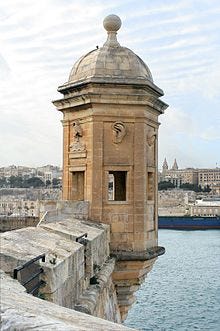
Photo by Thyes

Above is the Gardjola, a prominent guard tower on Maltese forts in Malta and an example of a vedette, in the sense of a place where the vedettes would hang out before… vedetting?

V for Vedette

There are a lot more Vedettes with a capital “V” than I expected to find.

The first one was a British Thoroughbred racehorse foaled in 1854, who won the 2000 Guineas Stakes and two Doncaster Cups. No, he didn’t live to be 150 years old. The 2000 Guineas Stakes refers to the original prize money, not the year. This race is the opening leg of the English Triple Crown.
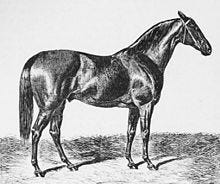
Drawing by J. Surgess

Not one, but two ships in the U.S. Navy had that name. The first one was yacht built in 1899 and leased by the military at the outbreak of World War I to patrol the North Atlantic Ocean. There she rescued survivors at sea and attacked a German U-boat. At the end of the war she was returned to her owner, railroad executive, financier, and philanthropist Frederick W. Vanderbilt.
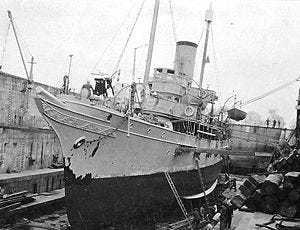
U.S. Naval Historical Center Photograph

In 1914 the Electric Launch Company from New Jersey happened to build a boat by the name Vedette. She was operating in the Panama Canal Zone when the U.S. Navy bought her to use as a patrol boat, also during World War I. She served right there at the canal for the rest of the war, after which the Navy returned her to the Panama Canal Company.

The Canadian Vickers Vedette was a single-engine biplane flying boat, the first aircraft designed and built in Canada to meet a Royal Canadian Air Force demand for a smaller aircraft than they had at the time. It was used from 1925 to 1941 and, aside from Canadian operators, was also purchased by the Chilean Air Force.
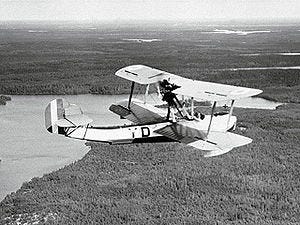
Photo by P. U. Blickdomain

As with the Navy boats, there were two car brands named Vedette in the 20th century; but both were really sort of the same car. The first was the Ford Vedette, a large care manufactured between 1948 and 1952 at their French plant. Here is the 1952 sedan:
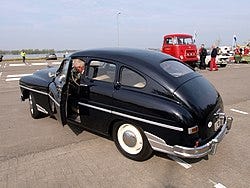
Photo by AlfvanBeem

As Wikipedia explains:

Facing unsatisfactory sales results, as well as disruptive strikes at the Poissy plant at the turn of the decade, Ford had been trying to dispose of the factory since shortly after the end of the war. An opportunity arose in 1954, when Henri-Theodore Pigozzi, the founder of the increasingly successful French automaker Simca, was looking for a new plant to expand its operations. Ford France was merged into Simca with both the Poissy plant and the rights to all models manufactured there — including a newly designed Vedette. The new car had debuted in France under the name of Simca Vedette, but was sold as the Ford Vedette in some markets (including Sweden, the Netherlands and Germany) at least until 1956.

The Simca Vedette was manufactured and sold until 1961. It was also assembled in Australia and Brazil. The photo at the top of today’s column is Brazilian made Simca Chambord, used on the TV series “O Vigilante Rodoviário”.

Here is a Simca Vedette station wagon.
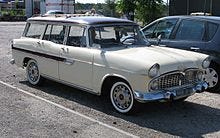
Photo by Herranderssvensson

Finally, Vedette is also the name of a b-side album by Argentine rock group Babasónicos. It contains tracks that didn’t make the cut for their albums Dopádromo and Babasónica.

Well, that about exhausts the list of vedettes for today.

And yet… despite all this plethora of information, the editors of the Spelling Bee decided that vedette is a dord.*

You can check out my previous entry on another dord* here:

*What the heck is a dord, you ask? Here’s the answer:

Spelling Bee
Language
History
Josephine Baker
Military
Recommended from ReadMedium