
Vanda
An orchid and a princess… and an opera, to boot
Today’s New York Times Spelling Bee letters:
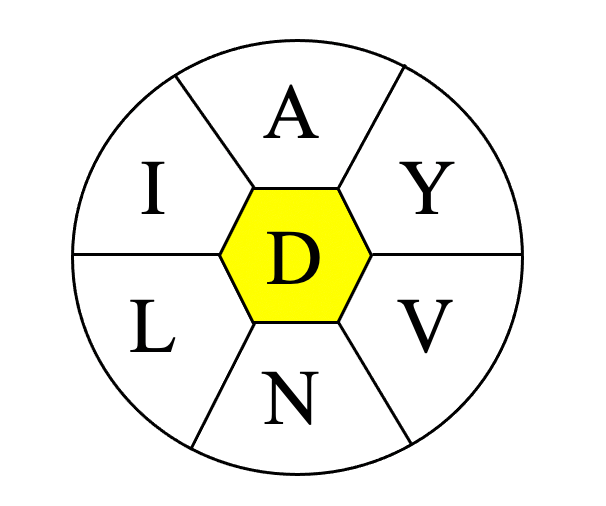
A, I, L, N, V, Y, and center D (all words must include D)
Merriam-Webster says…
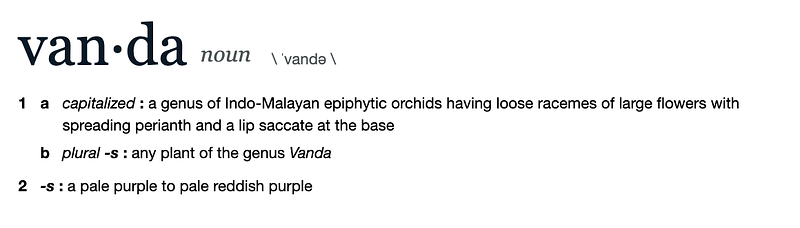
Silly little dictionary! Don’t you know that vanda can’t possibly be a word if the New York Times says it ain’t?
For further fascinating facts, check out the Spelling Bee Master.
What’s your favorite dord* from today’s puzzle?
My Two Cents
One of the rejected words from today’s list is iliad, and I could have sworn that up until some time ago ––I’m not sure whether it’s months or last year–– I played a Spelling Bee game in which the word was accepted.
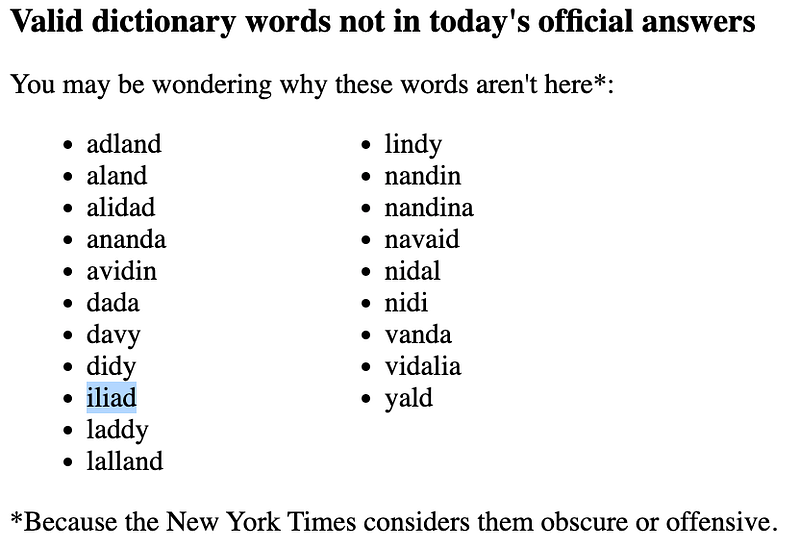
I’m not sure what happened that made the editors of the Spelling Bee change their minds about this word. I mean, know the Iliad is an ancient Greek epic poem, and cannot be accepted as a valid word because it’s a proper noun. But the name of the poem attributed to Homer gave way to a common noun with different meanings, first used in the early 17th century.
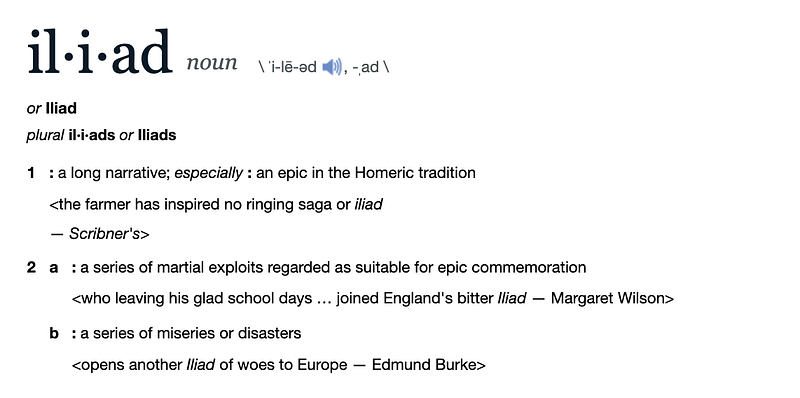
In any case, maybe one day I’ll dedicate this column to iliad. Today I just wanted to go light and easy with pictures of flowers and some classical music.
Vanda see something pretty?
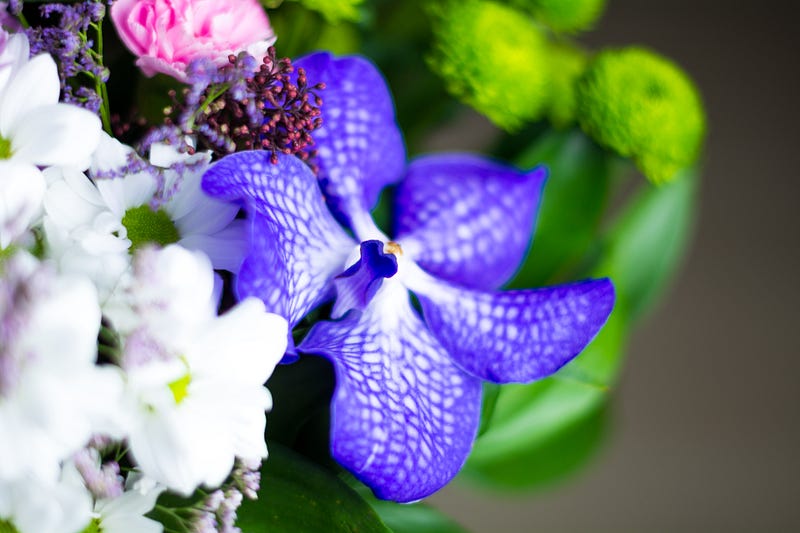
I’m keeping my fingers crossed that the picture at the top of today’s article is actually a vanda orchid. (If it’s not, please let us know in the comments section.) There are several species in the Vanda genus, but one of them is considered to be the “true blue orchid”. At least according to the second paragraph of a 1954 article in The New York Times.
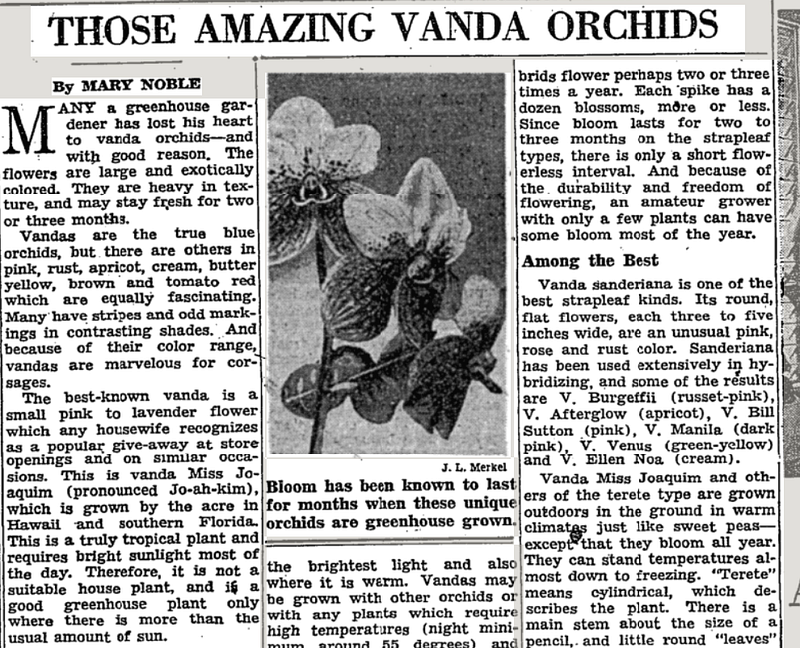
You’ll notice that vanda is spelled with a lowercase “v” in the third paragraph. Which means there is no argument for excluding the word from the Spelling Bee game based on it being a proper noun.
That “best-known vanda” mentioned in the article, back then known as the Miss Joaquim, is today called the Singapore orchid. It’s that country’s national flower, chosen as such in 1981 for it “its resilience and year-round blooming quality”. And, well, embarrassingly for the Times, it’s no longer considered a true vanda. This hybrid flower’s genus is currently listed as Papilionanthe.
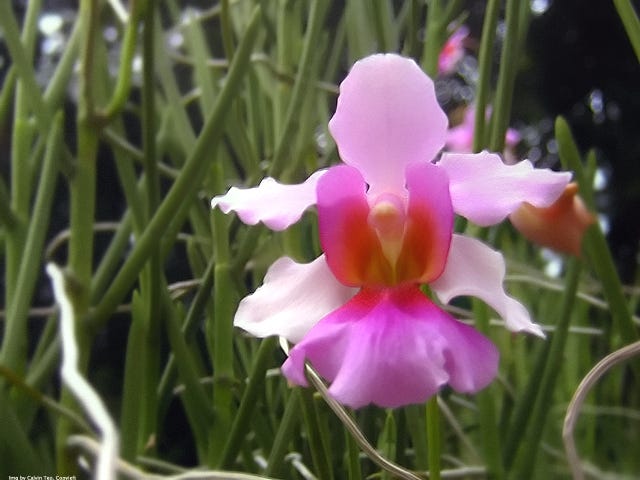
There are several dozen species of vandas, and some of them are even referred to with that term, like Vanda coerulescens, the “sky-blue vanda” from China, India, and the Himalayas…
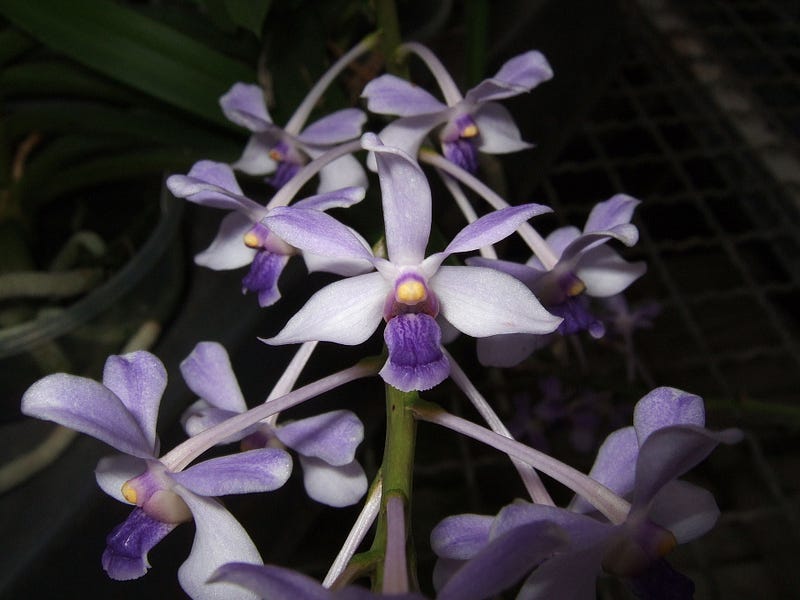
…or the Vanda roeblingiana, (Roebelen’s vanda) from the Philippines…

…or the Vanda ustii, the University of Santo Tomas’ vanda, also an orchid species from the Philippines.
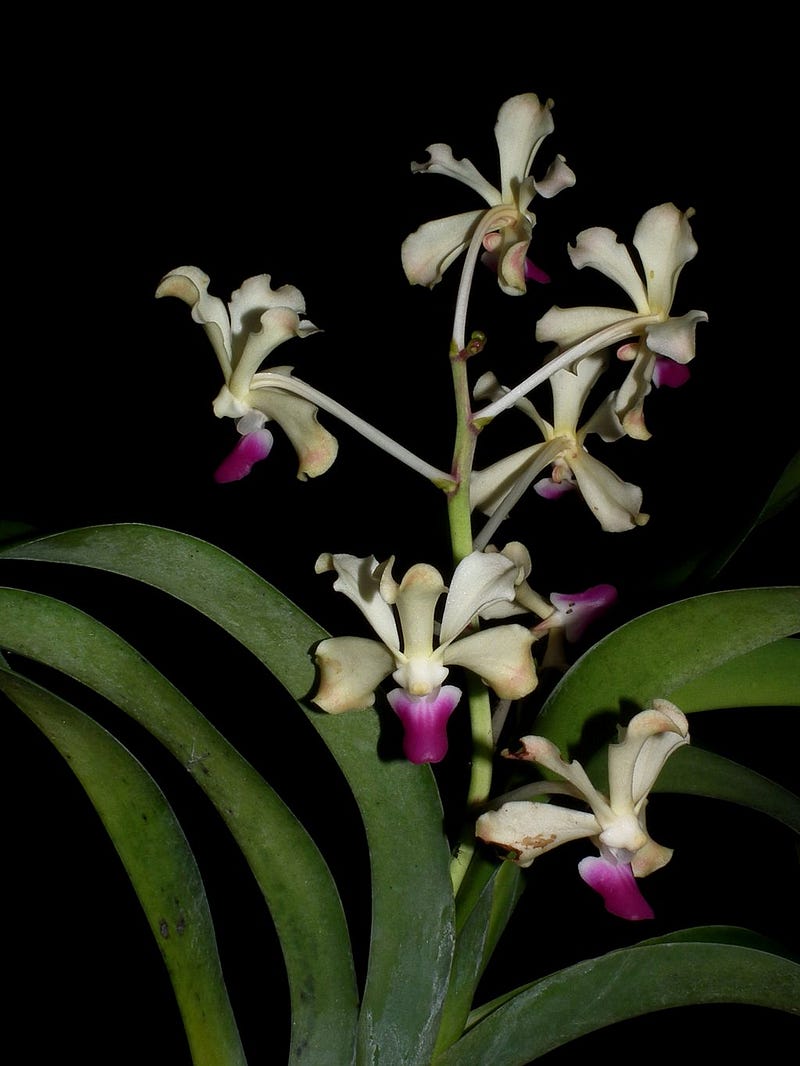
Hey, I told you there would be pictures of flowers. And I didn’t downsize the images to make it easier for you to appreciate their beauty.
The online Britannica sums up the basic characteristics of vandas like this:
Most species are epiphytic and have long sturdy stems that bear closely spaced straplike leaves. Some species have cylindrical leaves in a form known as terete. Vanda flowers usually are flat and have a short spur on the lip; the flowers are long-lasting and often fragrant. The plants grow well in warm temperatures with high humidity and require a well-draining potting medium.
(In case you’re wondering what epiphytic means, it’s a plant that derives its moisture and nutrients from the air and rain and grows usually on another plant.)
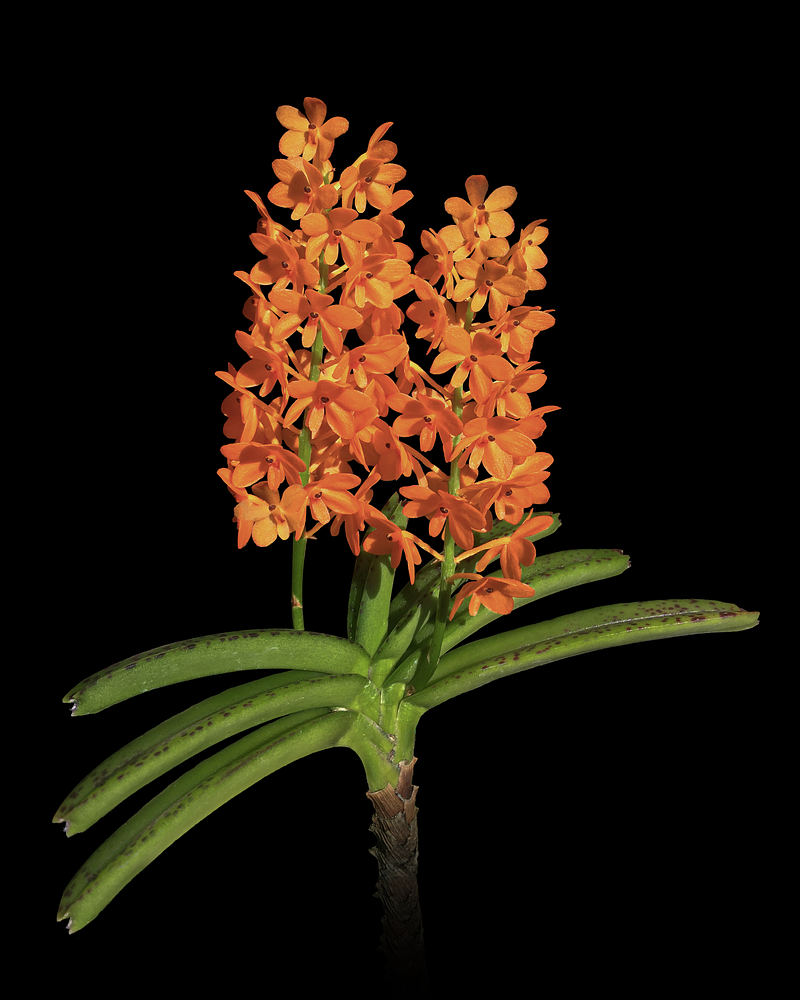
Well, that’s about it for flowering vandas. Okay, okay! One more, the Vanda garayi:
Vanda from Krakow
My paternal grandparents were both from Krakow, Poland, a place I got to visit almost thirty years ago this spring. Well, it was April and still freezing cold (we even got snow one day), so it didn’t feel very springlike. I was able to locate the apartment building where my grandparents grew up and even the Oskar Schindler’s old factory, where my grandparents worked during World War II. (My grandmother became a “Schindler Jew” and thus was spared the horrors of concentration camps; my grandfather was sent to Mauthausen and survived.)
Krakow was allegedly founded by a legendary Polish prince named Krakus. Also known as Grakch, he also built Wawel Castle and slayed the Wawel Dragon by feeding it a dead sheep full of sulfur.
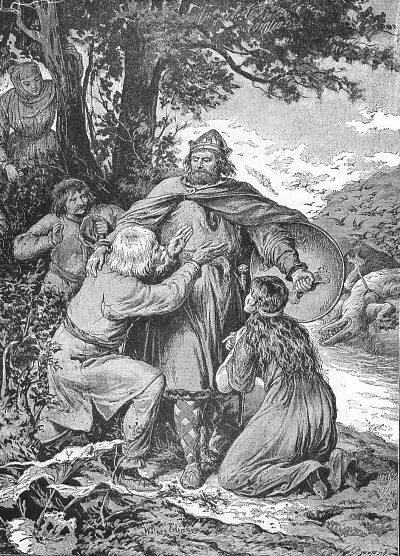
I know what you’re thinking. That arrow sticking out from the dragon’s chest looks nothing like a dead sheep full of sulfur. What can I say? Tomato, to-mah-to, I guess.
Anyway, legendary Krakus had a daughter named Vanda, or Wanda, who became the queen when her dad kicked the bucket. Perhaps from eating sheep laced with sulfur? Vanda apparently had many suitors, and there are several stories about what happened as a result. The original one apparently was written by Wincenty Kadłubek. We here at Silly Little Dictionary spare no money above $3.14 to bring you authentic historical documents, and here is that story as told by Kadłubek himself.
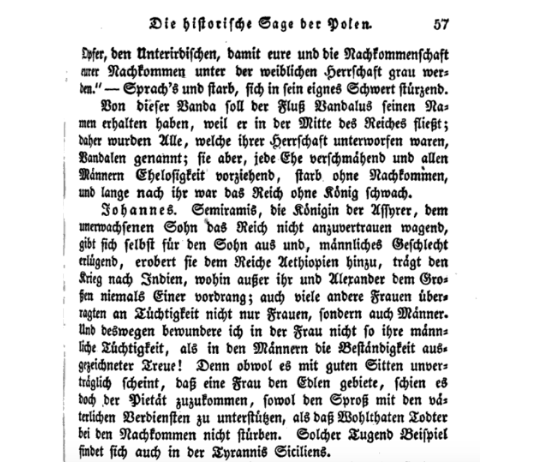
We usually also spare no expense in our translations, but we found one for free on Wikipedia this time.
Wanda ruled Poland after the legendary Polish king Krakus. When her lands were invaded by an “Alamann tyrant”, who sought to take advantage of the previous ruler’s death, Wanda led her troops out to meet him. Seeing her beauty, the German troops refused to fight and their leader committed suicide. Towards the end of the story Kadłubek states that “the river Vandalus is named after” her and hence the people she ruled over were known as “Vandals”.
(In this version Wanda remained unmarried and had a long life. Which says a lot about how women were treated by their husbands back in the day.)
In another version of the story, a German by the name of Rüdiger wanted to marry her so badly that he invaded her lands when she refused. Rüdiger died in battle, but Wanda killed herself anyway as a strange way of thanking the gods that had given her people victory over the Germans. In a third version of the story, before the invasion Wanda commits suicide by throwing herself into the Vistula river, knowing that as long as she is alive there will always be crazy incels who will use her refusal to marry as an excuse for war.
This story inspired Czech composer Antonin Dvorak to write a grand five-act opera about the martyred queen. Dvorak is best know for his Ninth Symphony, also called “From the New World". It was composed during his time living in New York and may have been influences by his interest in Native American music and African-American spirituals he heard while living there. Symphony № 9 is considered one of the most popular symphonies ever composed, and a recording was even taken to the moon by Astronaut Neil Armstrong on the Apollo 11 mission in 1969.
The beginning of the symphony’s fourth movement is a tune you may easily recognize, either because you’re a classical music fan… or because you watch a lot of cartoon from six or seven decades ago. Listen to the first minute.
Although many people have said that legendary film score composer John Williams stole the theme of Jaws from the first few bars of this movement, Kelly Sedinger disagrees.
Regarding Dvorak’s Vanda, classical-music.com has this to say:
Dvorák’s fifth opera, Vanda, is one of his most scandalously neglected compositions. Written in 1875, after the String Serenade and the Fifth Symphony, it benefits from both works’ lyricism. A clouded and desperately limited performing tradition has led to most commentators, very few of whom had even seen the score, dismissing it as a failed grand opera, full of longueurs and poorly assimilated Wagnerisms. Nothing could be further from the truth. Vanda, based on the tale of a Polish princess who sacrifices her life for victory over the German invader, if not an unqualified masterpiece, is full of marvellous things; for example, the first-act Romance — one of Dvorák’s finest tenor arias — and the magnificent set-piece finales of the first two acts. There are glamour, melody and drama aplenty, and the numinous conclusion of the opera is genuinely moving.
You can listen to the entire thing here and judge for yourself.
Now you know. Next time you’re in a flower shop and want to show off your knowledge about orchids, ask the salesperson for a vanda. Don’t be surprised if they have no idea what you’re talking about… because the editors of the Spelling Bee decided that vanda is a dord*.
You can check out my previous entry on another dord* here:
*What the heck is a dord, you ask? Here’s the answer: