
FORENSIC ANTHROPOLOGY/CRIMINOLOGY
UT’s Body Farm: The Grisly Science of Forensic Anthropology
Twenty years before CSI
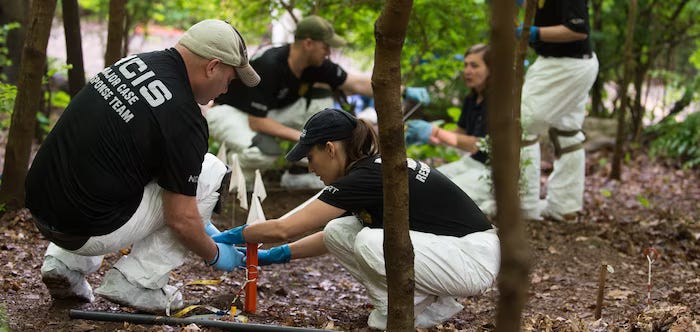
Like some of you, I was a fan of the weekly TV program titled CSI, which ran from 2000 until its final episode in September of 2015.
Having earned a graduate degree in anthropology I was fascinated with the evolving sub genre of forensic anthropology.
As a youngster I was so enthralled with the program The Untouchables, I wrote F.B.I. Director J. Edgar Hoover, asking if he might consider hiring me as a special undercover agent for the agency.
Crazy, I know.
My explanation was no one would ever suspect that a ten-year-old kid was a G-man, or, G-girl as it were. I was a natural sleuth and would solve major crimes for him.
Hoover answered my request with a personal, hand-written letter —a story in itself — which I’ve linked at the bottom of this page.
Long story short, Hoover told me to finish my education and come back to see him in twenty years.
I first learned about the Body Farm from fellow anthropology students who said they were hiring for summer jobs.
Freshly returned from a stint in Jamaica, where I taught English at Montego Bay Girl’s College, I wanted a job in my field of study. I’d had enough of classroom teaching.
The newly opened Body Farm was located at the University of Tennessee in Knoxville. At first I thought it was an archaeological site.
I was more than ready to dust off my trowel, line level and dental picks. I loved working on archaeological digs, and this one sounded super interesting.
But no, the Body Farm wasn’t an archaeological excavation. It was a body decomposition site where forensic studies were conducted to replicate murder scenes in order to discover time of death, and to apply lessons learned to real world scenarios.
I was ecstatic. I wanted — no needed — to snag one of those summer jobs at the Body Farm. I contacted a former professor at the University of Calgary in Alberta, where I’d taken his class in human osteology. I asked for a letter of reference.
The bone professor’s course had been rigorous — it was one of only two classes where I’d earned a B, not an A.
His final exam required us to identify by touch bones from a skeleton. There are 206 bones in the human body — not an easy exercise.
I was in luck. “Dr. Bones”provided a glowing reference on university letterhead which I included in my correspondence to Dr. William Bass, the Body Farm’s founder and director.
Origins of the Body Farm
Sadly, I wasn’t selected to join Dr. Bass’s team that summer of 1981. But over the past decades I’ve remained interested in the success of what’s now known as the Forensic Anthropology Center in Knoxville.
And it’s still called the Body Farm.
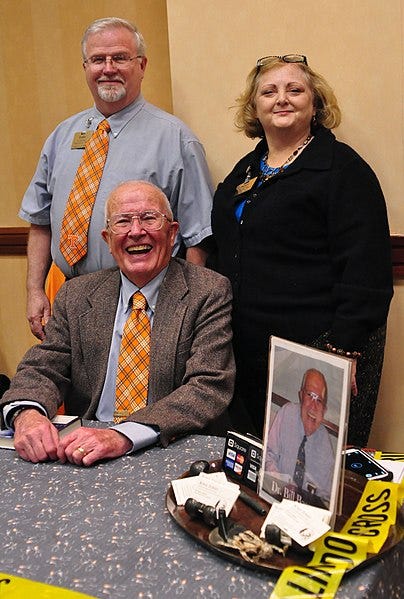
Back in 1971 police and medical examiners across Tennessee began turning to Dr. William Bass to help them figure out how long people had been dead.
As anyone who’s watched CSI knows, time of death allows investigators to narrow down suspects, validate alibis, and help identify the deceased.
Body temperature, rigor mortis, lividity and the presence of certain insects can help determine these factors.
Dr. Bass was pleased to examine bodies and to assist law enforcement. But his problem was, he didn’t have a proper place to temporarily store them.
One day, after Dr. Bass stuck a fresh corpse in a restroom near his office, a very frightened and most unhappy janitor reported that he’d almost had a heart attack.
In order to continue his work with medical examiners and detectives, Dr. Bass petitioned for a space to keep his deceased visitors.
From that request an internationally recognized center for the study of decomposition of the human body was born. The facility has been replicated by numerous universities across the U.S. and overseas.
It was the first facility of its kind in the world.
A typical day at the Body Farm
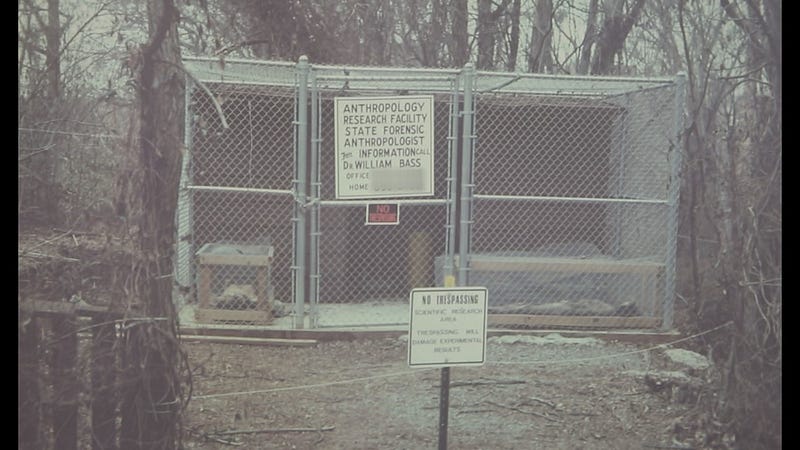
On any given day there are between 150 to 200 donated cadavers are littered across the hilly acres near the University of Tennessee Medical Center. The bodies are in various stages of decay — all under controlled circumstances mimicking the fate of actual crime victims.
Some are buried in shallow graves, others are placed in car trunks and more are submerged in ponds or strewn randomly throughout the grounds. To keep dogs and coyotes from carrying off human remains, corpses are surrounded by protective cages.
For the past 25 years the Body Farm is where F.B.I. agents are trained to investigate outdoor crime scenes. It allows them to study how bodies decompose so they can estimate how long someone has been dead.
Time of death is one of the first things crime scene investigators need to know. It helps in the identification of the victim and sometime the perpetrator.
Maggots and blowflies
In demystifying the question of time of death, the biggest contribution to forensic science and law enforcement is understanding the stages of insect invasion.
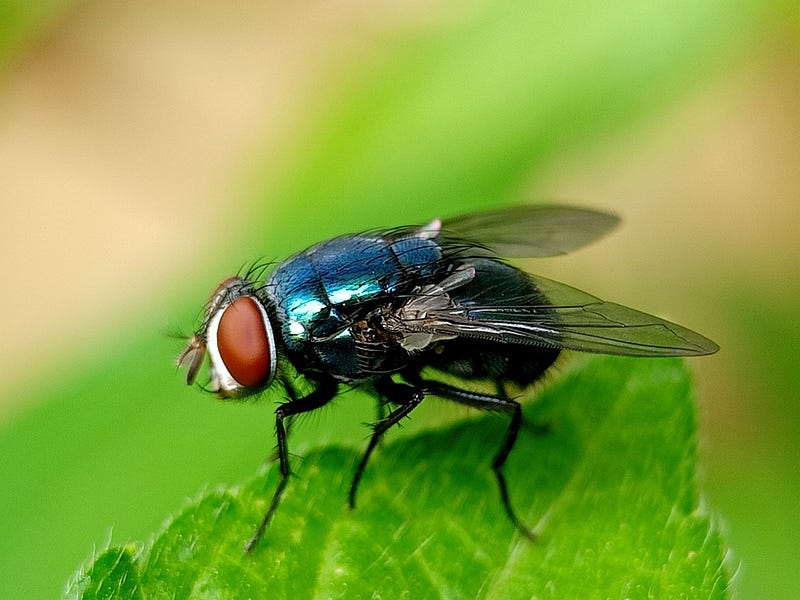
As bodies languish outside in all kinds of weather the Body Farm’s forensic scientists observe how blowflies invade a body.
Within minutes of death blowflies arrive on the scene and colonize the body. They hunt for cavity openings to lay their eggs — the nose, eyes, ears, anus, and vagina of the victim.
Maggots then hatch and thrive, feasting on the body’s flesh. As the insects lay their eggs investigators can analyze the developmental stages of the flies to approximate time of death.
The Body Farm also reveals other things useful for research — such as what type animals move in to consume a body, and how bones scatter as the corpse decays.
Predators such as wasps may swoop in — not to feed on the corpse — but to prey on other foraging insects. Since each species has a preferred time to dine on a dead body scientists can observe the gathering of various organisms to help estimate more accurately each post-mortem interval.
They also discover how bodies react when left out in frigid temperatures and what happens when exposed during the summer heat.
They can study the hundreds of chemical compounds emitted from a corpse as it rots and how prescription medicines affects the way bodies decay in death.
They’ve even been able to observe bodies buried at various levels under concrete when viewed through a ground-piercing radar.
The writer who made the Body Farm famous
The Body Farm lit up the imagination of crime junkies after the release of mystery writer Patricia Cornwall’s 1994 book The Body Farm.
In the book Cornwall’s main character, detective Kay Scarpetta, investigates the brutal murder of a young girl in rural North Carolina.
Scarpetta turns to the Tennessee research facility — the Body Farm — to help track down the serial killer. Through this connection she discovers leads that ultimately solve the girl’s murder.
Public interest rapidly grew after her best-selling book, and soon there were numerous articles written about the facility and its director, Dr. Bass.
Although the Body Farm receives frequent requests for tours, the heavily guarded facility — surrounded by a razor-wire fence — doesn’t allow public viewing.
Administrators at the Body Farm emphasize their purpose is for training, research and assisting law enforcement. All bodies are donated and they are tasked with ensuring that the families of donors are “treated with the utmost respect and compassion.”
In addition, visitors on the grounds would compromise the research.
Body Farm donations
Currently over 5,000 people have pre-registered to donate their body to the Body Farm. They typically receive around 100 donations a year which are within a hundred mile radius of the facility.
Just as people can choose to become an organ donor when they die, they can also donate their body to the Body Farm. (Link to the body donation packet on the Forensic Anthropology Center website.)
When someone donates their body they are first examined for infectious diseases. Then the individuals’ doctors are contacted for medical records. If everything checks out, two graduate students make the drive to the where the body is kept to bring it back to the Body Farm.
After a body decomposes on the site, the skeleton is cleaned and labeled. It’s then placed in a cardboard box that will reside in the W.M. Bass Donated Skeletal Collections at the university.
Closing thoughts
Macabre as it may seem, body farms — such as the one at the University of Tennessee — offer tremendous benefits for forensic science.
The use of these facilities to study the effects of the decomposition process continue to assist law enforcement in solving murders and unraveling other mysteries.
In recent years, the Tennessee Body Farm has worked with Mexican investigators to help them identify drug cartel victims buried in mass graves.
Because of the continuing advances in forensic science it’s now harder for killers to make their victims disappear.
As quoted in Patricia Cornwell’s book, The Body Farm, “In death, we find truth, for the body cannot lie or deceive.”
© 2024 Deborah Camp. All rights reserved.