
Use these free Strange Attractors to make interesting Midjourney images
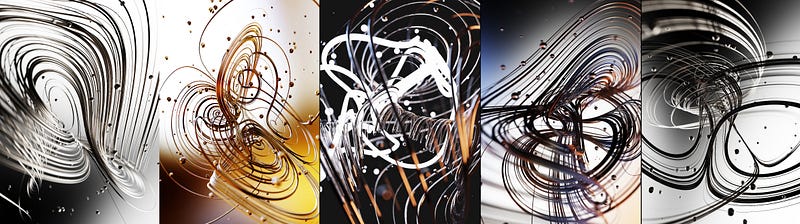
One of the best ways to create outstanding images with Midjourney is to inspire it with image references or style references. And the best reference images are indeed those that are pretty special to begin with.
And Strange Attractors are just perfect for that. Actually, strange attractors are just mathematical functions with some interesting properties, but when those functions are plotted as graphs, they look really artsy and fascinating.
While it is possible to ask Midjourney to create a Strange Attractor image, it will not be able to reproduce one with any fidelity. Still, it could make something fancier than usual prompts.
But, as luck has it, I have been very fascinated with Strange Attractors for a long while now, and created, using the best 3D modelling and rendering engines, quite a lot of rather beautiful images of those outstanding mathematical functions.
I will give a link later in the article where you can download these images of mine and have some fun with them. But I will start with a bit of explanation of how I use them in Midjourney.
I tend to use reference images quite a lot. But, unlike most users, my reference images rarely have a direct connection with the prompt. I rather use a reference to something that is difficult to describe with words in the prompt.
My reference images might have a bucking wild horse; when the prompt asks to create a dancer, the reference image serves as inspiration for wild motion and energy.
I wrote an article about it, and if you did not read it, it is here, it might be fun to read it too.
So abstract, swirling pictures of Strange Attractors are excellent for inspiring the creation of all sorts of images — from cats to dancers, musicians, and even coffee cups. They can guide the composition a bit, resulting in more elegant flowing forms.
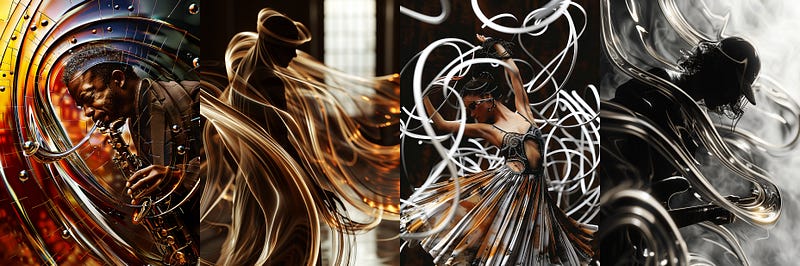
Strange attractors add some streaks and swirls, resulting in dynamic images that are quite difficult to prompt just with words.
Here are some examples of a simple prompt “cat” with one of the attractors as a reference image.
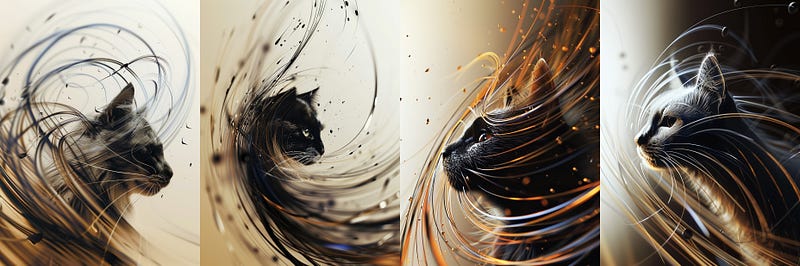
Of course, it is possible to use those images as style references, too. The result is subtly different; the prompt has more weight, images have a bit more realism.
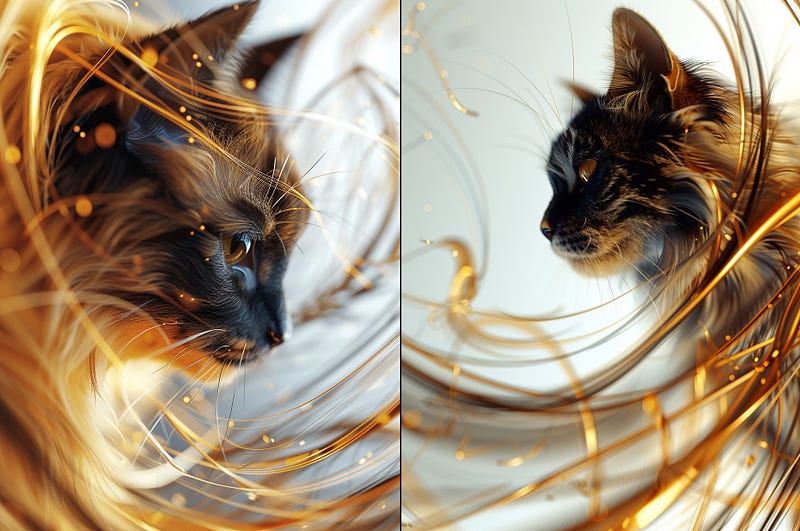
There are some other parameters that will influence the outcome, too. I usually use pretty high stylize parameters when providing abstract reference images and guiding prompt with unrelated words. In my experience, a value between 500–700 works best.
It is also worth noting that changing style from standard to raw will have a subtle yet noticeable influence. Once again, your prompt will have more weight over the reference or style image. It is also easier to give more complex prompts in raw mode.
I created some images of a dancer using standard and raw modes for comparison while everything else was the same.
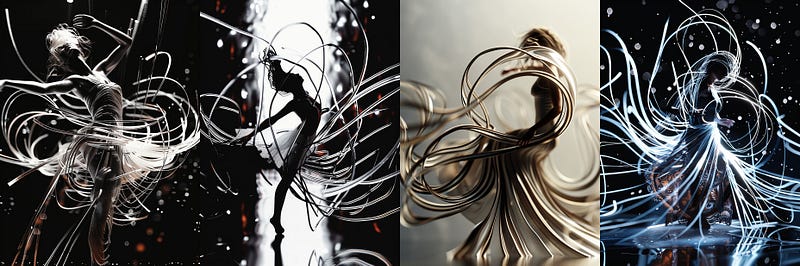
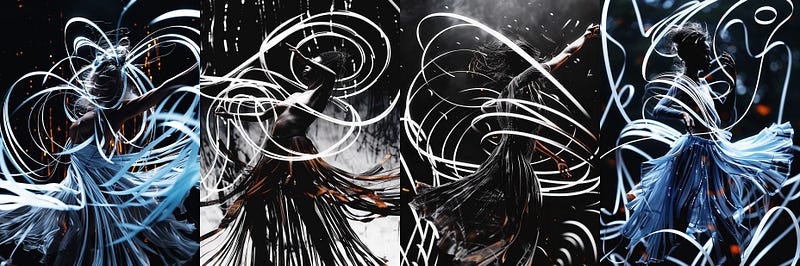
Using these Strange Attractor reference images, I was able to create quite a few very nice images, even with single-word prompts. And now, so can you.
You can go to my Ko-fi shop here and get a pack of 10 strange attractor images to start playing with.
For now, there is just one set of images there, but later this week, I will add a few more sets; it should be enough to create a couple of million unique Midjourney images.
Use your imagination with those reference images, combine them as reference and style images, and play with words.
Those images are provided for you for free and without limitations. Use them any way you like: modify, print, and use them as wallpaper or inspiration for Midjourney.
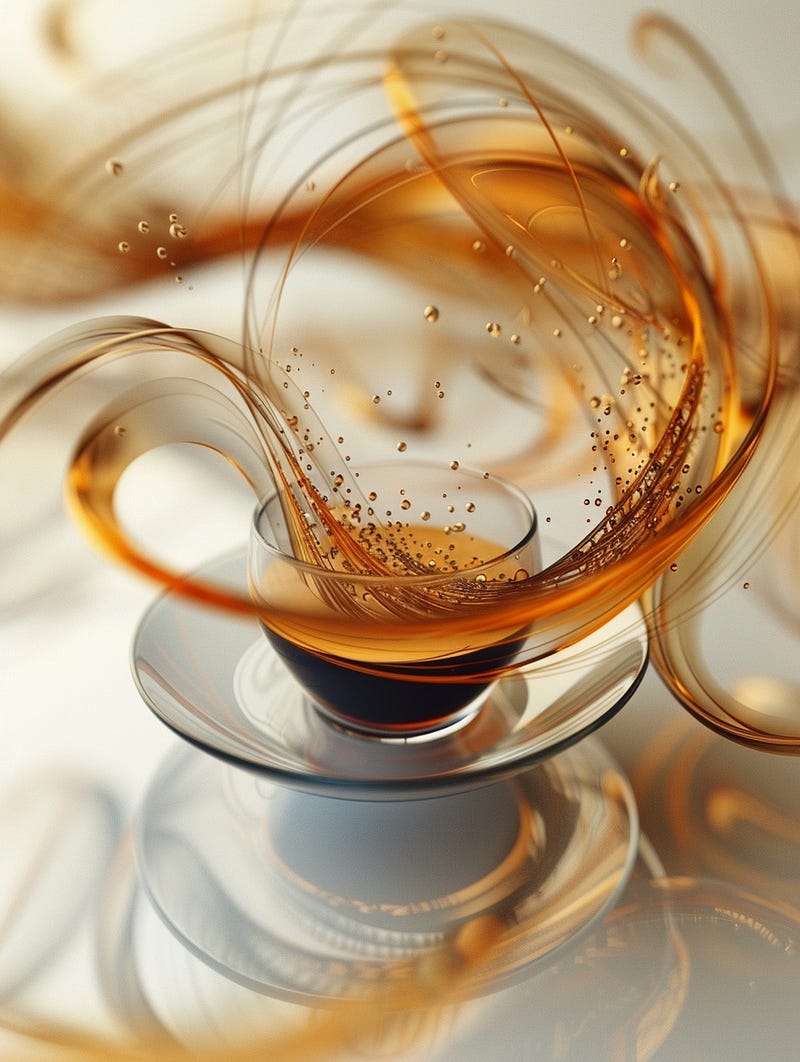
But if you feel like buying me a cup of coffee, that would be nice too.
Clap if you liked this article; please highlight and comment, too. Do not forget to check my publication “Let There Be Prompt” every now and then; my next article will be about using fractal images for inspiration as well as free images.
Aivaras Grauzinis


