
Health
Use a Blood Glucose Monitor to Lose Weight
Improve Eating Habits and Reduce Weight with Hunger Training
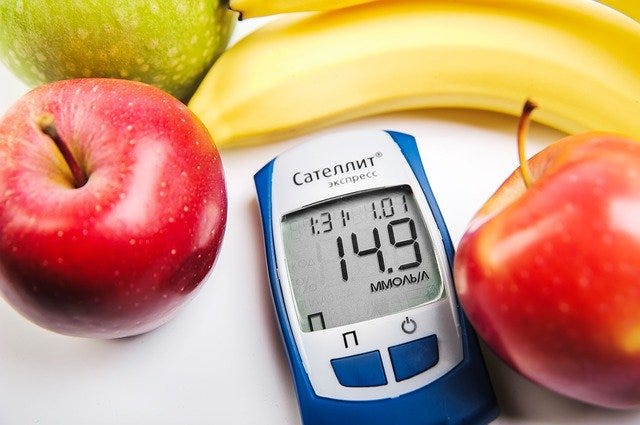
Something I’m working on is becoming more aware of when I want to eat from hunger, and when I want to eat for other reasons such as boredom, stress, or sadness. It’s not easy for me, and I wrote about my difficulties in the article “Better You: Reducing Snacking Through Interoception.”
Hunger is driven by several mechanisms in the body, including the vagus nerve communicating the emptiness of the stomach, the release of the hormone ghrelin, glucagon and epinephrine levels, and blood glucose levels. Even though all those things contribute to triggering hunger, there are studies showing that blood glucose is a generally reliable indicator of when we are hungry. Studies indicate that blood glucose levels below a marker between 80 and 85 mg/dL indicate hunger.
Scientific researchers have used this information for “hunger training” —educating our brain to know when we are really hungry by using data about the physiological state of the body. The goal is to teach them to delay meals until they feel physiological hunger. During hunger training each subject was given a blood glucose monitor and then instructed them to test it when they wanted to eat something, every time. If their blood glucose was below a certain level, they were instructed to go ahead and eat. If not, they were instructed to wait.
I decided to try hunger training with a blood glucose monitor for myself. I used a cut-off blood glucose level of 81.8, based on the study I felt had the most reliable number and the fact that my fasting glucose numbers are not normally elevated when tested. The goal was to do the following: When I felt hungry, I would test my blood glucose. If it was below 81.8, I ate. If it was above, I would wait.
Using a Glucose Monitor for Hunger Training
First, I got an inexpensive blood glucose monitor (cost was about $30 online, also available at local pharmacies). The next morning, I waited until I wanted to eat, which was about 10am. I tested my blood glucose, which was at 74. Yay! It was below the cut-off level of 81.8, so I had breakfast — oatmeal, walnuts, flaxseeds, and blueberries. I waited again until I wanted to eat at noon, tested, got a reading of 68, and ate. Then, mid-afternoon, I wanted to eat again. Snack-time! Except…when I tested my glucose, it was 90.
When I ignored my desire to eat a snack and really paid attention to my body, it was clear I wasn’t actually hungry. When I asked myself what was driving my craving to eat, I discovered I was just procrastinating on a work assignment and wanted a distraction and something fun to do. Snacking fit the bill, but would work against my desire to lose and maintain my weight, and impact my health. I took a short break, relaxed, and then got back to work instead of eating. That’s a big win for me!
I did it a few more days, and I found a similar pattern. When I wanted to eat and my blood glucose was under 81.8, I was legitimately hungry. When I wanted to eat and my glucose was over that number, it was clear I wasn’t really hungry if I turned my attention inward and assessed my sensations. The only exception I found was that after I exercised, my blood glucose would be elevated whether or not I was hungry. This is a normal result of exercise — our body releases glucose into the bloodstream from the muscles and liver during exercise for energy, and at the end of it, some remains for a bit.
One effective strategy for weight loss may be learning to eat only when hungry, as eating in response to environmental, social, or emotional cues rather than physical hunger has been consistently associated with a higher body mass index (BMI) and energy intake…. Participants are trained to connect their physical symptoms of hunger with their blood glucose, and to eat only when their blood glucose is below a set target. When tested in a group of 74 overweight participants, this method of “hunger training” (or “hunger recognition”) produced significantly greater weight loss over 5 months (3.5 kg), compared with that observed following the conventional approach of increasing vegetable intake and physical activity. — Jospe, “Adherence to hunger training using blood glucose monitoring: a feasibility study,” 2015.
What I Learned from this Self-Experiment
- Finding a way to take the time to look inward before eating, every time, gives me the space to determine whether I really need food, and if not, make another choice. If I do need food, I have the time to pick out foods that better support my goals — whether that is health, pleasure, or both.
- I found it valuable to have my blood glucose readings accurately correspond with what I thought hunger felt like. The sensations I thought were hunger really did signal my body needed nutrition! My body is working as it should, and my mind can tell when it needs food — and when it doesn’t — if I just listen to myself.
- I learned that it is very easy for our minds to come up with excuses to eat, even if our body doesn’t need food. At certain times of the day, my mind would tell me it wanted food, and I would get thoughts arising like “Maybe my lunch was too small!” or “I had a harder than usual workout today…” But when I followed those thoughts and tested my blood glucose, it didn’t indicate I was physiologically hungry. Having an objective measure of whether I needed food really helped me to ignore those little voices in my head urging me to eat.
Overall, this was a fun self-experiment that I learned a lot from. I will do it again in the future when I need to recalibrate my understanding of hunger in my body. It was cheap and easy to do. If you, too, have difficulty with eating when not hungry and would like to lose a few pounds, I recommend this a good technique to try.
In a previous article, I discussed how we can use awareness of our internal body states to reduce unwanted snacking. This article builds on that by using biofeedback to learn internal body states.
Further Reading:
Jospe, M R et al. “Adherence to hunger training using blood glucose monitoring: a feasibility study.” Nutrition & metabolism vol. 12 22. 9 Jun. 2015, doi:10.1186/s12986–015–0017–2
Ciampolini, Mario, and Riccardo Bianchi. “Training to estimate blood glucose and to form associations with initial hunger.” Nutrition & metabolism vol. 3 42. 8 Dec. 2006, doi:10.1186/1743–7075–3–42
Campfield LA, Smith FJ. Blood glucose dynamics and control of meal initiation: a pattern detection and recognition theory. Physiol Rev. 2003;83(1):25–58. doi:10.1152/physrev.00019.2002


