
Ukraine
US Plans to Send Anti-Ship Missiles to Ukraine
Harpoons and Naval Strike Missiles are in the mix to keep Russia’s Black Sea Fleet at bay. Why is this important?
The missiles are piling up
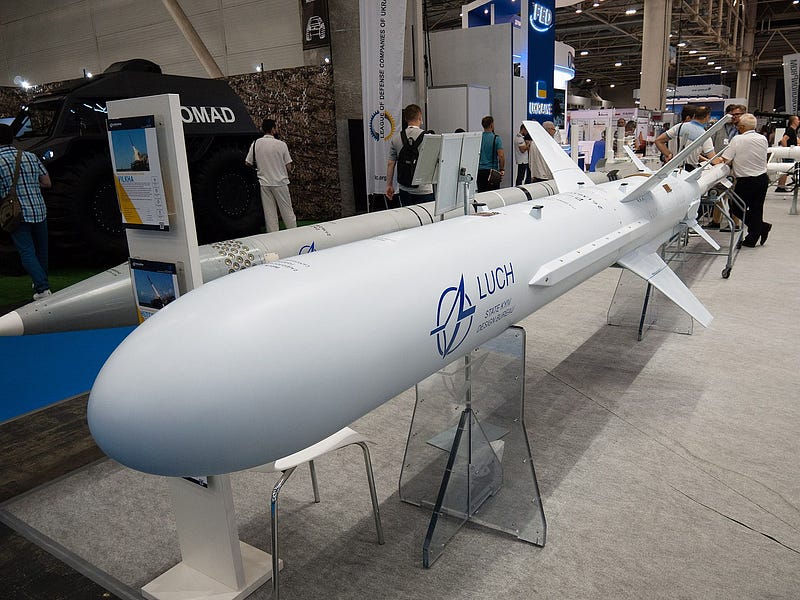
In early April 2022 the UK said that it would send anti-ship missiles to Ukraine.
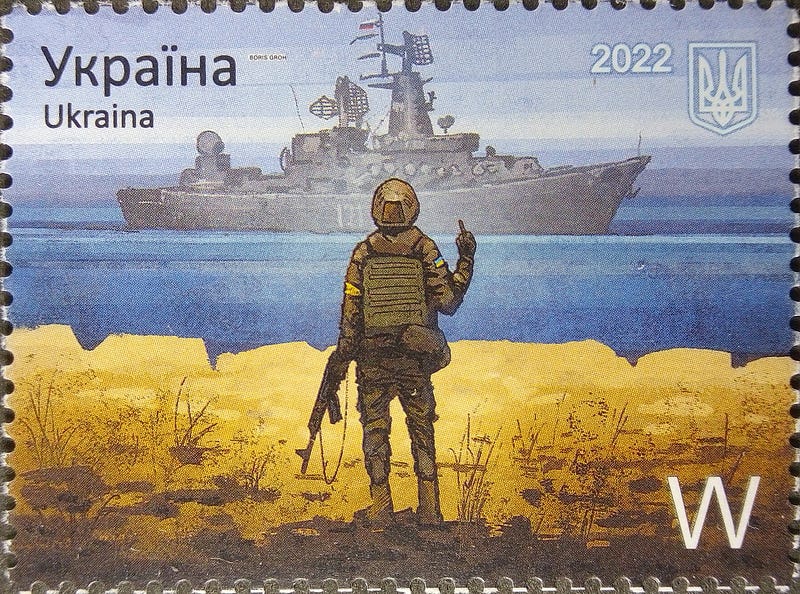
Then on 13th April, the Ukrainian forces sunk the ‘Moskva’, pride of Russia’s Black Sea Fleet. It’s believed that they used two of their own R-360 ‘Neptune’ anti-ship missiles to do so.
The result was that Russia’s sea blockade was moved further offshore — as well as a lot of egg slapped on the face of Russia’s navy.
And now the US is getting in on the act and planning to ship Boeing’s Harpoons and Raytheon/Kongsberg Naval Strike Missiles (‘NSM’) to Ukraine.
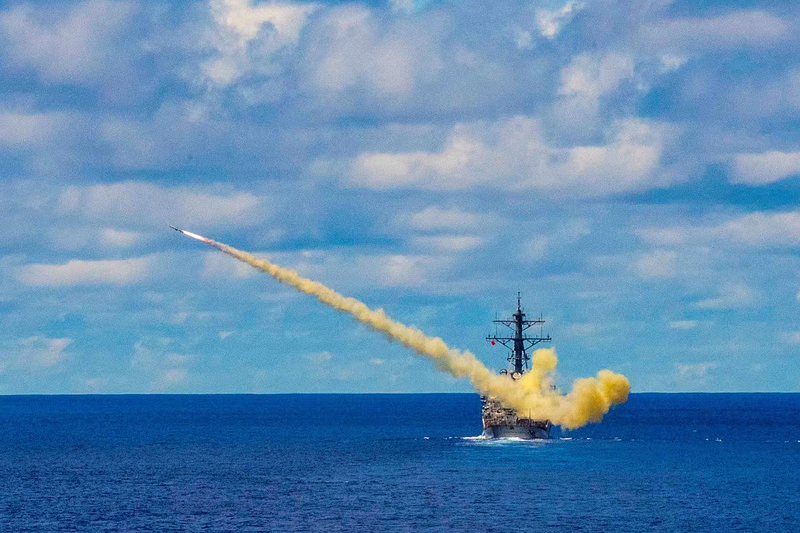
The shipment would probably be effected through a transfer to a European ally which already has them (for example, Portugal).
The idea of extended-range, more powerful weapons for Ukraine has been hampered by several factors, such as lengthy training requirements, difficulties in keeping equipment in working order, and worries that US weapons could be seized by Russian forces. Suitable launch platforms are also an issue.
The climate in Washington has recently changed
However, there are a number of difficulties preventing Ukraine from receiving the missiles. First and foremost is a lack of suitable platforms to launch Harpoons from land, which officials say is a technically complex option.
It has been reported that the United States is working on potential solutions that included pulling a launcher off of a US ship.
However, there does appear to be an air-launched version of the Harpoon fitted to the US Navy’s P3C-Orion aircraft.
In contrast, Ukraine’s R-360 Neptune can be launched from a truck, as can the NSM.
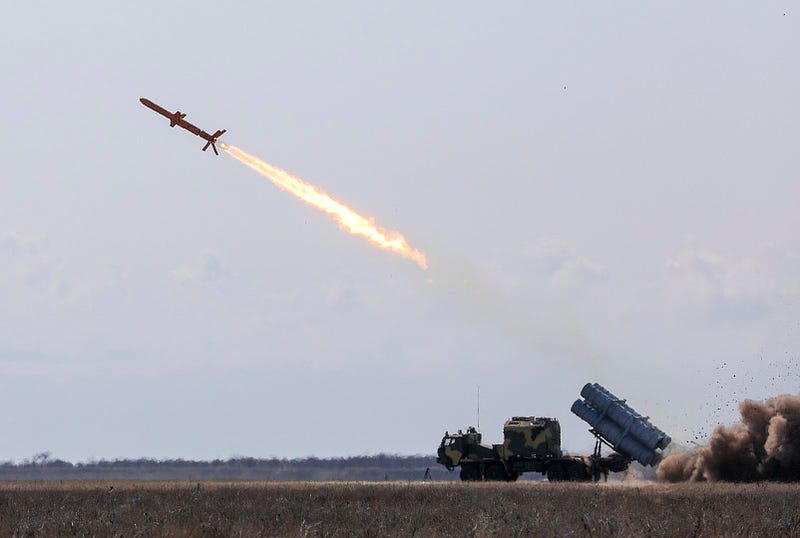
Harpoons cost about US$1.5 million per missile and NSMs about $2.2 million, according to industry executives. That’s a very cheap way of taking out a capital ship.
I can see that the US might be re-evaluating its Harpoon missile launch systems in light of the Ukraine war and making them land-portable, although it is now near the end of life and a new procurement cycle is underway.
The missile threat range
The Neptune (ironically based on a Soviet design) has a range of about 280 km, the Harpoon about 120 nautical miles (200 km) and the NSM 555+ km.
Given that the Neptune and Harpoon are more or less range-equivalent then it’s the NSM — Naval Strike Missile — that would be a game changer at 555km, pushing the Black Sea Fleet well away from Ukrainian coastal waters.
Note that there were reports that shortly after the sinking of the Moskva there was a Russian missile attack reported on the Neptune production facility in Ukraine (sorry no link to that story). It’s possible that tooling and other Neptune production facilities may have been damaged or lost.
Why is this missile shipment so important?
It’s important because if Ukraine can deter the Russians from close blockade of the coast then they can open their commercial ports to shipping — and to grain exports.
Ukraine is a major grain exporter in the world. Before the war, every day, around 3,000 container loads of grain would arrive by train at Odessa and other Ukrainian ports, where they would be stored in vast silos pre-shipment. However, since late February when Russia invaded the country, most of this grain, including 25 million tons that are stored has been piled up and will decay in the silos if not shipped.
Currently, Ukraine can only use small-capacity Danube river ports and trains to ship grain. Volumes are relatively miniscule.
So Putin, with his blockade, is effectively holding the world to ransom over food supplies.
Destroy the Black Sea Fleet?
Anton Gerashchenko, a Ukrainian Ministry of Internal Affairs adviser, recently said that the United States is “preparing a plan to destroy the Black Sea Fleet” to end the blockade. That sounds a bit far-fetched to me, but certainly the NSM missile threat could seriously hamper the Black Sea Fleet’s blockade and enable Ukraine to re-commence grain shipments.
Although the conflict is in Ukraine, its impact on food security will be global. The Black Sea basin is one of the world’s most important areas for grain and agricultural production. The consequences of the conflict will increase pressure on resources and access to food beyond Ukraine’s borders.- World Food Program
If the Ukrainian ports aren’t opened soon, Ukrainian farmers won’t be able to store their next harvest in July and August. Due to the conflict, ships carrying Ukraine’s grain have been stranded with little hope of moving, according to The Telegraph.
Russia has said it will not allow ships to move from Ukrainian ports unless anti-Russian sanctions are reviewed.
👤President of Ukraine Volodymyr Zelensky said that the state is considering various options for unblocking its ports. One of them is the military way, and for this, they have already requested the appropriate weapon.
“22 million tons are blocked today, and Russians are still constantly stealing and exporting our wheat somewhere… We need to unblock these routes because there will be a crisis in the world. There are many ways to deblock Ukrainian ports. One way is the military way. Therefore, we are turning to partners with such requests regarding the appropriate weapons,” Zelensky said at a recent press conference.
And more — the NSM poses a threat to the Crimean (Kerch) Bridge:

About me: If you follow me I guarantee variety in your inbox! I write on a wide range of topics including humor, tech and travel, together with daily news events and the minutiae of my daily life living on a boat. I also write techno-thrillers…and about…
…food as a weapon of war
If you appreciate stories like these and want to support other writers and me, consider signing up to become a Medium member. It’s only $5 a month, giving you unlimited access to incredible stories on Medium. If you sign up using my link below, I’ll earn a small commission at no extra cost to you.
Or just buy me a coffee?