
Learnéd Lessons
Unveiling the Dark Side: My Confession of Childhood Bullying
Bully to Educator: My Journey of Self-Reflection and Redemption
For the longest time, I didn’t realize why I was a bully.
I wasn’t really a good guy in middle school. I would do some bad stuff, and I think it might’ve had something to do with my mom and dad’s divorce.
The bullying started after.
I was alone a lot — babysitting and all — the man of the house at ten — and I think I just became a man at fifty. I was also paranoid — thinking my mom would never come home from work, and what would happen to us? How could I keep the world together?
To my eternal shame, as then a white knight, I repeated what my mom said to my dad on that very sad night.
“You heard her,” I said. “Get out.”
You see, I was mad and upset. And anger at mom was just not a thing to a dude with a double dose of Madonna and Goddess Complex. But anger toward father was easy.
There was his one kid who was tall and very thin, and I used to call him names like “kibbles and bits.” He would stand against the wall with his arms crossed against his chest — as if to keep warm or for protection,
Then there was another kid who had his books in a bowling bag, and I would make fun of him too. And dump his books on the carpeted floor.
Even now, I can’t go back to that school — and smell that same smell of the carpets and the mixed-up hormones — without feeling shame, as well as missed opportunities of friendship and education.
Was Voorhees Middle School a Black Hole of Education — or was I a Black Hole?
Looking back, I wonder why I was so mean — and creatively vicious, like a crueler version of Don Rickles.
Another kid named Billy I called “Billy Boner Boy.” Talk about projection!
I used to arrange fights between some of my friends, like my friend Paul and Antony. I would provoke them into fighting, but most of the time, the fights never happened.
One day, Antony appeared at the spot with rocks in his pocket. I was egging them on. Should they have thrown them at me? Yes.
It was ridiculous, and I had a lot of apologizing to do for those days.
Even in ninth grade, I wasn’t much better. I remember writing letters about my friend’s mom, thinking it was all a joke. I can say it was a different era, but mean is mean, regardless of timeline. Such explanations don’t excuse anything, but I feel good getting this off my chest.
I remember this one time when my younger brother, three years my junior and a nature enthusiast, was crying about a character’s death on “M*A*S*H.” He was upset that Radar died. Wow? Real human emotions? Real tears? Why couldn’t I have real tears? What — who — was holding me back? Talk about displaced aggression!
I got frustrated and ended up hurting his finger — trying to get him to “man up.” There was another time when I chased him around the house, and he injured his toe on the stereo.
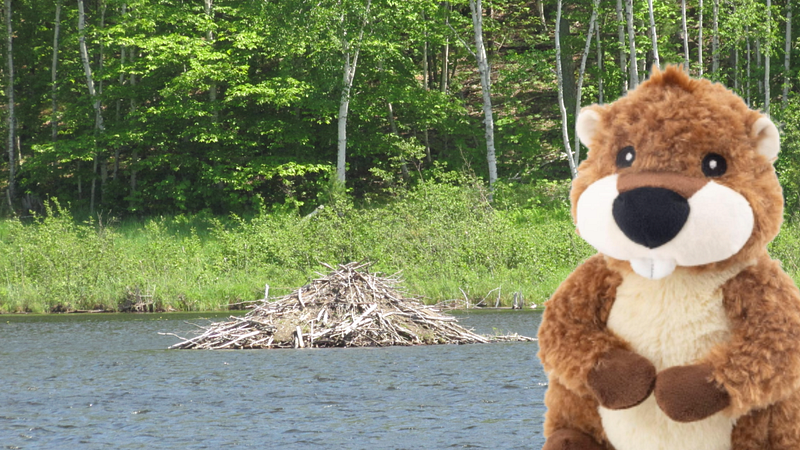
I also remember an incident with a stuffed beaver named Buddy. My brother loved Nature — still does as an ecologist and professor. We would take hikes in New York and Wyoming for beaver huts. I joked about that was the only “type of beaver” he liked. What an ass! What a pathetic, cliche “joke.”
Well, I took Buddy, tied a rope around its neck, and swung it from the ceiling while playing Led Zeppelin’s “Gallows Pole.” Looking back, it was cruel, and my brother didn’t deserve it. Even if I thought he was getting preferential treatment at vacations for his love of beavers and his grades, did he deserve to have his love mocked?
Who deserves that?
What was preying on me? What demon had possessed me? Is searching for a demon a lame excuse at scapegoating? It wasn’t me — it was Satan!
In those days, I think I was influenced by an older cousin from California who stayed with us. I learned a lot of bad habits from him, particularly about teasing. Sometimes, I joined him in things I knew were wrong — like picking the lock of the bathroom where his younger sister was bathing. We barged in. She screamed. Covered her chest with a hand towel. I rather had a crush on her — as she was a year younger, and living with us at the time — but what a barbaric thing to do.
Why didn’t I defend her? Wasn’t I a White Knight?
I realize now that I was often frustrated and seeking attention, as I didn’t have many friends and struggled in school. These actions I used to get noticed or make people laugh.
Back to Buddy the Beaver. My brother was so upset, he pushed me through the bedroom, into the hallway, and through the wall. My shoulder created an opening enough to crawl through. He cried. I was like, “Oh, shit.” And my mom was actually proud of him for standing up to me. I was, too. After that, I didn’t even have a bedroom; I slept on the sofa and eventually in the pop-up camper in my “Dude Cave.”
Our different personalities led me to prefer staying up late and listening to rock music, while my brother studied and read. I didn’t like reading, then. Just too passive.
In my sophomore and junior years, I matured and stopped engaging in bullying. My English teacher redirected my passions into writing, acting, and music. Later, as an English teacher, I wanted to make amends for my past actions and understand the mindset of bullies.
For seventeen years, I helped thousands in Student Alliance. That’s a start.
Recently, during a family gathering for my mom and father-in-law’s birthdays, my brother and I discussed those dark days. It reminded me of the harm I caused, both physically and emotionally. Does my brother still hold resentment? I can’t say I blame him.
We make mistakes when young, often without realizing the consequences. It’s essential to provide guidance, education, and redirection for youth engaged in bullying behavior. Hell, now, many adults are bullies. Punishment alone isn’t enough; we need to help them understand why their actions are hurtful.
As educators and adults, we should also give ourselves some grace and use our experiences to make a positive change. Those skeletons in closets can be used not for Halloween — but for Good. For Change. To show humility and humanity. It’s important to confront them and use them as a force for good.
Don’t be a bully; it’s a message we should all support and promote.
Thank you for reading! Please check out my other work:


