
Unpopular Opinion: Stay-At-Home Moms Are Just Fine, Thanks
I don’t feel the oppression you press upon me.
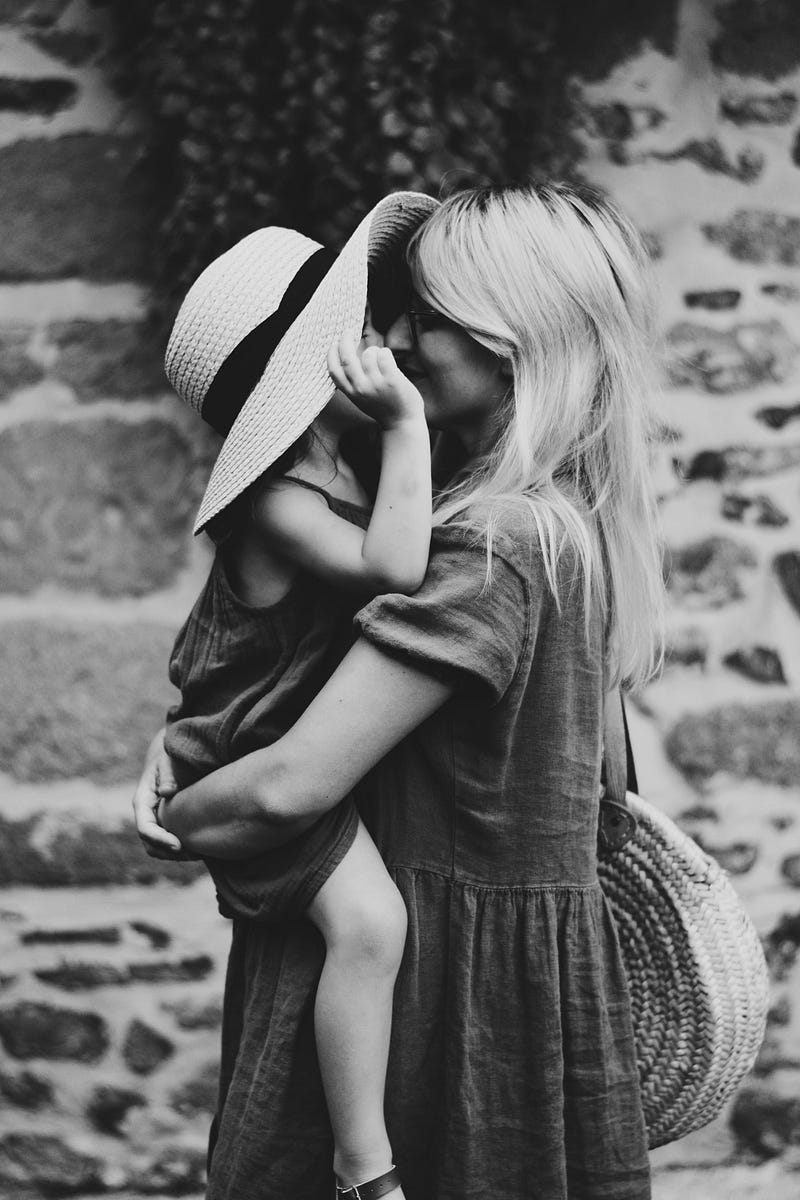
I’m supposed to be unhappy.
I’m supposed to feel oppressed. I’m supposed to fight back and march with the other strong, independent women who don’t need a man or kids to be fulfilled. I’m supposed to make sandwiches for myself and myself alone. I’m supposed to raise my daughter to be the CEO of a company she created on her own without the influence of men—I'm supposed to lead by example.
And from what I understand, that doesn’t involve cooking and cleaning for my family or raising my own children.
Whenever this topic comes up, I’m reminded of my late, wonderful grandmother. She was a housewife, mother, and supporter of those she loved most, and she was happiest when she was doing those things. Oppressed? Heck no. She thrived.
I’m thriving, too. Among my siblings and friends, I’ve always been the more traditional, and of late, that has involved being something of a rebel—bizarre, but somehow still true. I'm the only one (literally) who has remained married, the only one who has an intact nuclear family. I’m the unexpected but genuine black sheep of my old inner circle.
I’m not sure how that happened, but one thing is for certain: women today are expected to follow their hearts, to follow their dreams, and to have children only after they’ve lived a self-focused life—or not at all. But being a family and faith-driven woman who wants nothing more than to have a front-row seat to her own children’s upbringing? A wife who wants to keep her marriage happy and plays her “role” in that equation with genuine intention?
Impossible.
I’m supposed to be unhappy, but I’m not. I’m supposed to feel oppressed, but I don’t. Instead, I feel fulfilled and joyful, and while life comes with its trials and surprises, I’m genuinely happy with the person I am and how I spend my days. I wonder if I’ll one day be considered part of the “oppressed women” camp in future statistics and what my grandmother would say about that.
Above all, I wonder when people will just mind their own business and, quite simply, let me enjoy mine.
Making Waves
Before the second wave of feminism crashed gloriously through our polished homes and changed the functions of traditional family life, women donned their frilly aprons and feather dusters and did all the things a home needed to run smoothly.
From following a detailed cleaning schedule to having lovingly home-cooked family meals prepared each night, being a wife and mother at home was busy and—unpopular opinion alert—fulfilling for many women at the time. Not all women, of course. Don’t yell at me.
But the modern-day narrative is that those smiling 1950s housewives were, on the whole, oppressed and unhappy in their situations. I believe that to be true for many, as it is today for some. But the majority?
I don’t know—I wasn’t there. But it seems unlikely that the entirety of my sex was unhappy with their lot, especially considering how many are genuinely happy looking after their families at present.
While many women were effectively trapped in terrible marriages and situations, there were also women, like my grandmother, who were content with their role as the family matriarch. So were they genuinely happy, or was it all just clever advertising?
You tell me.
Happy or not, everything changed for women with the emergence of the second wave of feminism, which came rampaging in with braless hippies and activists of all kinds touting the freedom of love and peace for women systemically oppressed by the patriarchy.
To be honest, I’m not entirely sure that was a good idea for every woman or for every home. Some were perfectly happy keeping a pristine home and raising their children. Some were happy that wartime was behind them, as were the jobs they had to pick up in order to keep their country running.
I suspect that many women were happy to be able to mother their own children and serve their own families in peace. I know I am. But do I know that they were?
Of course not. I wasn’t there.
But what about today’s women? Life is certainly different now than it was in the ’50s and ’60s; surely women’s experiences have changed alongside the ever-changing world. How has family life changed, and more importantly, has the shift in women in the workplace been beneficial to the inner workings of the “family unit?”
Or has it been detrimental?
The daycare era
I remember petitioning social media forums for a daycare or day home for my first child so that I could return to work, and someone said something that infuriated me at the time.
“Why did you have kids if you can’t even look after them?”
Yeah, it’s rude as hell, but there’s some truth to it—at least, current Me can see the truth to it. Past Me was irate and made no bones about that fact, but that’s not the point. At the time, I thought I was upset about being a woman and being told, essentially, to stay at home where I belong. You know, where the patriarchy wanted me.
I was mad as heck. But looking back, I was mad about the wrong thing.
We are living in a society that not only expects but also encourages mothers to birth children and then hand them over to the establishment so that we can continue boosting the number of women in the workforce. Why? Why is that important to the women’s movement?
I refuse to get into a heated debate about the patriarchy and how women in my situation are oppressed because that has simply not been my experience. To the contrary, my experience as a stay-at-home mom and housewife has been empowering, and if I ever felt it wasn’t, I would have a much easier time extracting myself than my 1950s counterparts would have. In fact, my “job” is ten times easier than theirs ever was, thanks to technological advancements alone. I’m extraordinarily blessed to be able to stay home and raise my children, and the fact that this is not the norm is absolutely astounding to me.
How are we not making it easier for mothers to make this a choice they can make? For so many, it’s just not an option to stay home with the kids or to live on a single income, and if you ask me, that’s taking something away from women and our empowerment. Why aren’t we working towards a solution for this—one that doesn’t involve putting our kids in daycare when we don’t want to?
And how has the idea that women at home are oppressed ever entered the minds of our younger generations?
I know from past discussions on this topic that neither side will change their minds. Our lived experiences combined with the media we consume and the people we surround ourselves with will ultimately solidify our opinions on the subject, and no amount of discourse or statistical spam will change that. And it’s okay.
But I flat-out refuse to declare that I’m in any way oppressed—or that I’m somehow oppressing myself—by lovingly meeting the needs of my family. I refuse to be at fault for any perceived patriarchal oppression.
I will not be shamed for my choices or my family’s ability to support this lifestyle. We’re just making ends meet and fancy holidays are not in our forseeable future, but our kids are thriving—we're all thriving. And we’re all happiest with me being at home, keeping everything running smoothly.
And what’s wrong with that?
The happiness debate
My own happiness aside, the burning question remains: Are women who stay home to raise their children happier than those who pursue their careers?
While I’d love to give you a definitive yes or no answer, the situation we find ourselves in as women is more complicated than that. I will say that I personally am much happier, but I can acknowledge that it’s not for everyone. In fact, it’s impossible to study this topic until women are actually at home with their children for an extended period of time, and even then, it’s hardly an exact science.
For example, I returned to work early with my first child because I missed my career and having adult conversations, but desired nothing of the sort after having my second child, despite being further along in my career at that time. A woman’s opinion on this matter can vary greatly, as well as often:
...women may have an idea about what their role will be many years before they have children, and thus may adjust their educational, work, and relationship choices in view of that idea. This problem of endogeneity is very hard to solve. — IFStudies
There are a few studies on this topic nonetheless. The Institute for Family Studies mentions two, specifically, alongside their own:
- The National Library of Medicine found through their National Longitudinal Survey of Youth (NLSY) that women who remained in their careers without interruption due to having children were in a better mental state overall than those who experienced a disruption (generally for having children). Moreover, women who left their careers to have children and didn’t return to them afterward were just as healthy.
- Sage Journals compiled the data available through years of the General Social Survey to determine that women’s satisfaction in their careers has changed over time. In the 1970s, stay-at-home mothers were generally dissatisfied with their roles, but by 2012, stay-at-home mothers expressed greater satisfaction than those who worked in their careers outside of the home.
While these studies seem to lean toward SAHMs being happier than (or at the very least, just as happy as) our corporate counterparts, staying home and serving one’s family isn’t for everyone. Some women don’t want children—some women can’t have children.
Some women thrive without children.
There’s also a strong argument (one that I fully support) that speaks to women who excel at and love their careers. It’s a choice well worth making if that’s what a woman chooses in life. And as time marches forward, working from home with a kid or two running around is not only possible but more common than it has ever been.
Comparing the roles of stay-at-home moms and career women is tough, and honestly, it hardly seems like a fair or logical comparison. Their roles and lives are so different that one has nothing to do with the other.
As to happiness? That’s even harder to measure.
For me, being a stay-at-home mom and “housewife” isn’t a job. It’s a calling. It’s something that I feel compelled to do and to do well. In the same way, I used to charge towards promotional opportunities and career advancements, I made it my mission to run my home in a happy, comfortable way. I strive not for perfection but for our home to be a true refuge for my family.
And I’ve never been happier.
My grandmother’s name was Joy. I can’t think of a more fitting name for her or for her lived experience. If she knew about the current conception of what her life was like back then, I think she’d laugh, invoking the spirit of her name as she did, and return to her daily tasks without care.
In the end, does it matter who perceives themselves to be happier? I don’t think my grandmother would give it a second thought. Maybe we should all adopt that attitude and just get on with our lives.
Therefore, I wish you joy in the life you’ve chosen. I know I’ve found mine.