
Unpacking the Biggest Lie We’re Told as Children
Spoiler: this has nothing to do with Santa Claus

How many times throughout your life have you been told as long as you work hard, you can achieve anything you want?
It’s probably been a lot.
The thing is, everybody subscribes to this narrative because it seems simple with guaranteed success.
As long as we put in the study, hours, training and grind, we will be able to do anything and achieve the life we dreamed of as kids. How hard can it be?
Very hard. That’s because it’s all entirely wrong.
Like many children, I was raised by an amazing single mother who told me all my life (and still does) that as long as I work hard, I can achieve anything I want to. I could be anything, and do anything.
It didn’t matter that I spent a significant proportion of my childhood in care, that I wasn’t as clever as everyone else, or god forbid, that at heart, I was a working-class woman.
All these things shouldn’t matter. But ultimately, they do.
For years, I’ve desperately wanted to believe that hard work equals success, enabling all our dreams to come true. I wanted to keep clinging to this hope that everything would turn out fine if I just worked hard and kept going.
But it simply isn’t true, and despite the inspiring message and the vision of hope it gives children, it’s far from the truth.
Telling children this from a young age simply sets the bar so high and ignores all the factors that are swinging against us every day.
Instead, we should be teaching the next generation a heavy dose of realism. After all, if you expect the worst, you’ll never be disappointed, right?
The disparity of opportunity and why it matters
Childhood is beautiful. Maybe it’s not whilst we’re in it and experiencing the thick of it, but I do think there’s something wonderful about that stage in your life where you want to be a different person when you grow up every week.
I remember wanting to be a jockey, lawyer, doctor, singer, and more recently, a journalist. I worked hard at school and university, and I did well. But still, I’m none of those things or where I want to be. And this isn’t due to a lack of ambition or trying.
I beat myself up for it nearly every day, and this is influenced by the lie we tell children when they’re growing up about hard work and success. It is beautiful and lovely, but it’s also incredibly naive and creates false expectations for an entire generation.
The reality is, we’ve been feeding children and young people for generations a lie.
This is because it doesn’t matter how hard you work, for some, they will never be able to achieve their dreams because the society they are in is not built to support everyone.
That’s the truth. That’s the reality. We need to start raising children with this mindset because knowledge is power. Here are the three main barriers towards achieving our dreams, and how society is structured to reinforce them.
Class

In the UK, the share of income earned by the top 1% has been rising and wealth is even more unequally divided than income. In 2020, the ONS (Office for National Statistics) calculated that the richest 10% of households hold 43% of all wealth. The poorest 50%, by contrast, own just 9%.
The inequality of wealth in this society is engrained. We have an education system stratified by private fee-paying schools for the wealthy that pave the way to the best universities based on wealth and privilege.
We have a corporate world focused almost entirely on London so that the rest of the country is forgotten, or people have to turn down opportunities because living in our capital city on an entry-level wage is simply unaffordable.
When I was at university, I was set on pursuing Journalism, until I realised the odds were simply stacked against me. I got offered a place at Goldsmiths University in London, a prestigious arts facility, but had to turn it down because I couldn’t afford to live and study there.
I tried countless work experience schemes and internships, only to find out they either didn’t pay or paid so little it wouldn’t cover my travel costs into London. Journalism was a field I couldn’t break into, simply because I didn’t come from a wealthy background or couldn’t finance the numerous beginner costs it takes to get there.
And it’s reflected in the types of people at the top of industries. So let’s take journalism, as just one example.
- A report by the NCTJ (National Council for the Training of Journalists) in 2021 discovered that 75% of journalists had a parent in one of the three highest occupational groups, in 2022, that jumped to 80%
- A Sutton Trust report in 2016 ranked newspaper columnists as the fifth highest profession with Oxbridge recruits, with 44% from an elite background
- In 2013, the State of the Nation report revealed only 11% of journalists came from working-class backgrounds
And this is one industry. The same can be said for publishing, banking or the legal industry. The odds are stacked against people from working-class backgrounds, before they even get started.
We either accept that we’re going to have to work double, or even triple as hard, or give up before we start because it’s too damn hard to get there.
Race
The UK has a problem with racial disparity, as well as class. But combined, it can be incredibly hard to defy boundaries for young people starting their careers, and again, this is industry-wide.
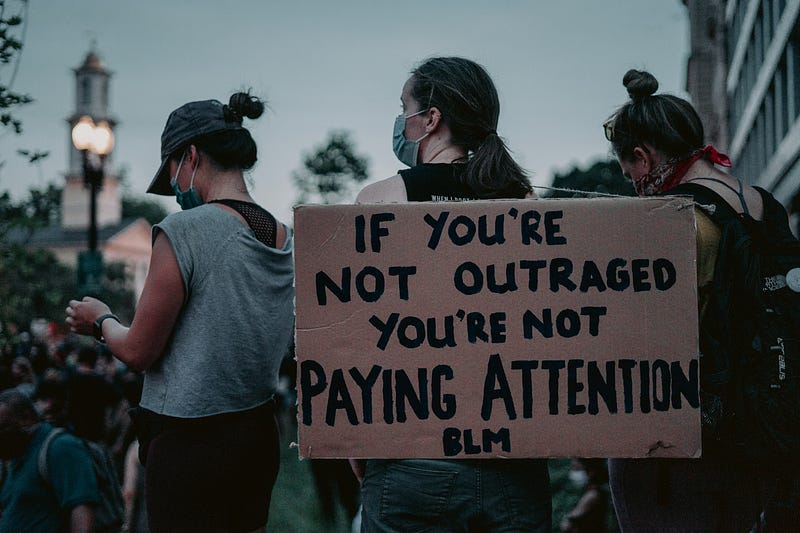
Despite the rise of the Black Lives Matter movement, and the increasing awareness of the barriers people of colour face in many industries, BAME representation in the UK’s top jobs has barely risen in the past three years.
According to the Colour of Power survey by consultants Green Park and not-for-profit organisation Operation Black Vote, only 51 out of the 1,097 most powerful roles in the country are filled by non-white individuals, an increase of only 1.2%, or 15 people, since 2017.
At the current rate of progress, BAME representation among Britain’s top leaders will not reach 13% until at least 2044 — by which time about a fifth of the UK population is expected to be from an ethnic minority.
We need to start having honest conversations about the sheer extent of racial disparity in this country, and how people of colour have an additional set of barriers to get through in the workplace and even more of a fight to get to the top.
This failure is centuries old and is becoming institutionalised. Radical, structural change is needed in many industries and across British society to increase opportunities for people of colour and/or from working-class backgrounds. Maybe then we can start telling our children they can be anything, as long as they put the work in.
Gender
Like many societies, Britain also has many invisible barriers stacked against women who choose to have children. Often, women have to try and balance where they are in their careers, and if having children will impact their progress in any way.
There’s also the cost of childcare, the lack of opportunity that comes with having to take up part-time work and trying to fit work around a 9–3 school schedule if you cannot afford to have childcare, or are lucky enough for close relatives or friends to look after your children.
And even if you choose not to have children, the odds are already stacked against you purely because you’re a woman. The latest research from the Sex and Power report from the Fawcett Society has found less than a third of top jobs in the UK are filled by women.
Yes, this is because of the lingering inequalities women have been battling for decades, but it’s also because of a society unfit to recognise women should have a role in the boy’s clubs that make up some of the biggest industries and companies in the UK.
In the same report, of the 5,166 positions of power looked across (including business, law, sports, health and politics) women held just 32% of roles.
If you are simply born a woman in the UK then, you already have to work harder than your male counterparts to get where they are. Combine that with class and racial disparity, it can be near on impossible to rise to the top.
And then if and when you do get there?
You’re probably going to earn less than your male colleagues because of those three little words: gender pay gap.
Industry-wide the gender pay gap may be falling, but in April 2023 it still stood at 7.7%.
This is a significant measure of gender inequality in the workplace as the figure is compiled from measuring the difference between the average hourly earnings of men and women as a proportion of men’s average hourly earnings.
We may have come a long way in terms of gender equality, but the reality is, that women across the UK (one of the richest countries in the world) are working day in, day out, across different industries and earning less than men, for doing the same amount of work.
This is something I wish I had been told when I was younger or learnt about at school.
Although it’s important to encourage children to dream and have the confidence to tackle challenges, it matters to educate them so they can be prepared for trying to overcome the considerable barriers that society has in place, whether that be gender, class, race or a combination of all three.
Living in societies & political systems that don’t support us
Anyone living in the UK or another wealthy nation is incredibly lucky. We will have opportunities other people across the world simply won’t, just because of our position in the world and our access to healthcare, education and a better quality of life.
However, the UK has been in a period of austerity for over a decade. This has meant severe cuts to public spending meaning our standard of schools, healthcare and local services are at an all-time low. This has an immediate effect on those who rely on these for a better quality of life.
In the UK, most children attend a state school which is funded by the government at no cost to the parents. However, almost three-quarters of schools in England have faced real-terms cuts since 2010 due to government funding decisions.
The deteriorating quality of schools combined with healthcare and the rising cost of living is creating a dire situation for a lot of our towns and cities, whilst the rich are growing wealthier.
There are a lot of good things about living in the UK, but the society we find ourselves in now only benefits the mega-wealthy who do not depend on public services.
This structural disparity, combined with the wealth of disparities that impact our access to careers as mentioned above completely invalidates the narrative we’re told as children, that we can be anything as long as we work hard.
It’s the biggest and most dangerous lie we’re ever told.
It’s naive to ignore that for most of us growing up here, the odds are going to be stacked against us in some way or another.
If we prepare young people with this knowledge early on, rather than telling them they can be anything they want, they can prepare themselves to try and overcome it.
Starting life off dissulisioned
You may be thinking what I’ve said is all well and good, but children are children, and they don’t want to be deflated by the current state of the world and lack of opportunity. We should be filling them with hope, rather than despair.
But actually, I believe in the opposite.
If we tell children how it is, they will be less disappointed when they don’t make it.
This narrative of hard work = success reinforces the idea we have to achieve certain life milestones by certain ages, and if we don’t, we are a failure and just have to work harder.
As I’ve just outlined, sometimes it doesn’t matter how hard you work. But promoting hard work as the only route to success is endangering a whole generation.
It eats into this comparison midsight which is only heightened by a generation of children growing up on social media where they compare themselves to the rest of the world in real time.
Removing the pressures of working yourself so hard into the ground will mean younger people have less self-doubt, anxiety and comparison.
So what’s the solution?
We need to start telling our children and young adults that sometimes, it doesn’t matter how hard you work, there will always be things out of reach.
It’s a societal and structural problem that we, as individuals, can’t fix but it is one we can influence through the parties we vote for and the role we take in the electoral process.
Giving children a hefty dose of realism from a young age isn’t counterintuitive to encouraging them to work hard, instead, it can prepare them even more for the struggles ahead.
If working hard was the only way to guarantee success, life would be so much easier and we’d all be able to achieve the dreams we had as children. However, life isn’t like this. There are many structures in places across societies decided by political systems that we simply cannot control.
There are socio-economic and racial disparities built into the very systems we are trying to work in that go back decades. Working hard and keeping your head down at school is good, but it doesn’t mean you can be anything you want.
Instead, we need to give children the knowledge about these differences, and how they may impact them going ahead in life. After all, more knowledge equals more power.
Subscribe to never miss a story.