
A New Lens on Identity and History: My DNA Test Experience as an Adoptee
Surprises, uncovering my unknown history and taking on a new sense of self
My partner thought taking an ancestry DNA test would be a fun activity for us both to do. We could compare percentages of ethnicities, tell each other about our family trees and bond over how much spit was required to fill the sample tube.
I was initially sceptical, due to the hefty price tag. A basic Ancestry DNA test costs nearly £100, but it wasn’t just the finances I was worried about in the beginning.
Having been adopted at the age of seven and knowing sketchy details about my biological family, I didn’t even know if I wanted to know more. Before doing this, I could tell you nothing about where my family came from, and I was content with that.
Those of us who are adopted often swing from wanting to know where we really come from to feeling afraid to admit that due to the guilt we will feel towards our adoptive parents and family. For some reason, it feels like breaking an allegiance, even though it’s a perfectly natural thing to be curious about.
Until this test, I didn’t want to know. Although I have vague memories of my biological parents, they weren’t all pleasant, and they feel so distant that I don’t even consider them as my family. All my life I’ve referred to my adoptive mum as ‘mum’ and nothing else (a lot of adoptees refer to their adoptive parents by their first name only) because that’s all I’ve known.
Being brought up in an accepting and loving adoptive family has made me a firm believer that family means so much more than the blood we share, or don’t share. DNA makes you who you are biologically, but it doesn’t make you better parents. Especially in my case.
Before taking this DNA test, I was nervous, sceptical and worried about what would be unearthed. I was also worried about telling my mum and her reaction to me researching my biological family tree (I needn’t have been as she was so supportive and fully onboard as a genealogy nerd herself.)
But I’m so glad I did, as not only has it given me the urge to learn more about my past and where my biological family came from, but changed my conception of identity completely. Here’s why.
Disclaimer — I come across as very enthusiastic about Ancestry (because I am!) but this is not a sponsorship or paid ad in any way, although it would be cool if it was.
But firstly, the results
Taking the standard Ancestry DNA test gives you a basic ethnicity breakdown and a list of matches with people who have also taken the test, and share DNA with you. Before I looked at the results, I had no idea what to expect. I knew I was born in Essex but had no idea whether this was the case for either of my parents. I knew very little so was intrigued to see how my roots went back. But I was also nervous and what connections and matches it may unearth (more on this later.)
Before doing this test, I always used to refer to myself as English and thought little of it. I was born in England and have lived here all my life, so could I identify as anything else? It turns out I can.
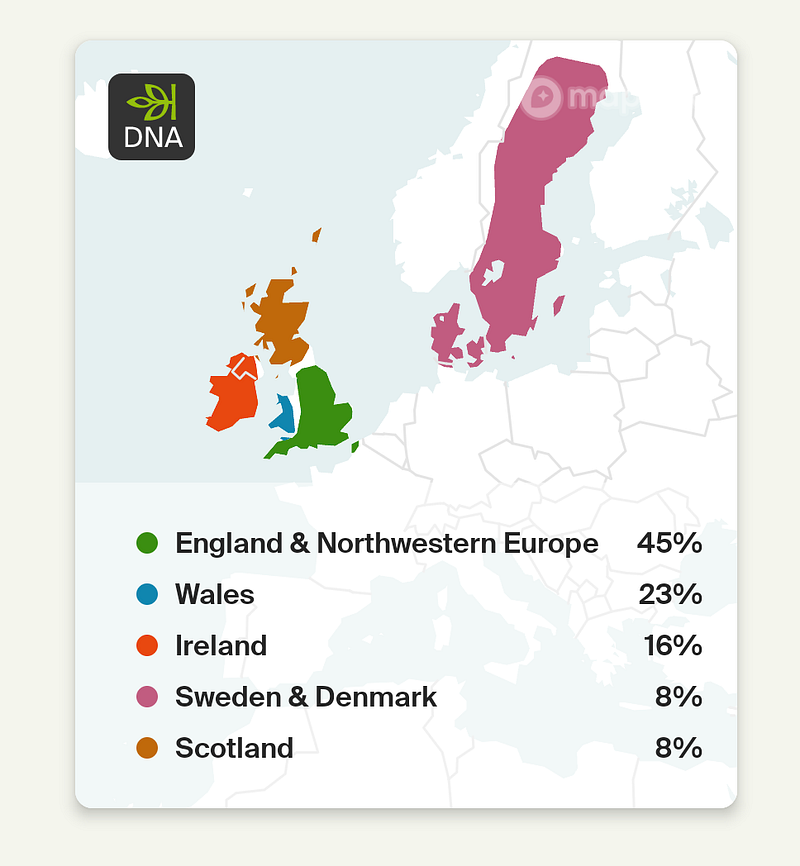
Okay, the majority of my ethnicity is English (East of England in particular) and Northwestern Europe, but I’m also 23% Welsh and 16% Irish which was fascinating to me. I only ever thought of myself as English, so this breakdown of my DNA did change my perceptions of myself and my identity.
First of all, it made me think about what ethnicity means in relation to identity, and how complicated it can be. As someone who knew nothing about their past at all, it felt grounding and reassuring to know a little about where the generations before me came from, but I didn’t realise how different it would make me feel.
After getting the results, I joked to my partner about how the 16% Irish explains why I’m so pale (at all times of the year) and my natural hair is very dark brown and slightly reddish in the sun or summer months. Whether this is a connection to my Irish ancestors or not I’ll never know, but I feel that my thirst to know more about where my biological family came from has grown.
Luckily, Ancestry also gives you the tools to make a family tree and explore this. After getting my ethnicity results, I was desperate to know where the Irish connection came from and how far back it would take. I didn’t even know if it would be possible, because I had so little information about my biological parents to go on, but it turns out, you only need their birth year and names for Ancestry to find the records of their parents, and then this can go way back.
The quest to discover where my 16% Irish came from didn’t take too long. I only had to go back three generations to my 3rd great-maternal grandfather, James William O’Hara, who was born in 1834 in County Mayo, Ireland. But this in itself unearthed a whole new perception of myself and my identity.
Uncovering photos of biological family and the search for resembence
With the discovery of James William O’Hara, not only did I begin to explore the Irish connection I never knew I had, but I also found an old photo of a relative that another Ancestry user had posted on their family tree. Her name is Agnes O’Hara, and is the daughter of James, making her my 2nd great-grandmother. Suddenly, as I was searching through the records and making my family tree, I was confronted with a black-and-white photo.
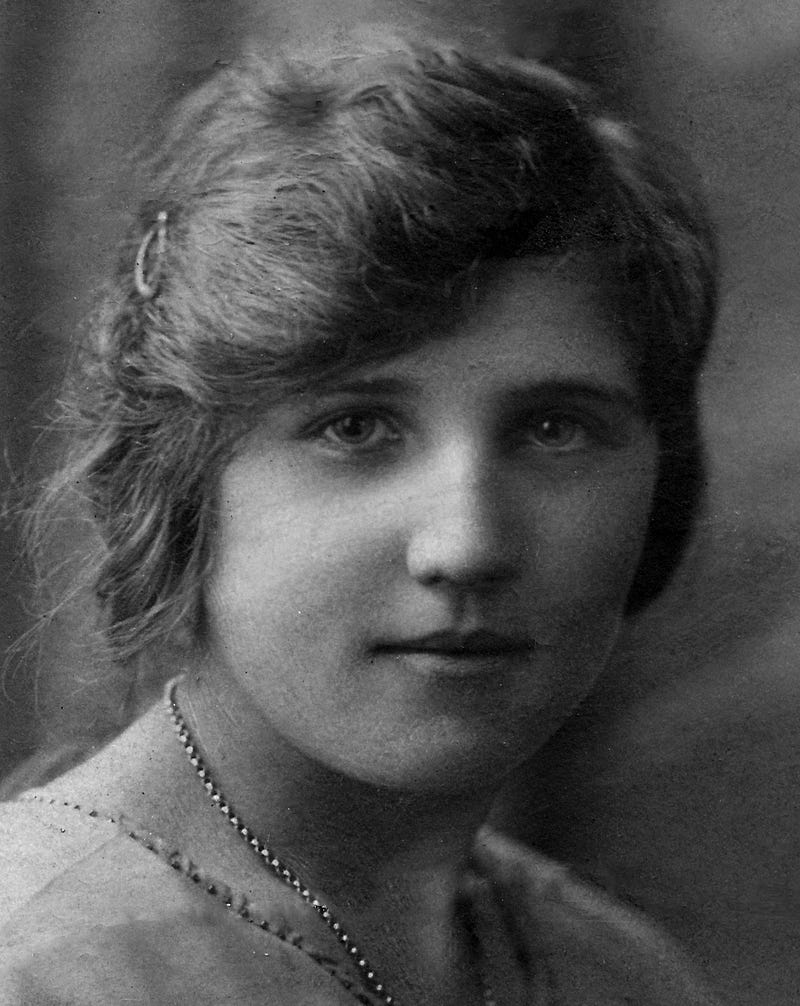
I immediately wanted to download it to get a better view. After zooming in and looking at this stranger, I was confronted with a concept that was relatively foreign to me. Resemblence. Physical resemblance. From another person who is biologically related to me. I had this with my brother, but somehow it feels different looking at someone from generations ago and being able to see yourself staring back at you.
Although I grew up with a loving and accepting adoptive family, I always experienced a moment of dread when the ancient family photo albums came out. Everyone looked like everyone else who had lived before, except me. I was the anomaly. The feeling of family resemblance was something I had never really experienced.
I had an on-and-off relationship with my biological brother, and it was only when he passed away in 2020 did I realise how much I looked like him — as his friends and former girlfriend would tell me. This, combined with unearthing old photos of relatives has changed my sense of self. In being able to relate to the physicality of relatives, I feel more grounded in the world and part of something.
It feels stupid to say, as it’s something I previously knew I didn’t have, but never missed.
Knowing where we come from and how to go forward
I’d never given much thought to where I came from or who had lived before me. Being adopted, you tend to push those feelings aside. They don’t belong to you, or feel especially relevant. And if you do want to know, you want to keep this part of yourself secret from your adoptive family. You don’t want to upset them or make them think you don’t value what they’ve done for you.
But this ancestry test changed everything for me. It got the cogs and wheels turning and immediately gave me a thirst for wanting to know more about my roots and in turn, what has shaped my identity so far. I wanted to know where my original surname (Crow) came from, and how I could be over 20% Welsh and 16% Irish because I knew nothing about my biological family history. Nothing at all.
Now that I’ve added over 200 people to my family tree, thanks to the help of ancestry and DNA testing, I can sit back and reflect on the knowledge and feelings I have gained.
Before, I embraced the unknown. My genealogy was a mystery that I was happy to keep closed. I never wanted to open that book, because I was scared about what I might find. Something was exciting and mysterious about not knowing where I came from.
But now that I know, I have this sense of grounding that I never had before. Before I was more than happy to drift through life, never knowing much about anything, but the moment I started digging I wanted to know more because of the sense of clarity and grounding it gave me.
There’s something that feels amazing about knowing I had ancestors who (most probably) fled from Ireland during the famine, and came to the North of England in search of a better life. And these roots were so strong, that my biological mother ended up being born in Leeds and I could rationalise the 16% of my Irish ethnicity.
After all, history always makes us feel that we belong. That we are part of a grand story. When it’s personal to you, it can shape your sense of self and identity more than anything else.
But now, what do I do with these new feelings? Should I do anything?
Changing the value of biological family and thinking about the future
Searching back through the decades and adding more branches of my family tree, right back until the 17th century has got me thinking a lot about time, and how short it is. Over the years, I’ve toyed with the idea of searching for my biological family and felt that I should do something before the time runs out.
I know that I don’t owe my biological parents anything, but I would love to meet my other siblings, and maybe become a part of their lives. This was merely a fantasy I liked to dream about before I did this test, but the idea of doing it feels more real now. I feel the compulsion to find out more about where I come from, and what the people I share DNA with are really like.
This process with undoubtedly be long and arduous, but I’m willing to take this chance in the future if the possibility ever arises. And if it doesn’t, I won’t be disappointed, because I have the luxury of having another family. One that brought me up, and swept me into open arms regardless of the DNA we didn’t share.
It may be cool and interesting to find out where we truly come from, but if it doesn’t happen I’ll still be content. After all, it is the people in our lives now and before that matter.
Subscribe to never miss a story.