
Universal Beauty
The balancing act between endurance and transience
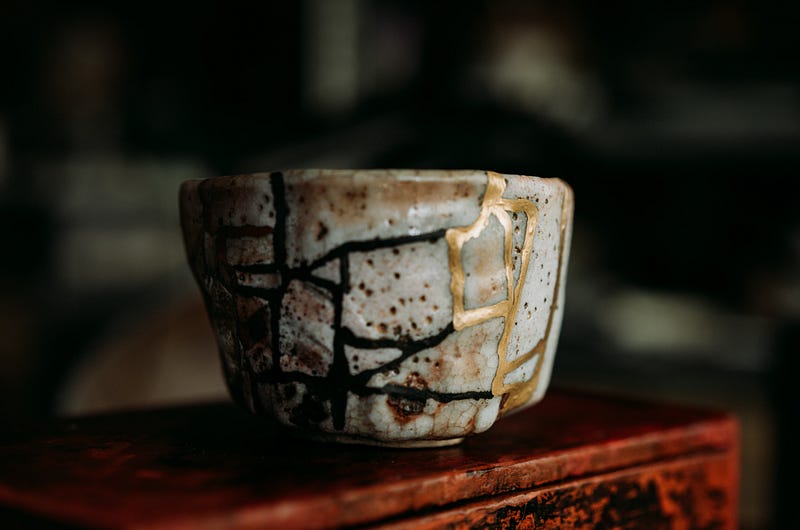
What is beauty? And what does a beautiful object look like? Being able to answer these questions unequivocally would be of great value to designers who aspire to create objects of mainstream appeal.
But unequivocal answers are difficult, if not impossible, to reach — not least of all when dealing with something as complex as beauty. Beauty is a fleeting concept which is either considered as something that fades with time or as something so closely connected to individual taste and subjective associations that it is impossible to say anything definitively about.
However, my hypothesis is that, despite individual preferences founded in cultural or temporal contexts, it is possible to set out general criteria or guidelines for the kind of elements make up the beautiful object. Put differently, objects or expressions perceived as beautiful are to some extent universal.
According to the French poet Charles Baudelaire (1821–1867), whose poems concerned and were inspired by the growing cities of the late nineteenth century, urban life teems with poetic and adventurous motives and with a kind of beauty, which he terms modern beauty, and which is characterized by transience, fragmentation, asymmetry, and chance. Taking urbanity as his starting point, Baudelaire distinguishes modern beauty from classical beauty, which is characterized by symmetry and harmonious proportions.
The modern artist wishing to “capture” and enunciate, or perhaps visualize, modern beauty must move around the city as an anonymous observer in the guise of the “man in the crowd,” like the flaneur or the idler, to take in the constantly changing expression and look of the city--and, by extension, fleeting, modern beauty. Baudelaire’s flaneur observes the world while existing in the midst of it; at the same time, he is anonymous and remains hidden from the world, and this is his source of freedom. The artist-flaneur, according to Baudelaire, should only write or paint in concord with what he sees and feels, adding a sort of phenomenological element to the process: sensing, not analyzing or concluding, should be the starting point of the creative process.
Nevertheless, in sketching the random and fleeting elements of the modern city, the true artist seeks something universal, something imperishable--the enduring, invariable part of beauty or the modern in-itself, the very core of modernity: “Every old master has had his own modernity; the great majority of fine portraits that have come down to us from former generations are clothed in the costume of their own period” Baudelaire writes. In other words, the true artist aims to penetrate the essence of beauty of the particular time period through experiencing fleeting or fragmented sense impressions (attempting to put these into words or form in some way). This can be done through the imagination, which Baudelaire sometimes referred to as the “queen of faculties”.
For Baudelaire, on the one hand, the beautiful thus consists of an eternal, invariable element, and, on the other hand, a relative, circumstantial element, which concerns the fashions of the day. Without the enduring element, a work of art appears meaningless. But transience (and news value) is also necessary for modern beauty. A work has to contain eternal elements, but, concomitantly, it must be marked by the fleeting variability of the world. For this reason, the artist, in order to touch the viewer’s soul, must seek to express eternity and transience, immutability and fragmentation.
This point about the duality of the modern art work can profitably be transferred to the design-object. The object that a viewer or user deems appealing, interesting, beautiful, and attractive might very well, in the spirit of Baudelaire, contain enduring as well as fleeting elements. Or, it might consist of an element that is independent and unaffected by time and place — remaining interesting and relevant for a number of years — and an element that is attractive by virtue of its transience and its news value.
I wrote previously about exactly this in my article What if some things were designed to be short-lived — About the thought that maybe the most sustainable design strategy, and thus the most enduring way of working with aesthetics and material beauty, lies in embracing both longevity and transience. That maybe some things need to be short-lived and fleeting in order to fill us with aesthetic nourishment. Just like the atmospheric changes around us, and the temporary feelings that fill us and disappear again.
Let’s connect! https://www.instagram.com/the_immaterialist/