avatarThe Mars Girl

Free AI web copilot to create summaries, insights and extended knowledge, download it at here

6140

Abstract

animals pooping or relieving themselves on the street, it was humans. Yep, the streets really were that disgusting.</p><h1 id="424f">Cramped Living spaces and Poverty</h1><p id="9dd0">Families were so densely packed into such tiny living spaces, that children frequently either ran away because it would give them a better chance of surviving, or would be thrown out simply because the parents were so poor that they couldn’t afford to feed them.</p><p id="9615">As horrific as it sounds, the methodology was sound. They would throw one kid out in the hopes that by having to feed one less child, they would have a better chance of keeping themselves and their other children alive.</p><figure id="f60d"><img src="https://cdn-images-1.readmedium.com/v2/resize:fit:800/0*rvXwHpPSF6QSK7Kj.jpg"><figcaption>As poverty worsened in Victorian Britain families literally abandoned their children to survive. Source: <a href="https://en.wikipedia.org/wiki/Victorian_era#/media/File:Victorian_Bishopgate.jpg">Wiki</a></figcaption></figure><p id="925e">The reason of course for the extreme poverty was like said, the insane population growth which when added to the rapid urbanization, which could not keep up with the population growth, created hell on earth for those living during that era.</p><p id="4103">So because so many children were living rather than dying, and because so many were moving into towns and cities, the infrastructure, food networks, and much more needed to cope with all this rapid change could not keep up.</p><h1 id="5dd6">The wealth gap between the poor and everyone else became greater than ever before — this caused profound inequality, especially in child mortality rates</h1><p id="ca96">There’s always been a wealth and outcome disparity between those at the top and those at the bottom, but the Victorian era led to an enormous disparity.</p><p id="ac39">This gap would see great differences in life chances even between the middle-class and the working class. On a side note, the Victorians nearly enough created the middle-class — though they were rising in the years prior to the period.</p><figure id="33cf"><img src="https://cdn-images-1.readmedium.com/v2/resize:fit:800/0*xKxEyYxIjmXJFBcT.jpg"><figcaption>Source: <a href="https://en.wikipedia.org/wiki/Victorian_era#/media/File:George_William_Joy_-_The_Bayswater_Omnibus.jpg">Wiki</a></figcaption></figure><p id="29b3">Returning to the point. The greatest discrepancy caused by the wealth gap could be seen in the child mortality rate, children born to working-class families typically still would see a very high child mortality rate, with some estimating that as many as 60 percent did not make it past the age of 15.</p><p id="e948">That means even though the child mortality rate was plummeting for the middle classes and above, it remained stubbornly high for the working class. The rich on the other hand would often see virtually all of their children survive, this is how some middle and especially upper-class families had as many as 20 or more children — all of whom made it to adulthood.</p><h1 id="e19c">Slums were one of the most horrific in history</h1><p id="30e4">The slums became so densely populated due to the explosion in population growth, that often there would be thousands of workers living and working in areas of typically no more than one square mile.</p><p id="a595">The most famous is a Manchester slum called Angel Meadow, it was nicknamed hell on earth and there were over 30,000 workers crammed into a space just one square mile in size.</p><figure id="cf22"><img src="https://cdn-images-1.readmedium.com/v2/resize:fit:800/0*q_7WNzKEYVFowG0q"><figcaption>Source:<a href="https://upload.wikimedia.org/wikipedia/commons/9/99/111418-25-History-Poverty-Victorian-England-London-768x989.jpg">Wiki</a></figcaption></figure><p id="824a">Needless to say, poverty in Victorian Britain was more severe than anywhere in history either before and arguably since. It’s often even said that slaves lived better lives than those who lived in the slums in Victorian England — it is said slaves had a better chance of escaping as well.</p><p id="f2cf">Yep, it was that horrific. And for those in the slums who lost their jobs, all they had waiting for them was either crime — which if they were caught could have seen them shipped to Australia — death on the streets through starvation or disease, or the Victorian workhouses, which were truly hellacious places.</p><h1 id="a1f3">Child labor was a real problem</h1><p id="e558">All preschool children, regardless of gender, dressed in the same way. That would be in a white frilly dress, which would frequently be complemented with bonnets and ribbons.</p><p id="e0b9">But once those boys got their trousers the majority likely wished they had not. Child labor was a serious problem in Victorian times, and it was the boys who by far saw the worst of it.</p><p id="0854">Boys as young as five would work on farms, in factories, as chimney sweeps, down in coal mines and the like, and much more. Girls would also be put to work from a young age but mostly in or around households — a relative utopia compared to the boys’ tasks. Though even some girls would find themselves down mines.</p><figure id="53da"><img src="https://cdn-images-1.readmedium.com/v2/resize:fit:800/0*-7HxmJhXEivlSnJw"><figcaption>An illustration of the conditions back then. A young girl can be seen dragging a coal tub in a mine. Source: <a href="https://commons.wikimedia.org/w/index.php?curid=2900244">Wikipedia</a></figcaption></figure><p id="9690">However, it wasn’t as bad during the Victorian times as it had been during the Industrial Revolution — it was still really bad. This is mainly because the Victorians brought in countless acts to try to combat child labor, for example, <i>The Chimney Sweepers and Chimney Regulations Act of 1840,</i> which made it illegal to allow any person under the age of 21 to climb up or into a chimney for the purposes of cleaning it.</p><p id="7127">Other acts of note were the 1842 mines act, which banned the employment of boys under the age of 10 and all women and girls fr

Options

om mines. The 1850 ten-hour act also set a limit for workers of no more than 10 and a half hours a day — many children had been forced to work upwards of <b>12 to 18 hours</b> a day.</p><p id="c1a0">Also, by end of the century, things became even better as the Victorians pretty much invented compulsory school. By the year 1880, all children from 5 upwards had to go to school. Though they did only have to stay till they were 10.</p><h1 id="94a0">The Victorians were sexual prudes for good reason</h1><p id="5348">The Victorian’s prudish attitudes towards sex are well known, what is not well known is the reason for these attitudes, the answer to which is, the explosive population boom of the 1800s.</p><p id="e387">To put things into perspective, Britain had a population of 4 million people in the year 1800, and by 1900, that had exploded to 40 million people. Yep, a tenfold increase in just one hundred years. At the start of Queen Victoria’s reign in 1837, the population was 16 million.</p><blockquote id="9545"><p>That means in just the 40 years prior to it, the population had increased 4 fold alone, and during it nearly tripled again. To say that the rate of population growth was unprecedented would be an understatement and what further exacerbated problems was that Britain was not that big of a nation in terms of landmass.</p></blockquote><figure id="8a9a"><img src="https://cdn-images-1.readmedium.com/v2/resize:fit:800/0*0GeWtS2Ogw6B68FX.jpg"><figcaption>Victorian brought about the concept of ‘Fallen-Woman’ which was a major stereotype in the era opposing their standards for the standard woman. Source: <a href="https://en.wikipedia.org/wiki/Victorian_erotica#/media/File:Past_and_Present_Number_One.jpg">Wiki</a></figcaption></figure><p id="3839">This meant that Victorian Britain became by far and away from the most densely populated landmass on the planet.</p><p id="0b90">This matters because it is well known that sexual attitudes are largely influenced by population density — there is a strong correlation between population density and sexual attitudes i.e. the more densely populated the area, the more non-sex positive the attitudes typically are, and the less densely populated, the more sex-positive they typically are.</p><p id="2afa">It’s believed this is linked to our instinctual desire to manage the population size i.e. when we start having too many children, we instinctually start shutting the door on sex, and as such our societal attitudes begin to mimic those instinctual ones so as to reaffirm them.</p><p id="9097">When the extreme poverty that this explosive population growth brought about is also added to the equation, which made sex unbelievably dangerous, it is not hard to see why the Victorians became so sexually prudish.</p><h1 id="f026">Do You Still Have The Same image?</h1><p id="ae98">Before knowing these facts, I had a very lavish and grand impression of the Victorian Era. Regardless of many great inventions, these moral, social and economical situations persisted for a very long time. The proverb <b><i>‘All that Glitter is not gold’ </i></b>suits in perfectly here!</p><p id="ff87">Want to follow up more from me and other amazing writers on Medium?</p><p id="ca4e"><i>Hop on the chance to join:</i></p><div id="c925" class="link-block"> <a href="https://medium.com/@themarsgirl80/membership"> <div> <div> <h2>Join Medium with my referral link - The Mars Girl</h2> <div><h3>As a Medium member, a portion of your membership fee goes to writers you read, and you get full access to every story…</h3></div> <div><p>medium.com</p></div> </div> <div> <div style="background-image: url(https://miro.readmedium.com/v2/resize:fit:320/0*N9xUwjsPYJ8sor54)"></div> </div> </div> </a> </div><h1 id="9a00">More From Author:</h1><div id="b2c2" class="link-block"> <a href="https://readmedium.com/mind-blowing-life-lessons-cleopatra-taught-us-unknowingly-d4f83c949f1b"> <div> <div> <h2>Mind-Blowing Life Lessons Cleopatra Taught Us Unknowingly</h2> <div><h3>A Convincingly Manipulative Lady Who Ruled An empire and the hearts of the two most powerful men of her time.</h3></div> <div><p>medium.com</p></div> </div> <div> <div style="background-image: url(https://miro.readmedium.com/v2/resize:fit:320/0*TdkjIAfo0-EKCqTh.jpg)"></div> </div> </div> </a> </div><div id="4236" class="link-block"> <a href="https://readmedium.com/to-eat-or-to-be-eaten-5-countries-where-cannibalism-still-exist-18c28db5ef9c"> <div> <div> <h2>To Eat or To be Eaten — 5 Countries Where Cannibalism Still Exist</h2> <div><h3>When you first hear the word cannibalism, your first thought is probably full of disgust and can make you throw up. Due…</h3></div> <div><p>medium.com</p></div> </div> <div> <div style="background-image: url(https://miro.readmedium.com/v2/resize:fit:320/1*ZvKcm2nPdseO-MEgQgyOmA.png)"></div> </div> </div> </a> </div><div id="eab8" class="link-block"> <a href="https://readmedium.com/story-of-mughal-prince-salimwho-revolted-against-akbar-for-love-7d091197f819"> <div> <div> <h2>A Mughal Tale of Love, Hatred, And Betrayal — Salim * Anarkali *Akbar?</h2> <div><h3>The Infamous Anarkali-Salim Story Had Other Roots Which Cherishers Don’t Know Of? Anarkali was not only the source of…</h3></div> <div><p>medium.com</p></div> </div> <div> <div style="background-image: url(https://miro.readmedium.com/v2/resize:fit:320/1*bTJTn9zBEIwrap1_937f1w.png)"></div> </div> </div> </a> </div></article></body>

Undeniable Things You Will Hate About Victorian Era.

Victorian Era Was Not All Glittery And Impressive As How The World Sees it Today.
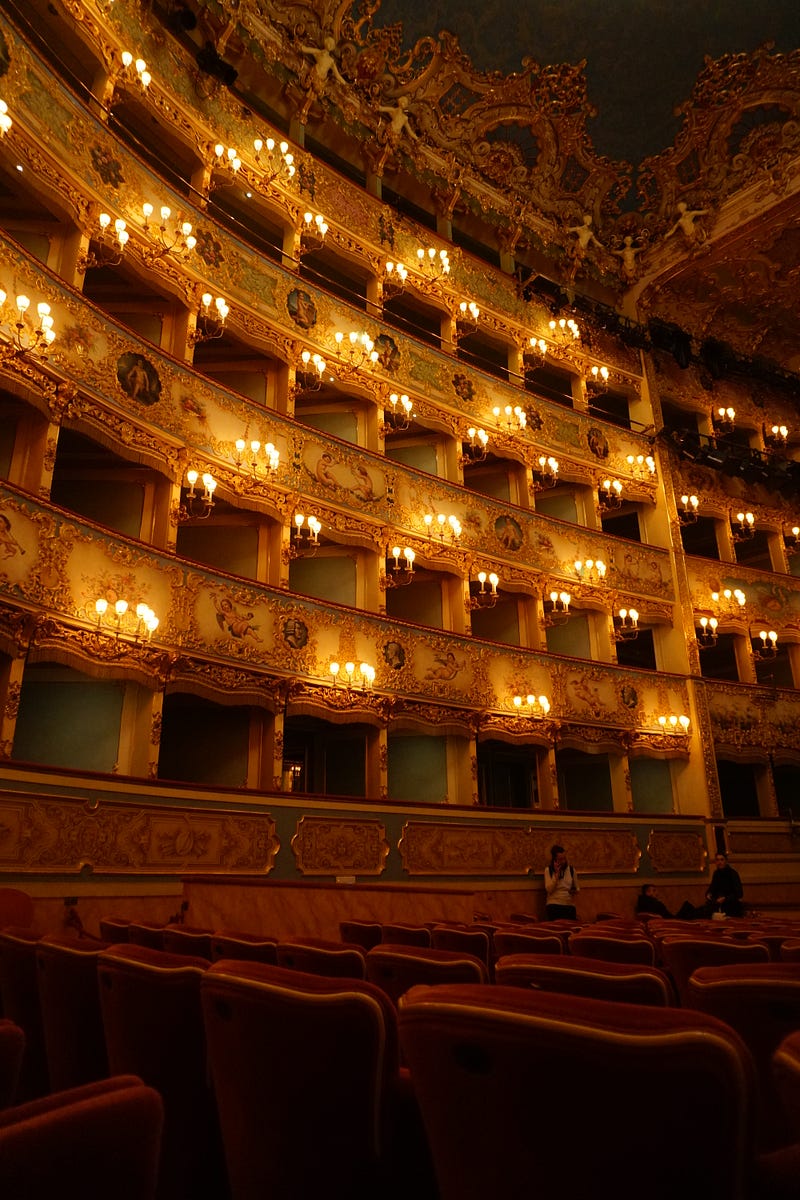
Photo by Keo Oran on Unsplash

Apart from their good acts like inventing nationalization and globalization. Returning to the point, the Victorians also pretty much invented the notion of globalization due to the many trade routes of the Empire. In fact, the British Empire is known as the greatest trade empire in history, so it was not as much about conquest as much as it was about setting up trading posts — they just used a heavy dose of conquest to build those trading posts.

The heavily interlinked world that we now have was pretty much born on the idea of global trade that was pushed heavily by the Victorians during Victorian times.

Could do anything for dressing up!

Everyone knows about tiger skin rugs and bearskin rugs and lion skin rugs et cetera, also about taxidermy i.e. the popularity of having stuffed animals the decorations. Everyone also knows about animal fur and much more. Such things have been around for millennia.

But the women of the Victorian era took fashion to places it had never even dreamt of going previously. Not just that, but women literally died for their outfits in the Victorian era. Frequently, the dresses were made with flammable fabrics, and it is estimated that thousands of women died because their dresses caught on fire.
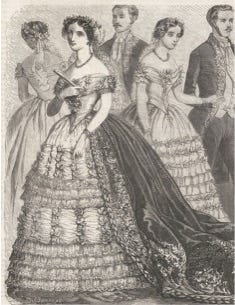
Some of the dresses women ended up wearing were so outrageous and so wide that they literally got stuck in doorways. Source: Wiki

But it wasn’t just women who died because of women’s fashion, it was animals and even insects. Women would literally wear dead animals and dead insects, so it wasn’t even just about wearing animal fur, women of the time would literally wear the dead animal or insect or both.

Bird hats, so hats that were literally made with the stuffed remains of a dead bird, and fox and ferret scarves, which were literally the animals stuffed, became especially popular. As did fans made out of stuffed birds.
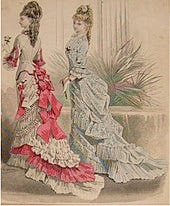
Source: wiki

The industry became so popular that it led to many animals and birds being pushed to the brink of extinction. For example, great crested grebes, a highly attractive bird that was especially targeted by the fashion industry, barely survived the era. Many others — especially birds — suffered the same fate.

The majority of people’s homes — especially those in London — used to stink

At the start of the 19th century, every house in London had a cesspool. This is a brick chamber that would be about 6 feet deep and about 4 feet wide. The household toilet — or privy as it was called back then — would be above this pool.

These cesspools would fill up quite quickly mainly due to the sheer number of overflowing households. This inevitably created quite a stink. What made matters worse was that once the water closet was added to the equation, which was not a sewage system, but simply a water system that would help flush the waste into the cesspool, the stench became even worse. It also made the cesspits become harbingers for diseases like cholera.
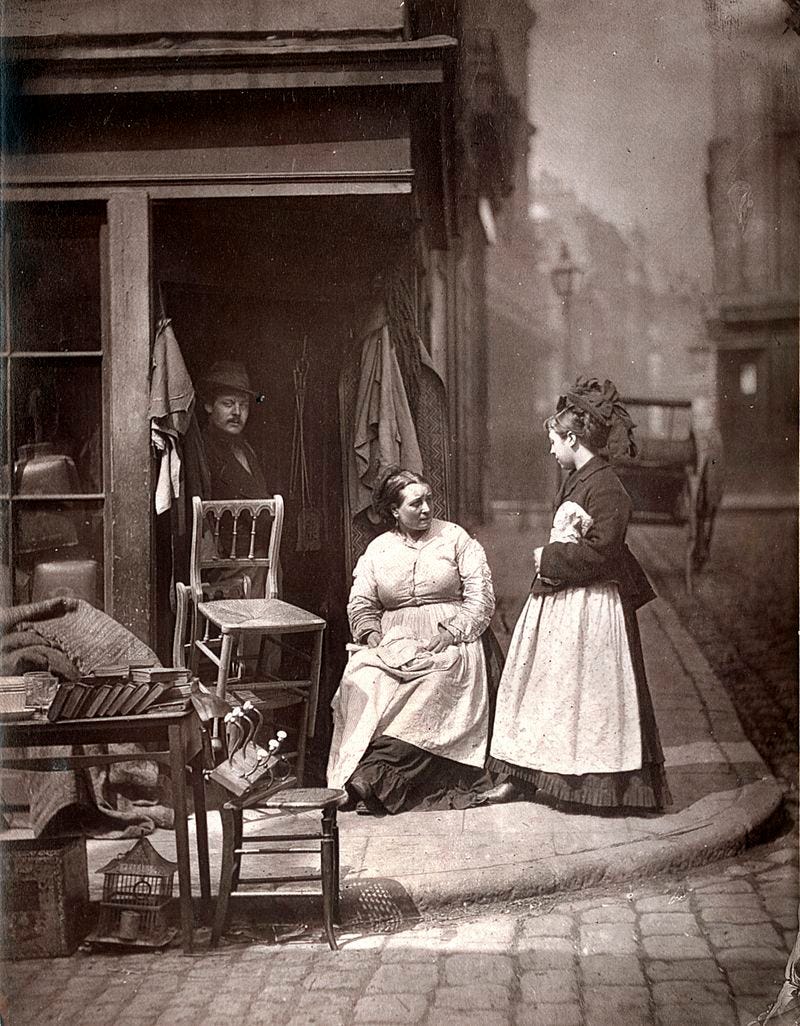
Street Life of London in 1877. Source: Wiki

This led to the event known as the Great Stink. It occurred in the summer of 1858 and was caused due to the excessively hot weather exacerbating the mass human waste problem caused by the cesspits and the fact that sewage was dumped into the river.

The stench was so horrific that it led to the Thames being called a cesspool of poisonous gas, it also was so bad that it even affected the business of Parliament and productivity because people could not cope with the horrific smell.

It was actually this event that led Parliament to enlist Joseph Bazalgette to solve the problem of the Thames River, and his work in sorting the sewage problem is believed to have saved more lives than any other Victorian official.

The streets were disgusting

The cities of Victorian England were just cesspits really, none more so than London. Cigarette ends, rotten food, this, that, everything. Even poop.

For example, by the year 1890, there were approximately 300,000 horses and thus 1000 tons of dung a day in London. Imagine that smell. The only solution the Victorians could come up with was to employ boys between the ages of 12 to 14 to try to run out into the traffic and scoop up the excrement as soon as it hit the ground.
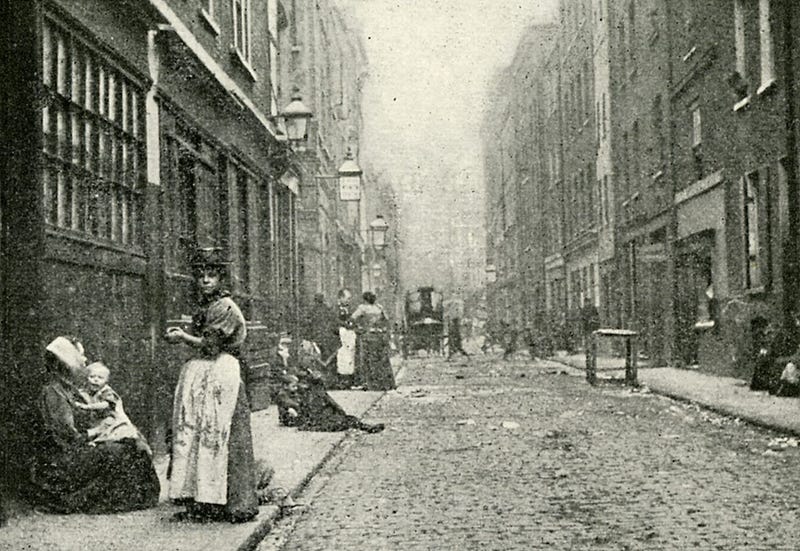
East London depicts the Street Life and conditions. Source: Wiki

You can imagine the fate many of the boys employed to do this would suffer. However, it was not just animals pooping or relieving themselves on the street, it was humans. Yep, the streets really were that disgusting.

Cramped Living spaces and Poverty

Families were so densely packed into such tiny living spaces, that children frequently either ran away because it would give them a better chance of surviving, or would be thrown out simply because the parents were so poor that they couldn’t afford to feed them.

As horrific as it sounds, the methodology was sound. They would throw one kid out in the hopes that by having to feed one less child, they would have a better chance of keeping themselves and their other children alive.
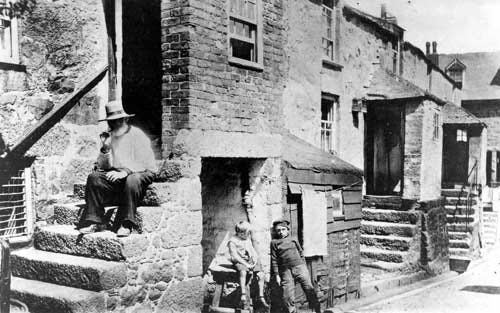
As poverty worsened in Victorian Britain families literally abandoned their children to survive. Source: Wiki

The reason of course for the extreme poverty was like said, the insane population growth which when added to the rapid urbanization, which could not keep up with the population growth, created hell on earth for those living during that era.

So because so many children were living rather than dying, and because so many were moving into towns and cities, the infrastructure, food networks, and much more needed to cope with all this rapid change could not keep up.

The wealth gap between the poor and everyone else became greater than ever before — this caused profound inequality, especially in child mortality rates

There’s always been a wealth and outcome disparity between those at the top and those at the bottom, but the Victorian era led to an enormous disparity.

This gap would see great differences in life chances even between the middle-class and the working class. On a side note, the Victorians nearly enough created the middle-class — though they were rising in the years prior to the period.
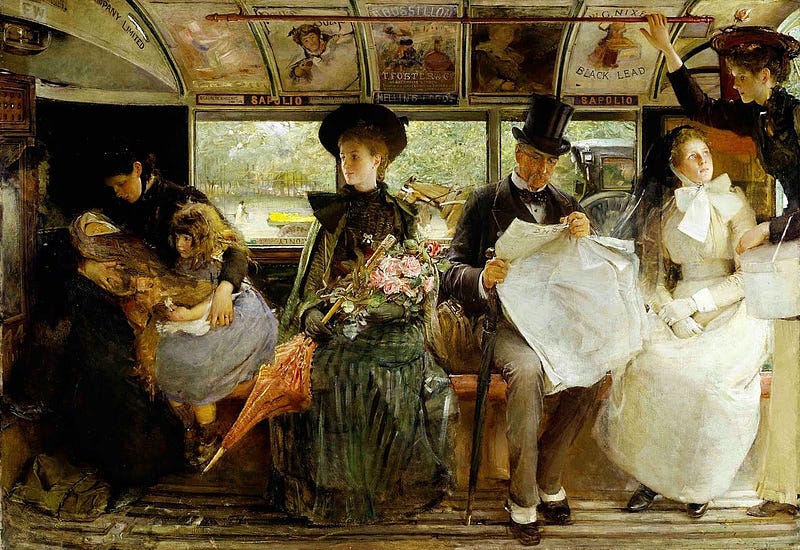
Source: Wiki

Returning to the point. The greatest discrepancy caused by the wealth gap could be seen in the child mortality rate, children born to working-class families typically still would see a very high child mortality rate, with some estimating that as many as 60 percent did not make it past the age of 15.

That means even though the child mortality rate was plummeting for the middle classes and above, it remained stubbornly high for the working class. The rich on the other hand would often see virtually all of their children survive, this is how some middle and especially upper-class families had as many as 20 or more children — all of whom made it to adulthood.

Slums were one of the most horrific in history

The slums became so densely populated due to the explosion in population growth, that often there would be thousands of workers living and working in areas of typically no more than one square mile.

The most famous is a Manchester slum called Angel Meadow, it was nicknamed hell on earth and there were over 30,000 workers crammed into a space just one square mile in size.
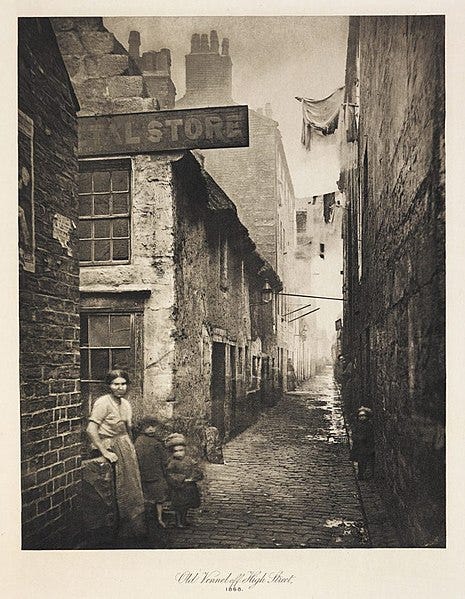
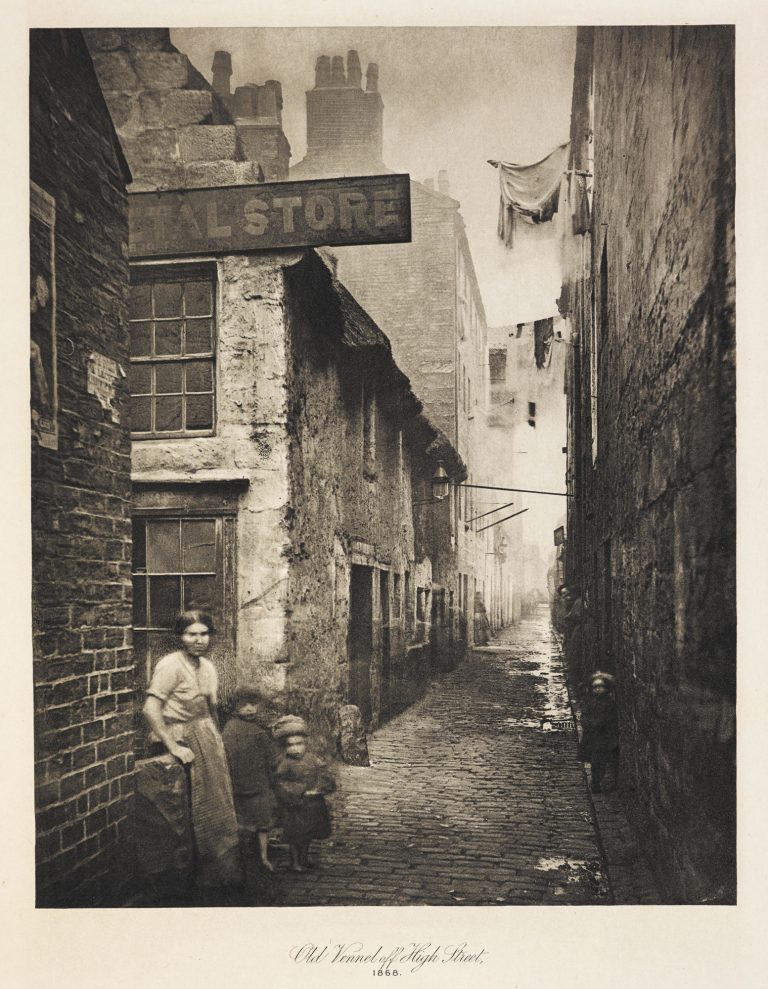
Source:Wiki

Needless to say, poverty in Victorian Britain was more severe than anywhere in history either before and arguably since. It’s often even said that slaves lived better lives than those who lived in the slums in Victorian England — it is said slaves had a better chance of escaping as well.

Yep, it was that horrific. And for those in the slums who lost their jobs, all they had waiting for them was either crime — which if they were caught could have seen them shipped to Australia — death on the streets through starvation or disease, or the Victorian workhouses, which were truly hellacious places.

Child labor was a real problem

All preschool children, regardless of gender, dressed in the same way. That would be in a white frilly dress, which would frequently be complemented with bonnets and ribbons.

But once those boys got their trousers the majority likely wished they had not. Child labor was a serious problem in Victorian times, and it was the boys who by far saw the worst of it.

Boys as young as five would work on farms, in factories, as chimney sweeps, down in coal mines and the like, and much more. Girls would also be put to work from a young age but mostly in or around households — a relative utopia compared to the boys’ tasks. Though even some girls would find themselves down mines.
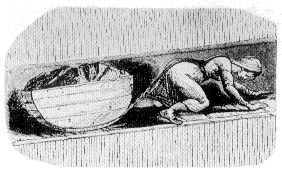
An illustration of the conditions back then. A young girl can be seen dragging a coal tub in a mine. Source: Wikipedia

However, it wasn’t as bad during the Victorian times as it had been during the Industrial Revolution — it was still really bad. This is mainly because the Victorians brought in countless acts to try to combat child labor, for example, The Chimney Sweepers and Chimney Regulations Act of 1840, which made it illegal to allow any person under the age of 21 to climb up or into a chimney for the purposes of cleaning it.

Other acts of note were the 1842 mines act, which banned the employment of boys under the age of 10 and all women and girls from mines. The 1850 ten-hour act also set a limit for workers of no more than 10 and a half hours a day — many children had been forced to work upwards of 12 to 18 hours a day.

Also, by end of the century, things became even better as the Victorians pretty much invented compulsory school. By the year 1880, all children from 5 upwards had to go to school. Though they did only have to stay till they were 10.

The Victorians were sexual prudes for good reason

The Victorian’s prudish attitudes towards sex are well known, what is not well known is the reason for these attitudes, the answer to which is, the explosive population boom of the 1800s.

To put things into perspective, Britain had a population of 4 million people in the year 1800, and by 1900, that had exploded to 40 million people. Yep, a tenfold increase in just one hundred years. At the start of Queen Victoria’s reign in 1837, the population was 16 million.

That means in just the 40 years prior to it, the population had increased 4 fold alone, and during it nearly tripled again. To say that the rate of population growth was unprecedented would be an understatement and what further exacerbated problems was that Britain was not that big of a nation in terms of landmass.
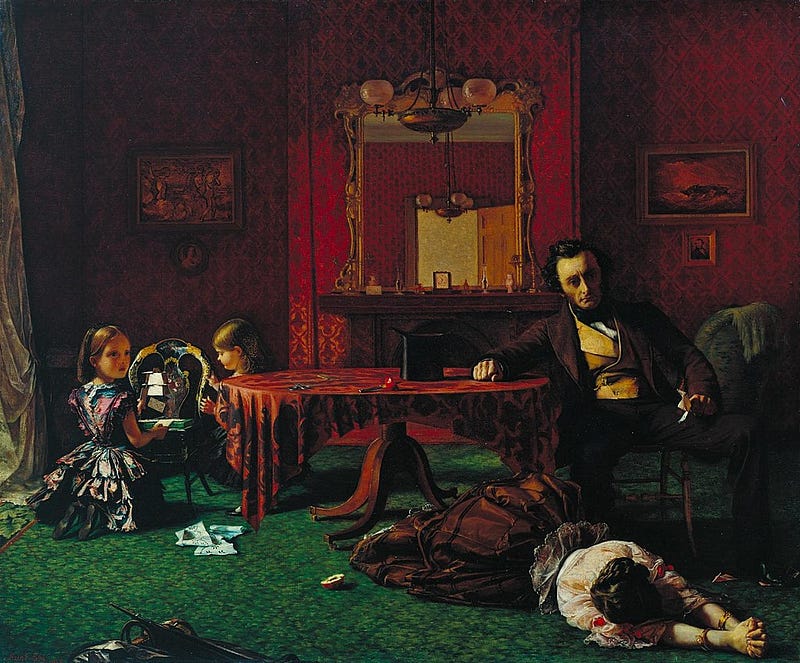
Victorian brought about the concept of ‘Fallen-Woman’ which was a major stereotype in the era opposing their standards for the standard woman. Source: Wiki

This meant that Victorian Britain became by far and away from the most densely populated landmass on the planet.

This matters because it is well known that sexual attitudes are largely influenced by population density — there is a strong correlation between population density and sexual attitudes i.e. the more densely populated the area, the more non-sex positive the attitudes typically are, and the less densely populated, the more sex-positive they typically are.

It’s believed this is linked to our instinctual desire to manage the population size i.e. when we start having too many children, we instinctually start shutting the door on sex, and as such our societal attitudes begin to mimic those instinctual ones so as to reaffirm them.

When the extreme poverty that this explosive population growth brought about is also added to the equation, which made sex unbelievably dangerous, it is not hard to see why the Victorians became so sexually prudish.

Do You Still Have The Same image?

Before knowing these facts, I had a very lavish and grand impression of the Victorian Era. Regardless of many great inventions, these moral, social and economical situations persisted for a very long time. The proverb ‘All that Glitter is not gold’ suits in perfectly here!

Want to follow up more from me and other amazing writers on Medium?

Hop on the chance to join:

More From Author:

Culture
Politics
History
Art
Life
Recommended from ReadMedium