
Ukraine
Ukraine’s Air Defence Systems: New NATO Systems
At the start of the 2022 war, Ukraine had a large inventory of ex-Soviet air defence systems, but now NATO is adding its latest technology to counter missile threats
The aerial battle background
I recently wrote about Ukraine’s inherited and enhanced ex-Soviet air defence inventory which served it very well during the early days of the 2022 war.
The aircraft battle so far has been largely won by Ukraine but as the Russians pull their remaining aircraft back behind their borders (real and annexed), they turn increasingly to missiles.
But Russia is still using some aircraft for ground support.
Russia has started to use the air-launched aero-ballistic hypersonic Kinzhal missiles against Ukraine, as well as many of their huge range of other missiles — cruise and ballistic. And there have been questions as to how long that stock of missiles might last.
How long can Ukraine defend against the missile bombardment?
There has also been a question about how long Ukraine’s air-defence capability can sustain its capability against the Russian missile bombardment.
Which will give out first?
Just as NATO and other countries have helped by supplying additional artillery to Ukraine to counter the hugely superior Russian numbers (estimated at a 10:1 advantage), so NATO has been supplying their latest air-defence weapons which are now starting to see action.
And tipping the balance.
Week ending 31 July 2022), the US committed to sending NASAMS, one of the most advanced systems in the world. But that’s only the tip of the spear, so to speak.
What have NATO countries supplied or committed to?
Because of the integrated and standardised nature of NATO, it’s not always straightforward to untangle ‘who has given what’, but I’ve had a go at it.
NATO: Stinger manpads
The US and NATO started sending Stinger manpads to Ukraine in March 2022. In June 2022 Forbes.com reported that the US had sent 1,400 of the missiles. The Stinger will replaced and stocks are running down. Re-starting production to backfill stocks is underway but some components are no longer available and therefore re-design work is required. Development of the replacement will not start until 2023. This appears to me to be a serious issue given the high usage in Ukraine.
Germany announced that it would provide 500 Stinger missiles. Denmark said that it will provide parts for 300 missiles, to be assembled in the United States. The Netherlands stated they would supply 200 units. Italy, Latvia [and] Lithuania each stated that they would provide undisclosed amounts. (Wikipedia)
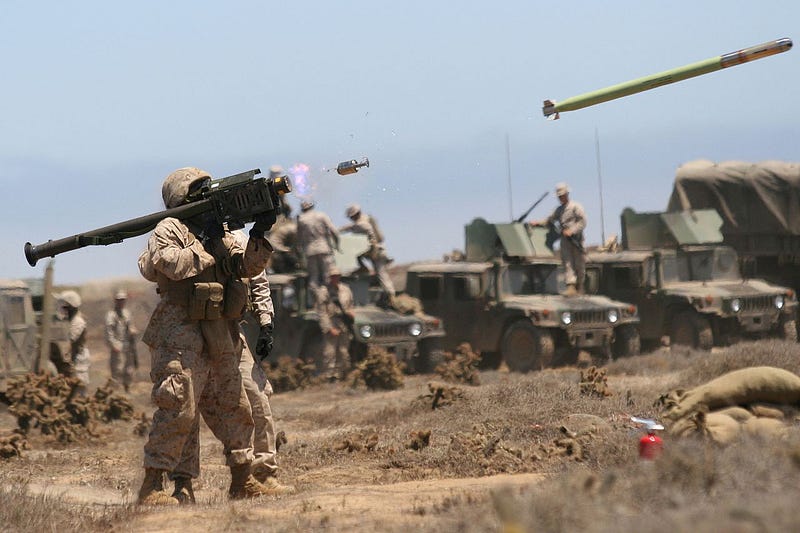
The Stinger dates back to 1967 and although several improvements have been mad it has a performance envelope which some Russian drones can operate outside (altitude primarily) — it has a targeting range of up to 4,800 metres and can engage ‘low altitude’ enemy threats at up to 3,800 metres (about 12,000 feet). (Wikipedia ibid.)
Of course some ex-Soviet NATO countries have sent ex-Soviet manpads such as Germany sending 2,000 Strela missiles out of 2,700 in stock. 700 were too old and dangerous for use.
United States: NASAMS
The US has committed to supplying the National Advanced Surface-to-Air Missile System, or NASAMS to Ukraine, but without a timeframe.
NASAMS (National/Norwegian Advanced Surface to Air Missile System) is a distributed and networked short- to medium-range ground-based air defense system developed jointly by Kongsberg Defence & Aerospace of Norway and Raytheon of the United States. The system defends against UAVs, helicopters, cruise missiles, unmanned combat aerial vehicles UCAVs and aircraft.
The system can engage 72 targets simultaneously in active and passive modes and, using active seeker missiles, can intercept targets beyond visual range. The NASAMS is armed with three launchers, each carrying up to six missiles. The primary weapon used by the system is the AIM-120 AMRAAM, however, the system can also employ AIM-9X Sidewinder, ESSM, and indigenous missiles
The radius of engagement for each missile launcher (12 missile launchers per battery) is up to 50 km depending on missile; flight altitude up to 36 km (missile dependent)— Wikipedia (ibid.). That altitude is over 110,000 feet and seemed high to me. Globalsecurity.org reports 25 km maximum altitude for the AMRAAM-ER (extended range) missile as used in NASAMS3.
Its radar detection and engagement range is cited by Wikipedia as 120 km.
Here’s an image I dug up which illustrates the battery configuration.
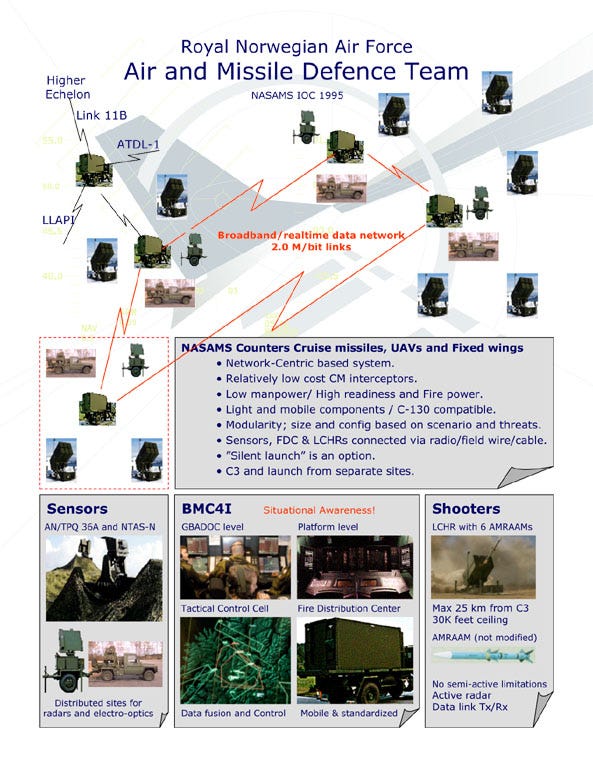
The key observation for me is that the launch platform is transported by truck but has to be unloaded and emplaced. That takes time and potentially leads to vulnerability to artillery and other weapons. It is designed for layered, fixed defenses (such as the Capital district of Washington DC). Engagement range is up to 50 km (radar 120km).
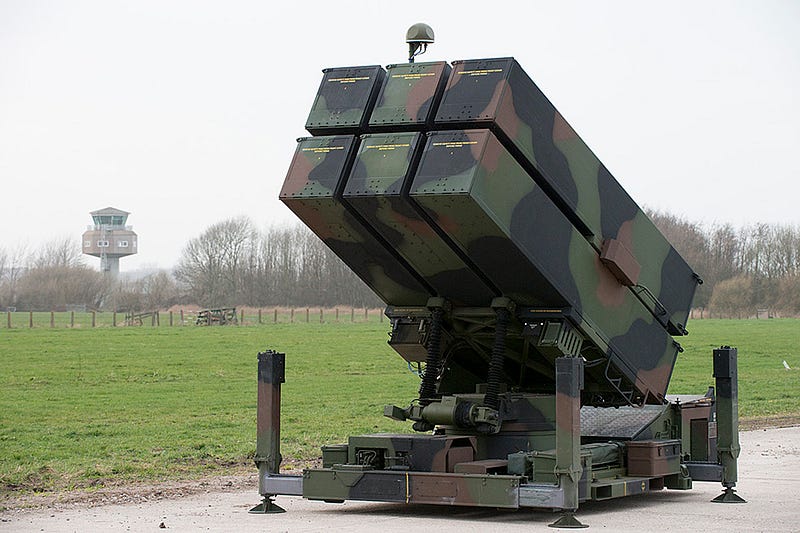
However, in my research on Russian AA defences for another story I noted that the powerful AA missiles — the S-300 family — that Russia uses to defend its major cities can be launched from transport-erector-launchers (TELARS).
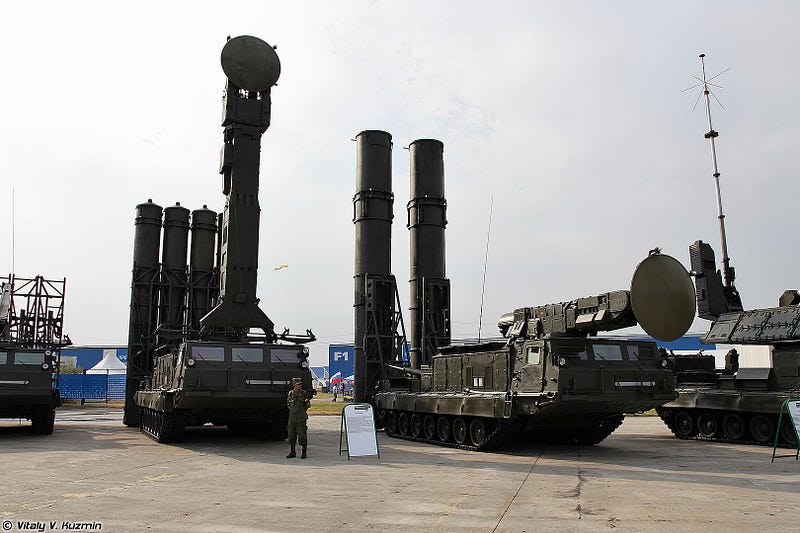
Note: Russia has been using these for land attack in Ukraine.
Spain: Skyguard Shorad Aspide
According to sources cited by El Pais and reported by Reuters, Spain’s Defence Ministry is planning to deliver low-level Aspide anti-aircraft missiles. These are relatively old technology and the Spanish Army has replaced these systems with more modern weapons.
Shorad is a generic term for short range air defence.
The system is Italian built and the missiles are very similar to the US’s now dated AIM-7 Sparrow. It uses the same airframe, but with an inverse monopulse IR seeker head that is far more accurate and much less susceptible to ECM than the original conical scanning version. (Wikipedia)
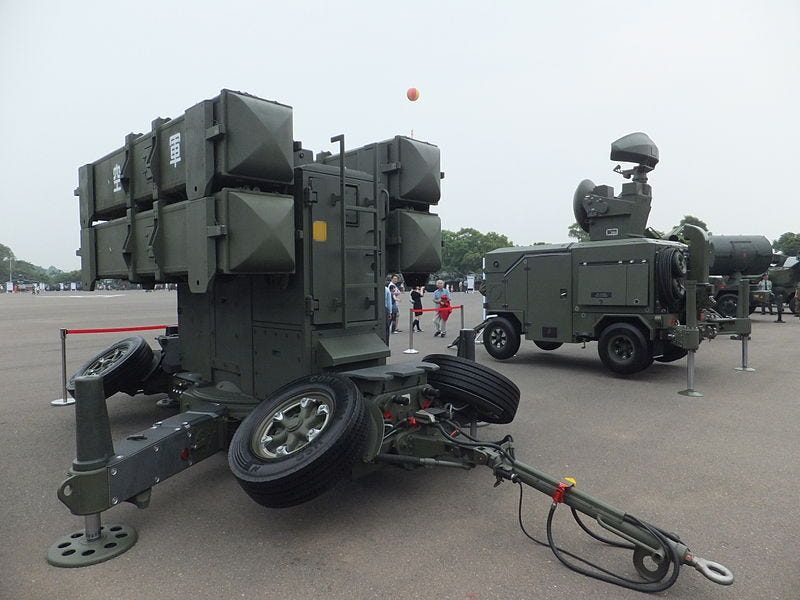
Missile range is quoted by Wikipedia as 25 km for the SAM version.
UK: Starstreak missile
The UK has sent Starstreak missiles. This versatile, fast and agile missile can be used in manpad form or as part of a more substantial air defence system. Unlike most other manpads it does not use infrared seeking.
After launch, the missile accelerates to more than Mach 4, making it the fastest short-range surface-to-air missile in existence. It then launches three laser beam-riding submunitions, increasing the likelihood of a successful hit on the target.
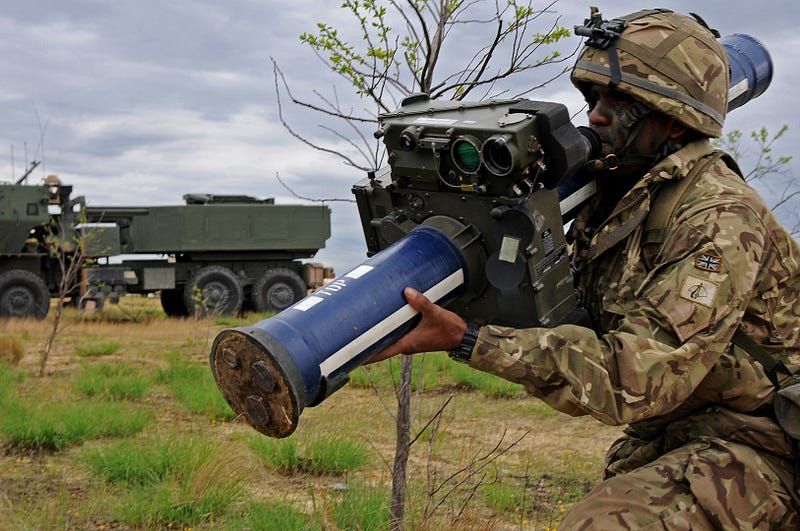
It’s an amazing piece of kit with very clever technology to maximize the likelihood of a kill using laser beams.
The darts do not home in on laser energy reflected from the target [beam riding]; instead, the aiming unit projects two laser beams which paint a two-dimensional matrix upon the target. The lasers are modulated, and by examining these modulations the sub-munitions sensor can determine the dart’s projected hit location within the matrix. The dart is then steered to keep it in the centre of the matrix. — Wikipedia (ibid.)
Because the Starstreak does not use IR or radar it is not susceptible to ECM — i.e. it cannot be jammed. What would work to fluff the lasers? Possibly another laser to blind them. No doubt that’s being designed somewhere right now, if not already out there.
Edit: A reader has provided further information commenting that Starstreak does use IR and is potentially susceptible to jamming:
Starstreak uses the “ADAD” (air defence alerting device) which does use IR sensors. So whilst the targeting is indeed SACLOS an IR sensor is in the loop, albeit a very expensive one that’s much harder to beat.UK: Starstreak manpad
Ukraine first received man-portable Starstreak launchers (MANPADS) from the UK in March, and by April 1 a Starstreak was already credited with downing a relatively advanced Russian Mi-28N Havoc attack helicopter. The BBC published a video.
The number of Starstreak manpads that the UK has supplied to Ukraine has not been disclosed.
UK: Starstreak on other launch platforms
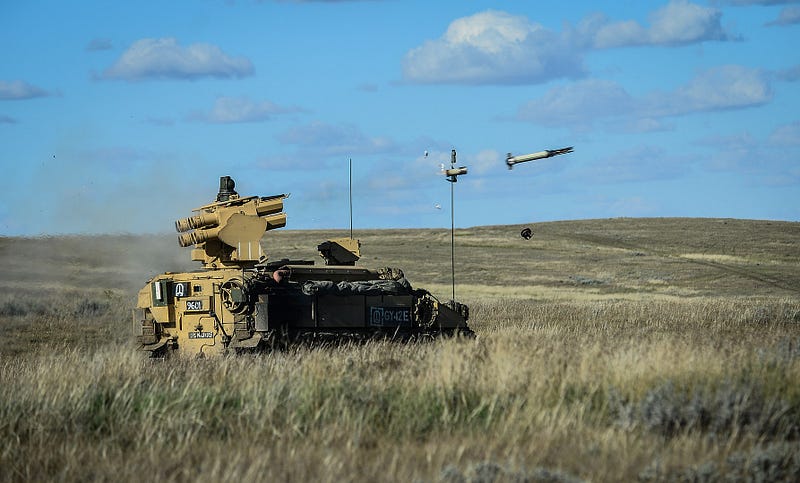
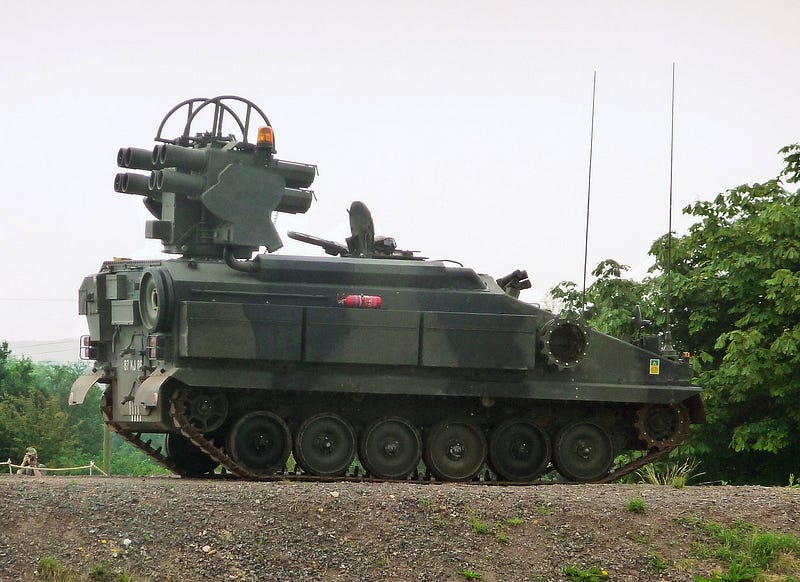
The UK has supplied the Ukraine with six Stormer HVMs, which arrived in July 2022 complete with Starstreak missiles. The Stormer HVM is a British tracked AFV (armoured fighting vehicle) available in multiple configurations including a Starstreak launch platform.
The Starstreak AA version has a roof-mounted eight-missile launcher and sufficient space inside to accommodate 8 additional missiles.
Germany: 9K32-Strela.
2,000 working units of this MANPAD have been supplied. This episode has been an embarrassment for Germany and led to many people questioning the German government’s commitment, as I did.
I covered this weapon system in detail in my earlier story about Ukraine’s ex-Soviet air-defence inventory.
Germany: IRIS-T SLM
Germany has also committed to supplying their latest IRIS-T SLM system, although once again, there seems to be some foot-dragging in Berlin — ‘by the end of the year’. Of course there could be nervousness about a widening of the war. Given Germany’s recent low expenditure on defence then worries about their own defensive capability may be leading to the slow supply. But, to be fair, operational testing of IRIS-T SL was only completed in January 2022.
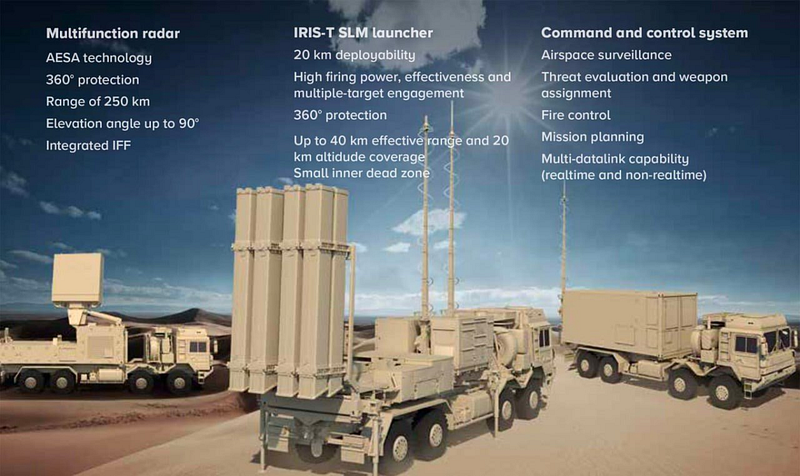
IRIS-T — the missile — is designed to replace the AIM-9 Sidewinder in NATO use. It can be deployed from a number of platforms including the US NASAMS and Germany’s own surface launch platform as the IRIS-T SL.
It is a surface-launched (SL) radar-guided version of the missile, called IRIS-T SL. It has a pointed nose, unlike the regular IRIS-T, with a jettisonable drag-reducing nose cone. The missile uses GPS-based inertial navigation system and radar data link for command guidance during the initial approach, while the interference-resistant IR seeker head is activated at the terminal stage.
In comparison to the AIM-9M Sidewinder, the IRIS-T has higher ECM-resistance and flare suppression. Improvements in target discrimination allows for 5 to 8 times longer head-on firing range than the AIM-9M. It can also engage targets behind the launching aircraft — Wikipedia
An interesting aside (at least for me): The Sidewinder was so-called after the horned rattlesnake — the ‘sidewinder’ — which uses infrared sensors to hunt prey. Another story is that this came about because in the early days of its development (circa 1950) the guidance feedback was very coarse and the missile snaked through the air and so the developers nicknamed it ‘Sidewinder’. My memory tells me that I’ve seen the video of it snaking, but I can’t find it online anymore. Either way the name stuck.
Germany: Gepard self-propelled AA artillery
The Flakpanzer Gepard is a heavily armoured self-propelled anti-aircraft gunnery system based on the chassis of the Leopard 1 battle tank.
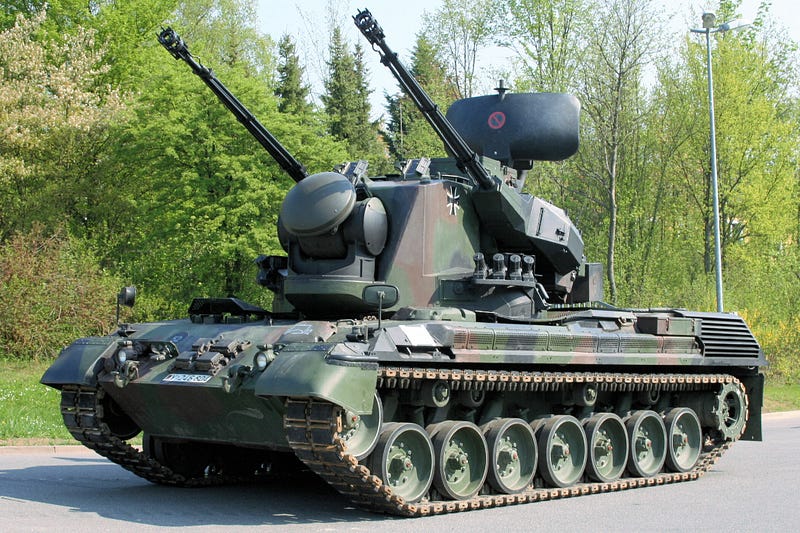
Each vehicle is armed with 2 × 35 mm Oerlikon GDF autocannon, each with 320 rounds anti-aircraft ammunition and 20 rounds of FPAD discarding sabot anti-tank projectiles. The turret swivels through a full 360⁰.
Designed as a defence against low flying aircraft and helicopters, the Gepard is a highly effective air defense system that features greater mobility than other systems of its type. The system is most effective when Stinger teams work in tandem with the Gepard units to take advantage of their long-range radar scanning capability.
The Gepard has two radar systems — a general search radar at the rear of the turret and a tracking radar, and laser rangefinder, at the front between the guns. The S-band search radar installed on the German Gepard has a range of 15km.
These weapons are no longer used by the German army.
On 26 April 2022, the German government authorised the transfer of 50 Flakpanzer Gepard anti-aircraft vehicles to Ukraine. The first three Gepards arrived in Ukraine in late July 2022. The weapon has shown faults in not recognising Norwegian ammunition. (Wikipedia)
Ukraine’s air defences — success against missiles
The number of reports about successful downing of cruise and other missiles by Ukrainian air defences appears to be increasing.
On August 3rd, Ukraine claimed to have downed seven out of eight Kh-101 cruise missiles during the previous night.
Six of them were “eliminated” by anti-aircraft missile forces, while one was shot down by a Ukraine air force fighter jet, Ukraine defence sources said.
The Kh-101 is a very sophisticated (despite using very old electronics components) and stealthy missile. Air-launched with terrain following capability, Russia has been launching these subsonic missiles from strategic bombers over the Caspian Sea. So, although stealthy, the missiles have a flight path to mid-Ukraine which I estimate to be about 700 miles — more than one hour’s flight time.
The launch bombers are outside Ukraine’s air defence range (Ukraine is not attacking Russian aircraft in Russian airspace). However, with such a missile flight time I think it’s possible that US satellite feeds and the best Ukrainian long-range air defence radar is able to spot them in good time for cueing targeting by Starstreak and other NATO systems. Stealthy or not.
Ukraine long-range air defence radars are largely based on ex-Soviet (=old) units. Some units such as the P-14 have a working range of 400 km. They are 2D and therefore to obtain full target information (speed, direction, height, range, IFF) then two different sets are required with their data to be combined.
They perform poorly against terrain-hugging stealth missiles. Ukraine claims to have developed its own long range early warning VHF radar.
The United States has supplied 4 units of the 3D Sentinel air defence radars to Ukraine.
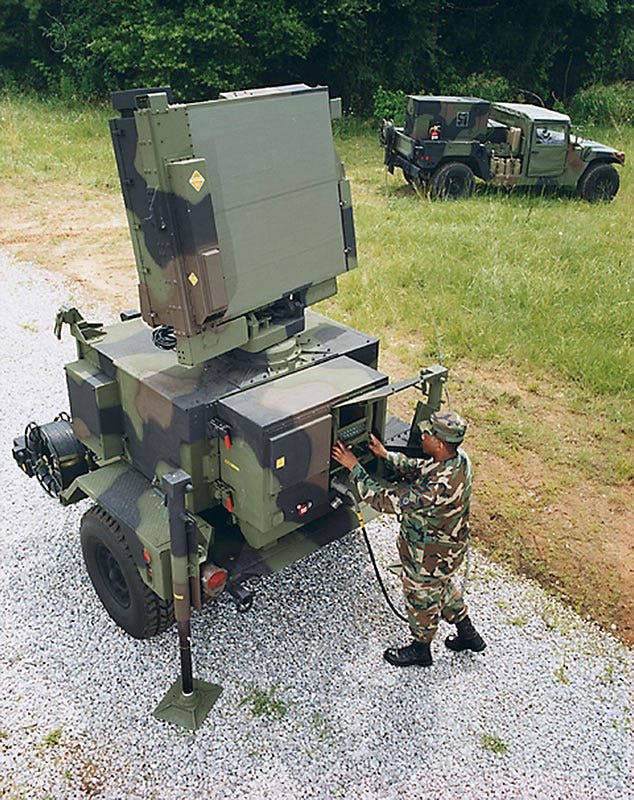
The Sentinel has a range of 120 km, but 4 units may not be enough to cover the threat span — which could soon include, again, Ukraine’s border with Belarus.
The Sentinel is designed to be part of an integrated data network so patching them in to Ukraine’s own systems will be an interesting technical exercise. But they are in operation, one way or another.
However, the German IRIS-T has a claimed 450 km range and, as a NATO weapons system I would expect it to be ‘plug and play’ compatible with the US Sentinel. But that’s only a guess. And again, at long range it’s unlikely to be able to detect low level cruise missiles which would be below the horizon and possibly flying in a valley or behind hills specifically to avoid such radars and reducing interception timescales.
I haven’t mentioned AWACS lookdown radars, but reports are that US AWACS planes in NATO airspace are contributing to Ukraine’s threat picture.
Optimism
As I write we’re over 160 days into Putin’s ‘special military operation’. Russia has lost over 200 aircraft and reportedly used over 3,000 missiles of various kinds.
Ukraine claims to have destroyed 182 cruise missiles to date.
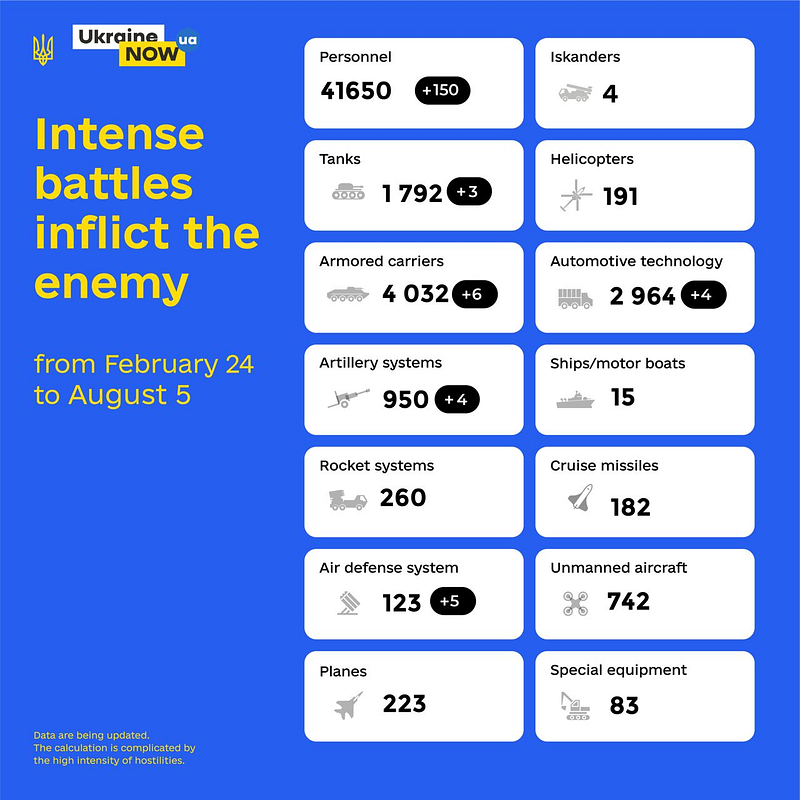
Certainly Ukraine is optimistic about progress towards recovering full control of its skies.
It will be possible to close the sky over Ukraine until the end of 2023
This will be possible subject to large deliveries of Norwegian anti-aircraft missile systems NASAMS, believes the former Deputy Chief of the General Staff of the Armed Forces of Ukraine, Lieutenant General Ihor Romanenko
“We need to cover the capital, the decision-making center, and use another one somewhere, implement the principle of Trishka’s caftan — when a “hole” forms, we tear off the “patch” from another place and close this place. And a “hole” appears in the old place,” Romanenko explained.
— Telegram
About me: If you follow me I guarantee variety in your inbox with some peculiar perspectives! I write on a wide range of topics including humor, tech, space, geopolitics and travel, together with daily news events and the minutiae of my daily life living on a boat. Yes, I really do live on a boat (some readers don’t believe that). I also write about…
…undeclared wars
If you appreciate stories like these and want to support other writers and me, consider signing up to become a Medium member. It’s only $5 a month, giving you unlimited access to incredible stories on Medium. If you sign up using my link below, I’ll earn a small commission at no extra cost to you.
Or maybe just buy me a coffee?


