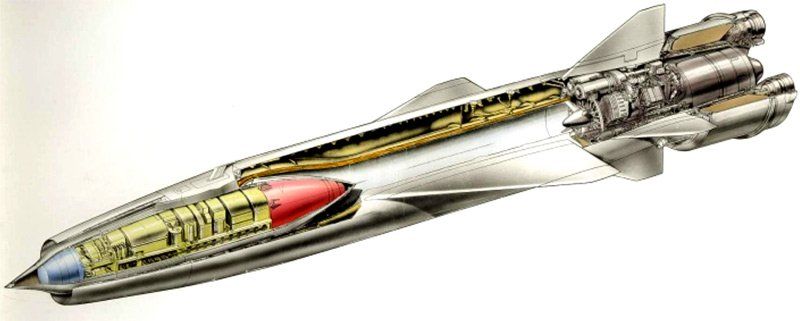
avatarJames Marinero, MSc, MBA

Free AI web copilot to create summaries, insights and extended knowledge, download it at here

12056

Abstract

on>Kh-101 / X-101 cruise missile. Image credit: Image credit: <a href="https://english.pravda.ru/news/russia/141781-russian_missile/">https://english.pravda.ru/news/russia/141781-russian_missile/</a></figcaption></figure><p id="58e3">It was used against Ukraine in June 2022.</p><p id="9200"><a href="#5628">Return to contents</a></p><h2 id="f545">Kh-22 / X-22 — Burya</h2><figure id="e480"><img src="https://cdn-images-1.readmedium.com/v2/resize:fit:800/1*dkWD9rv161jCig2KtMu-ow.jpeg"><figcaption>Image credit: By Антон Бородин — Музей авиационной техники, CC BY-SA 3.0, <a href="https://commons.wikimedia.org/w/index.php?curid=10658517">https://commons.wikimedia.org/w/index.php?curid=10658517</a></figcaption></figure><p id="46b6">The Kh-22 / X-22 (NATO reporting name: Kitchen) is a substantial long-range anti-ship missile originally developed by the Raduga company in the Soviet Union. Although is was intended for use against aircraft carriers and carrier battle groups, with either a conventional or nuclear warhead it is a LACM (Land Attack Capable Missile).</p><blockquote id="a898"><p>Since May, the Armed Forces of the Russian Federation began to try out the X-22 missiles to assess their efficiency. In a month and a half they’ve learned that the missile’s range of application without loosing precision does not exceed 200 kilometers.</p></blockquote><blockquote id="667a"><p>The X-22 missiles were used to attack the trade center in Kremenchuk at the distance of 200 kilometers, and to target Bilhorod-Dnistrovsky at the distance of 170 kilometers.</p></blockquote><blockquote id="5ee5"><p><a href="https://t.me/ukrainenowenglish/12459"><i>Ukraine Telegram</i></a></p></blockquote><p id="852b">It’s an air-launched missile capable of carrying a 1000 kg conventional explosive warhead, or a nuclear warhead in the range 350–1000 kilotons at Mach 4.6 (3,500 mph) for a range of 600 km.</p><p id="3806">Fearsome is the word. It can use high or low altitude modes. In the high altitude mode it climbs to 89,000 feet and dives into its target.</p><p id="c5e7">Using a gyroscope autopilot and radio altimeter, it is not reliant on the Glonass GPS system (which could be jammed).</p><p id="5e46"><b>Upgrades: </b>These missile are being upgraded to the Kh-32 / X-32 with ceilings of 132,000 feet (i.e. the stratosphere) and inertial guidance.</p><p id="1fb2"><b>Other attacks: </b>In the night between 30 June and 1 July 2022, three Kh-22 missiles were fired from Tu-22M3s into a 9-storey apartment building and a recreational center in Serhiivka, a Ukrainian settlement on the Black sea coast about 70 km (43 mi) south-west of Odessa. At least 57 other missiles are reported to have been use in Ukraine. — <a href="https://en.wikipedia.org/wiki/Kh-22">Wikipedia</a></p><p id="4057">After the collapse of the Soviet Union, Ukraine inherited 423 of these missiles, which were scrapped along with the decommissioning of their TU-22M launch platforms. (<a href="http://www.aviaport.ru/digest/2006/01/26/100145.html">www.aviaport.ru</a>)</p><p id="ab09"><a href="#5628">Return to contents</a></p><h2 id="637d">Kh-55 / Kh-555 X-55 / X-555</h2><p id="1a00">The Kh-55 / Х-55, NATO reporting name AS-15 Kent, is a Soviet/Russian subsonic air-launched cruise missile. With a range of up to 2,500 km it is launched exclusively from bomber aircraft and a number of conventionally armed variants have been derived, mainly for tactical use, but only the Kh-101 (<i>ibid.</i>) and Kh-555 appear to have made it into service (in much modified form — for example fuselage shape has aerodynamic lift in Kh-101).</p><figure id="b83e"><img src="https://cdn-images-1.readmedium.com/v2/resize:fit:800/1*bmzcnQEcr96ofjFbUceP2w.jpeg"><figcaption>Kh-55 (NATO code:AS-15 “Kent”) in the Ukrainian Air Force museum. Image credit: George Chernilevsky, Public domain, via Wikimedia Commons</figcaption></figure><p id="6151">They use a turbofan engine built by a Ukraine company. The weight of the missile is about 1650 kg and its maximum flight speed is Mach 0.75.</p><p id="cab5">Ukraine inherited many of these missiles after independence but sold them off to Russia and Iran. - <a href="https://en.wikipedia.org/wiki/Kh-55">Wikipedia</a>.</p><p id="2786">The<b> Kh-555 (NATO Kent-C)</b> is an enhanced version:</p><blockquote id="fe87"><p>This missile has larger conformal fuel tanks than the Kh-55SM due to increased weight of the warhead. This missile has a range of up to 3 500 km.</p></blockquote><blockquote id="a741"><p>This missile has improved guidance system. Also the Kh-555 has a GPS navigation capability. Due to improved guidance systems the missile has increased accuracy. Some sources report that this missile has a CEP of 20 meters. —<i> <a href="https://www.military-today.com/missiles/kh_555.htm">Military Today</a></i></p></blockquote><p id="252b"><a href="#5628">Return to contents</a></p><h2 id="d617">Kh-59 Ovod (NATO Kingbolt)</h2><p id="0863">Designed in the 1970s as a precision stand-off weapon for the Su-24M and late-model MiG-27’s, it is a solid-fuelled TV guided subsonic cruise missile with a rocket accelerator in the tail.</p><figure id="cee9"><img src="https://cdn-images-1.readmedium.com/v2/resize:fit:800/1*L_fgrZLCMW3fMTSTHcxWCQ.jpeg"><figcaption>Image credit: By Allocer — Own work, CC BY-SA 3.0, <a href="https://commons.wikimedia.org/w/index.php?curid=7642405">https://commons.wikimedia.org/w/index.php?curid=7642405</a></figcaption></figure><p id="1fe2">Range is about 200 km and it has a maximum altitude of 11,000 metres. minimum of 7 metres. It carries a 320 kg warhead.</p><p id="ed0d">There are a large number of variants including anti-ship and it has been used extensively in Russia’s wars and in Ukraine.</p><p id="be22"><a href="#5628">Return to contents</a></p><h2 id="a63b">3M-54 Kalibr</h2> <figure id="1fad"> <div> <div> <img class="ratio" src="http://placehold.it/16x9"> <iframe class="" src="https://cdn.embedly.com/widgets/media.html?src=https%3A%2F%2Fwww.youtube.com%2Fembed%2Fs93XchuFKu0%3Ffeature%3Doembed&amp;display_name=YouTube&amp;url=https%3A%2F%2Fwww.youtube.com%2Fwatch%3Fv%3Ds93XchuFKu0&amp;image=https%3A%2F%2Fi.ytimg.com%2Fvi%2Fs93XchuFKu0%2Fhqdefault.jpg&amp;key=a19fcc184b9711e1b4764040d3dc5c07&amp;type=text%2Fhtml&amp;schema=youtube" allowfullscreen="" frameborder="0" height="480" width="854"> </div> </div> </figure></iframe></div></div></figure><p id="b52e">Also referred to as 3M54–1 Kalibr and 3M14 Biryuza, NATO reporting name SS-N-27 Sizzler and SS-N-30A. This is a hugely versatile family of Russian cruise missiles with ship-launched, submarine-launched and air-launched versions with variants for anti-ship, anti-submarine and land attack use. Multi-stage, with rocket boost and turbojet propulsion, some versions have a second rocket propulsion stage that initiates a supersonic sprint in the terminal approach to the target, reducing the time that target’s defense systems have to respond.</p><p id="c335">The missile can carry a warhead weighing up to 500 kg of explosive or a thermonuclear warhead for 300–500 km, although range estimates vary considerably. A new variant with a 4,500 km range is reported to be in development.</p><figure id="1574"><img src="https://cdn-images-1.readmedium.com/v2/resize:fit:800/1*neACxvDiGZwXTh325Fj18A.jpeg"><figcaption>3M-54 Kalibr cruise missile. Image credit: By Allocer — Own work, CC BY-SA 3.0, <a href="https://commons.wikimedia.org/w/index.php?curid=8897938">https://commons.wikimedia.org/w/index.php?curid=8897938</a></figcaption></figure><p id="1afb">It is well proven and has been used extensively in Syria (reportedly air-launched from the Caspian Sea and submarine-launched from the Mediterranean Sea). Twice as heavy and almost four times as fast as the US Tomahawk, the 3M54T has more than 32 times the on-cruise kinetic energy as the Tomahawk and is extremely hard to defend against. Flight speed ranges from Mach 0.8–3.0 at an altitude 50–150 metres over land (20m over water), with high manoeuvrability in the terminal flight phase.</p><figure id="b666"><img src="https://cdn-images-1.readmedium.com/v2/resize:fit:800/1*5bHBWjUMDg0ubk-xpcqHXQ.jpeg"><figcaption>Indian Navy frigate INS <i>Tabar</i> firing the Club missile. Image credit: By Indian Navy — <a href="https://www.indiannavy.nic.in/content/western-naval-command-concludes-exercise-paschim-leher">https://www.indiannavy.nic.in/content/western-naval-command-concludes-exercise-paschim-leher</a>, GODL-India, <a href="https://commons.wikimedia.org/w/index.php?curid=53257713">https://commons.wikimedia.org/w/index.php?curid=53257713</a></figcaption></figure><p id="ad3e">Many have been exported in several ‘Club’ versions and it is in use by the navies of Algeria, China, Iran, Vietnam and India. With a flexible launch system in standard 44 feet long shipping containers it is easily, secretly transportable.</p><p id="0ef3">It has been very widely used in the Ukraine war and has apparently prompted an upgraded Tomahawk design.</p><p id="40c8"><a href="#5628">Return to contents</a></p><h2 id="af0d">3M-55 / P-800 — Oniks</h2><figure id="36e7"><img src="https://cdn-images-1.readmedium.com/v2/resize:fit:800/1*7OZSpWUESljr75zqaiRqJw.jpeg"><figcaption>3M-55 ‘Yakhont’ Oniks. Image credit: By Boevaya mashina — Own work, CC BY-SA 4.0, <a href="https://commons.wikimedia.org/w/index.php?curid=73415917">https://commons.wikimedia.org/w/index.php?curid=73415917</a></figcaption></figure><p id="e752">These ramjet-powered missiles (NATO reporting name SS-N-26 ‘Strobile’) are reported to have an accuracy of 1.5 metres CEP (circular error probable). That’s about as accurate as anything can be as so much depends on target coordinate accuracy anyway.</p><p id="e493">With a range of up to 600 km, a ceiling of 14,000 metres (~45,000 feet) and a speed of Mach 2–3, these weapons weigh in at about 3 tonnes including a warhead of 250-300 kg. They can fly as low as 10 metres above sea level.</p><p id="a998">Launched from air, sea or land they use a rocket booster which is ejected after burnout when the ramjet kicks in. These fire-and-forget missiles are considered to be very hard to defend against with active radar tracking and high terminal speed which makes close-in-weapons-systems (CIWS) almost ineffective. They are thought to be highly resistant to ECM.</p><p id="5ce5">They were originally designed as anti-ship weapons (and currently Wikipedia does not indicate report a land attack capability) but they are clearly land attack capable:</p><p id="a58d">The <a href="https://understandingwar.org/backgrounder/russian-offensive-campaign-assessment-may-1">Institute for the Study of War</a> reported that on April 30, Russia used “Onyx” anti-ship missiles during an attack on Odessa airport. Implication: the missiles were used for ground attack purposes.</p><p id="9066">Analysts at the institute believe that this may indicate a shortage of other types of high-precision long-range missiles.</p><p id="5626">It has been exported to many of Russia’s allies including Hezbollah in the Middle East.</p><p id="4eb2"><a href="#5628">Return to contents</a></p><h2 id="26a5">3M-80 / P270MV — Moskit</h2><p id="0820">This is the land attack variant of the P270. NATO codename SS-N-22 Sunburn.</p><figure id="2182"><img src="https://cdn-images-1.readmedium.com/v2/resize:fit:800/1*Cdy8qpqgfHbUbEDh4QUZjw.jpeg"><figcaption>P270 Moskit cruise missile. Image credit: <a href="http://By No machine-readable author provided. Jno~commonswiki assumed (based on copyright claims). - No machine-readable source provided. Own work assumed (based on copyright claims)., CC BY 2.5, https://commons.wikimedia.org/w/index.php?curid=687585">Wikipedia</a></figcaption></figure><p id="6dc9">This is a follow up to the P120 Malakhit (which is still in service and not included here) designed to address some of the shortcomings of its ancestor.</p><p id="55a5">First produced in 1983, it has b

Options

een sold widely to the former Soviet Union’s allies. The air-to-surface version is solid fuelled, whereas other versions use 4 ramjets. It can be launched from ships (not submarines), fixed wing aircraft, coastal batteries and mobile truck TELARs (transport erector launchers).</p><p id="e72c">With a weight of 4.5 tonnes (warhead 300 kg), it has a maximum speed of Mach 3 at height and Mach 2.2 at a flight altitude of 5–15 metres, it has a range of about 250 km (air launched), and uses inertial guidance and terminal homing radar to close its attack.</p><p id="2e4c">The missile can perform intensive anti-defense maneuvers with dynamic overloads in excess of 10g, which [can be] completed for 9 km before reaching its target. — <a href="https://en.wikipedia.org/wiki/P-270_Moskit">Wikipedia</a></p><figure id="6f1a"><img src="https://cdn-images-1.readmedium.com/v2/resize:fit:800/1*uOPm9d50-r5fcHgN2uNNKw.jpeg"><figcaption>3M-80 air-launched flight profiles excludes manoeuvring. Image source: <a href="https://www.testpilot.ru/russia/raduga/kh/41/images/shema.jpg">Wikipedia</a></figcaption></figure><p id="465d">It can be launched from almost any platform (variant dependent) including submerged submarines. There are no reports as yet of it being used against Ukraine.</p><p id="9bdc"><a href="#5628">Return to contents</a></p><h2 id="24ea">3M-45 / P-700 — Granit</h2><figure id="4121"><img src="https://cdn-images-1.readmedium.com/v2/resize:fit:800/1*D2HthjwCUTxW7SfJK4dysg.jpeg"><figcaption>P-700 Granit. Image credit: <a href="https://www.naval.com.br/blog/wp-content/uploads/2017/09/P-700-Granit.jpg">Naval.com.br</a></figcaption></figure><p id="16f6">This missile is a Soviet and Russian naval anti-ship cruise missile with the NATO reporting name SS-N-19 <i>Shipwreck</i>. It comes in surface-to-surface and submarine-launched variants, and can be used against ground targets.</p><p id="b4d3">It is a heavy weapon at 7 tonnes (warhead 750 kg) and 10 metres length, with a range estimates varying up to 625 km. The power unit is believed to be a turbojet and ramjet combination (unusual). It can fly supersonic (Mach 1.5) at sea level and Mach 2.5 at high altitude (unspecified).</p><blockquote id="f6b9"><p>The missile, when fired in a swarm (group of 4–8) has a unique guidance mode. One of the weapons climbs to a higher altitude and designates targets while the others attack. The missile responsible for target designation climbs in short pop-ups, so as to be harder to intercept. The missiles are linked by data connections, forming a network.</p></blockquote><blockquote id="5bf6"><p><a href="https://en.wikipedia.org/wiki/P-700_Granit"><i> Wikipedia</i></a></p></blockquote><p id="975c">Note: some of the ‘facts’ about this missile on Wikipedia are disputed. Images vary too with some showing an annular air intake in the nose (which could be protected with a dust cap in others).</p><figure id="5de0"><img src="https://cdn-images-1.readmedium.com/v2/resize:fit:800/1*MbUuAzLEM5UZyBsU7ucQVw.jpeg"><figcaption>P-700 Granit. Image credit: <a href="https://warshistory.ru/raznoe-2/raketa-p-700-granit-ttx-rossijskie-rakety-granit-smertelnaya-opasnost-dlya-flota-ssha.html">warhistory.ru</a></figcaption></figure><p id="75c1">Interestingly, Wikipedia reports that there is an issue with the guidance system: Inertial guidance, active radar homing with home-on-jam, and Legenda satellite targeting system with its own constellation of 69 satellites for navigation. Legenda is believed to be nonfunctional after the fall of the USSR and is now being replaced by the 4 satellite Liana system.</p><p id="24ff"><a href="https://en.wikipedia.org/wiki/Legenda_(satellite_system)">Legenda</a> was created specifically for this missile and will surely have been replaced by now.</p><p id="4cee">Production of the Granit ceased in 1992.</p><p id="8ed6">There are no reports of its use in Ukraine.</p><p id="5c8a"><a href="#5628">Return to contents</a></p><h2 id="a112">Mach numbers?</h2><p id="6106">A quick note: Mach 1 is the speed of sound at a given air temperature, density and pressure, so it varies with height above the Earth’s surface. Missiles ‘go supersonic’ at Mach 1 (which varies with height) and this has major design implications for the missile structure and engine designs. I have quoted missile speeds in Mach numbers. Very roughly, at ground level the speed of sound is 760 mph — about 1 mile in 5 seconds — just as you counted the seconds between the flash and bang in a thunderstorm.</p><p id="46da">Faster missiles are harder to defend against — and for the designer to control in the terminal phase.</p><h1 id="85f4">Conclusions</h1><p id="b11e">I was amazed by the range of Russian cruise missiles and their capabilities.</p><p id="3e5a">Note: Nowhere did I read about any of these missiles being in current production, but I might have missed the detail.</p><h2 id="6e9b">Quantities</h2><p id="35a5">How many does Russia have? As you may imagine numbers are hard to come by.</p><p id="6bec">During my research I saw that of one particular cruise missile Russia had produced 500 — it’s not a current missile and I didn’t note it at the time, so it must be a predecessor of a current missile. But maybe that gives us a feel for numbers.</p><p id="966e">Dr Sidharth Kaushal, a research fellow for sea power and missile defence at the Royal United Services Institute, said it is unclear how many cruise missiles Russia currently has. One report has suggested about 120 were produced in 2018. Source: <a href="https://inews.co.uk/news/world/russia-cruise-missiles-how-many-putin-military-power-explained-weapons-ukraine-1525348">ienews.co.uk</a></p><p id="9d39">Forbes estimates that the Russian stockpile was 7,000 cruise missiles:</p><div id="3faf" class="link-block"> <a href="https://global.espreso.tv/forbes-experts-estimate-how-many-soviet-missiles-remain-in-russia"> <div> <div> <h2>Forbes experts estimate how many Soviet missiles remain in Russia. Espreso</h2> <div><h3>There were about 7,000 of this type of missile left in Russia at the start of its war against Ukraine. They are short…</h3></div> <div><p>global.espreso.tv</p></div> </div> <div> <div style="background-image: url(https://miro.readmedium.com/v2/resize:fit:320/0*Tq_TEmQYjpLlG9tT)"></div> </div> </div> </a> </div><p id="e28f">One thing is sure, Russia is burning through them very quickly in Ukraine.</p><p id="9277">I have listed 8 current LACM cruise missiles in this story. There will not be 500 of each type, for sure, but if that were the average then we’d be looking at 4,000 cruise missiles — but would that include those anti-ship i.e. not LACM variants?</p><p id="cc31">As you saw in the Ukraine ‘claims’ image at the start of this story, Ukraine is claiming 153 downed cruise missiles (6 July). Undoubtedly they have defence weapons capable of destroying cruise missiles, although downing a terrain hugging supersonic missiles is very challenging, subsonic less so.</p><p id="500a">Ukraine claimed another 9 cruise missiles destroyed on July 5, 2022:</p><div id="97b1" class="link-block"> <a href="https://euroweeklynews.com/2022/07/06/russian-cruise-missiles-ukraine-combat-losses/"> <div> <div> <h2>Nine Russian cruise missiles destroyed by Ukraine as combat losses revealed</h2> <div><h3>Ukraine's Ministry of Defence published updated figures of combat losses inflicted on Russian forces since the…</h3></div> <div><p>euroweeklynews.com</p></div> </div> <div> <div style="background-image: url(https://miro.readmedium.com/v2/resize:fit:320/0*kFyHZCy2rD9TfI1l)"></div> </div> </div> </a> </div><p id="e33c">The other thing to bear in mind is that as with tanks and aircraft, Russia will not want to let its inventory fall too far — that would leave them ‘defenceless’ — but where the bottom line is I do not know.</p><h2 id="e142">Do the cruise missiles work?</h2><p id="da58">Having the weapons is one thing, but will they work? Russia does have quality problems with some of its missiles. This is a report (fact or fiction?) from the Ukraine Telegram Channel:</p><blockquote id="ef1d"><p>In Kherson and Belgorod, the invaders’ missiles turned around in the air and flew back</p></blockquote><blockquote id="93e0"><p>Users of the network<i> [ed: Telegram]</i> published the corresponding video.</p></blockquote><blockquote id="4381"><p>The missile from Kherson turned around and began to fall after the launch of the Russians. Local Telegram channels write that out of 7 missiles fired, 4 fell immediately after takeoff.</p></blockquote><blockquote id="6ff4"><p>Also, at least 2 rockets fired from Belgorod turned around almost immediately and flew back. As a result, the missiles fell in a Russian city, not far from the Ukrainian border.</p></blockquote><p id="059f">That’s no surprise, as the Ukraine war has demonstrated the Russian failures of proper storage, maintenance and awakening of their equipment, from truck wheel bearings seizing up to missile failures.</p><p id="bcdd"><a href="#5628">Return to contents</a></p><div id="bad2" class="link-block"> <a href="https://t.me/ukrainenowenglish/13596"> <div> <div> <h2>Ukraine NOW [English]</h2> <div><h3>🔺 Volodymyr Zelensky: "Russia has already used more than 3,000 cruise missiles against Ukraine"</h3></div> <div><p>t.me</p></div> </div> <div> <div style="background-image: url(https://miro.readmedium.com/v2/resize:fit:320/0*leTrfvwCWok075Zo)"></div> </div> </div> </a> </div><div id="fed8" class="link-block"> <a href="https://readmedium.com/ukraine-is-russia-running-out-of-missiles-6b868859a6d9"> <div> <div> <h2>Ukraine: Is Russia Running out of Missiles?</h2> <div><h3>The use of strategic X-101 standoff missiles could be a sign of shortages or is it just a sign that Ukraine’s air…</h3></div> <div><p>medium.com</p></div> </div> <div> <div style="background-image: url(https://miro.readmedium.com/v2/resize:fit:320/1*a3jRzUNyqXtlg2hshnL6mw.jpeg)"></div> </div> </div> </a> </div><p id="4ad8">If you want to learn more about these missiles — and others — then useful sites are:</p><p id="af76"><a href="https://missilethreat.csis.org">Missilethreat.csis.org</a></p><p id="c76a"><a href="https://www.military-today.com/">Military Today</a></p><p id="4a4d">I have no affiliation with them and there are several others.</p><p id="dc44"><i>About me: If you follow me I guarantee variety in your inbox with some peculiar perspectives! I write on a wide range of topics including humor, tech, space, geopolitics and travel, together with daily news events and the minutiae of my daily life living on a boat. I also write about…</i></p><p id="2015"><b>…war technology</b></p><p id="f508"><i>If you appreciate stories like these and want to support other writers and me, consider signing up to become a Medium member. It’s only $5 a month, giving you unlimited access to incredible stories on Medium. If you sign up using my link below, I’ll earn a small commission at no extra cost to you.</i></p><p id="e6cc"><a href="https://james-marinero.medium.com/membership"><i>https://james-marinero.medium.com/membership</i></a></p><p id="afa9"><i>Or maybe just <a href="https://ko-fi.com/jamesmarinero">buy me a coffee?</a></i></p><figure id="ffa4"><img src="https://cdn-images-1.readmedium.com/v2/resize:fit:800/1*F7CRvNpnsbM3yYySfOeIjA.png"><figcaption></figcaption></figure></article></body>

Ukraine War

Ukraine, Russia and Cruise Missiles

Apart from the troops on the ground, Russia is fighting the Ukraine war from a distance with a huge but decreasing cruise missile inventory
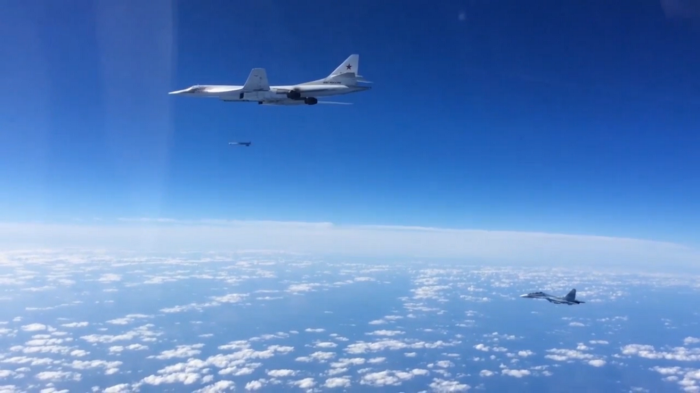
A Tu-160 launching a Kh-101 cruise missile at targets in Syria, November 2015. Image credit: Wikimedia

Stop Press 19 July 2022:

Volodymyr Zelensky: “Russia has already used more than 3,000 cruise missiles against Ukraine”

Introduction

In an earlier story I questioned whether Russia was suffering from depletion of its cruise missile inventory in the Ukraine war and concluded that it was.

And then I wondered, what exactly does Russia have in its Ukraine land-attack cruise missile (LACM) inventory beyond the X-101/Kh-101 which I covered in that story?

As I dug deeper what really surprised me as an amateur was the breadth of ingenuity displayed in the designs, operational flexibility and characteristics of this weapon type.

Most, but not all, Russian cruise missiles have both anti-ship and land attack variants. Some are very specifically anti-ship, designed for sea skimming in the terminal phase and not therefore suitable for land attack.

There are basically two aerodynamic body types for cruise missiles— wing lift or combined body/wing lift (more stealthy). Engine units include ramjet, scramjet, turbojet, turbofan and solid fuel rocket. Launch boost rockets are used too in combination with jet options.

Several guidance and targeting systems are used, and in combination. One Russian cruise missile family (Granit) even had its own constellation of 69 satellites for navigation.

There are a lot of these design combinations in Russia’s arsenal of cruise missiles.

Warheads include a wide range of conventional explosive payloads, chemical, biological and nuclear. So far, only conventional explosive warheads have been used in Ukraine.

If you’re here for the long haul then grab yourself a coffee.

Contents

Why has the air war changed?

What’s been happening?

Russia’s land attack cruise missiles

Kh-35 / X35 Zvezda — Kayak

Kh-101 / X-101

Kh-22 / X-22 — Burya

Kh-55 / KH-555 X-55 / X-555

Kh-59 — Ovod

3M-54 — Kalibr

3M-55 / P-800 — Oniks

3M-80 / P-270MV — Moskit

3M-45 / P-700 — Granit

Conclusions

Why has the air war changed?

As I see it, the reason is that Ukrainian air defences are just too good for Russia to risk any more aircraft — and pilots. Unsurprisingly, there have also been rumours about dissent in among Russian combat pilots.

Ukraine currently (July 6, 2022) claims 217 Russian aircraft destroyed, captured or put out of action. On top of that they claim 187 helicopters.
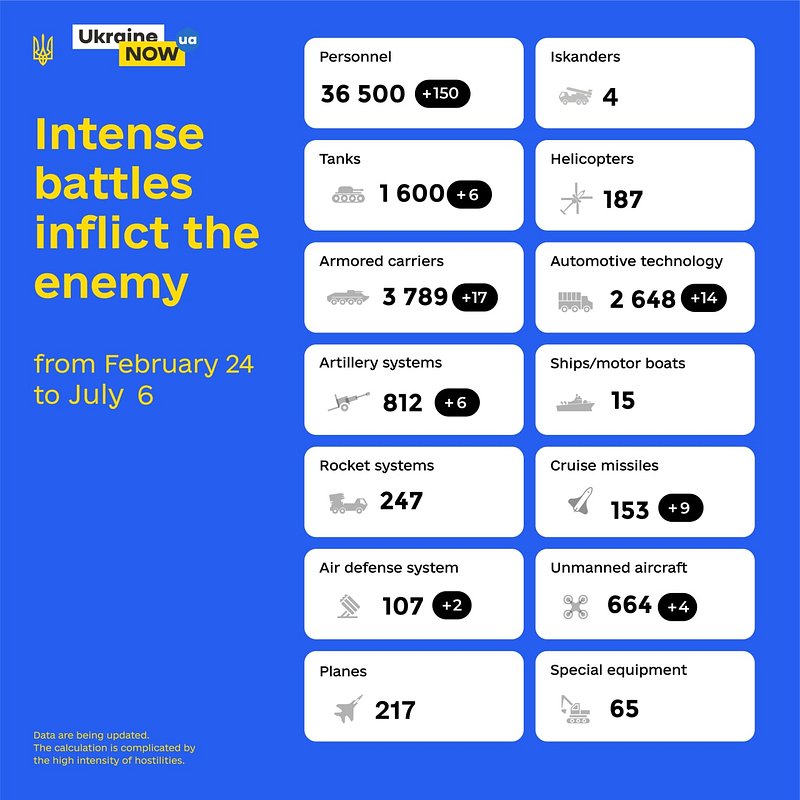
Image source: Ukraine Telegram Channel

The figures may well be inflated, but the key point is that the number of aircraft claimed (excluding UAVs) has barely changed over the last few weeks — it was 212 when I looked at the stats on June 6th. The curve is flat-ish.

What’s been happening?

Yes, the war has changed to one of attrition in Donbas, an artillery battle where Russia had an acknowledged 10:1 advantage in artillery pieces, but which Ukraine is now effectively offsetting with HIMARS and other advanced NATO-supplied artillery.

Russia has significantly reduced its air sorties and placed more emphasis on the use of cruise missiles — some — such as the X-101 — launched from strategic bombers over the Caspian Sea.

Then there was the apparent targeting of the shopping mall in Kremenchuk which killed 21 people. The shopping complex was hit by an X-22 missile launched from Russian Tupolev Tu-22M3 bombers.
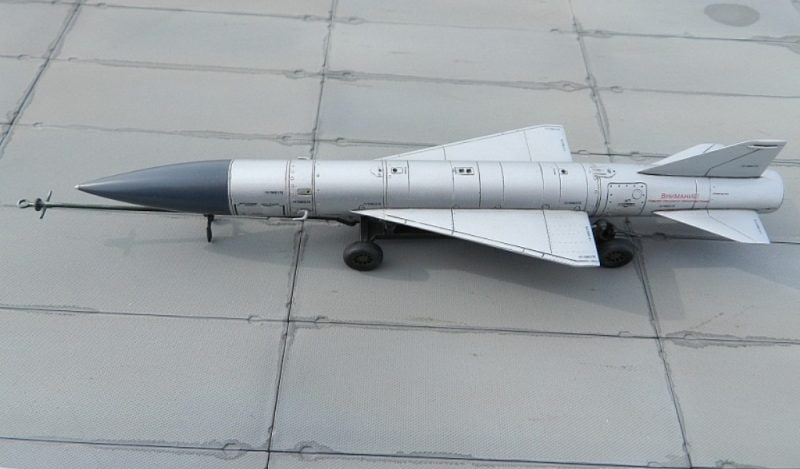
X-22 cruise missile. Source: Ukraine Telegram Channel

So, this war is now being run by Russia as a stand-off exercise, at least aerially. There appears to be little in the way of conventional tank and armoured formation attacks.

And of course Russia is targeting civilian areas with missiles — guided (cruise) and unguided.

So, what does Russia have in the way of cruise missiles?

Russia’s Land-Attack Cruise Missiles

Wikipedia defines a cruise missile thus:

A cruise missile is a guided missile used against terrestrial or naval targets that remains in the atmosphere and flies the major portion of its flight path at approximately constant speed. Cruise missiles are designed to deliver a large warhead over long distances with high precision.

They are, in the main, air-breathing, only using rockets for initial boost if at all.

I’ve trawled through the public information on Russia’s cruise missile inventory and focused on those which have land attack capability (‘LACM’), so these include some primarily anti-ship missiles; they may be air, ship, submarine or erector/ramp launched. All are capable of carrying nuclear warheads.

Cruise missiles such as the P-500 Bazalt/P-1000 (as on the Moskva) are not included if they do not have LACM capability (as far as can be determined).

One of Russia’s newest missiles — and it’s one of Putin’s six ‘new’ strategic weapons — the Kh-47M2 Kinzhal (Dagger), NATO reporting name Killjoy - is a Russian nuclear-capable hypersonic aero-ballistic air-to-surface missile with a 2,000 km range at Mach10–12. A huge range at high speed but rocket propelled and aero-ballistic, so they are not technically cruise missiles. They are deployed at air bases near to Ukraine.
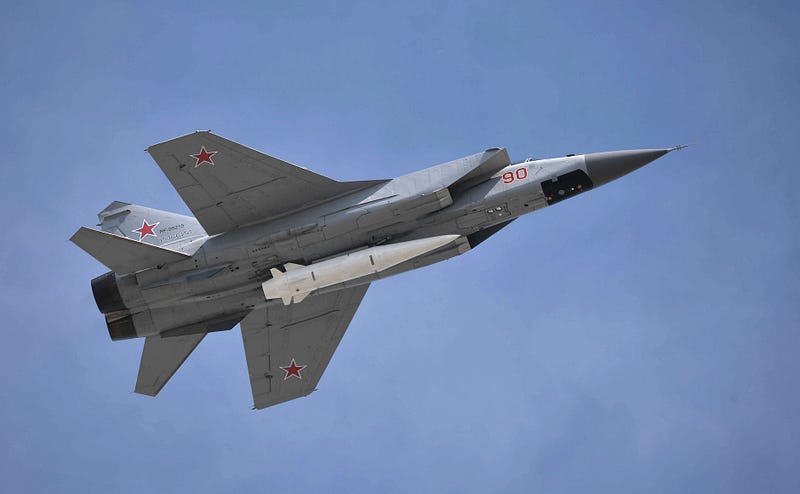
Kh-47M2 Kinzhal. Image credit: By kremlin.ru, CC BY 4.0, https://commons.wikimedia.org/w/index.php?curid=68926303

Ukraine sunk Russia’s Black Sea flagship, the missile cruiser Moskva, with two R-360 Neptune cruise missiles. It is thought these Ukraine missiles may be LACM.
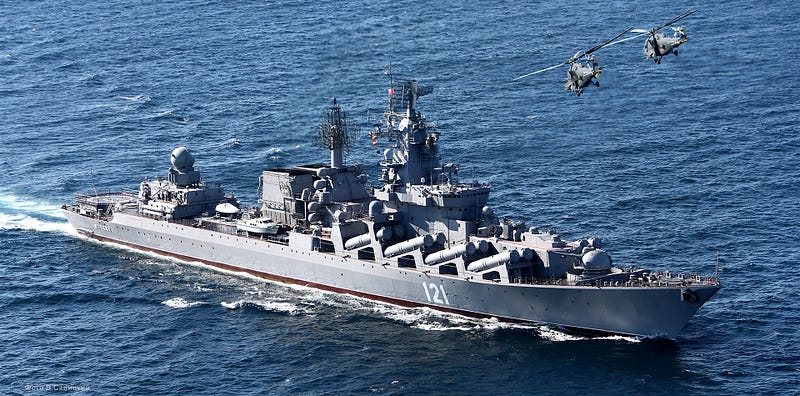
Russian cruiser Moskva (P-500 Bazalt anti-ship missiles, not known to be land attack capable). Image credit:By Mil.ru, CC BY 4.0, https://commons.wikimedia.org/w/index.php?curid=41914316

The Neptune design is based on the Soviet Kh-35 anti-ship missile, with substantially improved range and electronics.

What goes around, comes around, as they say, so let’s start our look at Russian LACM cruise missiles with the Kh-35.

Kh-35 / X35 Zvezda — Kayak
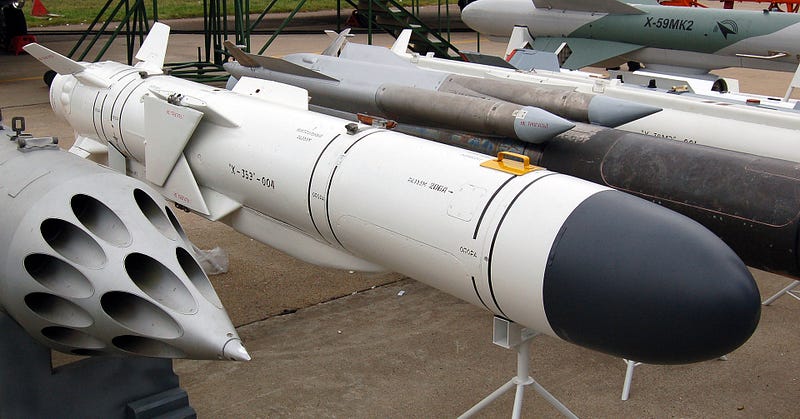
Kh-35E cruise missile. Image credit: By Allocer — Own work, CC BY-SA 3.0, https://commons.wikimedia.org/w/index.php?curid=7643147

The Zvezda Kh-35 / X35 is a Soviet-era turbojet subsonic cruise anti-ship missile. The missile can be launched from helicopters, surface ships and coastal defence batteries with the help of a rocket booster, in which case it is known as Uran. It was designed to attack vessels up to 5,000 tonnes.

But as we saw with the Moskva, size is not necessarily a problem — her displacement was 11,500 tonnes fully loaded.

With a weight of 500–600 kg it’s on the small side as cruise missiles go, but that means several can be carried by smaller strike aircraft.

There are variants which are LACM.

It has been widely exported by Russia.

Return to contents

Kh-101 / X-101

I wrote about this strategic long-range stand-off cruise missile recently, but the brief details are:

NATO reporting name: Kodiak. First shown in 2018, the X-101 stealthy subsonic terrain-hugging cruise missile weighs 2,500 kg (2.5 tonnes), including a warhead weight of 400 kg. The length of the missile is about 8 metres and it flies at about Mach 0.8 with a range claimed to be about 4,500 km (range claims vary) and possibly as 10,000 km with a 10 hour endurance.

These requirements are necessary as Russia has no overseas bases, just one aircraft carrier and therefore cannot provide fighter cover at long range.
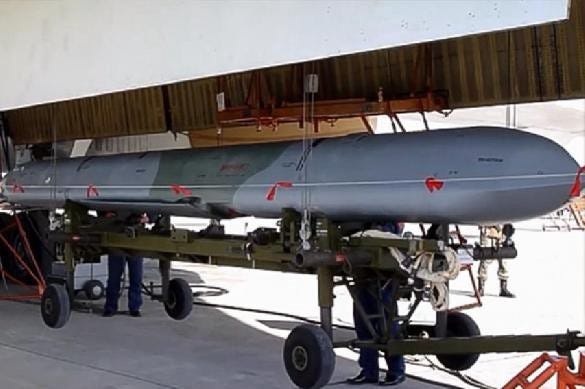
Kh-101 / X-101 cruise missile. Image credit: Image credit: https://english.pravda.ru/news/russia/141781-russian_missile/

It was used against Ukraine in June 2022.

Return to contents

Kh-22 / X-22 — Burya

Image credit: By Антон Бородин — Музей авиационной техники, CC BY-SA 3.0, https://commons.wikimedia.org/w/index.php?curid=10658517

The Kh-22 / X-22 (NATO reporting name: Kitchen) is a substantial long-range anti-ship missile originally developed by the Raduga company in the Soviet Union. Although is was intended for use against aircraft carriers and carrier battle groups, with either a conventional or nuclear warhead it is a LACM (Land Attack Capable Missile).

Since May, the Armed Forces of the Russian Federation began to try out the X-22 missiles to assess their efficiency. In a month and a half they’ve learned that the missile’s range of application without loosing precision does not exceed 200 kilometers.

The X-22 missiles were used to attack the trade center in Kremenchuk at the distance of 200 kilometers, and to target Bilhorod-Dnistrovsky at the distance of 170 kilometers.

Ukraine Telegram

It’s an air-launched missile capable of carrying a 1000 kg conventional explosive warhead, or a nuclear warhead in the range 350–1000 kilotons at Mach 4.6 (3,500 mph) for a range of 600 km.

Fearsome is the word. It can use high or low altitude modes. In the high altitude mode it climbs to 89,000 feet and dives into its target.

Using a gyroscope autopilot and radio altimeter, it is not reliant on the Glonass GPS system (which could be jammed).

Upgrades: These missile are being upgraded to the Kh-32 / X-32 with ceilings of 132,000 feet (i.e. the stratosphere) and inertial guidance.

Other attacks: In the night between 30 June and 1 July 2022, three Kh-22 missiles were fired from Tu-22M3s into a 9-storey apartment building and a recreational center in Serhiivka, a Ukrainian settlement on the Black sea coast about 70 km (43 mi) south-west of Odessa. At least 57 other missiles are reported to have been use in Ukraine. — Wikipedia

After the collapse of the Soviet Union, Ukraine inherited 423 of these missiles, which were scrapped along with the decommissioning of their TU-22M launch platforms. (www.aviaport.ru)

Return to contents

Kh-55 / Kh-555 X-55 / X-555

The Kh-55 / Х-55, NATO reporting name AS-15 Kent, is a Soviet/Russian subsonic air-launched cruise missile. With a range of up to 2,500 km it is launched exclusively from bomber aircraft and a number of conventionally armed variants have been derived, mainly for tactical use, but only the Kh-101 (ibid.) and Kh-555 appear to have made it into service (in much modified form — for example fuselage shape has aerodynamic lift in Kh-101).
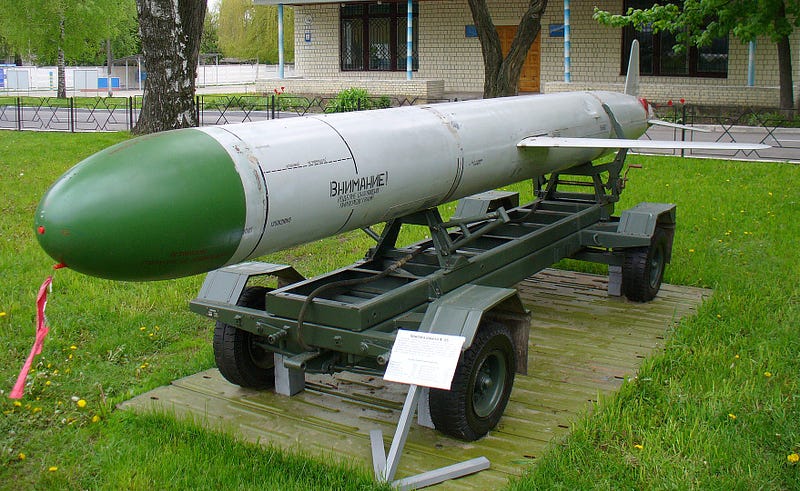
Kh-55 (NATO code:AS-15 “Kent”) in the Ukrainian Air Force museum. Image credit: George Chernilevsky, Public domain, via Wikimedia Commons

They use a turbofan engine built by a Ukraine company. The weight of the missile is about 1650 kg and its maximum flight speed is Mach 0.75.

Ukraine inherited many of these missiles after independence but sold them off to Russia and Iran. - Wikipedia.

The Kh-555 (NATO Kent-C) is an enhanced version:

This missile has larger conformal fuel tanks than the Kh-55SM due to increased weight of the warhead. This missile has a range of up to 3 500 km.

This missile has improved guidance system. Also the Kh-555 has a GPS navigation capability. Due to improved guidance systems the missile has increased accuracy. Some sources report that this missile has a CEP of 20 meters. — Military Today

Return to contents

Kh-59 Ovod (NATO Kingbolt)

Designed in the 1970s as a precision stand-off weapon for the Su-24M and late-model MiG-27’s, it is a solid-fuelled TV guided subsonic cruise missile with a rocket accelerator in the tail.
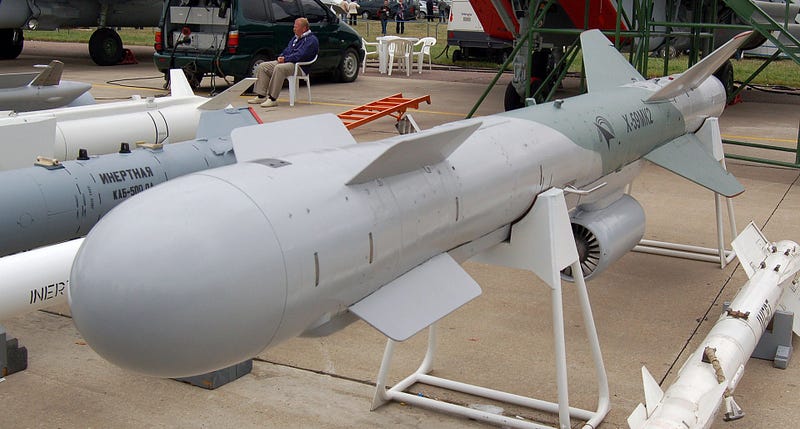
Image credit: By Allocer — Own work, CC BY-SA 3.0, https://commons.wikimedia.org/w/index.php?curid=7642405

Range is about 200 km and it has a maximum altitude of 11,000 metres. minimum of 7 metres. It carries a 320 kg warhead.

There are a large number of variants including anti-ship and it has been used extensively in Russia’s wars and in Ukraine.

Return to contents

3M-54 Kalibr

Also referred to as 3M54–1 Kalibr and 3M14 Biryuza, NATO reporting name SS-N-27 Sizzler and SS-N-30A. This is a hugely versatile family of Russian cruise missiles with ship-launched, submarine-launched and air-launched versions with variants for anti-ship, anti-submarine and land attack use. Multi-stage, with rocket boost and turbojet propulsion, some versions have a second rocket propulsion stage that initiates a supersonic sprint in the terminal approach to the target, reducing the time that target’s defense systems have to respond.

The missile can carry a warhead weighing up to 500 kg of explosive or a thermonuclear warhead for 300–500 km, although range estimates vary considerably. A new variant with a 4,500 km range is reported to be in development.
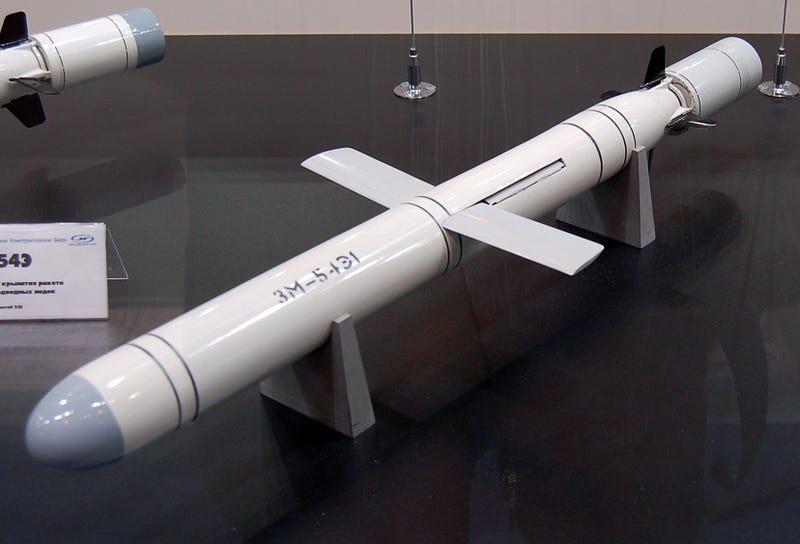
3M-54 Kalibr cruise missile. Image credit: By Allocer — Own work, CC BY-SA 3.0, https://commons.wikimedia.org/w/index.php?curid=8897938

It is well proven and has been used extensively in Syria (reportedly air-launched from the Caspian Sea and submarine-launched from the Mediterranean Sea). Twice as heavy and almost four times as fast as the US Tomahawk, the 3M54T has more than 32 times the on-cruise kinetic energy as the Tomahawk and is extremely hard to defend against. Flight speed ranges from Mach 0.8–3.0 at an altitude 50–150 metres over land (20m over water), with high manoeuvrability in the terminal flight phase.
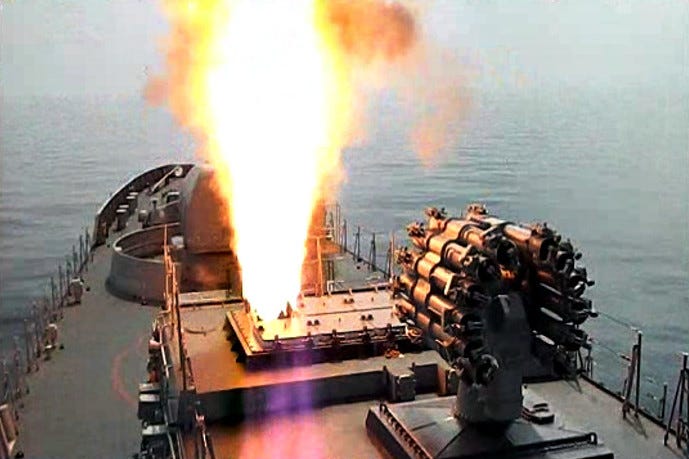
Indian Navy frigate INS Tabar firing the Club missile. Image credit: By Indian Navy — https://www.indiannavy.nic.in/content/western-naval-command-concludes-exercise-paschim-leher, GODL-India, https://commons.wikimedia.org/w/index.php?curid=53257713

Many have been exported in several ‘Club’ versions and it is in use by the navies of Algeria, China, Iran, Vietnam and India. With a flexible launch system in standard 44 feet long shipping containers it is easily, secretly transportable.

It has been very widely used in the Ukraine war and has apparently prompted an upgraded Tomahawk design.

Return to contents

3M-55 / P-800 — Oniks

3M-55 ‘Yakhont’ Oniks. Image credit: By Boevaya mashina — Own work, CC BY-SA 4.0, https://commons.wikimedia.org/w/index.php?curid=73415917

These ramjet-powered missiles (NATO reporting name SS-N-26 ‘Strobile’) are reported to have an accuracy of 1.5 metres CEP (circular error probable). That’s about as accurate as anything can be as so much depends on target coordinate accuracy anyway.

With a range of up to 600 km, a ceiling of 14,000 metres (~45,000 feet) and a speed of Mach 2–3, these weapons weigh in at about 3 tonnes including a warhead of 250-300 kg. They can fly as low as 10 metres above sea level.

Launched from air, sea or land they use a rocket booster which is ejected after burnout when the ramjet kicks in. These fire-and-forget missiles are considered to be very hard to defend against with active radar tracking and high terminal speed which makes close-in-weapons-systems (CIWS) almost ineffective. They are thought to be highly resistant to ECM.

They were originally designed as anti-ship weapons (and currently Wikipedia does not indicate report a land attack capability) but they are clearly land attack capable:

The Institute for the Study of War reported that on April 30, Russia used “Onyx” anti-ship missiles during an attack on Odessa airport. Implication: the missiles were used for ground attack purposes.

Analysts at the institute believe that this may indicate a shortage of other types of high-precision long-range missiles.

It has been exported to many of Russia’s allies including Hezbollah in the Middle East.

Return to contents

3M-80 / P270MV — Moskit

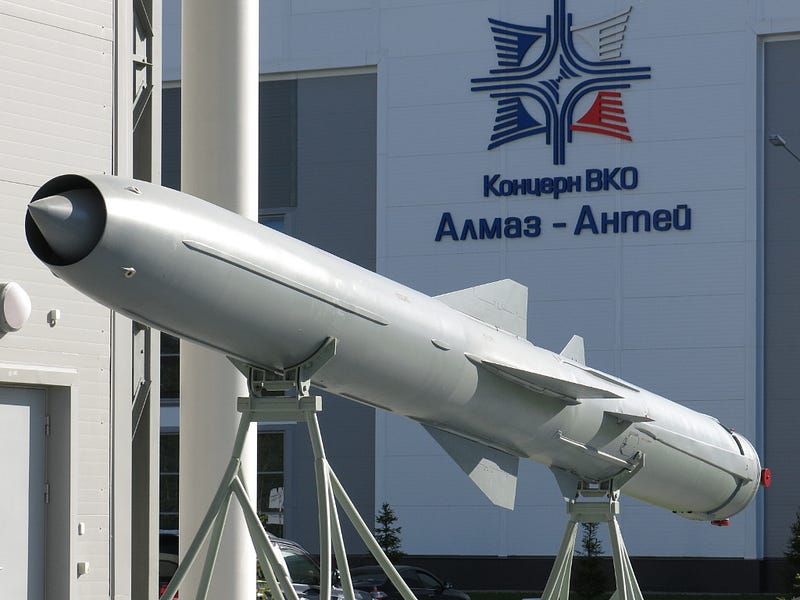
This is the land attack variant of the P270. NATO codename SS-N-22 Sunburn.
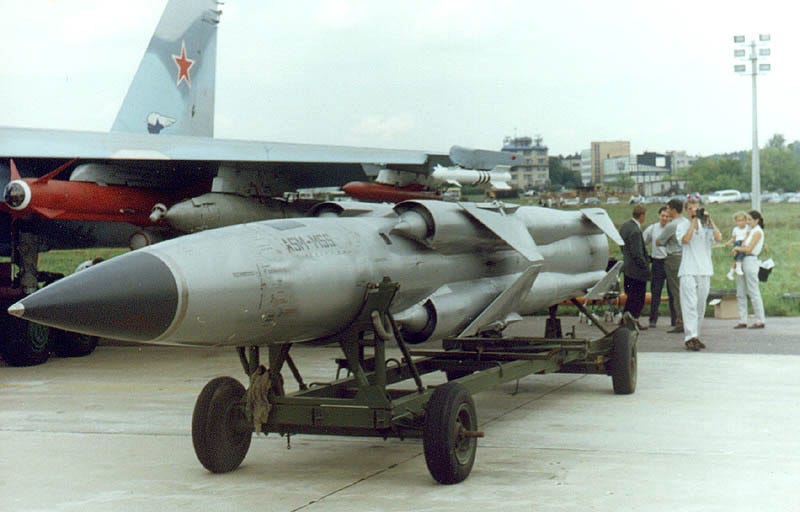
P270 Moskit cruise missile. Image credit: Wikipedia

This is a follow up to the P120 Malakhit (which is still in service and not included here) designed to address some of the shortcomings of its ancestor.

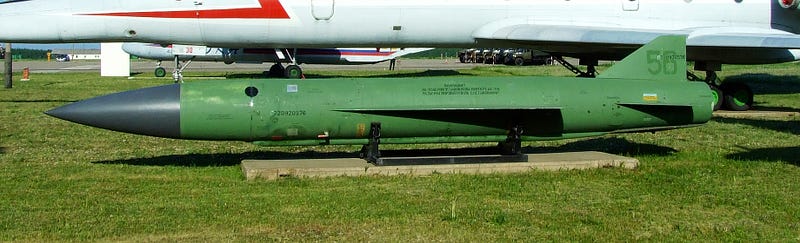
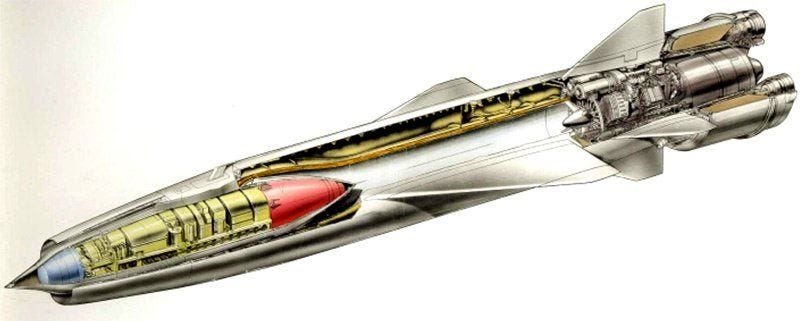
First produced in 1983, it has been sold widely to the former Soviet Union’s allies. The air-to-surface version is solid fuelled, whereas other versions use 4 ramjets. It can be launched from ships (not submarines), fixed wing aircraft, coastal batteries and mobile truck TELARs (transport erector launchers).

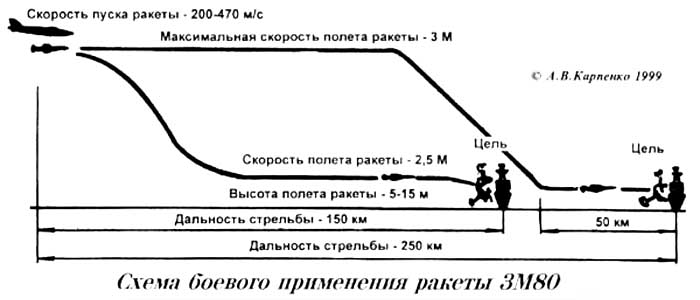
With a weight of 4.5 tonnes (warhead 300 kg), it has a maximum speed of Mach 3 at height and Mach 2.2 at a flight altitude of 5–15 metres, it has a range of about 250 km (air launched), and uses inertial guidance and terminal homing radar to close its attack.

The missile can perform intensive anti-defense maneuvers with dynamic overloads in excess of 10g, which [can be] completed for 9 km before reaching its target. — Wikipedia
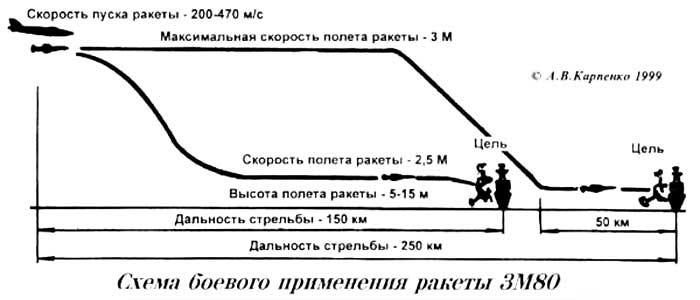
3M-80 air-launched flight profiles excludes manoeuvring. Image source: Wikipedia

It can be launched from almost any platform (variant dependent) including submerged submarines. There are no reports as yet of it being used against Ukraine.

Return to contents

3M-45 / P-700 — Granit

P-700 Granit. Image credit: Naval.com.br

This missile is a Soviet and Russian naval anti-ship cruise missile with the NATO reporting name SS-N-19 Shipwreck. It comes in surface-to-surface and submarine-launched variants, and can be used against ground targets.

It is a heavy weapon at 7 tonnes (warhead 750 kg) and 10 metres length, with a range estimates varying up to 625 km. The power unit is believed to be a turbojet and ramjet combination (unusual). It can fly supersonic (Mach 1.5) at sea level and Mach 2.5 at high altitude (unspecified).

The missile, when fired in a swarm (group of 4–8) has a unique guidance mode. One of the weapons climbs to a higher altitude and designates targets while the others attack. The missile responsible for target designation climbs in short pop-ups, so as to be harder to intercept. The missiles are linked by data connections, forming a network.

Wikipedia

Note: some of the ‘facts’ about this missile on Wikipedia are disputed. Images vary too with some showing an annular air intake in the nose (which could be protected with a dust cap in others).
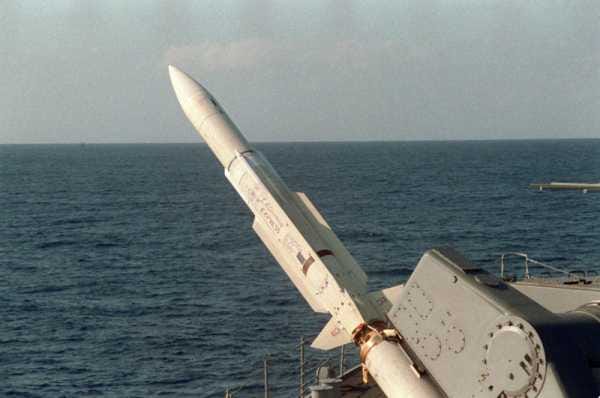
P-700 Granit. Image credit: warhistory.ru

Interestingly, Wikipedia reports that there is an issue with the guidance system: Inertial guidance, active radar homing with home-on-jam, and Legenda satellite targeting system with its own constellation of 69 satellites for navigation. Legenda is believed to be nonfunctional after the fall of the USSR and is now being replaced by the 4 satellite Liana system.

Legenda was created specifically for this missile and will surely have been replaced by now.

Production of the Granit ceased in 1992.

There are no reports of its use in Ukraine.

Return to contents

Mach numbers?

A quick note: Mach 1 is the speed of sound at a given air temperature, density and pressure, so it varies with height above the Earth’s surface. Missiles ‘go supersonic’ at Mach 1 (which varies with height) and this has major design implications for the missile structure and engine designs. I have quoted missile speeds in Mach numbers. Very roughly, at ground level the speed of sound is 760 mph — about 1 mile in 5 seconds — just as you counted the seconds between the flash and bang in a thunderstorm.

Faster missiles are harder to defend against — and for the designer to control in the terminal phase.

Conclusions

I was amazed by the range of Russian cruise missiles and their capabilities.

Note: Nowhere did I read about any of these missiles being in current production, but I might have missed the detail.

Quantities

How many does Russia have? As you may imagine numbers are hard to come by.

During my research I saw that of one particular cruise missile Russia had produced 500 — it’s not a current missile and I didn’t note it at the time, so it must be a predecessor of a current missile. But maybe that gives us a feel for numbers.

Dr Sidharth Kaushal, a research fellow for sea power and missile defence at the Royal United Services Institute, said it is unclear how many cruise missiles Russia currently has. One report has suggested about 120 were produced in 2018. Source: ienews.co.uk

Forbes estimates that the Russian stockpile was 7,000 cruise missiles:

One thing is sure, Russia is burning through them very quickly in Ukraine.

I have listed 8 current LACM cruise missiles in this story. There will not be 500 of each type, for sure, but if that were the average then we’d be looking at 4,000 cruise missiles — but would that include those anti-ship i.e. not LACM variants?

As you saw in the Ukraine ‘claims’ image at the start of this story, Ukraine is claiming 153 downed cruise missiles (6 July). Undoubtedly they have defence weapons capable of destroying cruise missiles, although downing a terrain hugging supersonic missiles is very challenging, subsonic less so.

Ukraine claimed another 9 cruise missiles destroyed on July 5, 2022:

The other thing to bear in mind is that as with tanks and aircraft, Russia will not want to let its inventory fall too far — that would leave them ‘defenceless’ — but where the bottom line is I do not know.

Do the cruise missiles work?

Having the weapons is one thing, but will they work? Russia does have quality problems with some of its missiles. This is a report (fact or fiction?) from the Ukraine Telegram Channel:

In Kherson and Belgorod, the invaders’ missiles turned around in the air and flew back

Users of the network [ed: Telegram] published the corresponding video.

The missile from Kherson turned around and began to fall after the launch of the Russians. Local Telegram channels write that out of 7 missiles fired, 4 fell immediately after takeoff.

Also, at least 2 rockets fired from Belgorod turned around almost immediately and flew back. As a result, the missiles fell in a Russian city, not far from the Ukrainian border.

That’s no surprise, as the Ukraine war has demonstrated the Russian failures of proper storage, maintenance and awakening of their equipment, from truck wheel bearings seizing up to missile failures.

Return to contents

If you want to learn more about these missiles — and others — then useful sites are:

Missilethreat.csis.org

Military Today

I have no affiliation with them and there are several others.

About me: If you follow me I guarantee variety in your inbox with some peculiar perspectives! I write on a wide range of topics including humor, tech, space, geopolitics and travel, together with daily news events and the minutiae of my daily life living on a boat. I also write about…

…war technology

If you appreciate stories like these and want to support other writers and me, consider signing up to become a Medium member. It’s only $5 a month, giving you unlimited access to incredible stories on Medium. If you sign up using my link below, I’ll earn a small commission at no extra cost to you.

https://james-marinero.medium.com/membership

Or maybe just buy me a coffee?

Russia
Cruise Missiles
Ukraine
Military
War
Recommended from ReadMedium