avatarJames Marinero, MSc, MBA

Free AI web copilot to create summaries, insights and extended knowledge, download it at here

6545

Abstract

f aerial vehicles, was taken up by Palantir. Critics warn that the technology could lead to autonomous weapons that decide who to strike without human input. — <a href="https://en.wikipedia.org/wiki/Palantir_Technologies"><i>Wikipedia</i></a></p></blockquote><p id="96c5">Palantir Technologies started with projects for the CIA but now has a world wide customer base which includes private companies and governments.</p><p id="2f11">In Ukraine Palantir’s technology is used close to the front line. It is used to shorten the “kill chain” in the Russia-Ukraine war.</p><p id="a3a6">The phrase ‘<a href="https://en.wikipedia.org/wiki/Government_by_algorithm">government by algorithm</a>’ has been associated with Palantir software, but now it’s also ‘war by algorithm’.</p><p id="1846">It’s hard to discover how effective Palantir’s software actually is in the Ukraine war, but Wikipedia quotes an example of its efficiency in the commercial sector:</p><blockquote id="aa77"><p>On March 5, 2021, Palantir announced its partnership with Amazon AWS. Palantir’s ERP Suite is now optimized to run on <a href="https://en.wikipedia.org/wiki/Amazon_Web_Services">Amazon Web Services</a>. One of the first notable successes of the ERP suite was with <a href="https://en.wikipedia.org/wiki/BP">BP</a>, which was able to save about 50 million in working capital within two weeks of onboarding the system</p></blockquote><p id="4c5f">Of course, 50 million in relation to BP’s overall December 2022 market capitalisation of $105 billion is less than peanuts.</p><p id="eecc">Ignatius continues:</p><blockquote id="d2d3"><p>The “kill chain” that I saw demonstrated in Kyiv is replicated on a vast scale by Ukraine’s NATO partners from a command post outside the country. The system is built around the same software platform developed by Palantir that I saw in Kyiv, which can allow the United States and its allies to share information from diverse sources — ranging from commercial satellite imagery to the West’s most secret intelligence tools.</p></blockquote><blockquote id="95a3"><p>This is algorithmic warfare, as Karp says. Using a digital model of the battlefield, commanders can penetrate the notorious “fog of war.” By applying artificial intelligence to analyze sensor data, NATO advisers outside Ukraine can quickly answer the essential questions of combat: Where are allied forces? Where is the enemy? Which weapons will be most effective against enemy positions? They can then deliver precise enemy location information to Ukrainian commanders in the field. And after action, they can assess whether their intelligence was accurate and update the system.</p></blockquote><p id="4bf8">Does Russia have anything equivalent? I very much doubt it. They can’t even give their troops winter clothing, and this war has shown how inept the <a href="https://en.wikipedia.org/wiki/Stavka">Stavka</a> is.</p><h1 id="7e19">How does the system work?</h1><p id="f40b">I’ve described some of the big data that is available, but there’s plenty more out there, even free, that is synthesised by Palantir’s systems.</p><p id="9d7a">Consider thermal imaging. The <a href="https://www.ospo.noaa.gov/Products/imagery/index.html">National Oceanic and Atmospheric Administration</a> sells simple thermal imaging for forest fire detection but that can also register artillery explosions. Some NOAA data is freely available (that of course means that Russia could use it too).</p><p id="a572">With upwards of 30 satellites overlooking Ukraine at any given time out of more than 300 overall that pass over, there is plenty of data. Cloud-piercing synthetic aperture radar enhances the battlefield picture.</p><p id="4065">On the ground too, sensors are widely deployed with fighting units, as well as above them with drones in the air. Almost every soldier has a tablet computer.</p><p id="a36a">And don’t forget the Ukrainian civilians. They feed data into the system via a secure Telegram chat system. Almost half a million reports have been fed in so far.</p> <figure id="06b8"> <div> <div> <img class="ratio" src="http://placehold.it/16x9"> <iframe class="" src="https://cdn.embedly.com/widgets/media.html?src=https%3A%2F%2Fwww.youtube.com%2Fembed%2FVTAxA3Omfmw%3Ffeature%3Doembed&amp;display_name=YouTube&amp;url=https%3A%2F%2Fwww.youtube.com%2Fwatch%3Fv%3DVTAxA3Omfmw&amp;image=https%3A%2F%2Fi.ytimg.com%2Fvi%2FVTAxA3Omfmw%2Fhqdefault.jpg&amp;key=a19fcc184b9711e1b4764040d3dc5c07&amp;type=text%2Fhtml&amp;schema=youtube" allowfullscreen="" frameborder="0" height="480" width="854"> </div> </div> </figure></iframe></div></div></figure><div id="a27d" class="link-block"> <a href="https://t.me/liveukraine_media/4194"> <div> <div> <h2>Live: Ukraine</h2> <div><h3>Woman confronted by Russian military for recording Russian convoy going through Kam'yanka-Dniprovs'ka, Zaporizhia…</h3></div> <div><p>t.me</p></div> </div> <div> <div style="background-image: url(https://miro.readmedium.com/v2/resize:fit:320/0*6fj3bhXgwjAMI5Kt)"></div> </div> </div> </a> </div><p id="df6c">All that data is fed into the model.</p><p id="d826">The C2 system then uses AI and is constantly updating with feedback from each missile/artillery/bomb strike; battle damage assessments are fed back into the wide area digital network enabled by the Starlink satellite constellation. This feedback is used to fine-tune the predictive models. But it’s not — yet — fully automated, but wait…</p><div id="e3e4" class="link-block"> <a href="https://t.me/United24media/2383"> <div> <div> <h2>UNITED24Media</h2> <div><h3>The United States will additionally order automated fire control systems for 18 new HIMARS MLRS, which will be…</h3></div> <div><p>t.me</p></div> </div> <div> <div style="background-image: url(https://miro.readmedium.com/v2/resize:fit:320/0*Hh_OG199zJ_GZnKX)"></div> </div> </div> </a> </div><blockquote id="bd78"><p>The United States will additionally order [sic] automated fire control systems for 18 new HIMARS MLRS, which will be transferred to Ukraine</p></blockquote><blockquote id="e886"><p>The systems make it possible to gathe

Options

r together information from intelligence, infantry, artillery, aviation, etc., which gives a general idea of the operational picture of battles and fire support. — <a href="https://t.me/United24media/2383">https://t.me/United24media/2383</a></p></blockquote><p id="31dc">The key to Ukraine’s success is the synthesis of all the available data.</p><p id="4540">Looking at Palantir’s offerings, it’s not clear which of their ‘platforms’ might be in use in Ukraine, but my judgement is that it’s <a href="https://www.palantir.com/platforms/gotham/">Palantir Gotham</a>. Gotham conjures up a suitably black and dystopian image in my mind.</p><p id="ecf5">Palantir’s SaaS (Software as a Service) is one of five offerings authorized for Mission Critical National Security Systems by the U.S. Department of Defense.</p><p id="82b2">But do we now have WaaS?</p><p id="3439">War as a Service.</p><p id="77e8">Russia is playing catchup, but with little success. So far they have demonstrated that they could not coordinate a piss-up in a brewery.</p><p id="a992">Arguably Russia already has a stone age version of war as a service, as delivered by Wagner Group mercenaries the old fashioned way — boots on the ground. While enriching Putin’s chef, <a href="https://en.wikipedia.org/wiki/Yevgeny_Prigozhin">Yevgeny Prigozhin</a>.</p><p id="5348">David Ignatius’s story in The Washington Post is recommended and worth a read for more detail than I can fairly quote here (requires subscription or crafty use of your browser).</p><p id="fe95">There’s more in this video, too, from United24Media:</p><div id="ccb3" class="link-block"> <a href="https://t.me/United24media/2671"> <div> <div> <h2>UNITED24Media</h2> <div><h3>Get a glimpse into the future of warfare with this AI-generated video about Ukrainian military officers using…</h3></div> <div><p>t.me</p></div> </div> <div> <div style="background-image: url(https://miro.readmedium.com/v2/resize:fit:320/0*JjLEG0rfz3KePSJj)"></div> </div> </div> </a> </div><p id="9cae"><b>Sources:</b></p><div id="1653" class="link-block"> <a href="https://www.washingtonpost.com/opinions/2022/12/19/palantir-algorithm-data-ukraine-war/"> <div> <div> <h2>Opinion | How the algorithm tipped the balance in Ukraine</h2> <div><h3>KYIV, Ukraine - Two Ukrainian military officers peer at a laptop computer operated by a Ukrainian technician using…</h3></div> <div><p>www.washingtonpost.com</p></div> </div> <div> <div style="background-image: url(https://miro.readmedium.com/v2/resize:fit:320/0*4DA8jnBPIDZY51QY)"></div> </div> </div> </a> </div><div id="f78c" class="link-block"> <a href="https://t.me/United24media/2295"> <div> <div> <h2>UNITED24Media</h2> <div><h3>US technology gives the Armed Forces of Ukraine an advantage in the war with the Russian Federation, writes The…</h3></div> <div><p>t.me</p></div> </div> <div> <div style="background-image: url(https://miro.readmedium.com/v2/resize:fit:320/0*3AII36UtBCX0AwP-)"></div> </div> </div> </a> </div><div id="b85a" class="link-block"> <a href="https://www.politico.eu/article/russia-ukraine-cyber-invasion-warfare-kremlin-nato/"> <div> <div> <h2>Ukraine marks a turning point for cyberwarfare</h2> <div><h3>Cristina Vanberghen is a professor at the Universite Libre De Bruxelles and a senior expert at the European Commission…</h3></div> <div><p>www.politico.eu</p></div> </div> <div> <div style="background-image: url(https://miro.readmedium.com/v2/resize:fit:320/0*aSfWncSdYrDyLY5T)"></div> </div> </div> </a> </div><div id="104b" class="link-block"> <a href="https://en.wikipedia.org/wiki/Palantir_Technologies"> <div> <div> <h2>Palantir Technologies - Wikipedia</h2> <div><h3>Palantir Technologies is a public American software company that specializes in big data analytics. Headquartered in…</h3></div> <div><p>en.wikipedia.org</p></div> </div> <div> <div style="background-image: url(https://miro.readmedium.com/v2/resize:fit:320/0*BT_Z3DEc2vQDzlFv)"></div> </div> </div> </a> </div><p id="0d80"><i>About me: If you follow me I guarantee variety in your inbox with some unusual perspectives! I write on a wide range of topics including humor, tech, space, geopolitics and travel, together with daily news events and the minutiae of my daily life living on a boat. Yes, I really do live on a boat (some readers don’t believe that). I also write about…</i></p><p id="2828"><b>…programmable warfare</b></p><p id="7f39"><i>If you appreciate stories like these and want to support other writers and me, consider signing up to become a Medium member. It’s only $5 a month, giving you unlimited access to incredible stories on Medium. If you sign up using my link below, I’ll earn a small commission at no extra cost to you.</i></p><div id="b4ba" class="link-block"> <a href="https://james-marinero.medium.com/membership"> <div> <div> <h2>Join Medium with my referral link - James Marinero</h2> <div><h3>Read every story from James Marinero (and thousands of other writers on Medium). Your membership fee directly supports…</h3></div> <div><p>james-marinero.medium.com</p></div> </div> <div> <div style="background-image: url(https://miro.readmedium.com/v2/resize:fit:320/0*Fv-rxTERFqERcCHx)"></div> </div> </div> </a> </div><p id="d2df"><i>Or maybe just <a href="https://ko-fi.com/jamesmarinero">buy me a coffee?</a> and tell me what you liked reading (or not)…</i></p><figure id="942a"><img src="https://cdn-images-1.readmedium.com/v2/resize:fit:800/1*F7CRvNpnsbM3yYySfOeIjA.png"><figcaption></figcaption></figure></article></body>

Warfare

Ukraine: How Big Data Has Changed Warfare

Widespread multi-sensor coverage on the ground, in the air and in near-space has given Ukraine the advantage when combined with bleeding-edge real-time big-data analysis, AI and feedback loops. Brave people too…

Image credit: https://www.pexels.com/@markarronsmith/

In an op-ed in The Washington Post, David Ignatius has recently argued that US software technology has given the Armed Forces of Ukraine an advantage in the war with the Russian Federation.

He says that according to Alex Karp, chief executive of software company Palantir Technologies, this is “the most advanced warfare in human history.”

“The power of advanced algorithmic warfare systems is now so great that it equates to a tactical nuclear weapon against an adversary with only conventional weapons,” says Karp.

The newspaper notes that with the help of the developments provided by Palantir, the Ukrainian military can analyze the balance of forces in battles, aim and attack enemy positions with a range of precision weapons systems.

A bold claim?

Maybe. Remember that Palantir was one of several indestructible crystal balls from J. R. R. Tolkien’s epic-fantasy novel ‘The Lord of the Rings’.

Here’s where the Palantir algorithms come into play in the netherworld of the Russia-Ukraine war:

Satellite imagery

We have all become used to seeing superbly detailed satellite images of Russian weaponry and infrastructure.
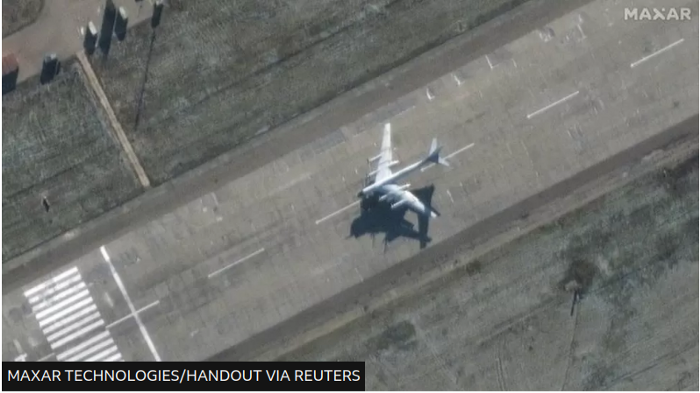
A Russian Tupolev TU-95 bomber rolls down the runway at Engels airbase in Saratov, Russia. Photo via BBC

The United States Government has at least five Keyhole-12 satellites and the best Keyholes are estimated to have a resolution of around 5 centimeters per pixel (but do we really know)? And we don’t see those US Government satellite images. But even the commercial images are stunning.

And we don’t see the Russian image equivalents either. Would Russia even publish their images — if they had them?

Huge volumes of digital satellite image data are being streamed down from the birds. The data is subject to automated differential analysis (i.e. what’s changed since when?) by supercomputers with anomalies being flagged for further human examination. Big data, analysed and fed into a model.

Elint

It’s accepted that the US is using an extensive range of its elint assets to track and listen in to Russian armed forces activity and feed the information to Ukraine. This has reportedly led to Ukraine’s great success in targeting Russian high command staff when combined with HIMARS.

Global Hawk Elint drones were tracked over the Ukraine a week before the Russian invasion started, but after the commencement of hostilities they were withdrawn to international airspace over the Black Sea.

It’s suspected that data from one of these drones was used by Ukraine in its attack on the Russian naval base in Sevastopol in October 2022.
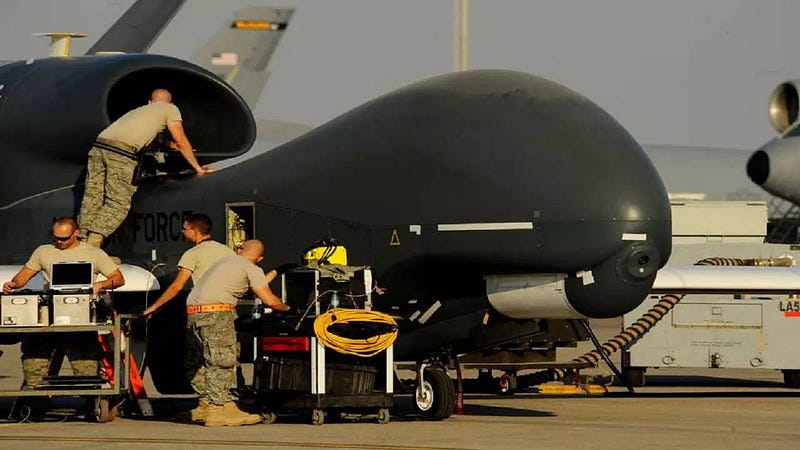
RQ-4B Global Hawk Drone (Courtesy U.S. Air Force Handout via REUTERS)

These drones are streaming huge amounts of data down to US control centres — and that data has to be analysed, the quicker the better and real time is the best, before the value of the elint degrades with time.
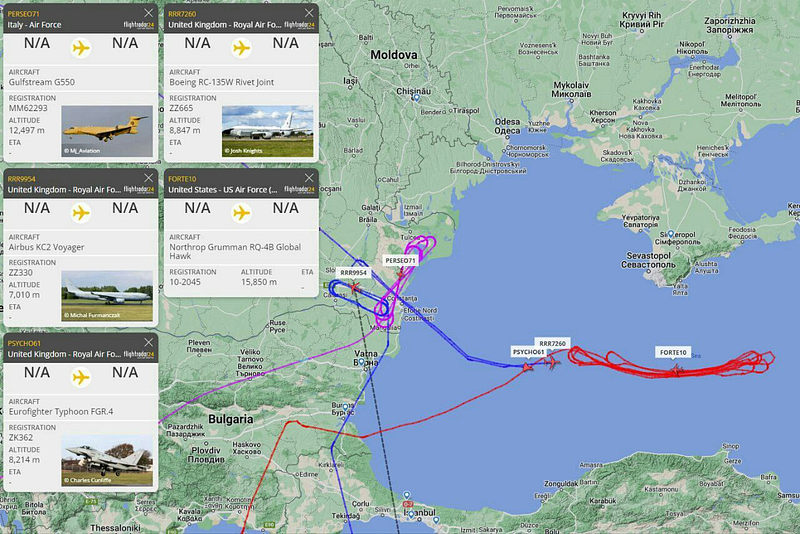
Western Elint planes over the Black Sea, 30–12–2022. Image source: Ukraine Intel Telegram

Analysing those volumes of data to make them useful in near-real-time means automation, means alogrithms, means using artificial intelligence.

It’s big data, again, analysed and fed into a model.

Behind the weaponry

But what about that software, the algorithms that drive the modern weaponry, command and control (C2) systems, identifying targets and integrating battlefield manoeuvres that Ukraine has deployed? That is arguably the key advantage — their rapid processing of big data.

In the Washington Post, Ignatius describes ‘a detailed look at what may prove to be a revolution in warfare — in which a software platform allows U.S. allies to use the ubiquitous, unstoppable sensors that surround every potential battlefield to create a truly lethal “kill chain.”’
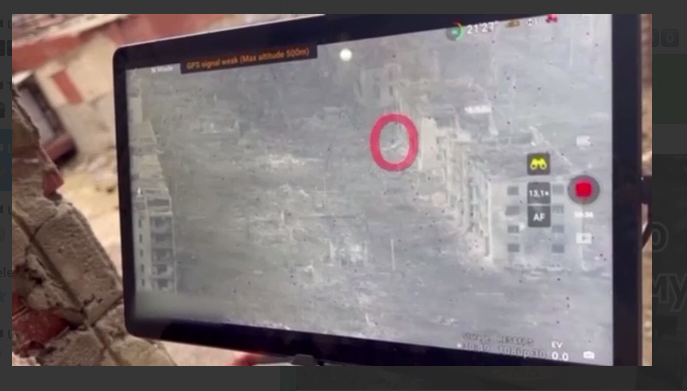
Successfully targeting a mortar strike. — Ukraine Telegram

Who’s building the Big Data analysis software?

The US company Palantir Technologies is heavily invested in the war. Palantir Technologies is a public American software company that specializes in big data analytics.

It has a somewhat controversial profile and set of investors. ‘Tech community activists have asked whether Palantir is too close to the U.S. government and can “see too much” with its tools.’ — Ignatius

After Google had issues in 2018 with employees walking out concerning the new contract in partnership with the Pentagon, Project Maven, a secret artificial intelligence program aimed at the unmanned operation of aerial vehicles, was taken up by Palantir. Critics warn that the technology could lead to autonomous weapons that decide who to strike without human input. — Wikipedia

Palantir Technologies started with projects for the CIA but now has a world wide customer base which includes private companies and governments.

In Ukraine Palantir’s technology is used close to the front line. It is used to shorten the “kill chain” in the Russia-Ukraine war.

The phrase ‘government by algorithm’ has been associated with Palantir software, but now it’s also ‘war by algorithm’.

It’s hard to discover how effective Palantir’s software actually is in the Ukraine war, but Wikipedia quotes an example of its efficiency in the commercial sector:

On March 5, 2021, Palantir announced its partnership with Amazon AWS. Palantir’s ERP Suite is now optimized to run on Amazon Web Services. One of the first notable successes of the ERP suite was with BP, which was able to save about $50 million in working capital within two weeks of onboarding the system

Of course, $50 million in relation to BP’s overall December 2022 market capitalisation of $105 billion is less than peanuts.

Ignatius continues:

The “kill chain” that I saw demonstrated in Kyiv is replicated on a vast scale by Ukraine’s NATO partners from a command post outside the country. The system is built around the same software platform developed by Palantir that I saw in Kyiv, which can allow the United States and its allies to share information from diverse sources — ranging from commercial satellite imagery to the West’s most secret intelligence tools.

This is algorithmic warfare, as Karp says. Using a digital model of the battlefield, commanders can penetrate the notorious “fog of war.” By applying artificial intelligence to analyze sensor data, NATO advisers outside Ukraine can quickly answer the essential questions of combat: Where are allied forces? Where is the enemy? Which weapons will be most effective against enemy positions? They can then deliver precise enemy location information to Ukrainian commanders in the field. And after action, they can assess whether their intelligence was accurate and update the system.

Does Russia have anything equivalent? I very much doubt it. They can’t even give their troops winter clothing, and this war has shown how inept the Stavka is.

How does the system work?

I’ve described some of the big data that is available, but there’s plenty more out there, even free, that is synthesised by Palantir’s systems.

Consider thermal imaging. The National Oceanic and Atmospheric Administration sells simple thermal imaging for forest fire detection but that can also register artillery explosions. Some NOAA data is freely available (that of course means that Russia could use it too).

With upwards of 30 satellites overlooking Ukraine at any given time out of more than 300 overall that pass over, there is plenty of data. Cloud-piercing synthetic aperture radar enhances the battlefield picture.

On the ground too, sensors are widely deployed with fighting units, as well as above them with drones in the air. Almost every soldier has a tablet computer.

And don’t forget the Ukrainian civilians. They feed data into the system via a secure Telegram chat system. Almost half a million reports have been fed in so far.

All that data is fed into the model.

The C2 system then uses AI and is constantly updating with feedback from each missile/artillery/bomb strike; battle damage assessments are fed back into the wide area digital network enabled by the Starlink satellite constellation. This feedback is used to fine-tune the predictive models. But it’s not — yet — fully automated, but wait…

The United States will additionally order [sic] automated fire control systems for 18 new HIMARS MLRS, which will be transferred to Ukraine

The systems make it possible to gather together information from intelligence, infantry, artillery, aviation, etc., which gives a general idea of the operational picture of battles and fire support. — https://t.me/United24media/2383

The key to Ukraine’s success is the synthesis of all the available data.

Looking at Palantir’s offerings, it’s not clear which of their ‘platforms’ might be in use in Ukraine, but my judgement is that it’s Palantir Gotham. Gotham conjures up a suitably black and dystopian image in my mind.

Palantir’s SaaS (Software as a Service) is one of five offerings authorized for Mission Critical National Security Systems by the U.S. Department of Defense.

But do we now have WaaS?

War as a Service.

Russia is playing catchup, but with little success. So far they have demonstrated that they could not coordinate a piss-up in a brewery.

Arguably Russia already has a stone age version of war as a service, as delivered by Wagner Group mercenaries the old fashioned way — boots on the ground. While enriching Putin’s chef, Yevgeny Prigozhin.

David Ignatius’s story in The Washington Post is recommended and worth a read for more detail than I can fairly quote here (requires subscription or crafty use of your browser).

There’s more in this video, too, from United24Media:

Sources:

About me: If you follow me I guarantee variety in your inbox with some unusual perspectives! I write on a wide range of topics including humor, tech, space, geopolitics and travel, together with daily news events and the minutiae of my daily life living on a boat. Yes, I really do live on a boat (some readers don’t believe that). I also write about…

…programmable warfare

If you appreciate stories like these and want to support other writers and me, consider signing up to become a Medium member. It’s only $5 a month, giving you unlimited access to incredible stories on Medium. If you sign up using my link below, I’ll earn a small commission at no extra cost to you.

Or maybe just buy me a coffee? and tell me what you liked reading (or not)…

Ukraine War
Big Data
Artificial Intelligence
Ukraine
Military
Recommended from ReadMedium