Ukraine War
Ukraine: Can HIMARS be Jammed?
This missile system has proved critical in stalling and reversing the Russian advance into Ukraine, but could Russia find a way to ‘jam’ it?
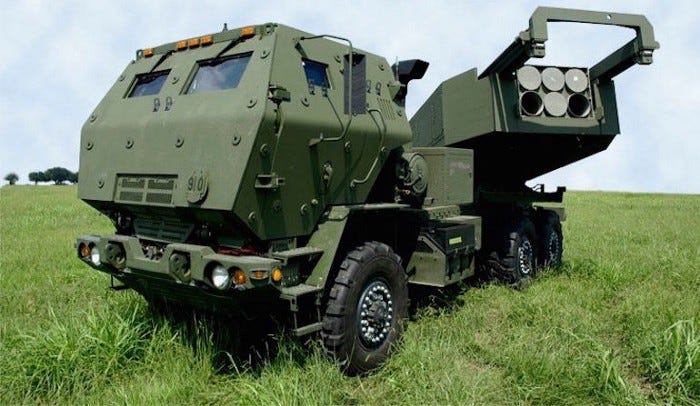
Fire and forget, move quickly to the next deployment before counter-batteries can respond.
HIMARS works. It frightens Russian troops. It destroys ammo and fuel dumps and muster points. It kills officers in command posts.
It is lethally accurate — provided it has targets.
How can Russia respond?
Can HIMARS be jammed — or more generally, can its effectiveness be reduced?
I’ve had a look at the possibilities, and, as an amateur I don’t pretend that my efforts are complete. But here goes…
Supply line
The obvious strategy here would be to interrupt the supply chain to Ukraine by attacking the logistics. This would almost certainly involve action against a NATO country (say at the Polish border if that’s one of the supply routes). Other, slower options could be to interrupt the supply of critical components to the manufacturer, Lockheed Martin. Again that would provoke the ire of the US.
The best way would be to hit the supply line within Ukraine, but there will be dummy routes and other obfuscation to protect the missile supply logistics.
Targets
Don’t provide targets.
In July 2022, a Senior U.S. defence official said that Ukrainian forces are having “a good deal of success” using a U.S.-given advanced rocket system to target Russian command posts.
There is some evidence that Russia has since been learning and had reduced the size and increased the number of its ammunition dumps in response to the success of HIMARS.
I have no information as to whether they are now more careful in their command post sitings — there may be too many giveaways as to locations with traffic patterns and comms emissions, but they can certainly use decoys.
But that is not possible for all targets. The bridges over the Dnipro river outside Kherson were destroyed by HIMARS and the Russians lost two generals in the defence of the Chornobaivka airbase outside Kherson.
Russia was forced to retreat from the city.
Target spotting and designation
First off, the success of any artillery system depends on precision target spotting, which includes precision coordinate definition.
This has traditionally been done by target spotters correcting the ranging salvos and walking the artillery to the target. But HIMARS is so precise that given accurate coordinates, no correction is necessary. There is no warning for the troop concentrations and targets are destroyed in the first salvo.
Fear spreads.
We know that Ukraine has access to almost real-time satellite data from the US for targeting, and has a fleet of drones in close target observation from the air. It also has traditional and special forces target spotters — boots on the ground.
For Russia to target the satellites (which are mainly US ‘owned’) is not yet considered likely as it would be an act of war, as I wrote about in a recent Starlink story.
Dealing with the ‘boots on the ground’ is more a matter of good soldiering — patrolling, camouflage, security, decoys and so on. If they have well-trained soldiers and officers. If. We know that they have problems with this.
But dealing with the spotter drones is a matter of technology and the use of anti-drone weaponry and jamming. This is practical for Russia, if they have sufficient equipment and can access the electronic components to build the jammers in sufficient numbers.
Making HIMARS harmless
Decoys: The use of decoys dilutes the effectiveness of HIMARS as wasted missiles reduce the strike success rate and depletes Ukraine’s HIMARS stocks. Replenishment of these HIMARS is becoming a problem — the US State Department has just let another contract for the missiles but ramping up production takes time and there is concern that the US’s own stocks are falling too low.
There is an analogous BBC story that because Russia is using up its precision missiles so quickly, it is now resorting to using nuclear-capable but unarmed ballistic missiles to force the Ukraine to use up its ground to air defence missile stocks:
Target the launchers: Hitting the HIMARS launchers at source is a problem, even given accurate satellite or drone spotting — the HIMARS launchers move quickly and are believed to have very short readiness times (I could not find a number for this time). So far there is no reported successful Russian strike on a HIMARS launch platform. Indeed there are reports of the reverse: Russian bombs being wasted on HIMARS decoys:
Jam/spoof the missiles
Before a flying HIMARS missile can be targeted, it has to be identified — and that’s not easy, given Ukraine’s own clever use of ‘decoys’:
First, recognise the HIMARS: In an interview with Global Defense Post, military analyst Ryan McBeth pointed out that Ukraine always launches HIMARS within a cluster of their ex-Soviet BM21 GRAD rockets. HIMARS and GRAD launchers are placed in close proximity and launches are simultaneous.
The flight speed difference (Mach 2.4 v Mach 2.1) between the missile types makes it hard for current Russian radars to discriminate and pick out the real HIMARS threat.
So, which target to engage?
Radar upgrades to improve discrimination are possible but will not happen overnight.
Target the guidance system: There is a wide range of missiles which can be launched from the M142 launch platform, with different characteristics, guidance and terminal phase control. However, the missiles in use in Ukraine are the M31A1 GMLRS unitary rockets.
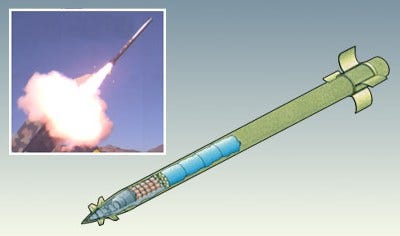
This missile has a combined GPS and inertial measurement unit (IMU) guidance system with four control fins to fine tune the terminal target approach phase. Jamming the GPS may well be possible, but inertial systems are self contained. Not surprisingly there is little information available about this, and whether the IMU can take over in the event of the GPS data stream changing unexpectedly is open to question.
There have been stories recently that Russia has somehow acquired an M31 missile through a third party — I’m sorry I can’t now find the source of the story I read. If true (and I find that unlikely), that would enable them to possibly figure out a defence mechanism. The story could just be propaganda to encourage their own troops, but that’s unlikely too given the Russian command’s patent disdain for its grunts.
There have been several stories quoting Russian press claims that their forces captured a complete HIMARS M142 launcher, but they have been disproven.
Conclusion
I think that the effectiveness of HIMARS can be reduced, but how quickly?
We have seen that Russia has learned the lessons of large ammunition and logistics dumps being tempting targets. I have no information as to whether they are more careful in their command post sitings — there may be too many giveaways as to locations, but they can certainly use decoys.
A 3–5% effect across a number of different avenues such as I have tried to identify would soon add up. But would even a 20% reduction in the HIMARS strike effectiveness be enough to help Russian forces? Probably not.
About me: If you follow me I guarantee variety in your inbox with some unusual perspectives! I write on a wide range of topics including humor, tech, space, geopolitics and travel, together with daily news events and the minutiae of my daily life living on a boat. Yes, I really do live on a boat (some readers don’t believe that). I also write about…
…very effective weapons
If you appreciate stories like these and want to support other writers and me, consider signing up to become a Medium member. It’s only $5 a month, giving you unlimited access to incredible stories on Medium. If you sign up using my link below, I’ll earn a small commission at no extra cost to you.
Or maybe just buy me a coffee? and tell me what you liked reading (or not)…