
Russian Army
Russia’s Military Command and Control Structure is Failing
From top to bottom the fatal flaws in Russia’s ACCS have been brutally laid bare for the Kremlin, and conscripts can’t save the day
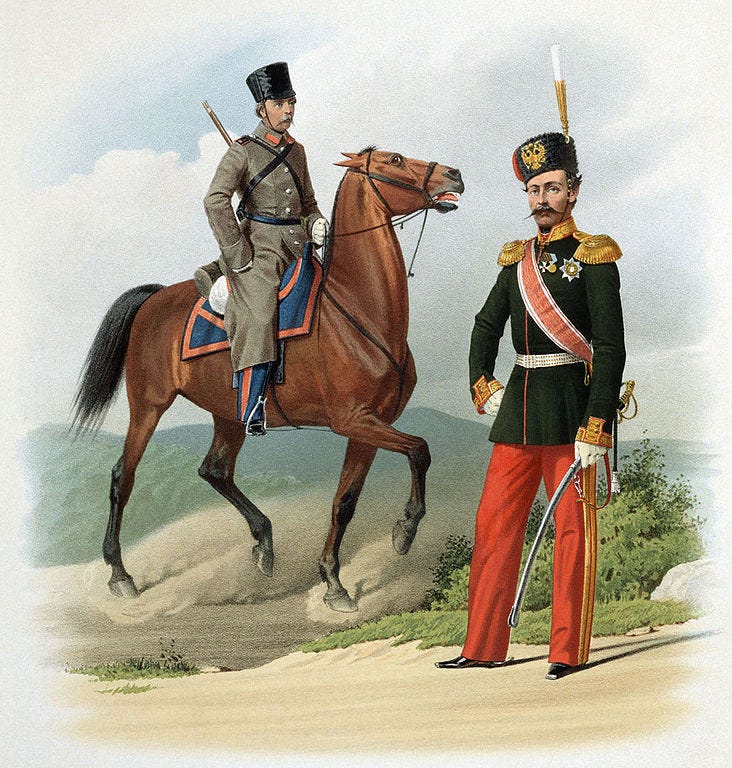
Historical design
The Russian Armed Forces command and control structure (‘ACCS’) is complex and often confusing to outsiders. But with a little bit of explanation, it can be much easier to understand.
The Russian Army Command and Control was established in 1918 to provide centralized control of the newly formed Red Army. It was disbanded in 1924 after Vladimir Lenin’s death but was reinstated in 1935 by Joseph Stalin. It has been in operation ever since, being renamed as the General Staff Headquarters during World War II and then again as the General Staff Headquarters of Soviet Armed Forces following the war.
The fall of the Soviet Union left the Russian Federation with a military that was far too large.
It had been a union of 15 republics that had been established in 1922 following the Russian revolution and civil war. Although it collapsed in 1991, it still left behind an armed force structure that was much larger than any other country’s. It is estimated that the Soviet Union had 40% of all tanks, 30% of all combat aircraft and 25% of all ships in the world at its peak.
The collapse of the Soviet Union left Russia with an army that was much larger than any other country’s, but Russia did not have enough money to fund this army so it began to shrink. In recent years, Russia has been spending more on its military budget to modernize its military. But problems have become apparent.
The Stavka
The Russian Armed Forces command and control structure is known as the ACCS. The Commander-in-Chief is the President of Russia, currently Vladimir Putin.
The heart of the system is the Stavka, or general staff. This is a small group of senior officers who oversee all military operations. They are responsible for making decisions about strategy and tactics, and they coordinate the efforts of all the different branches of the military.
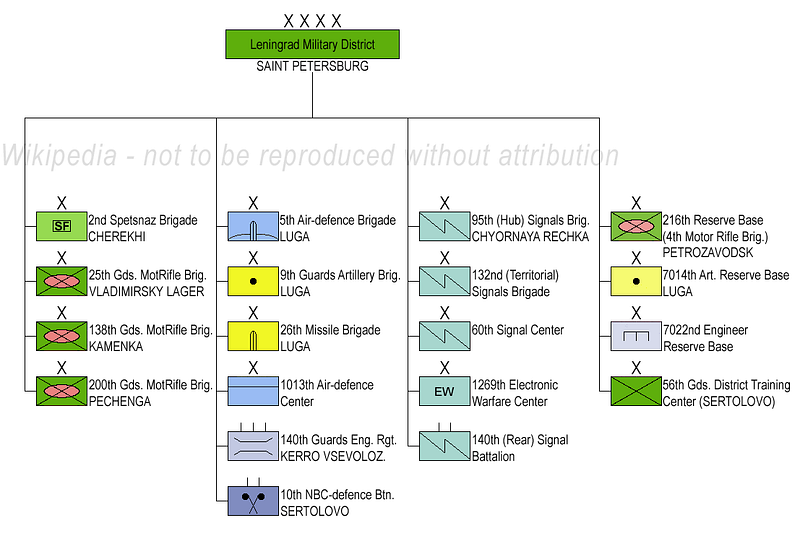
Below the Stavka is the general headquarters, which is responsible for overseeing all military activity in a particular region. There are four main regional commands: Western, Southern, Central, and Eastern. Each one has its own commander who reports directly to the Stavka.
Beneath the general headquarters are the various military districts. These are the main units of the Russian army, and each one is responsible for a specific area of the country. The district commanders report to the general headquarters, and they have a great deal of autonomy in how they operate.
Finally, at the bottom of the command structure are the individual military units. These are the soldiers who do the actual fighting, and they report up through their chain of command all the way to the Stavka.
ACCS is a complex system, but it’s designed to be flexible and responsive to changing conditions on the ground. With a little bit of knowledge, it’s not so difficult to understand.
And knowing how it works can give you a valuable insight into the thinking of the Russian military…and it’s susceptibility to failure.
Weakness: Lack of flexibility where it matters
But change has been slow in such a bureaucratic command structure and that is the probable reason that in the first month of the war in Ukraine the Russian army has lost five generals to enemy action. Battalion commanders have been reluctant to act quickly in response to changing events on the ground and so general staff officers have been drawn into the front lines to provide motivation and — as one commentator has said — ‘spine’.
Weakness: Old technology
Another weakness is the outdated technology used by some of the Russian military’s communications systems. This can make it difficult for commanders to keep up with the latest developments in the battlefield.
They’ve been using cellphones in the Ukraine, but the system failed and led to significant interceptions.
Weakness: Information network not unified
One of the biggest weaknesses is the lack of a unified information network. This means that different units often have difficulty communicating with each other. This can lead to confusion and delays in decision-making.
Beneath the ACCS are the grunts who have to take the fire, and that’s where the whole structure of the Russian military has a problem.
Weakness: High levels of non-professional troops
The actual makeup of the ground forces of the Russian Federation has had a major impact on their effectiveness in the Ukraine — apart, of course, from a total mis-read by the Kremlin of the Ukrainian defensive capabilities, cohesive leadership, resilience and determination.
Currently, most estimates put the proportion of conscripts in the Russian military at about 25%, with numbers varying somewhat across services and unit types. Despite Russia’s efforts to professionalize its military — particularly to improve training and expertise in the force — it must control its military budget, and that means offsetting professionalism against the need to maintain a large military establishment.
Usually, in any organisation that has to cut headcount, technology gains are used to offset those cuts, if effectiveness and performance is to be maintained.
But that hasn’t happened in the Russian Army — the technology gains have lagged, as I mentioned above.
What does this all mean?
In addition, warfare will also now involve “indirect and asymmetric methods” and a general blurring of the lines between the tactical, operational, and strategic levels of military operations. The implication for Russia’s enlisted personnel is that conscripts will be unable to be effective warfighters on the modern battlefield because the conscription period in the Russian Federation has been reduced to one year. — US Maj. Charles K. Bartles
That statement appears to have been proven to be true in Ukraine where high numbers of poorly trained conscripts have taken the brunt of the Ukrainian pushback. As a quick fix the Russian Army has been importing Syrian personnel to fight on the front line but reports suggest that even these hardened fighters are pulling out.
The Russians have deployed 400 Wagner Group mercenaries in the Ukraine (The Economist) with the specific objective of killing President Zelenskyy, and others may well be in action.
Obvious failures of the ACCS in Ukraine
There are so many examples that I am not quoting sources here, suffice it to say that a 40 Km long convoy of expensive military equipment was stuck for days on a highway leading south towards Kyiv.
You’ve probably seen the drone footage of the convoy being trashed. I’m not a military man, but even I wonder why those armoured vehicles were not off-road and dug in behind revetments instead of being lined up like sitting ducks in a shooting gallery. You have to wonder about the quality of command on the ground.
Reports suggest that the convoy was on stop due to poor logistical support with lack of fuel and food being cited as the reason.
It’s said that amateur soldiers discuss plans. tactics and strategy, whereas professional soldiers talk logistics. QED.
Fixing the ACCS problems
I may be biased, but I hope they’re not fixed too soon and that the Ukrainian Special Forces and snipers continue to take out the general staff.
Nevertheless, the technology problems were recognised some time ago.
At a conference call with the leadership of the RF Armed Forces, Russian Defense Minister Sergei Shoigu discussed the progress of development work (ROC) “Sozvezdiye-2015”, which involves the creation of an automated command and control system for tactical level troops (ACCS TZ).
This was reported by the press service of the Russian Defense Ministry.
“The Minister of Defense said that the use of this system will improve the control of troops, weapons, reconnaissance, electronic warfare and communications, technical and logistical support of combined arms formations and military units, and will make it possible to form unified databases for the control of subordinate troops,” the website of the Russian Defense Ministry says. — Source: Teller Report
A project to develop a new high-technology system got underway in 2015.
Apparently the Quartz system (also known as Era) was one of the products of that initiative.
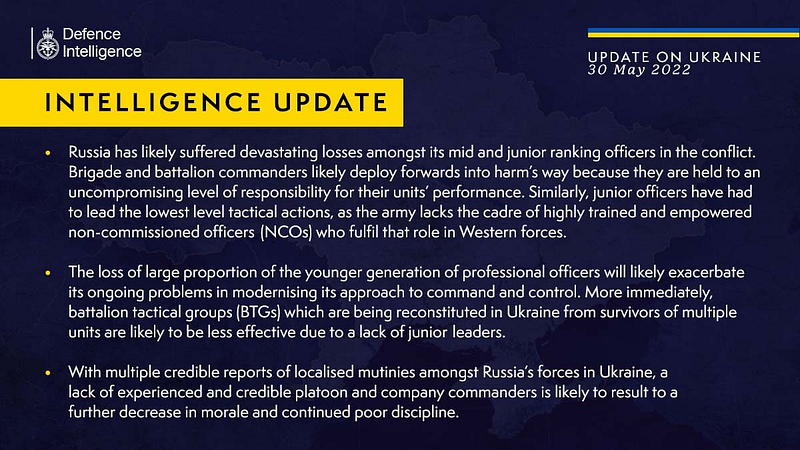
Here’s a performance report I recently wrote about it:
Added after 3 months of war:
In conclusion
It’s a very worrying situation because the Russian Army (and its Airforce) have taken a battering. Putin is undoubtedly raging about the setbacks — it should have been less than a week, but it’s now almost a month as I write, and he’s still not in Kyiv.
He could act irrationally in such a situation and that’s the worry, but I hope cooler heads in the Kremlin will prevail — if he hasn’t yet removed them.
And I missed out the Russian Navy from the ‘battering’. News just in is that a senior Russian naval commander has been shot dead in Mariupol. He was the deputy commander of Russia’s Black Sea Fleet. I’m not gracing him with a mention of his name here.
Latest update — command changes
A Western official confirmed Russia had now reorganised the command of its operations in Ukraine with the general now in charge having had extensive experience from Syria.
The forces which invaded on 24 February were organised and commanded separately from the district from which they had come.
“There was really poor coordination across those different commands,” said the official, since Russian forces had never trained to work in this way. The Southern Military District Commander is now in charge of operations to attempt to provide better co-ordination — this is reported to be General Alexander Dvornikov. — BBC
Full story:
Sources: Politico.com, Teller report, Swedish Defence Research Industry, Army University Press, The Economist, TheHill.com
About me: If you follow me I guarantee variety in your inbox! I write on a wide range of topics including humor, tech and travel, together with daily news events and the minutiae of my daily life living on a boat. I also write techno-thrillers…and about…
…the Russian army and avoiding global catastrophe
If you value stories like these and want to support other writers and me, consider signing up to become a Medium member. It’s $5 a month, giving you unlimited access to incredible stories on Medium. If you sign up using my link below, I’ll earn a small commission at no extra cost to you.
https://james-marinero.medium.com/membership
You can follow me on Facebook Twitter @jamesmarinero . On Pinterest you will find many of my research photos from around the world. Check out my website where I occasionally have a free book on offer.
Buy me a coffee? or buy a book in my store — we both get something that way?


