avatarDenny Pencheva, MD

Free AI web copilot to create summaries, insights and extended knowledge, download it at here

6579

Abstract

You Red Meat Allergies</h2> <div><h3>A disease that’s lurked for years, undiagnosed in many Americans</h3></div> <div><p>medium.com</p></div> </div> <div> <div style="background-image: url(https://miro.readmedium.com/v2/resize:fit:320/0*ItKpursXVwWbg3Pk)"></div> </div> </div> </a> </div><p id="5efb">Lyme disease is growing rapidly in the <a href="https://www.ncbi.nlm.nih.gov/pmc/articles/PMC5610605/">United States</a> and<a href="https://www.ncbi.nlm.nih.gov/pmc/articles/PMC6707478/"> Canada</a>, rattling the health infrastructure. According to <a href="https://s3.amazonaws.com/media2.fairhealth.org/infographic/asset/Lyme%20Disease%20Infographic%20-%20Final.pdf">insurance data</a>, Lyme disease diagnoses in the United States grew 357% in rural and 65% in urban areas between 2007 and 2021. Between 2009 and 2019, Canada’s Lyme disease cases <a href="https://www.canada.ca/en/public-health/services/publications/diseases-conditions/lyme-disease-surveillance-report-2019.html">shot up 1729.2%</a>.</p><figure id="db42"><img src="https://cdn-images-1.readmedium.com/v2/resize:fit:800/1*rk5DnLYT-1Ngm3RBLLGSiw.png"><figcaption>Canadian Lyme disease cases per 100,000 people. Graphic: Canadian government</figcaption></figure><p id="ba42">With this ongoing climate reshuffling, could malaria be the next unwanted visitor knocking at our door? Could it shift from being an exotic menace to a domestic threat? History offers some cause for optimism that a public health crisis could be avoided.</p><h1 id="3a4a">How the United States beat malaria</h1><p id="062e">If there’s a glimmer of hope in this whole “rising temperatures, rising diseases” scenario, it’s that our fate is not entirely weather-dependent. Climate plays a significant role in vector-borne disease spread, but it isn’t the only player in this high-stakes game.</p><p id="dc56">In the early 1940s, malaria, our time-tested adversary, was as American as apple pie. The fight against it is actually how today’s CDC, the Centers for Disease Control and Prevention, started.</p><p id="9b19">The <a href="https://www.cdc.gov/malaria/about/history/elimination_us.html">Office of Malaria Control in War Areas</a>, the predecessor to the CDC, was born in 1942. The southern part of the country had crucial military training bases, making malaria a strategic thorn in the war effort’s side. Beating malaria was essential if the Army hoped to send healthy, well-trained soldiers to the front.</p><p id="dfc3">The effort evolved. The National Malaria Eradication Program<i> </i>started in 1947 as a large-scale public health project that involved multiple health authorities and agencies. By 1949:</p><ul><li>Numerous wet, mosquito breeding sites were drained.</li><li>Over 4.65 million rural homes were sprayed with DDT.</li><li>Lands were treated with insecticide, sometimes by airplane.</li></ul><p id="e082">In two short years—using an insecticide that<a href="https://www.epa.gov/ingredients-used-pesticide-products/ddt-brief-history-and-status"> wouldn’t be acceptable today</a>— the United States was able to eliminate malaria as a public health concern. The climate didn’t change. The mosquitoes didn’t change. What changed was the concentrated effort against a debilitating disease.</p><p id="8971">The moral of this tale? Climate sets the stage, but it doesn’t always get to decide what plays out. It draws the boundaries and chalks out the potential territories for vector-borne diseases, but within these territories, many other factors are involved. Public health measures, local environmental conditions, community resilience, and human behavior can all play pivotal roles in determining the actual distribution of these diseases.</p><h1 id="475a">Is malaria back?</h1><p id="8b80">In 2023, the United States had its first cases of<a href="https://emergency.cdc.gov/han/2023/han00494.asp"> locally acquired malaria</a> in<a href="https://www.cdc.gov/mmwr/preview/mmwrhtml/mm5238a3.htm"> 20 years</a>. Here and in other developed countries, there are new malaria cases every year, but they occur in people who traveled recently and brought the disease back home. This isn’t what happened in Florida and Texas this year. None of the five patients who contracted the disease had traveled abroad. They got malaria in their state.</p><p id="75dc">So is the villain back? Yes and no.</p><p id="0bdf">Yes, there is clearly cause for concern. The <i>Anopheles </i>mosquito — the primary carrier of the malaria parasite — thrives in various parts of the country. If it bites someone with malaria (say, your neighbor who got back from the tropics), it can then infect others. Despite our best efforts to reduce them, mosquito populations aren’t zero. This means the chances of locally acquired malaria, while low, still exist.</p><p id="e0e2">However, as a whole, malaria is going down.</p><p id="19a6">Over the past ten years,<a href="https://www.thelancet.com/journals/lancet/article/PIIS0140-6736%2818%2932335-3/fulltext"> disability-adjusted life year rates</a> for almost all vector-borne diseases have dropped. Malaria was down 39% before it increased in 2020 (mostly the consequence of COVID-19-related hurdles). But, we are getting back on track now and malaria deaths fell last year.</p><p id="18b5">The recent cases in Florida and Texas have raised eyebrows and should remind us that complacency is not an option. However, some experts are actually <i>more </i>worried about other vector-borne diseases. David Hamer, MD, a professor of global health and medicine at the Boston University School of Public Health, an expert in vector-borne infectious diseases <a href="https://www.bu.edu/articles/2023/possible-malaria-outbreak-us/">recently commented</a> on the US malaria cases:</p><p id="54dc">“I’m not very worried,” Hamer said. “This shows us the potential for malaria to occur here. I think our ability to quickly control an outbreak from malaria is easier than an outbreak of something like dengue or chikungunya, which also spread from mosquitoes.”</p><p id="ee8b">John Brownstein, PhD, an infectious disease epidemiologist and chief innovation officer at Boston Children’s Hospital, felt similarly in an ABC interview:</p><p id="cde2">“While the permanent return of malaria is still unlikely, these cases represent a broader warning of mosquito-borne diseases in the region,” Brownstein said.</p><p id="e6d7">So, the logical question follows:</p><h1 id="1cab">What do we do now

Options

?</h1><p id="5933">As the mercury climbs, our health landscape changes and we face a new era of vector-borne diseases. Here are the concrete steps you can take both at the grassroots level and as part of a wider collective effort for climate-related vector-borne disease risks:</p><h2 id="7ec6">1. Protect yourself and your community</h2><p id="108e">I’m yet to meet anyone that doesn’t hate mosquito bites. But, with the recent malaria cases in the US, it’s even more important to ward off their bites. Whether you’re traveling to a malaria area or not, it’s always best to avoid mosquitoes. Local health authorities will have more specific guidance, and I highly recommend you read Dr. Pattrson’s excellent piece:</p><div id="96fd" class="link-block"> <a href="https://readmedium.com/mosquito-repellent-strategies-what-works-and-what-doesnt-453d57282262"> <div> <div> <h2>Mosquito Repellent Strategies: What Works and What Doesn’t</h2> <div><h3>These nuisance bugs can also cause serious and deadly diseases. Learn how to arm and prepare yourself for any outing.</h3></div> <div><p>medium.com</p></div> </div> <div> <div style="background-image: url(https://miro.readmedium.com/v2/resize:fit:320/1*iqIbmKZl5mTbIkOhECQNiQ.jpeg)"></div> </div> </div> </a> </div><p id="8026">Here are some of the basics:</p><ul><li>Use an effective insect repellent like DEET or picaridin.</li><li>Install window and door screens. Bed nets (ideally one soaked in insecticide) are important and already saving lives in zones with a large mosquito population or malaria cases.</li><li>Wear long-sleeved protective clothing. Fabric can also be treated with insecticide to protect you.</li></ul><p id="0243">These steps aren’t just for your own safety — they also protect your community by interrupting the disease transmission cycle.</p><h2 id="9910">2. Stay informed</h2><p id="ab53">Back in the 1940s, they had funky cartoons like the <i>Private Snafu vs. Malaria Mike </i>series to teach people about malaria:</p> <figure id="118c"> <div> <div> <img class="ratio" src="http://placehold.it/16x9"> <iframe class="" src="https://cdn.embedly.com/widgets/media.html?src=https%3A%2F%2Fwww.youtube.com%2Fembed%2FkK6NrbL6sLY%3Ffeature%3Doembed&amp;display_name=YouTube&amp;url=https%3A%2F%2Fwww.youtube.com%2Fwatch%3Fv%3DkK6NrbL6sLY&amp;image=https%3A%2F%2Fi.ytimg.com%2Fvi%2FkK6NrbL6sLY%2Fhqdefault.jpg&amp;key=a19fcc184b9711e1b4764040d3dc5c07&amp;type=text%2Fhtml&amp;schema=youtube" allowfullscreen="" frameborder="0" height="480" width="640"> </div> </div> </figure></iframe></div></div></figure><p id="b6a8">Today, you have the internet, with all its perks and perils. As the landscape of vector-borne disease changes, risks in your local area might change, too.</p><p id="87a1">You can stay on top of the news and follow what health authorities advise. <a href="https://www.cdc.gov/ncezid/dvbd/index.html">The CDC</a> has up-to-date information about vector-borne diseases and how to prevent them. They also post emergency news, like when malaria cases surfaced in June. Start there whenever you want to learn more about these health concerns and don’t give in to the panic that media often creates.</p><h2 id="626f">3. Support the frontlines</h2><p id="b071">In the West, we have it relatively easy. Even with changing temperatures, developed countries have public health systems that make vector-borne disease control easier.</p><p id="2a2b">On a global level, that’s not the case. Africa has <a href="https://www.who.int/teams/global-malaria-programme/reports/world-malaria-report-2022">95% of malaria</a> cases, many of which happen in poverty-stricken areas. Those who bear the largest burden are the most disadvantaged.</p><p id="99a9">If you’re able, consider supporting organizations that fight against vector-borne diseases. One such organization is the<a href="https://www.againstmalaria.com"> Against Malaria Foundation</a>, which provides long-lasting insecticide-treated nets (LLINs) to high-risk populations.</p><p id="710b">And, your money will go to a good organization.<a href="https://www.givewell.org/charities/amf"> Give Well</a>, an independent charity evaluator, has made the AMF a top charity every year since 2009. It estimates that the cost per life saved is often<a href="https://docs.google.com/spreadsheets/d/10JFJaWnFAEKmsv5XjXqGqEoMUx0eM7x3WYwu_vC7FRw/edit#gid=1364064522"> under $4,000</a> for the AMF. In short, this is a cheap and effective way to prevent malaria for those who need our support most.</p><h2 id="93f3">4. Push for climate action</h2><p id="8d00">The looming health crisis from vector-borne diseases isn’t just a health issue — it’s an environmental one. Climate change is exacerbating the spread of vector-borne diseases. Any action we take to mitigate global warming helps in the fight against these diseases. If you want to do your part, you can support policies that aim to reduce greenhouse gas emissions and embrace sustainable practices in your daily life.</p><p id="de07">The fight against vector-borne diseases like malaria is an ongoing one, and the stakes are higher than ever in our rapidly changing world. But as we’ve seen in the past, we can make a difference when we take strategic, concerted action. As for malaria specifically, the <a href="https://www.youtube.com/watch?v=PtSAYu59w2Q">World Malaria Day 2023 message</a> from US Global Malaria Coordinator, David Walton, MD, rings truer than ever:</p><p id="cd4f">“Together, we can make malaria a disease of the past, and build a safer, more prosperous, and more equitable world for everyone.”</p><div id="0f05" class="link-block"> <a href="https://readmedium.com/special-report-extreme-heat-and-human-health-da97f08f6aa6"> <div> <div> <h2>Special Report: Extreme Heat and Human Health</h2> <div><h3>Excessive heat is pushing the limits of human tolerability. In more than a dozen articles, Wise & Well examines how hot…</h3></div> <div><p>medium.com</p></div> </div> <div> <div style="background-image: url(https://miro.readmedium.com/v2/resize:fit:320/1*POAUldBjPRY5DCewGpXx8Q.png)"></div> </div> </div> </a> </div></article></body>

Uh-Oh: Mosquitoes and Other Disease Carriers Thrive in Soaring Temperatures

America’s first in-country malaria transmissions in decades hint at rising risk of vector-borne diseases
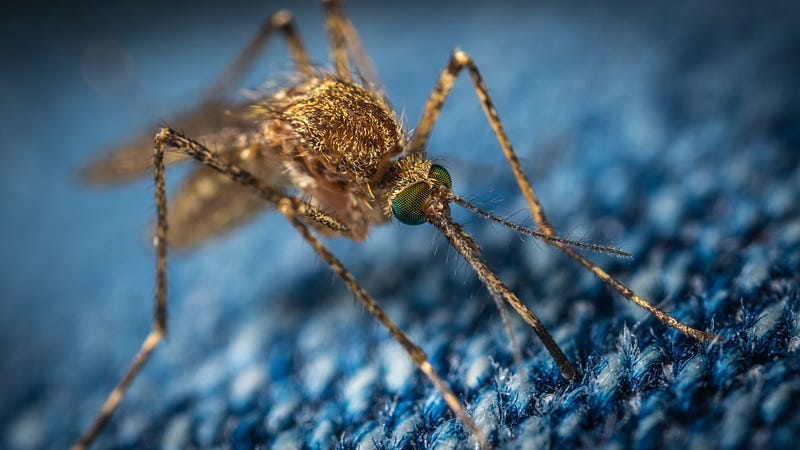
Image: Егор Камелев on Unsplash

This article is part of a Wise & Well Special Report: Extreme Heat and Human Health.

Rising global temperatures have put more than 10,000 species in danger of extinction. But there is one group that thrives in higher temperatures. Mosquitoes love the heat. So do most other disease vectors like ticks, flies, fleas, and lice.

A warmer climate allows these pests to reach territories that were impossible to survive in before. The heat also boosts their metabolism and feeding activity (a.k.a. how many people they bite).

Global warming is creating better conditions and a wider spread for one of humanity’s main killers. Mosquitoes are responsible for more than 700,000 deaths around the world every year, with malaria responsible for the vast majority of them. And, this year the United States had its first locally acquired malaria cases in decades. In June, the CDC announced four cases had been detected in Florida and one in Texas. The last time this happened was in 2003, and this time around it has experts seriously worried.

“The cases highlight the potential for a return of malaria in the future, Manoj Duraisingh, John LaPorte Given Professor of Immunology and Infectious Diseases at Harvard T.H. Chan School of Public Health said in a statement. “Higher temperatures driven by climate change could significantly increase mosquito populations, and we should be prepared at a public health level.”

How will this pan out as the mercury keeps rising? Are vector-borne conditions the next big risk for global health?

We have fought this battle before — in fact, it may have helped the US effort in World War II. As we face another global crisis, here is what we know and what we could do.

First, the bad news (and the bad guys)

Malaria has been a persistent scourge for humanity, almost as old as our species itself. The disease has been detected in Egyptian remains from 3200 BC. It helped bring the Roman Empire down. It has killed kings and beggars alike. Malaria isn’t just part of history, though — it claimed an estimated 619,000 lives last year, and after two decades of decline, cases are on the rise, up from a low of 558,000 in 2019.
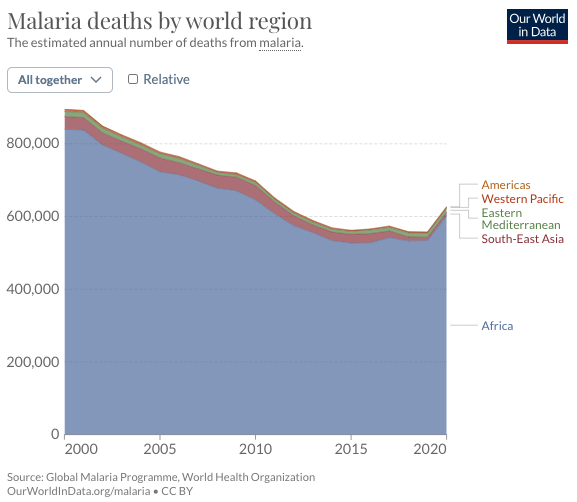
As we turn up the planet’s thermostat, we’re helping our old nemesis reach new lands.

Mosquitoes are, quite literally, hot for warmer temperatures. Higher temperatures expand the territories these vectors can conquer. Areas once too cool for the insects will now offer a warm welcome.

The heat doesn’t just rev up the mosquitoes’ engines, it also provides a boost to the malaria-causing Plasmodium parasites they carry. When global temperatures rise, new territories will reach the optimal temperature for malaria transmission.

Malaria isn’t all we have to worry about, either.

Dengue, another mosquito-borne fever that’s less severe than malaria but can lead to death, is growing at rapid rates. Cases more than doubled last year in the Americas, and significant outbreaks have occurred across the region in 2023. Peru is currently dealing with four times the dengue cases it had in 2022, thought to be a consequence of the extreme weather conditions in the country.

In Europe, one species of mosquitoes have settled further up North than ever before. Switzerland now has established Aedes albopictus (a vector of the chikungunya and dengue virus) populations, and so do Germany, Hungary, and Austria.

Lyme-disease-carrying ticks are also expanding their range. In the United States, Europe, and elsewhere, as the climate warms, ticks inhabit larger areas and their potential to cause disease has grown.

Unlike humans, who may throw off their covers and grumble about heat disrupting their sleep, ticks are ecstatic when the mercury doesn’t dip. They’re only active above a certain temperature, so longer summers and warmer winters give them more time to infect us. And, as we recently learned, ticks can give you a lot more than Lyme disease, too:

Lyme disease is growing rapidly in the United States and Canada, rattling the health infrastructure. According to insurance data, Lyme disease diagnoses in the United States grew 357% in rural and 65% in urban areas between 2007 and 2021. Between 2009 and 2019, Canada’s Lyme disease cases shot up 1729.2%.
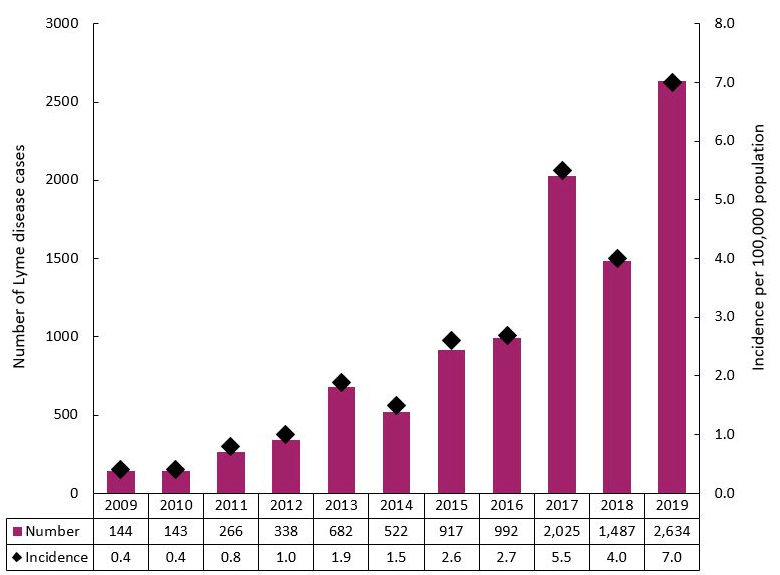
Canadian Lyme disease cases per 100,000 people. Graphic: Canadian government

With this ongoing climate reshuffling, could malaria be the next unwanted visitor knocking at our door? Could it shift from being an exotic menace to a domestic threat? History offers some cause for optimism that a public health crisis could be avoided.

How the United States beat malaria

If there’s a glimmer of hope in this whole “rising temperatures, rising diseases” scenario, it’s that our fate is not entirely weather-dependent. Climate plays a significant role in vector-borne disease spread, but it isn’t the only player in this high-stakes game.

In the early 1940s, malaria, our time-tested adversary, was as American as apple pie. The fight against it is actually how today’s CDC, the Centers for Disease Control and Prevention, started.

The Office of Malaria Control in War Areas, the predecessor to the CDC, was born in 1942. The southern part of the country had crucial military training bases, making malaria a strategic thorn in the war effort’s side. Beating malaria was essential if the Army hoped to send healthy, well-trained soldiers to the front.

The effort evolved. The National Malaria Eradication Program started in 1947 as a large-scale public health project that involved multiple health authorities and agencies. By 1949:

  • Numerous wet, mosquito breeding sites were drained.
  • Over 4.65 million rural homes were sprayed with DDT.
  • Lands were treated with insecticide, sometimes by airplane.

In two short years—using an insecticide that wouldn’t be acceptable today— the United States was able to eliminate malaria as a public health concern. The climate didn’t change. The mosquitoes didn’t change. What changed was the concentrated effort against a debilitating disease.

The moral of this tale? Climate sets the stage, but it doesn’t always get to decide what plays out. It draws the boundaries and chalks out the potential territories for vector-borne diseases, but within these territories, many other factors are involved. Public health measures, local environmental conditions, community resilience, and human behavior can all play pivotal roles in determining the actual distribution of these diseases.

Is malaria back?

In 2023, the United States had its first cases of locally acquired malaria in 20 years. Here and in other developed countries, there are new malaria cases every year, but they occur in people who traveled recently and brought the disease back home. This isn’t what happened in Florida and Texas this year. None of the five patients who contracted the disease had traveled abroad. They got malaria in their state.

So is the villain back? Yes and no.

Yes, there is clearly cause for concern. The Anopheles mosquito — the primary carrier of the malaria parasite — thrives in various parts of the country. If it bites someone with malaria (say, your neighbor who got back from the tropics), it can then infect others. Despite our best efforts to reduce them, mosquito populations aren’t zero. This means the chances of locally acquired malaria, while low, still exist.

However, as a whole, malaria is going down.

Over the past ten years, disability-adjusted life year rates for almost all vector-borne diseases have dropped. Malaria was down 39% before it increased in 2020 (mostly the consequence of COVID-19-related hurdles). But, we are getting back on track now and malaria deaths fell last year.

The recent cases in Florida and Texas have raised eyebrows and should remind us that complacency is not an option. However, some experts are actually more worried about other vector-borne diseases. David Hamer, MD, a professor of global health and medicine at the Boston University School of Public Health, an expert in vector-borne infectious diseases recently commented on the US malaria cases:

“I’m not very worried,” Hamer said. “This shows us the potential for malaria to occur here. I think our ability to quickly control an outbreak from malaria is easier than an outbreak of something like dengue or chikungunya, which also spread from mosquitoes.”

John Brownstein, PhD, an infectious disease epidemiologist and chief innovation officer at Boston Children’s Hospital, felt similarly in an ABC interview:

“While the permanent return of malaria is still unlikely, these cases represent a broader warning of mosquito-borne diseases in the region,” Brownstein said.

So, the logical question follows:

What do we do now?

As the mercury climbs, our health landscape changes and we face a new era of vector-borne diseases. Here are the concrete steps you can take both at the grassroots level and as part of a wider collective effort for climate-related vector-borne disease risks:

1. Protect yourself and your community

I’m yet to meet anyone that doesn’t hate mosquito bites. But, with the recent malaria cases in the US, it’s even more important to ward off their bites. Whether you’re traveling to a malaria area or not, it’s always best to avoid mosquitoes. Local health authorities will have more specific guidance, and I highly recommend you read Dr. Pattrson’s excellent piece:

Here are some of the basics:

  • Use an effective insect repellent like DEET or picaridin.
  • Install window and door screens. Bed nets (ideally one soaked in insecticide) are important and already saving lives in zones with a large mosquito population or malaria cases.
  • Wear long-sleeved protective clothing. Fabric can also be treated with insecticide to protect you.

These steps aren’t just for your own safety — they also protect your community by interrupting the disease transmission cycle.

2. Stay informed

Back in the 1940s, they had funky cartoons like the Private Snafu vs. Malaria Mike series to teach people about malaria:

Today, you have the internet, with all its perks and perils. As the landscape of vector-borne disease changes, risks in your local area might change, too.

You can stay on top of the news and follow what health authorities advise. The CDC has up-to-date information about vector-borne diseases and how to prevent them. They also post emergency news, like when malaria cases surfaced in June. Start there whenever you want to learn more about these health concerns and don’t give in to the panic that media often creates.

3. Support the frontlines

In the West, we have it relatively easy. Even with changing temperatures, developed countries have public health systems that make vector-borne disease control easier.

On a global level, that’s not the case. Africa has 95% of malaria cases, many of which happen in poverty-stricken areas. Those who bear the largest burden are the most disadvantaged.

If you’re able, consider supporting organizations that fight against vector-borne diseases. One such organization is the Against Malaria Foundation, which provides long-lasting insecticide-treated nets (LLINs) to high-risk populations.

And, your money will go to a good organization. Give Well, an independent charity evaluator, has made the AMF a top charity every year since 2009. It estimates that the cost per life saved is often under $4,000 for the AMF. In short, this is a cheap and effective way to prevent malaria for those who need our support most.

4. Push for climate action

The looming health crisis from vector-borne diseases isn’t just a health issue — it’s an environmental one. Climate change is exacerbating the spread of vector-borne diseases. Any action we take to mitigate global warming helps in the fight against these diseases. If you want to do your part, you can support policies that aim to reduce greenhouse gas emissions and embrace sustainable practices in your daily life.

The fight against vector-borne diseases like malaria is an ongoing one, and the stakes are higher than ever in our rapidly changing world. But as we’ve seen in the past, we can make a difference when we take strategic, concerted action. As for malaria specifically, the World Malaria Day 2023 message from US Global Malaria Coordinator, David Walton, MD, rings truer than ever:

“Together, we can make malaria a disease of the past, and build a safer, more prosperous, and more equitable world for everyone.”

Health
Disease
Climate Change
Infectious Disease
Public Health
Recommended from ReadMedium