
Mosquito Repellent Strategies: What Works and What Doesn’t
These nuisance bugs can also cause serious and deadly diseases. Learn how to arm and prepare yourself for any outing.
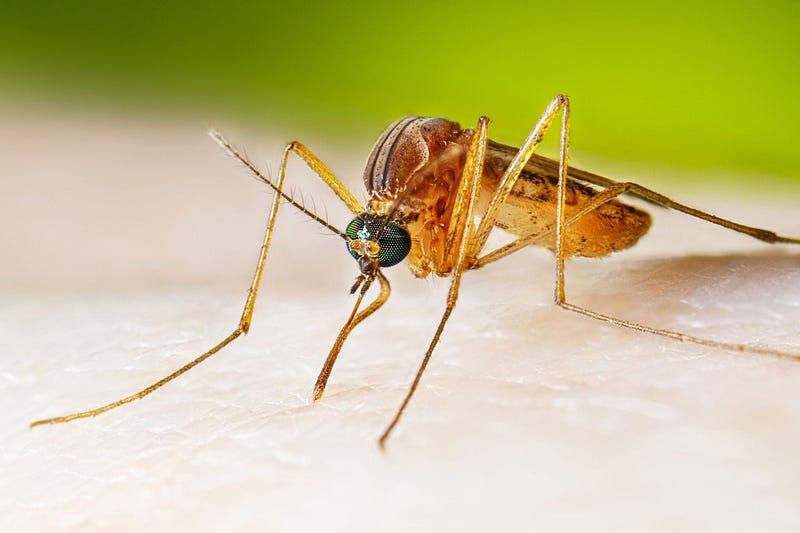
Around since the time of the dinosaurs, mosquitos are the deadliest creatures on earth, packing diseases like malaria, West Nile virus, dengue and Zika that kill more than 700,000 humans a year, not to mention countless birds and other animals.
As an infectious diseases physician, I know the value of mosquito-repellent strategies. I used the best insect repellent I knew about while on a photo safari in Africa several years ago. I had seen enough cases of life-threatening malaria.
What we are interested in mostly, though, is how to get rid of these pests when we are trying to enjoy the outdoors in our backyards or on camping trips. I’ll review five strategies that work, and some highly touted tactics that don’t.
Don’t try this at home (or anywhere)
Bug zappers. They are killing beneficial insects such as moths and beetles when you hear that unsettling “zap.” Mosquito control experts say mosquitos are a minuscule fraction of the bugs that are killed. These are not worth the investment.
Citronella candles may smell nice but they don’t effectively deter mosquitoes.
Citronella plants, also known as the “mosquito repellent plant” are not effective, either. There is not enough concentration of citronella from the plant to have any efficacy.
Taking thiamine (vitamin B1) orally has been touted as an effective repellent. Studies, however, find otherwise.
Garlic is another natural oral repellent that has been recommended. Again, studies have not been able to document efficacy. If you love smelling like garlic, go for it, just don’t expect to avoid mosquito bites.
Things That Work
To find us and get their blood meal, mosquitos detect carbon dioxide we exhale. Insect repellents that work interfere or interrupt the bug’s sensor system or overwhelm their carbon dioxide detection to repel them.
For proven efficacy and safety, use an EPA-registered repellent. Apply a thin layer of repellent to exposed skin. Frequent reapplication is not needed for effective repellents; follow the manufacturers’ instructions.
Do not use repellent under clothing. Avoid application near eyes and mouth. For use on the face, apply to hands first and then apply to the face. If you are using sunscreen and insect repellent, apply the sunscreen first.
DEET (diethyltoluamide)
DEET has been the gold standard for mosquito repellent since it was developed by the Army in 1946 and released in 1957. It is effective but is oily, has an objectionable odor to some, and is a plasticizer — it may degrade plastics and vinyl, such as eyeglass frames, other plastic surfaces, and some car seats. It has been deemed safe for contact with fabrics, except synthetics such as acetate, rayon, or Spandex. DEET is also neurotoxic if absorbed, so avoid application near the eyes or mouth.
DEET is effective against mosquitos for two to 12 hours, depending on the concentration used. It is effective for 5 hours at 25% concentration. Concentrations over 33% should be avoided due to toxicity.
DEET should be used sparingly on children, avoiding the hands and areas near mouth and face. It is approved for infants as young as two months of age.
Picaridin
At 20% concentration, this chemical is also highly effective, and in some recent studies has proven more effective than DEET. It is commonly used in Europe and Australia. It has a milder odor, is less oily, and is less likely to irritate skin than DEET. It will not damage plastics or synthetic fabrics.
Picaridin is effective for eight to 10 hours against mosquitos. Recent studies have shown a longer protection time than DEET.
It is also approved for infants as young as two months of age.
OLE (Oil of lemon eucalyptus)
This is an extract of the lemon eucalyptus oil, often in synthetic form of a component of the oil, p-methane-3,8-diol, called PMD. A disadvantage is its very strong and undesirable odor which does not fade.
It is not as effective as 25% DEET or 20% picaridin. The efficacy of OLE at 30% concentration is comparable to low concentrations of DEET. The protection it offers lasts up to 6 hours for aggressive mosquitos, and 12 hours or less for less aggressive mosquitos.
OLE is not approved for children under three years old because it has not been thoroughly studied in this group.
IR3535
This synthetic compound was inspired by a naturally occurring amino acid that is effective against mosquitos. It is colorless, almost odorless, and biodegradable. It can damage plastics and some clothing. IR3535 is often combined with sunscreen. But the combination is not recommended because reapplying sunscreen often can lead to unnecessary overexposure to the repellent.
This agent is not as effective as DEET or picaridin against mosquitos that carry malaria. So, don’t rely on it if you are in a country where malaria is a problem. There are no age limits to IR3535 use.
Plant oils
The EPA has registered some citronella oil products. Citronella, derived from the plant, has some repellent effect against mosquitos, but not enough to use it as a single strategy. Practical application is limited because it is unstable in the presence of air and at high temperatures. Also, the protection time is limited to two hours. It is not recommended for areas with mosquito-borne diseases.
The EPA does not evaluate other essential oils, because they are considered minimum risk. They have been studied by Consumers Reports and found to not last more than one hour. A problem is that essential oils are small molecules and evaporate from skin quickly.
For infants less than two months of age, the best prevention may be netting. Reviews for children’s insect repellents are available and give some ideas about specific types that are kid friendly.
Spatial repellents
These are repellents that cover an area, rather than a person. The repellent is dispensed by a device that sends it into the air. A breeze will decrease effectiveness of these, and they do require battery replacements. Reviews of these are available and some are quite effective. Thermacell makes most of these devices. Depending on the model, they can provide protection for an area up to 20 by 20 feet. Protection time is 12 hours or more, depending on the cartridge you choose.
An interesting recent innovation is Tiki BiteFighter LED String Lights, as mentioned in the review cited above. These strands of light have a repellent that is dispersed when the lights are plugged in. The concentration of repellent is lower than with the Thermacell devices, but depending on how they are strung, they can protect a 12x12-foot area.
Spatial repellents are preferred over traps. While traps may have some effect, the experts say that the mosquito will always favor a human over the trap. Other options such as yard sprays, foggers, and misting systems offer effectiveness against bugs, but they destroy beneficial ones such as moths and beetles.
Incense is a type of spatial repellent and is the idea behind citronella coils. Citronella coils lack effectiveness as a single strategy and, as opposed to the citronella candle, most people do not like the smell. Mosquito repellent incense is available and lasts longer than the incense we used in the ’70s, but I have used that incense with some success also. Again, breeze is a limiting factor. Incense is not effective as a single strategy, but can be added to some of the others.
Blow them away
My favorite strategy: mosquitos are wimpy fliers, so take advantage of this weakness and get an oscillating fan for your outdoor area. During mosquito season the breeze from the fan for cooling is often appreciated as well.
Wear protective clothing
Wear loose-fitting clothing with long sleeves and long pants when possible as a barrier against mosquitos. Clothing and gear can be treated with permethrin, an insecticide that repels or kills mosquitoes. Permethrin is not to be used on skin. It is highly effective and provides protection for five to six washings. As a warning to cat lovers, high concentrations of wet permethrin can be toxic to cats, but once it has dried it is not a danger.
Head nets and bed nets can be helpful in areas with a high density of flying insects and can also be treated with permethrin.
Permethrin-treated bed nets have been saving children’s lives in Africa since the 1990s by avoiding early childhood exposure to malaria.
Destroy their habitat
When you’re at home, empty standing water in plant saucers, bird baths, and play pools. Mosquitoes lay eggs near water, so this will help to control proliferation. Use screens on windows and doors.
What I do
The strategy at my house is a mix of the above. I turn on the fan when we are on the porch, as well as burn incense at peak times. We keep a fan on the porch and by the pool, and they are very helpful.
At the pool, I spray my natural essential oil blend on my head and hands while I am lighting the mosquito-repellent incense and turning on the fan.
When I will be in a situation with heavy mosquito exposure, and when I am in an area with serious mosquito-borne diseases, I rely on picaridin and protective clothing. I don’t want mosquito bites, and I sure don’t want the diseases they can transmit.
This information is intended to provide useful information on the topic discussed. It is not intended to diagnose or treat any medical condition. Please be sure to discuss any conditions regarding your health with your own healthcare professional.
Your support makes writing on Medium possible. You can subscribe to emails when I publish a story or join Medium to directly support me and gain full access to all Medium stories. Best, Dr. Jan


