
Two Lessons Fathers Teach
Will your children cry at your funeral?
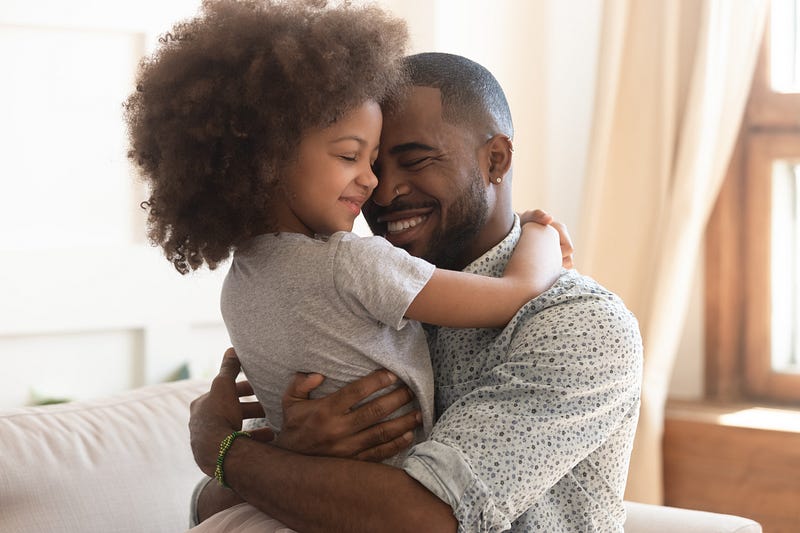
Momma’s baby, daddy’s maybe. There are stories I could tell about mothers who kept secrets from their children about the true identity of their father! Some fathers deny their children. Some fathers are denied.
Fathers are a vulnerable species in the family, not required after fertilization. In-vitro fertilization doesn’t require their presence at all. Little attention is directed toward fathers during the baby’s gestation. Research suggests that fathers need support to fulfill their paternal roles effectively.
“Today’s fathers have few generational or cultural references to guide them through the novel levels of expectations and demands placed upon them as new parents” (Warren.)
Where Art Thou, Father?
Even fathers who are consistently present in their children’s lives are varied in their connections to mothers. Of the 70 million fathers in America, 35% are part of married-couple families with children younger than 18. The two million single fathers make up 17% of custodial parents. Over 200,000 fathers are stay-at-home dads, caring for 434,000 children under the age of 18.
Generally speaking, the stronger the presence of fathers in their children’s lives, the healthier their development.
“When fathers are involved in the lives of their children, especially their education, their children learn more, perform better in school, and exhibit healthier behavior. Even when fathers do not share a home with their children, their active involvement can have a lasting and positive impact” (Dad Stats).
Gifts of the Father
Of course, merely being present doesn’t improve children’s lives. Fathers often provide financial stability, an essential component of child development. All other fatherly positive effects are up for grabs.
A 2018 research investigation revealed that “paternal personality, psychopathology, and attitudes influence child temperament.” According to Babadagi, when fathers exhibit signs of mental instability or emotional negativity, children may respond with emotional distress or dysregulation. The response is likely to follow into adulthood.
This reality was evident in a recent article I read. The writer discussed their insight between adult and childhood patterns of behaviors that were influenced by their father.
The Father-Daughter Dance
I have more mixed feelings about my father than the negative emotions the writer expressed. Yet, like the writer, I didn’t cry at my father’s funeral. I felt relieved. He was never a particular burden to me because I kept enough distance to ignore him. But, I saw the effect he had on my mother, definitely a burden.
I have fond memories of my father putting me on his shoulders to take me in the ocean. I remember my dad as a story-teller. He had a story for any occasion. I can’t tell you how many times I was late for school growing up because I asked him for lunch money and got stuck listening to a 20-minute story about how hard he had to work to earn his money.
I’ll never forget the “your head is like an inner tube” one. “It can only hold so much,” Daddy orated to me. He was trying to tell me that I couldn’t focus on boys and books at the same time while I was in college. I never did tell him how wrong he was about that one.
My favorite stories were his jokes. My father loved to laugh. Most of his jokes were corny, but some were funny. He would especially tell them on the long road trip with the nine of us squeezed up in the Ford Station Wagon.
The Death of a Father
I was an adult before I understood the extent of my father’s infidelity and mean streak toward my mother. My mother always wanted the children to respect our father, so she hid his disgraceful behavior from us.
Despite his mistreatment, my mother buried my father with the dignity of a saint, even though they were no longer living together. She didn’t owe him anything. Still, she wanted to make sure her children, all of us grown, had an opportunity to pay our respect, the respect we did not owe either.
I was the only of his seven “legitimate” children that spoke at his funeral, even though I was the youngest. My siblings didn’t have much left to say to him, even at his funeral. They had said their last words to him years ago. Since my father loved to tell stories, I told one last story for him.
“There was once a little girl who had a father who talked more than he listened, believed people should do as he said not as he did, and sometimes thought that he should reap whatever good you sow.
And the little girl loved her father. She didn’t see any faults because he treated her so special. And when she got older, she loved him despite his faults, because he was always there for her when she needed him. And when he died, she reflected on the lessons she actually learned from his faults — to love unconditionally in life, to forgive in life, to be self-determined, and always to seek God.
And she still loved her daddy. And she lived happily ever after.”
My father’s absence and presence in my life are timeless. A father, ultimately, teaches us two lessons, what to do and what not to do.
References
Babadagi, Z., Karabekiroglu, K. M. Z., Ucar, F., Say, G. N., Yuce, M., & Yildirim, Z. G. (2018). Associations between father temperament, character, rearing, psychopathology and child temperament in children aged 3–6 years. Psychiatric Quarterly, 89(3), 589–604. doi:10.1007/s11126–017–9556–1
Dad Stats National Responsible Fatherhood Clearinghouse. https://www.fatherhood.gov/content/dad-stats
Dennet (2020). No tears for dad. Illumination on Medium. https://readmedium.com/no-tears-for-dad-390d1d3c15d1.
Warren, J. (2020). Supporting Men in Their Transition to Fatherhood. Journal of Prenatal & Perinatal Psychology & Health. Vol. 34 (3) p230–237.


