Turkey’s Future Role in the Black Sea & Balkan Region
This story was originally published in Areas & Producers
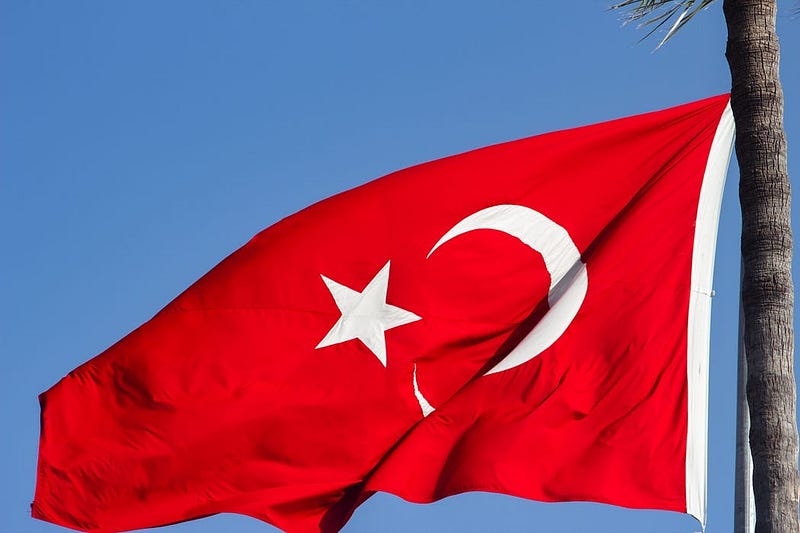
Over the weekend there was an announcement made by Turkey’s President Recep Tayyip Erdogan about the country’s future membership to the European Union (EU).
President Erdogan reportedly said: “The EU is making efforts to sever ties with Turkey.” ABC News
This comment was made at a press conference held between reporters and President Erdogan, held during the G-20 Summit, about the European Parliament’s recent report on the assessment of EU-Turkey relations.
He also told reporters: “The EU is trying to break away from Turkey. We will make our evaluations against these developments and if necessary, we can part ways with the EU.” Reuters
Erdogan won re-election as president, after beating Kemal Kilicdaroglu of the Republican People’s Party, and thus he was declared the elected leader by the Supreme Election Council in Turkey.
After the re-election campaign was over, Erdogan referred to Turkey’s economic struggles, such as the domestic inflation problem, which was one that is “not a difficult problem to solve”.
The domestic economy is a top priority for the current leadership in Turkey, while addressing the damage caused by the Earthquake in February will be two of Erdogan’s key priorities at home.
Since Turkey can use its influence in Europe and Asia, Turkey is likely to take advantage of its geographical position and cultural leadership to address issues at home. At this moment, what is most uncertain is how Turkey’s leadership role during the Russia-Ukraine War, such as brokering the Black Sea Grain Initiative, will play a factor in the country’s economic development.

Another development related to this situation is about European energy security dilemma, particularly Hungary, a country which represented five of the Central and Eastern Europe (CEE) group of countries — Bulgaria, Hungary, Poland, Romania and Slovakia — by visiting Turkey to meet with government officials about the Black Sea Grain Deal.
Istvan Nagy, Farm Minister of Hungary, visited Ankara, Turkey, on 11 July 2023, to discuss the deal made jointly by Russia, Turkey and the United Nations (UN) to allow for exports of energy, food and fertilizer through Black Sea ports of Ukraine. Due to the failure of the deal, Turkey’s role in ensuring safe grain exports through the Black Sea is a big concern for Hungary and other Eastern European countries.
This week, it was reported by Upstream that Hungarian Prime Minister Viktor Orban is now interested in sourcing more of its natural gas supplies — in the form of liquified natural gas (LNG) — from countries such as Bulgaria and Poland.
Turkey’s impact in the Balkans would definitely play a role in how it engages with countries in Central Europe as well. If Turkey makes a wrong move toward a Balkan country, the effects could reverberate throughout Eastern Europe, and cause the country’s influence to significantly decline.
But right now the central focus is on the Black Sea. The dynamics between these countries will change every day according to how the war between Russia and Ukraine escalates in this maritime area — a vital trade route for Russia, Ukraine, Turkey, Romania and Bulgaria
To know more about these events, read what I have written about the maritime conflict between Russia and Ukraine, and how the war’s escalation has evolved into a strategic battle for more control over areas of the Black Sea, including offshore drilling platforms, in the publication Areas & Producers.
To sum all of this up, Geopolitical Futures published a story by Kamran Bokhari entitled “Turkey’s Resurgence in the Black Sea Basin” which is a topic about international affairs that I have become very interested in this year.
Bokhari opens up with a strong statement about his assessment of Russia’s and Turkey’s positions in world affairs going forward:
“Russia’s weakening, especially following its invasion of Ukraine, has serious implications for its southern flank. In the years ahead, Moscow’s ability to project power in the Black Sea basin will decline, and one of the main beneficiaries will be Turkey.”
The war in Ukraine has put Turkey in the spotlight of world affairs, while making Russia out to be the weakening power in the Black Sea. But I would argue that this might not be the case in the future.
In the short-term, Russia has demonstrated that it still retains much of its influence and power in the maritime domain of the Black Sea.
For instance, it was just reported this weekend by The Maritime Executive that a German bulker was finally allowed to leave Odessa port in Ukraine after 18 months due to the war risk.
The trend of EU cooperation, in lieu of depending on Russia for energy imports, could possibly lead to a greater role by Turkey in the EU’s affairs. This would give Ankara an advantage over EU accession talks or other negotiations about trade in the Black Sea or Balkans.
It is probable that this scenario will play out in the area of international business, too, as multi-national corporations (MNCs) from Cargill to Michelin are exiting from their operations in Russia.
In response to international sanctions from the US and EU, it is likely that more MNCs, especially those with interests in raw materials and agriculture, will be assessing their risks in Russia, while making a preference toward Turkish influence in the Black Sea and Balkans.
This will be the long game of geopolitics for decades to come.


