
Racism and Injustice
Trying To Understand Racism — Answering These Questions
At this time, I want to do my best to understand what black people are going through. And I am trying to understand what racism and injustice really mean.
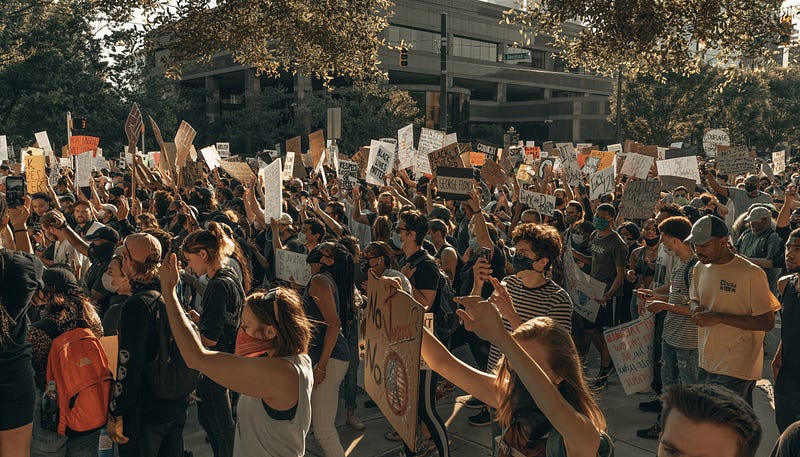
So, I am reading stories and articles about racism and injustice, and I am trying to find more information about this topic. I don’t have any black people in my circle right now — then a few black people I volunteer with at the local radio station, but when I talk to someone I will definitely listen to what they have to say.
Recently I came across an article, written by Michelle Silverthorn.
The article was called: ‘Mom, Why Don’t You Have Any Black Friends?’.
I don’t know if I am allowed to use these questions, but my gut told me to do so and to try answering them. Just to try what the outcome will be and where I stand right now in this racism and injustice problematics. What can I do better?
You probably ask: “Why online?”
The answer is: just to show my vulnerability to you, and writing is what I love to do. I am just another human being on earth with flaws. I believe you may be vulnerable online too.
She asked questions we should answer before talking to our children about racism and injustice.
As a mother myself, I want to be a good example towards my children on this topic.
So, here I go.
What were the races of your three best friends when you were nine?
Well, to be honest, I don’t have that many friends in life, and I had one best friend. The friends I have were all white people.
Now I think about it, I am ashamed that I didn’t have that many friends in the first place, but that my friends were all white.
In high school, I had a lot of adolescents from other races in my class. I was aware of it. But they have been bullied me every day.
When you were 19?
When I was 19, I didn’t have that many friends, either. I have seen a lot of people, but none of them were from other races.
At this age, I was busy with my first pregnancy and her birth.
Although, at this time of my life, I was more aware of different races, but not the problems they face.
When you were 39?
Well, I hope time doesn’t fly fast. I am still 32 years old. But I had during my voluntary work a few colleagues from different races. That will hopefully continue in the future.
I will embrace it and talk to them and understand the problem, even it will be a long road u til I finally understand.
What about your first boss?
I haven’t had any boss in the past that had a different race. They were a few but all bosses were white.
Your last boss?
I’m my own boss and I’m white. Half Dutch and half Indonesian. The Dutch side is more seeable.
When I worked at my mother’s work for two weeks, I had a boss, but she was white.
Your wedding party?
At my wedding party were my siblings and my father from the Indonesian side and others were my mother’s side, all Dutch.
Your first crush?
My first boyfriend was white. I’m just short on this.
My second boyfriend was from another race, but it didn’t work out between the two of us.
My third and now husband is white.
Your first mentor?
My mentor was white. But had an Italian father. My second mentor was Dutch and white. I had him until the third class. In the fourth my mentor and teacher were black.
Your favorite high school teacher?
I didn’t have a favorite high school teacher, but I had a teacher who is black.
Here’s a story I want to share:
I have been bullied in high school. There was a classmate from Marocco and you could see he comes from another country. He and two other young men from other races (his friends)— brown — took away my stuff and hid them in the classroom before my black teacher arrived in class. My black teacher knew it and said something about it. I had respect for him that he dared to say something about it (I don’t know why I thought that back then). Those boys made fun of him all the time. I remember I said something about it, but I never thought about racism and injustice problems. I said something about it because I can’t stand injustice. I never had.
Your dentist?
In my youth, I had a white dentist, until three years ago. I got someone from another race. The dentist I have now is also from another race. But both are brown, not black (does that make a difference anyhow?).
Your closest neighbor?
In my youth, I had neighbors living across me and they were from China but they just lived briefly across me. I never spoke to them. They couldn’t speak Dutch and I couldn’t speak Chinese. Neither of us spoke English at that time. And thinking about learning the language didn’t come up in my mind.
What race is your child’s best friend?
My child’s best friends and non best friends are all white. They have black children in their classes. And people from other races. They respect them and like me, my daughters can’t stand injustice.
What about your child’s favorite author?
I believe they don’t have a favorite author and to be honest, I haven’t thought about what races the authors are from the books they love to read. I just chose the books from the book covers and the back of the books. But I believe they’re all white authors.
Your favorite author?
My favorite author? I do t read that much, mostly online stories and articles. But I can say that I think they are all white.
Although, I have a book about women and their position in the world. One of the authors from one of the stories is black.
The star of your favorite movie?
Oof, I don’t have any favorite movie star, and I never had.
I want to add that my favorite movie is ‘Music of The Heart’ about a white violin teacher. She starts teaching at a school in East Harlem in New York, a neighborhood with lots of different races and problems. She managed to stay at that school for about ten years. Her determination on raising two boys in this neighborhood and teaching those vulnerable kids to play the violin.
Your doctor?
All my doctors were white.
The president?
Doing research on this question brought me to a list with all the white Prime Minister we ever had in the Netherlands. We never had a black Prime Minister and that worries me.
On her website, she also asked questions to answer if you don’t want to be an antiracist. I also want to try answering those questions to myself, just to understand where I am now and what I can still learn.
Name three Black journalists you read or three Black websites you follow.
I follow Zora on Medium here for a while now. Here on Medium, I follow black people. Sometimes I read there stories and articles when they pop up in my feed.
Furthermore, I am was not aware of the color of authors and writers.
Name three Black authors whose books have influenced your life — and while you’re at it, three people you’ve shared those books with.
Pfffff, I really don’t know the answer. I haven’t been aware of the color of the author. Besides that, I don’t read books that much, more online readings.
I can look it up, but that is not fair.
Name three tenets of the Black Lives Matter movement.
- Learning what racism and injustice mean according to black people. What can I learn from this Black Lives Matter movement?
- Being more aware of black people, their behavior, and skills. What can I learn from these people? What can I bring into my life they taught me?
- What is my job to be an anti-racist? Being silent makes things worse.
Name three aspects of Black culture that you have had to learn and adapt to in order to succeed at your job.
Oof, also this question I can’t answer properly. I was not realizing the Black culture on itself and what I can learn from them, what they do and what they brought and bring their culture with them, which I can learn from.
Name three racist remarks that you remember hearing, challenging, and you corrected.
Tow my black teacher, my brown classmates told him he smelt like shit. I remember I was looking to them, but didn't say anything out loud but only in my mind, which was that they needed to stop right away. Now I rethink about that, and I don’t like injustice and racism, I’ve should’ve said something about it. And I didn't.
My mistake on that point, mainly because they have bullied me as well.
Conclusion
It is very hard to write this conclusion. I realized I have a lot of things to work on to be a better person on this topic. I think I was afraid to say something when I was in class not to be hurt.
When I hear people talk negatively, I should say something about it. Sometimes I ask myself if people won’t beat me in my face if I say something about their negative behavior. Am I a racist then?
So, the conclusion is that I have to learn more about racism and injustice. I also have to talk to black people more often than I do now. On my book list, I will add books about racism and injustice and I will read more stories and articles written by black authors. Also reading any kind of book written by black authors will be on my book list.


