
POLITICS, TRUTH, SOCIETY
Truth-Telling and Political Bullshit
Political speech is a variety of performance art
We live in a complex society with overlapping and contradictory roles. A social role is defined as one of a set of connected behaviors, rights, obligations, beliefs, and norms related to the interactions of people in a situation where each has to make assumptions about the behaviors of the others. Role theory explores how behavior and expectations vary for a social status or social position.
Erving Goffman has been described as “the most influential American sociologist of the twentieth century”. In 2007, The Times Higher Education Guide listed him as one of the most-cited authors of books in the social sciences. One of his many contributions, dramaturgical analysis, begins by taking one of Shakespeare’s key insights (based, in turn, on centuries of tradition) and applying it as a metaphor to everyday life.
All the world’s a stage, And all the men and women merely Players; They have their exits and their entrances, And one man in his time plays many parts. . .
— As You Like It, Act II Scene VII
We are all actors. Our behavior — our identity — varies with the audience and the role. And while we each place our own “spin” on a role (John Gielgud’s Hamlet could not be confused with David Tenant’s and neither could be mistaken for Mark Rylance or Angela Winkler — each brilliant, each unique), our “lines” are given to us and the audience expects us to hold to them.
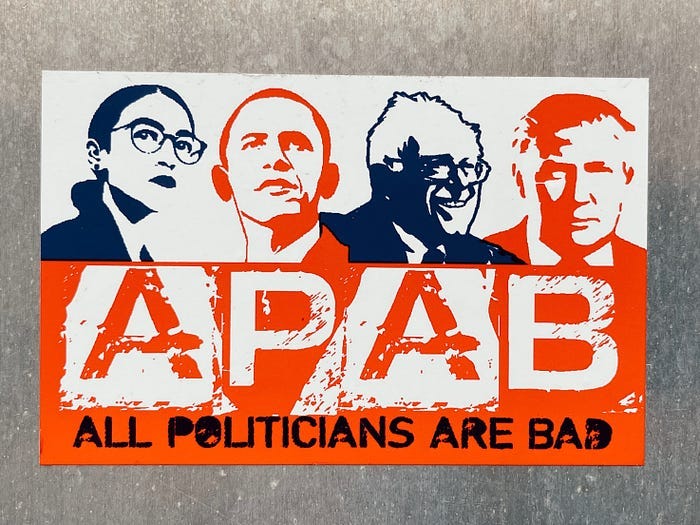
Politicians are actors. That doesn’t mean all politicians are bad — although we may be disgusted by the roles they have chosen to play. It means that all politicians are liars, in the same sense all actors are liars. And while I can choose not to play any particular role (father, husband, criminal, friend), I can’t refuse to play any roll at all. All I can do is select from the options available to me. (While I’d love to be the captain of a starship, that role isn’t available — yet.) When one evaluates the available options, four questions must be considered:
- Which roles am I willing to play?
- What are the requirements for those roles?
- What are the scripts related to those roles?
- What price will have have to pay if I refuse to read my lines?
The requirements for admission
Some roles are very specific in their requirements. To become a member of the U.S. Foreign Service requires a multi-stage selection process that begins with the most difficult general knowledge test in the world and the most trying test ever devised for expressing an idea in the words required (no more, no less) to leave no room for misinterpretation. There are several stages past that initial round — some competitive, some designed to see how you function in a group — culminating in a personal interview with a panel of Foreign Service Officers. All this is before being admitted for the training program.
For the Foreign Service the tests are as much about personality as they are about knowledge. A Puerto Rican friend of my mine (later an assistant District Attorney for the City of New York) was rejected after the final stage for “cultural insensitivity”. (A couple of weeks later he received a recruitment letter from the Central Intelligence Agency. They’d been following his progress and concluded he could be perfect for a job in operations. Apparently, the role of spy has a slightly different set of requirements than the role of a diplomat.)
To be a lawyer in the United States requires admission to the bar: the granting by a particular court system to practice law in that jurisdiction. Each U.S. state and federal territory sets its own rules for the bar. Federal courts, while often overlapping with with the states, set their own requirements.
Typically, lawyers seeking admission to the bar of one of the U.S. states must earn a Juris Doctor degree from a law school approved by the jurisdiction, pass a bar exam and professional responsibility examination, and undergo a character and fitness evaluation. The character and fitness requirement doesn’t require a lawyer to meet the same standards as someone who testifies in a case. It is not necessary for a lawyer to tell “the truth, the whole truth, and nothing but the truth” either while in the courtroom or on the steps of the courthouse speaking to the press, merely that he does not engage in malpractice that harms his client. Enormous student loan debt can keep someone from admission to the bar. A reputation for lying does not.
The role of the politician
Politics, like diplomacy and the practice of law, is performance art. The role of a politician has far lower standards for admission, and far lower standards for action. The politicians audience is a political group. His interim goal is to bring that group to see the world in a new way or to reinforce the prejudices they already have. The politician’s long-term goal is to gain and hold power.
In order to do anything, in a democracy a politician must first be elected. Even if he is not part of a democracy, the politician must mobilize and maintain enough support to take and hold power. Vladimir Putin’s primary audience is in the security services. If he maintains their support, they can keep the masses in line. Political opponents can be removed from the ballot and jailed.
Expecting truth from a political candidate is like expecting truth from an actor or a diplomat or an attorney. Truth-telling is not their job. Any diplomat who told the complete truth about their country would canned immediately. Likewise, an attorney exists to represent the best interests of her client. Telling “the truth, and the whole truth” in any but a narrow set of circumstances is a reason to be removed from the bar. To be suspended from the bar — like, for example, Rudy Giuliani — requires enormous and repeated deviations from the truth.
In America, political candidates exist to get themselves and their party elected, which means it’s to their advantage to sound like the people whose support they are running to lead. One can be kicked out of a political party for a reputation for too much truth telling (see Liz Cheney and Adam Kinzinger).
In private, you can often get these people to tell the truth: “Sure, my client did the crime. Of course my country exterminated the native population. Anyone who assumes the law will result in justice is a fool.” I’ve learned a lot from diplomats and politicians and lawyers off the record. But it is be against their interests and their role to make those opinions public.
Especially during a primary season, a politician has to appeal to the lowest common denominator of their most engaged voters. For all politicians, Republican and Democrat or whatever, that lowest common denominator can be low indeed. In fact, it can be so low that a relatively honest politician may feels obliged to abandon his role. If he does, he suffers the consequences. If he doesn’t, he falls into line.
The new Republican Party
After the Iowa caucuses, Donald Trump’s victory was followed by endorsements from former rivals for the presidential nomination whom he has previously insulted. Ted Cruz tweeted he was “proud” to back the man who had personally attacked Cruz, his wife, and his father in 2016. Former foe Marco Rubio declared his backing for Trump in a tweet on Sunday.
On Saturday Trump had called Vivek Ramaswamy “sly” and urged Iowa voters not to be “duped” by his “deceitful campaign tricks”. Tuesday night, Ramaswamy offered Trump his unqualified backing.
I congratulated him on his victory and now going forward he will have my full endorsement for the presidency, and I think we’re gonna do the right thing for this country. — Vivek Ramaswamy (2024)
The two appeared together at a campaign event in New Hampshire on Tuesday, as Trump’s supporters chanted “VP, VP,” in a call for him to be named vice-presidential running mate.
Doug Burgum, the Republican North Dakota governor, started by saying he refused to do business with Trump last summer in order not to be judged “for the company you keep”. Now he claims Trump is “the right man” to move the country forward.
Ron DeSantis told reporters in New Hampshire
If Trump loses, he will say it’s stolen no matter what, absolutely. He will try to delegitimize the results. — Ron DeSantis (2023)
Now he’s fallen into line.
Playing the role
Were all these people lying before? Or are they lying now? Both, actually. The primaries have made clear what the lowest common denominator is. The worst elements of Trump’s base aren’t in it for the tax cuts or to end abortion rights or to stack the Supreme Court. They already have that. For many, it’s not about holding their noses and accepting the slime in exchange for power: it’s about making the transfer of power permanent. They can’t hold power forever in today’s American democracy. Demographics and culture won’t allow it. So they fall in line behind the man who’s built his reputation on cheating.
As one law professor observed during the election of 2020,
Republicans could have gotten their judges and their economic policies without continuing to support Trump (or even supporting him in the first place). Their continued support of him means that they either like his bigotry in the first instance or they want to permanently lock in their long-term policy agenda, which just so happens to have racist impacts in politics, economics, health, and every other area of life.
And if they must help Trump steal an election and end constitutional democracy as we have known it to get what they want, Republicans seem not only untroubled by that but actually eager to do so. This is not a reluctant quid pro quo. This is a hateful mutual admiration society. — Neil H. Buchanan (2020)
Maybe. Maybe not. But if this is perceived as the lowest common denominator required of any Republican who wants power this is what that politician has to support. So they do.
It’s sad that we have to consult mortality tables for hope. It’s clear Trump is already showing cognitive decline and when a movement loses a charismatic leader, the competition will be for who best plays his role to the audience.
Then, our best hope is that the next Trump will be lying.


