
Politics
Trump Fades Into Irrelevance as GOP Flounders
As Donald Trump leaves the stage, the Republican Party fixates on voter suppression and endless culture war
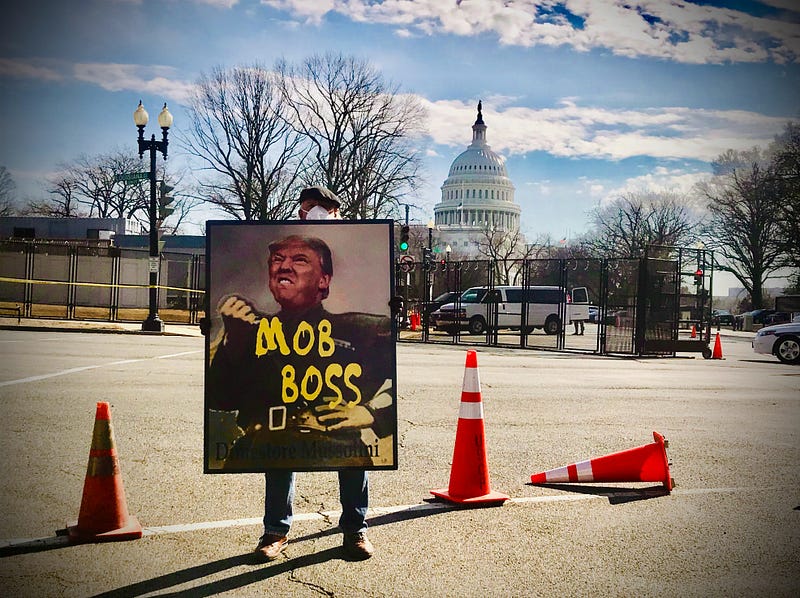
Donald Trump is slipping into irrelevance faster than most might have predicted. The Republican Party’s grassroots still adores the twice-impeached populist firebrand, and many conservative voters continue to be enthralled with the culture-war nationalism he propagated. But the GOP is flailing, clinging to the former president’s election lie and trying to replicate his bombastic style with little success, and doing not much else.
Petty pop-culture resentment and “election integrity” via voter suppression are the twin Republican priorities, as the GOP struggles to articulate a coherent vision in the Biden era.
Republicans seem to agree only that fewer people should vote, a unifying issue that underscores the depth of their unpopularity.
Mitch McConnell kept Republicans in the Senate sidelined for Biden’s massive and broadly popular stimulus package, a piece of legislation that put money in American pockets, and Democrats seem to have scored an uncontested political win.
Instead, McConnell issued threats that he would grind the Senate to a halt if Democrats eliminated the filibuster, his prized weapon of obstruction. Biden quickly slapped McConnell’s warning aside by weighing in to support reforming the filibuster, lending renewed energy to that battle and making McConnell look both weak and uncharacteristically clumsy.
Republican donors and political networks remain fixated on rolling back voting, and Republican lawmakers across the nation are obliging, using Trump’s lie to justify harsh voting restrictions. Republicans in the Senate are bracing for a political battle over the filibuster, the last remaining barrier between their campaign to silence voters and efforts by Democrats to respond with a massive federal voter protection law.
As political upheaval stirs in the GOP, and conservative politicians try to find their place in a Washington dominated by unified Democratic rule, elements of the GOP’s standard coalition are cracking apart under the pressure. Beth Moore, an influential female evangelical leader, recently departed the Southern Baptist Convention, decrying the racism and division of Trump’s presidency, amidst a political reckoning that so far has been mostly muted in evangelical America.
The news that the mass shooter in Atlanta who left eight people dead at three Asian massage parlors was motivated by “lust” and “religious mania,” and that he was a member of the Baptist Church, illustrates the difficult moment taking place in the post-Trump religious right.
Meanwhile, House minority leader Kevin McCarthy has tried to rewrite history, as he denied his role in trying to overturn the election, getting into a spat on live television with a CNN reporter. It seems Republicans will try to distance themselves from the horror of the January 6th insurrection, while they remain obsessively latched on to the allegations of election fraud that caused the violence at the Capitol.
The GOP has thus far been largely unable to have the dialogue and soul-searching required after the political devastation of the Trump era. After again acquitting Trump in his second impeachment, Republican lawmakers remain mired in denial and refuse to accept accountability for enabling a presidency that rocked American democracy to its core. Instead, they’ve tried to push past Trump’s campaign to overturn the election and the resulting insurrection, while holding fast to his dangerous brand of grievance politics.
Since CPAC, Donald Trump has appeared disengaged, muted on twitter, and popping up only to quietly gripe about the GOP using his likeness to raise cash, a petty battle he lost. He looks increasingly weak and irrelevant, as investigations and lawsuits pile up too fast to count. As the country absorbs Trump’s political wreckage and particularly his disastrous handling of COVID-19, and as the Biden administration’s successful vaccine campaign continues to raise hopes nationwide of the beginning of the end of the pandemic, Trump’s cachet will continue to erode.
As Trump fades into political irrelevance, if not obscurity, the GOP faces a challenging political landscape, and one in which Democrats feel emboldened to act decisively on issues that matter to liberal voters. Republicans seem to agree only that fewer people should vote, a unifying issue that underscores the depth of their unpopularity.
One thing is clear, however, and that is that Republicans will continue to be animated by the politics of cultural grievance. Trump left an indelible mark on conservative voters, even as he tore apart the foundation of traditional conservatism. His presence in politics remains, even as his actual influence diminishes.
As Democrats score wins, effectively battling the pandemic and helping Americans recover from the economic devastation in a way they can feel, Republican lawmakers will either be forced into bipartisan consensus or relegated to the political periphery. The stark reality of Donald Trump’s failed presidency has created an opening for Joe Biden’s Democrats to govern in an ambitious and unafraid way, and Republicans seem unable to form a persuasive and coherent political response.


