
Trudeau a Dictator? Revoking Emergencies Act Proves He’s Not
Thank you for your concern, America, but Parliament is wide awake and Canadian democracy is healthier than it’s been in years.
Note: My follow up article on radicalization of churches and American influence in Canada’s Truckers’ Convoys has turned into a series. Part one:
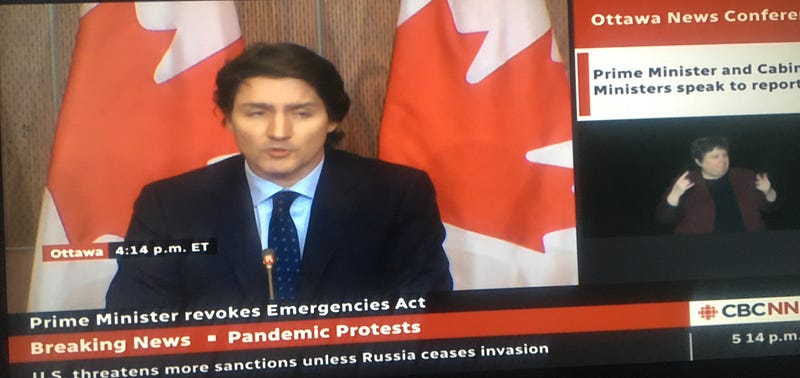
Today the Governor General of Canada proclaimed revocation of the 14 February Declaration of National Emergency at the request of the Prime Minister. Why? It is now clear that criminal law will address illegal activities of the so-called Freedom Convoy. The Emergency Act is not needed.
Jagmeet Singh, leader of the NDP, whose party reluctantly supported continuation of the Declaration of National Emergency in the House of Commons Monday night (21 February) promised to join the Conservatives and Bloc Quebecois in opposing the Emergency if that happened. The Conservatives planned to put the matter before Parliament again next week. Losing that vote or the looming Senate vote, might have sent Justin Trudeau off to Rideau Hall to tell the Governor General he could no longer govern.
Prime Minister Justin Trudeau remains, some would argue deservedly, at the mercy of a fractious Parliament watching his every move.
This debunks assertions of American right wing pundits and conspiracy theorists (some home grown) that Canadians live in a totalitarian state where we pay allegiance to the leader of People Kind, Justin Trudeau.
Contrary to what many in the foreign press thought, most protesters were not truckers and some convoy leaders called for an end to democratic rule. Participants with legitimate concerns, often unemployed or recruited from faith communities, were there to shield a darker agenda. (I will address this in a future article.)
Canadians Never Supported Occupations or Illegal Barricades
Even the Conservative Premier of Alberta, Jason Kenney, who opposed invoking The Emergencies Act and continues to call for an end to US and Canadian federal vaccine requirements for cross-boarder truckers, opposed the barricades and asked for federal help to end the protests. In fact, two thirds of Canadians supported military action to remove protesters at border crossings and in downtown Ottawa. That never happened. Instead police cleared the barricades after activists were given the opportunity to leave peacefully without charges.
Parliament missed one day of debate because of police action, but invoking the Emergencies Act did not prevent the Opposition from doing their job. Members on both sides of the House of Commons were more animated than they have been in months as they debated the passage of the Act. At one point some MPs, including the Prime Minister, got so rowdy, the Speaker chastised them. Even Liberal MPs criticized the Prime Minister’s handling of the crisis. This how a Westminster Parliamentary System is supposed to work.
The influx of money from foreign crowd funding sites to the illegal blockades was stopped, but the Government did not permanently close bank accounts of Canadians engaged in legitimate dissent.
The RCMP states that frozen accounts affected ‘influencers in the illegal protest in Ottawa, and owners and/or drivers of vehicles who did not want to leave the area impacted by the protest. At no time, did we (The RCMP) provide a list of donors to financial institutions.’ Most of these accounts are in the process of being unfrozen. (I will address this in a future article.)
Canada was never under Martial Law.
On 14 February The Emergencies Act was enacted to give law enforcement additional tools to clear blockades and end the flow of foreign money. The Act took effect immediately, but required votes in the House of Commons and the Senate to remain in effect for up to 30 days. (Under the Act a motion must be presented to Parliament within seven days of an Emergency Declaration. An Emergency ends in 30 days automatically unless Parliament extends it.)
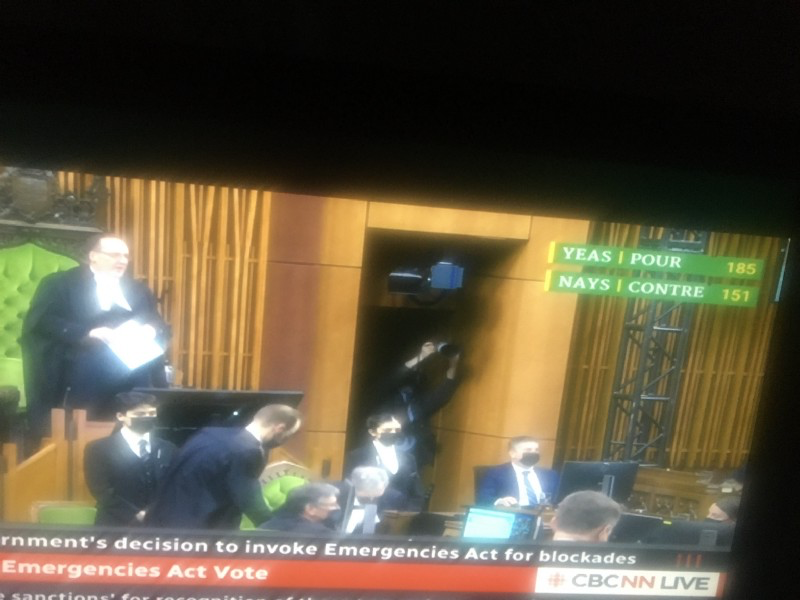
The motion, approved by the House of Commons by a vote of 185 to 151 on 21 February, was being debated in the Senate when the National State of Emergency ended this afternoon (23 February).
As required by the Act, a Special Joint Committee of the House of Commons and Senate must be struck to review the Declaration of Emergency and any orders or regulations attached to it. The Emergency Declaration is also subject to an Inquiry that will report to both Houses of Parliament. (The appointed Canadian Senate serves as a ‘house of sober second thought’ like the UK House of Lords.)
The contents of those reports and the outcomes of court challenges to the Act could swing the next election. Minority governments generally don’t last more than a couple of years before they either lose a Confidence Vote in Parliament or the PM seeks a new mandate.
Ultimately, Canadian voters will issue the final verdict on Prime Minister Trudeau and this Parliament. No foreign crowdfunding or pundits required. That’s how our democratic institutions work.
-30-


