
Trimotor
Not one, not two, but three reasons to include this word in the Spelling Bee
Today’s New York Times Spelling Bee letters:
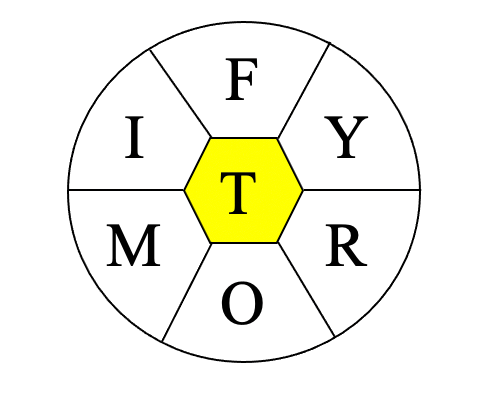
F, I, M, O, R, Y, and center T (all words must include T)
Merriam-Webster says…
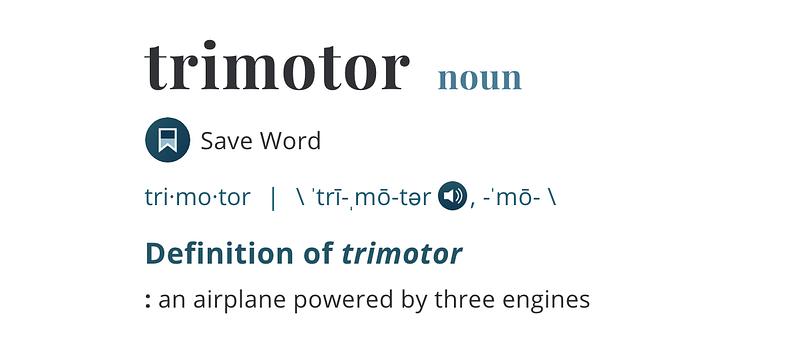
Silly little dictionary! Don’t you know trimotor can’t possibly be a word if the New York Times says it ain’t?
For further fascinating facts, check out the Spelling Bee Master.
What’s your favorite dord* from today’s puzzle?
My Two Cents
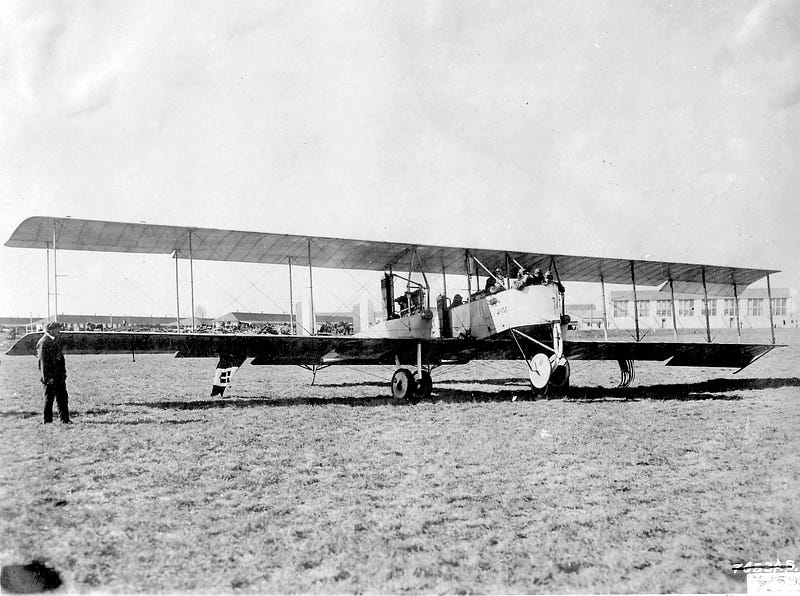
To be honest, I’m not quite sure the biplane in the photo at the top of today’s column is a trimotor. I don’t see three engines or three propellors––in fact, I see no propellors at all! But warbirdnews.com has some photos that indicate that this aircraft, the Caproni Ca.3, did indeed have three engines.
So it was a… you guessed it: trimotor!
Wikipedia offers a list of more than two hundred trimotors, many of which are also featured in their own individual articles. Granted, the height of their popularity was about 100 years ago, starting around World War I and continuing into the 1940s and 50s. But still, you might figure an engine configuration that had this historic importance would be admitted into today’s list of valid terms.
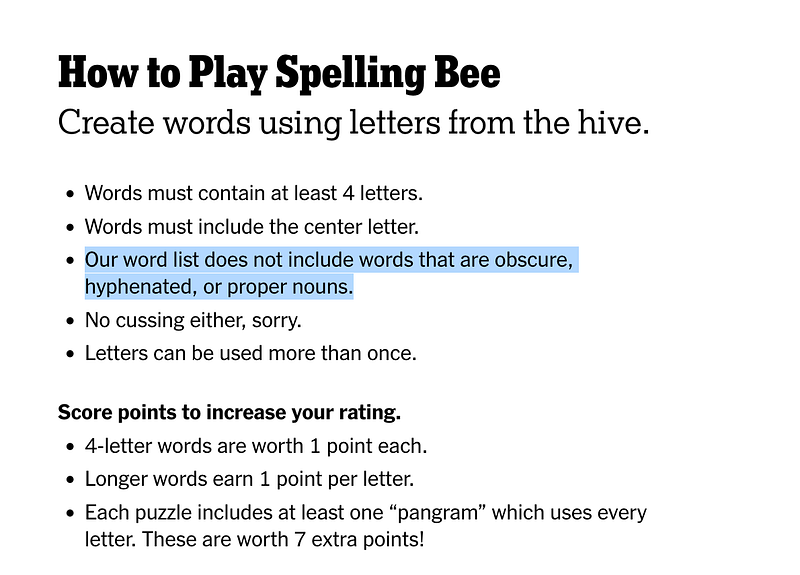
You’d figure wrong, of course. Why trimotor isn’t considered an appropriate word remains a mystery. Could it be the editors of the New York Times think it should be spelled with a hyphen? Tri-motor? Hyphenated words are a big no-no in the strict and straightforward rules of the game:
Those magnificent men in their flying machines
Getting back to our three-engine flying machines… the one featured in the photo at the top was indeed used as a bomber during World War I. Not-so-fun fact (because, well, war): until around 1939 or 1940, that war was known as “The Great War”, “World War”, and “The war to end (all) war(s)”. The latter expression was a variation of the original one coined by sci-fi great H.G. Wells in his 1914 book:
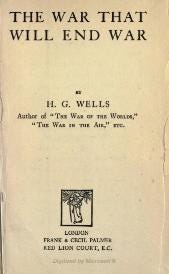
Wells may have been a great author, but clearly he was not the prophet that George Orwell was. Today that term “war to end all wars” is used with disdain when referring to World War I because… World War II.
Trimotors represented “a compromise between complexity and safety and was often a result of the limited power of the engines available to the designer.” When you think of it, war bombers probably required a lot of engine power to lift a plane filled with bombs.
After the Great War, trimotors retained their popularity. It seemed like everyone was getting into the game. Even Henry Ford saw an opportunity, and his company designed and built the famous Ford Trimotor, also known as the “Tin Goose”.
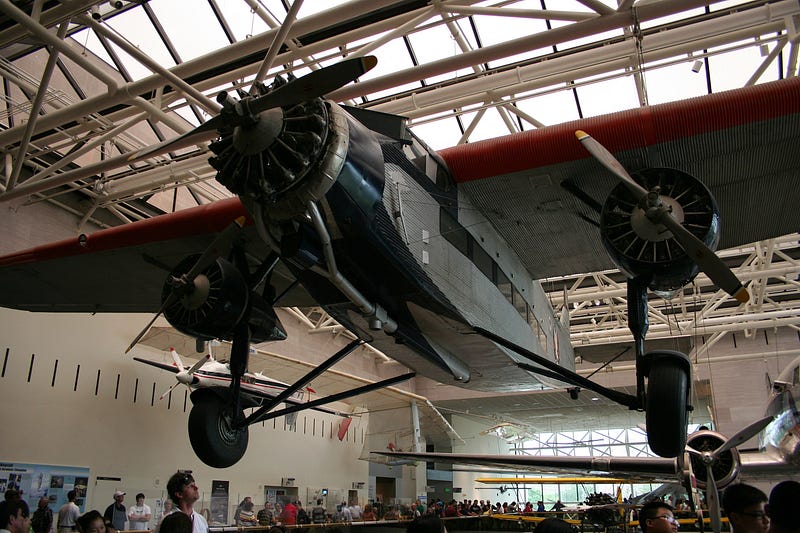
Only 199 trimotors were ever built, but they gained appreciation and reputation over the years, having been piloted by the likes of Amelia Earheart and that lovable antisemite, Charles Lindbergh. The latter makes sense, since dear old Henry Ford also disliked the Jews quite a bit. But to prove that I can rise above all that hatred, I’ll be magnanimous and show you a photo of Ford’s crappy plane flown by that a-hole Lindbergh:
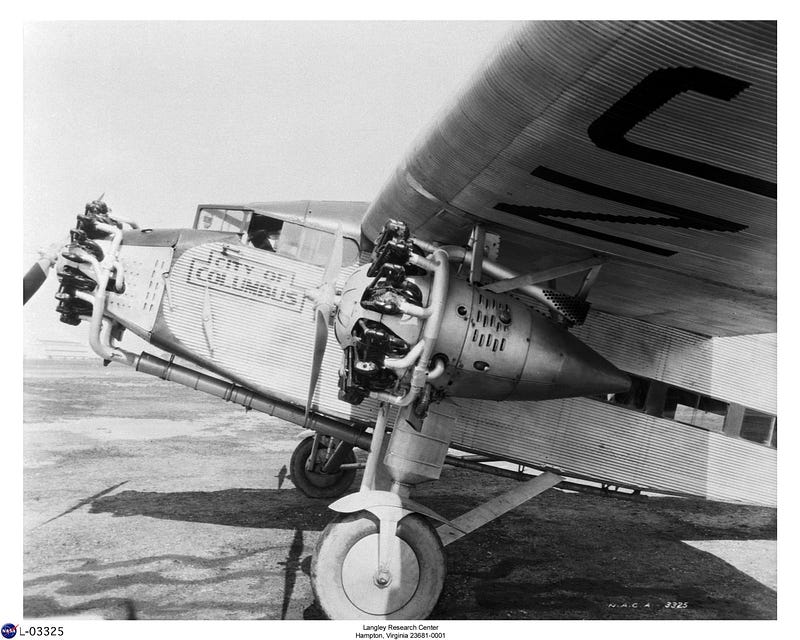
Today there are still eight airworthy Ford trimotors, while a few more are undergoing restoration.
Rain, my man
One of the trimotors used commercially after World War II was the de Havilland Australia DHA-3 Drover, a small transport aircraft built by.. you guessed it, de Havilland Australia (DHA).
Here is the DHA-3 Mk. 3a Drover:
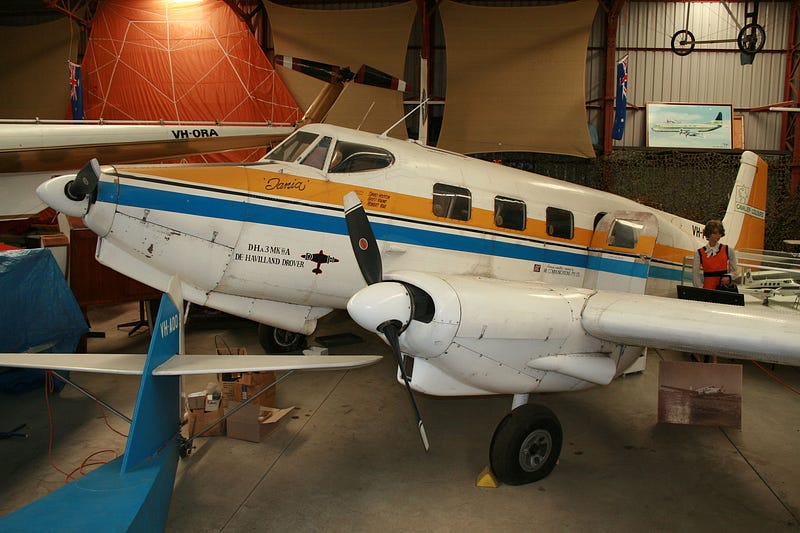
And here is the Mark 2 Drover:
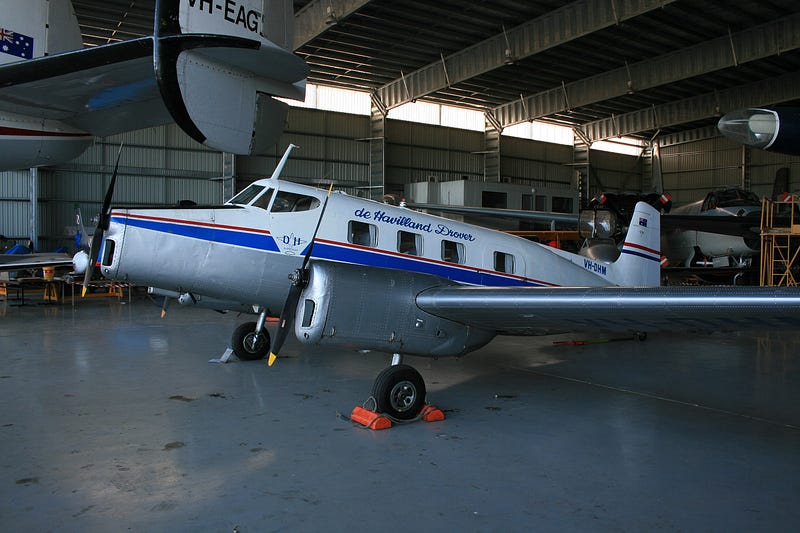
As you can imagine after seeing the photos above, the plane was still used in the 1950s and 60s. Qantas (Australia’s flag carrier and largest airline) placed the Drover into service on its routes in what was then called the Territory of Papua and New Guinea. However, likemany other aircraft types before and since, the Drover did not do so great in the demanding conditions of the island.
Not only that… on 16 July 1951 one of Qantas’s Drovers crashed off the coast of New Guinea after the center engine’s propeller stopped working. The pilot and all six passengers on board were killed. This ended up being the first of three fatal crashes suffered by Qantas over a period of four months in 1951.
Aha! Having seen the movie Rain Man, you will now proceed to lecture me on how Qantas is the safest airline in the world and has never had an airplane crash:
Technically, you’d be correct only if you were referring to jet planes. As wikipedia explains (with sources): “While it is true that the company has neither lost a jet airliner nor had any jet fatalities, it had eight fatal accidents and an aircraft shot down between 1927 and 1945, with the loss of 63 people. Half of these accidents and the shoot-down occurred during World War II, when the Qantas aircraft were operating on behalf of Allied military forces. Post-war, it lost another four aircraft (one was owned by BOAC and operated by Qantas in a pooling arrangement) with a total of 21 people killed. The last fatal accidents suffered by Qantas were in 1951, with three fatal crashes in five months. Qantas’ safety record allows the airline to be officially known as the world’s safest airline for seven years in a row from 2012 until 2019, and again in 2021.”
So there! Okay, let’s call it a tie, then.
In any case, as we mentioned earlier, despite three-engine airplanes being of historic importance, the editors of the Spelling Bee decided that the word trimotor is a dord*.
You can check out my previous entry on another dord* here:
*What the heck is a dord, you ask? Here’s the answer: