avatarPanos Grigorakakis

Free AI web copilot to create summaries, insights and extended knowledge, download it at here

2657

Abstract

tures were thought to have been the earliest-diverging dinosauromorphs, meaning that they were more closely related to dinosaur ancestors.</p><p id="c7f9">As it turns out though, these small reptiles had certain anatomical characteristics that make them better candidates for belonging to the pterosaur family tree instead. Lagerpetids fit the pterosaur-ancestor profile, said University of California Berkeley paleontologist Kevin Padian:</p><p id="06a8"><i>“The proportions of their slender limbs, as well as the shape of their back, are fully consistent with a bird-like body plan.”</i></p><figure id="0559"><img src="https://cdn-images-1.readmedium.com/v2/resize:fit:800/1*3rNFRdwhdyJhDKu_xdHQ_g.jpeg"><figcaption>A model reconstruction of the lagerpetid Ixalerpeton polesinensis / ULBRA Canoas, / <a href="https://commons.wikimedia.org/wiki/File:Ixalerpeton_models.jpg">Wikimedia Commons</a>.</figcaption></figure><p id="4951">Furthermore, lagerpetids and pterosaurs had a similar brain and inner-ear anatomy, hinting that abilities important to flight — such as coordinating movements of the head, eye, and neck — evolved while the pterosaurs’ ancestors were still on the ground.</p><p id="705a"><i>“The presence in lagerpetids of neuroanatomical features that were previously linked to the origin of flight in pterosaurs indicates that they instead appeared before the acquisition of flight and were exploited later by pterosaurs, allowing them to conquer the skies”</i>, notes Ezcurra.</p><h1 id="b67e">Where are the wings?</h1><p id="1d8e">Despite their similarities in the shape of the inner ear and the brain features related to enhanced agility, lagerpetids lack a basic characteristic that defines pterosaurs: the wings.</p><p id="d169">Pterosaur wings were formed by a membrane of skin, muscle, and other tissues stretching from the ankles to a dramatically lengthened fourth finger. Their main arm bone, the humerus, had a pronounced “crest” on which flying muscles were probably attached.</p><figure id="0de0"><img src="https://cdn-images-1.readmedium.com/v2/resize:fit:800/1*SyIyNgEvSaP-0KrQcwMf6A.jpeg"><figcaption>Pterosaur wing compared to the wing of birds and bats / Tim Evanson / <a href="https://commons.wikimedia.org/wiki/File:Wing_comparisons_-_Pterosaurs_Flight_in_the_Age_of_Dinosaurs_(31887885888).jpg">Wikimedia Commons</a>.</figcaption></figure><p id="6a5f">Lagerpetids don’t show any signs of a developing “wingfinger” or a large humeral crest. Therefore, the next challenge for scientists would be to find the remains of earlier pterosaurs and for fossils of creatures with transitional features between them and the lagerpe

Options

tids.</p><p id="efae"><i>“It would be very interesting to find, at some point, a more intermediate form between lagerpetids and pterosaurs that has a narrower evolution of these traits related to flight,”</i> Dr. Ezcurra said.</p><h1 id="a3b0">Epilogue</h1><p id="de6e">Pterosaurs ruled the skies for more than 150 million years. During that immense time-span, they diversified in countless forms and sizes. These remarkable creatures ultimately went extinct along with the non-avian dinosaurs during the Cretaceous-Paleogene Mass Extinction event some 66 million years ago.</p><p id="ef70">The early pages of their evolutionary history are still poorly understood. The reclassification of the enigmatic, tree-dwelling lagerpetids could help scientists get a better idea of the ancestral creatures that gave rise to these amazing reptiles.</p><h1 id="261a">Relevant Read:</h1><div id="798a" class="link-block"> <a href="https://readmedium.com/azhdarchids-the-largest-creatures-to-fly-165862c74bb2"> <div> <div> <h2>Azhdarchids: The Largest Creatures to Fly</h2> <div><h3>Meet the rulers of the Cretaceous skies…</h3></div> <div><p>medium.com</p></div> </div> <div> <div style="background-image: url(https://miro.readmedium.com/v2/resize:fit:320/1*JKePzV-ee2gYQWdptQiLOQ.jpeg)"></div> </div> </div> </a> </div><blockquote id="0d93"><p>Panos Grigorakakis is a journalist particularly interest in history, evolutionary biology, anthropology and…ocean liners! Connect with him on <a href="https://www.linkedin.com/in/panos-grigorakakis/?locale=en_US">Linkedin</a> or say hi on <a href="https://twitter.com/PanosGrigor">Twitter</a>.</p></blockquote><h1 id="4de1">References</h1><p id="0d05"><i>Ezcurra, M.D., Nesbitt, S.J., Bronzati, M. et al. Enigmatic dinosaur precursors bridge the gap to the origin of Pterosauria. Nature (2020). <a href="https://doi.org/10.1038/s41586-020-3011-4">https://doi.org/10.1038/s41586-020-3011-4</a></i></p><p id="37dc"><i>Riley Black, (Dec. 2020), Pterosaur Origins Flap into Focus, Scientific American, <b>Link:</b> <a href="https://www.scientificamerican.com/article/pterosaur-origins-flap-into-focus/">https://www.scientificamerican.com/article/pterosaur-origins-flap-into-focus/</a></i></p><p id="b986"><i>Laura Geggel, (Dec. 2020), Missing link in pterosaur origins discovered, LiveScience, <b>Link:</b> <a href="https://www.livescience.com/pterosaur-family-tree.html">https://www.livescience.com/pterosaur-family-tree.html</a></i></p></article></body>

Tree-Climbing Reptiles Shed Light on Pterosaur Evolution

The lagerpetids seem to fit the pterosaur-ancestor profile…
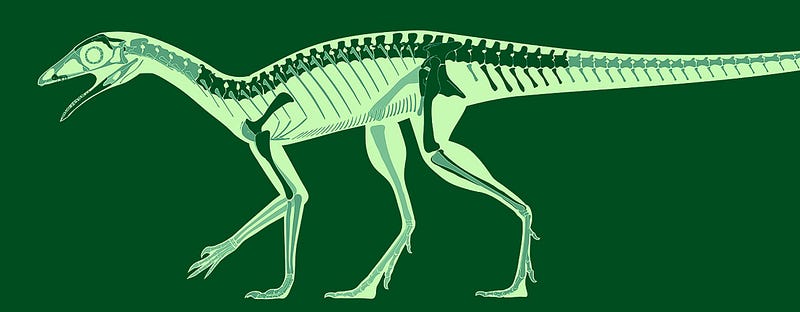
A speculative skeletal diagram of the lagerpetid Ixalerpeton polesinensis, restored in a quadrupedal stance / Maurissauro / Wikimedia Commons.

Pterosaurs, the iconic winged reptiles of the Mesozoic Era were the first vertebrates to evolve powered flight. They were also the largest with some species achieving wingspans of over 10–11 meters (33–36 feet). Despite pterosaurs becoming globally widespread during the Mesozoic, little is known about their evolutionary origins.

Part of the problem is that these animals as well as their ancestors were very delicate. Skeletal adaptations that were important for flight — such as ultralight hollow bones — made pterosaurs and their precursors especially vulnerable to the forces involved in fossilization. Therefore, it’s no wonder paleontologists have trouble finding ancestral forms of these incredible reptiles.
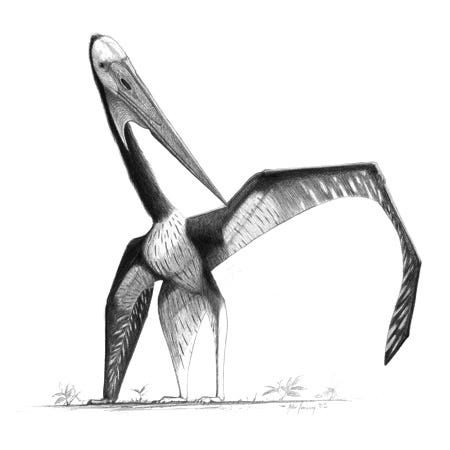
Zhejiangopterus linhaiensis, an azhdarchid pterosaur by John Conway / Wikimedia Commons.

A new study led by Martín Ezcurra, a paleontologist at the Bernardino Rivadavia Natural Sciences Argentine Museum and the University of Birmingham, provides new insights into the evolution of these remarkable creatures. Ezcurra and his team suggested that a group of small, tree-climbing reptiles, named lagerpetids, could potentially fill a 28-million-year gap in the evolution of pterosaurs and provide a rough estimate of what their ancestors could have looked like.

Introducing the Lagerpetidae

The Lagerpetidae were a group of reptiles that lived between 236–212 million years ago, during the Late Triassic Period. Fossils of these enigmatic animals are known from Argentina, Arizona, Brazil, Madagascar, New Mexico, and Texas. Originally these creatures were thought to have been the earliest-diverging dinosauromorphs, meaning that they were more closely related to dinosaur ancestors.

As it turns out though, these small reptiles had certain anatomical characteristics that make them better candidates for belonging to the pterosaur family tree instead. Lagerpetids fit the pterosaur-ancestor profile, said University of California Berkeley paleontologist Kevin Padian:

“The proportions of their slender limbs, as well as the shape of their back, are fully consistent with a bird-like body plan.”
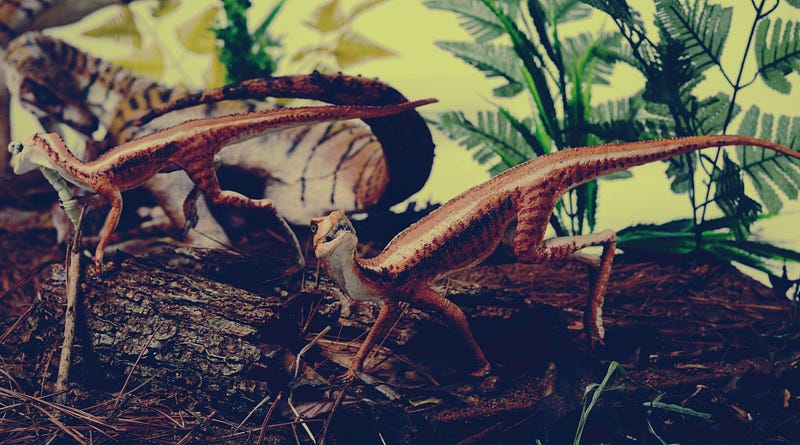
A model reconstruction of the lagerpetid Ixalerpeton polesinensis / ULBRA Canoas, / Wikimedia Commons.

Furthermore, lagerpetids and pterosaurs had a similar brain and inner-ear anatomy, hinting that abilities important to flight — such as coordinating movements of the head, eye, and neck — evolved while the pterosaurs’ ancestors were still on the ground.

“The presence in lagerpetids of neuroanatomical features that were previously linked to the origin of flight in pterosaurs indicates that they instead appeared before the acquisition of flight and were exploited later by pterosaurs, allowing them to conquer the skies”, notes Ezcurra.

Where are the wings?

Despite their similarities in the shape of the inner ear and the brain features related to enhanced agility, lagerpetids lack a basic characteristic that defines pterosaurs: the wings.

Pterosaur wings were formed by a membrane of skin, muscle, and other tissues stretching from the ankles to a dramatically lengthened fourth finger. Their main arm bone, the humerus, had a pronounced “crest” on which flying muscles were probably attached.
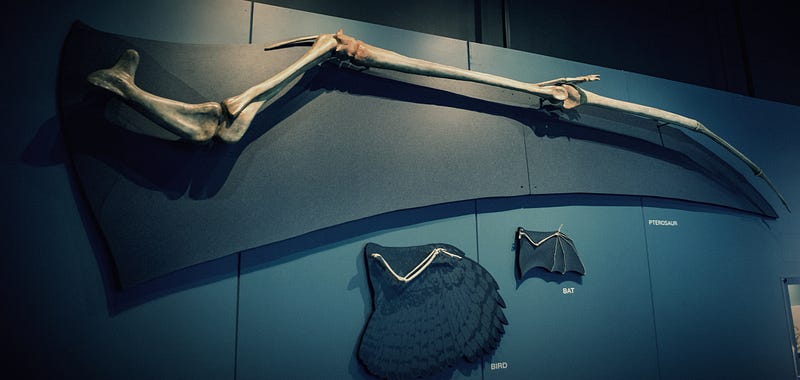
Pterosaur wing compared to the wing of birds and bats / Tim Evanson / Wikimedia Commons.

Lagerpetids don’t show any signs of a developing “wingfinger” or a large humeral crest. Therefore, the next challenge for scientists would be to find the remains of earlier pterosaurs and for fossils of creatures with transitional features between them and the lagerpetids.

“It would be very interesting to find, at some point, a more intermediate form between lagerpetids and pterosaurs that has a narrower evolution of these traits related to flight,” Dr. Ezcurra said.

Epilogue

Pterosaurs ruled the skies for more than 150 million years. During that immense time-span, they diversified in countless forms and sizes. These remarkable creatures ultimately went extinct along with the non-avian dinosaurs during the Cretaceous-Paleogene Mass Extinction event some 66 million years ago.

The early pages of their evolutionary history are still poorly understood. The reclassification of the enigmatic, tree-dwelling lagerpetids could help scientists get a better idea of the ancestral creatures that gave rise to these amazing reptiles.

Relevant Read:

Panos Grigorakakis is a journalist particularly interest in history, evolutionary biology, anthropology and…ocean liners! Connect with him on Linkedin or say hi on Twitter.

References

Ezcurra, M.D., Nesbitt, S.J., Bronzati, M. et al. Enigmatic dinosaur precursors bridge the gap to the origin of Pterosauria. Nature (2020). https://doi.org/10.1038/s41586-020-3011-4

Riley Black, (Dec. 2020), Pterosaur Origins Flap into Focus, Scientific American, Link: https://www.scientificamerican.com/article/pterosaur-origins-flap-into-focus/

Laura Geggel, (Dec. 2020), Missing link in pterosaur origins discovered, LiveScience, Link: https://www.livescience.com/pterosaur-family-tree.html

Science
Paleontology
Pterosaur
Discovery
Prehistory
Recommended from ReadMedium