
Travel to See Your Team(s)
With the rise of messaging platforms like Slack and Hipchat, free collaboration software from Google, and workflow management programs like JIRA or Trello, it’s never been easier to run a team across multiple locations.
However, that doesn’t mean you should operate remotely for everything.
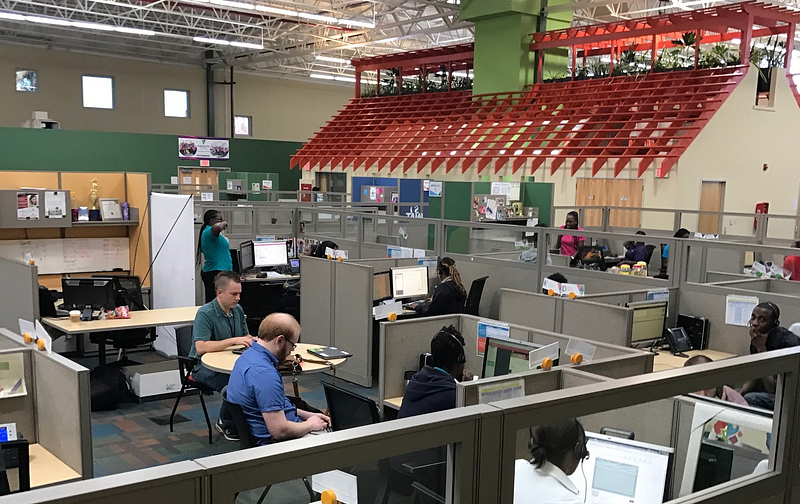
Last week, I traveled to Jamaica to visit Vistaprint’s Western Hemisphere Support HQ. Our group included product managers, developers, and other support agents based in DC and Boston. Additionally, I travel every 6 weeks to Boston and Vistaprint HQ to spend time with the rest of the Vistaprint Digital team.
The products my teams build and maintain are heavily supported by these support agents in this Jamaica and these agents are incredibly vital to our KPIs.
It’s no exaggeration: I’ve witnessed on countless occasions a well-trained, motivated agent save a customer who was set on cancellation or turn a poor experience with a product into a positive one. This transformation often retains the customer for Vistaprint for life.
But this post isn’t about customer support, it’s about the importance of traveling to see your team(s) in person.
There are 5 key reasons why I believe that, even in this world of technology, you have to spend time with your team in person.
- Information is Lost Through Technology
Despite our best efforts to address this shortcoming of technology, we still haven’t done it. Information is simply lost through technology.
Here is just a short list of a few things that we lose through technology:
- Tone of voice (even on video)
- Facial emotions (even on video)
- “Water cooler” discussion
- Lunch (often one of the most creative times)
- Pre or Post work offsites
2. Bonding is Hard Remotely
Whether you’re working on assembling a new remote (or partially remote) team or strengthening one that’s already in place, bonding is hard over Slack.
It doesn’t matter if you are doing workshops, discussing shared values, or trying one of those silly “team building” activities that 31% of people hate, in-person team bonding is dramatically more effective than remote efforts.
Additionally, spending time directly with your team(s) will allow you to go much more quickly through the Forming, Storming, and Norming stages coined by Psychologist Bruce Tuckman. By flying through these stages faster, you’ll achieve a “Performing” team much sooner and with fewer diversions.
3. Informal/Social Conversations are Better in Person
In a recent study from MIT, social (or non-work discussion) time was found to be deeply critical to team performance. Often, it accounts for more than 50% of positive changes in communication patterns! These are the conversations that happen at the water cooler, at lunch, or at offsite events.
How can you expect to maximize the effect of this social time if you aren’t spending any time in person with your team?
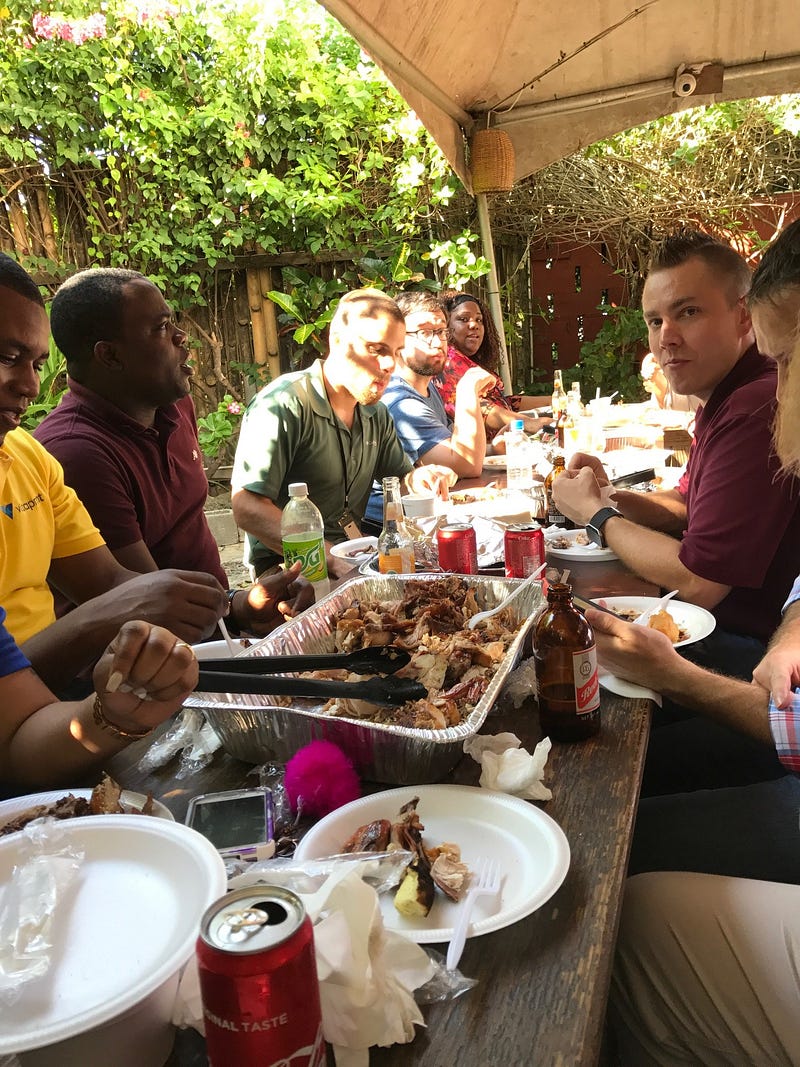
By spending time with your team informally, you’ll naturally learn about their lives, their cultures, their aspirations both inside and outside of your company, and much, much, more.
The best part? You’ll really enjoy the conversations and the break from thinking about your next deliverable.
4. You Can Better Spot Resource Needs in Person
It’s very difficult to truly understand your remote team’s day-to-day work life without seeing them in person. For example, on last week’s trip to Jamaica, I noticed several support agents using workarounds (some even provided by other companies!) to support our products when customers called in.
For one specific customer call, I saw an agent go through 8 different steps and tools to make a very simple domain name property change. While the customer on the phone may not have noticed the difference, my development team could have dramatically improved the life of that support team member and many others like them by building a simple tool. This tool could save them significant time and frustration and help us build an even stronger team.
While this may be an extreme example, it’s a powerful one. It is incredibly hard to see or hear about many experiences like this remotely. It’s only through on the ground, front-line observation, that it’s possible to recognize these patterns and find the best solutions to address them.
5. Traveling Shows You Care
When you travel a few hours or halfway around the world to visit your team (or extended team), it shows you care. It shows that you value those individuals’ contributions and you’re willing to put effort into making the bonds between you and them stronger.
In-person meetings excite remote teams. Almost like clockwork, I’ve seen spikes in KPIs and output by remote teams immediately following a visit. With the right plan, those spikes can also be sustained over a mid-term period (3–6 months) until the next visit!
Visit Your Team(s)
What excuse do you have for not visiting your remote teams more often?
What reason do you have for not bringing them to visit your headquarters next month?
If it’s that it’s too expensive or your too busy, take a step back and think about the cost of a failed team or the cost of sub-optimal team performance. That cost is certainly much greater than the cost of a few trips per year.
If it’s that you don’t think you or they will gain much from the experience, think again. There is simply too much research and evidence to ignore.
Book your trip today. Build a better team tomorrow.
Check out my first book, Building Digital Products at www.buildingdigitalproducts.com
More About Alex Mitchell
Check out Alex’s Book: Building Digital Products
Amazon: https://www.amazon.com/Building-Digital-Products-Ultimate-Handbook/dp/1522824936
Digital Download: https://gum.co/CLccb