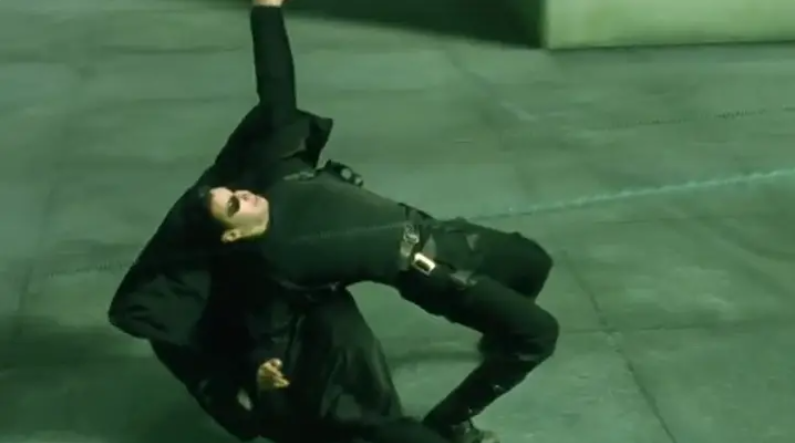
Transformation is your Consciousness Playing with the World
When we hear about moments of transformation, we often hear harrowing accounts about the desperation of hitting rock bottom, the devastating realization of loss and betrayal, or the defining moment of strength that overcame a past weakness. Certainly all of these can be a part of transformation, as they often provide the activation energy to let go of something precious but inhibiting from one’s past. But they are by no means the most effective or even necessary catalyst for change. Like college dropout billionaires, they are the most dramatic examples of a category that skew the underlying reality. And the reality is that change is nothing more than a byproduct of your mind playing with possibilities in yourself and the world.
Happiness is the Gateway to Change
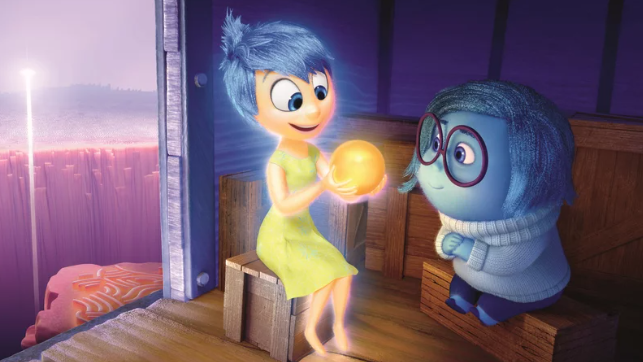
When I say happiness, I’m not talking about the satisfaction of having one’s favorite meal or the excitement of playing a video game. The happiness I’m talking about is the one sought by the Buddhists and yogis who equated happiness with peace within the mind.
When we desire something we don’t currently have, conventional wisdom would suggest that we must sacrifice present happiness as the fuel for pursuing that which we don’t have. It certainly made logical sense to me for a long time, until I realized how blatantly wrong it was.
If life were a game, trying to make a change while one is unhappy with present circumstances is like trying to escape a dungeon with 5% health and permanent stat debuffs. Maybe after 100 tries, you’ll finally succeed once, but the path there was undoubtedly painful, arduous, and anxiety ridden.
What if instead you could run that same dungeon on 100% health and full stats? Heck, what if you had unlimited health, legendary gear, and a portal gun to boot? Feels like cheating, doesn’t it? But that’s basically what changing your life is like when you’re happy.
When you’re in a negative state, everything feels 100x harder to think about and execute: your mental prison is rigid, the world is dangerous, and you’re a lonely naked guy with a club. You might have the strength to bash things for a few hours, but eventually you will end up right back where you started.
In contrast, when you’re at peace, the prison cell of the mind practically melts away. Actions feel effortless, natural. Fortune and allies flock to you. Your mind is focused and flexible. Getting knocked down is no big deal, as you simply get back up.
We make a profound error when we treat happiness as the end goal and misery, effort, and hard-won success as the price. In truth, happiness is the key to the prison that opens the door to life’s possibilities.
The Psychodynamics of Play and Exploration

You may have noticed from our definition of happiness that a happy mind implies both an open and focused mind. This is exactly the same as the state of play, which is a fundamental behavior in mammals that allows exploration of contingency in a controlled, low stakes environment.
This link isn’t a coincidence. If we look at the word “recreation”, it literally means to reinvent or rejuvenate oneself through enjoyment. Enjoyment changes habitual behavior, because it encourages exploration, which is the antithesis of repetition and being stuck.
There’s a deeper analogy with play as well, which is based on the idea that play must allow different players to win at various moments. It’s a well studied phenomenon in the play behavior of dogs that the more dominant or skilled canine must allow the weaker one to also win its fair share of games, otherwise play will cease. So the very existence of play implies variation and uncertainty in the winner and outcome.
Thus, if we consider abstractly the notion of “play” between different pathways or potential “selves” within our psyche, an idea emerges that play is essentially the exploration of different versions of oneself, often in a structured environment where these different selves can be practiced and evaluated.
Furthermore, there is direct evidence that certain kinds of play, particularly those involving novel and coordinated movement (like dance!), open up channels of neuroplasticity, thereby allowing the brain to learn completely new habits and skills.
Put another way, play is your consciousness exploring new and creative ways to connect yourself with the world.
Playing your way to Victory (or Freedom)
When we’re about to undertake something difficult, the natural instinct is to steel ourselves like we’re about to go to war. We inflate our egos, suppress our merriment, and lure ourselves into a state of chronic stress, anxiety, and hard focus. All this just makes the journey vastly more difficult if not impossible. What if there was a better way?
For inspiration, we need only look to the countless examples of brilliant scientists, artists, athletes, and more who channeled play as a vital part of their path to success, a source of profound creativity, insight, and lasting motivation: Feynman, Mozart, Rowling, Einstein, Musk, and Williams to name just a few.
Furthermore, some of the most successful organizations in the world incorporate play as a fundamental part of their culture, from the colorful game rooms of Google to the creative collaborations at Pixar. It’s pretty undisputed that a playful culture is enormously beneficial for keeping teams of people both creative and productive, yet we often forget that memo when it comes to the projects in our personal lives.
I spent a good number of years of my adult life being mostly unhappy (ironically, while working at Google). I felt justified in thinking that the world kind of sucked, with all the bullshit, egotism, misfortune, injustice, and meaningless conflict. I saw all of that in myself too, and thought that I had two options: to be better or to be happy. I’d drunk in the notion that happiness implies complacency, conformity, and condoning what I know to be wrong. That there was something glorious about always chasing that revolution, that distant dream, and never being satisfied.
Not only did this make me unhappy, it also made me unpleasant, sometimes unwittingly seeing others as enemies after a few disappointments, rather than friends in the making. It also blinded me to amazing possibilities in my life, for creativity, connection, and actually making the world better. Rather than inspiring me to exit the Matrix, my unhappiness just made me a pawn.
Looking back, actually the most transformative moments in my life, the ones that really set me on a new and better path, were precisely those that were filled with joy and appreciation for everything, pain included. I left these moments feeling alive and filled with the energy of new possibilities, but only because in those moments I left behind the fable of discontent and accepted happiness as the key to freedom.
Ready to dodge some bullets? Here’s what that process might look like in practical terms:
- Give yourself permission: This is often the hardest mental barrier to overcome, and is what this article is for. Accept that there is suffering in this world, and that happiness does not mean condoning evil. Rather, it is your most powerful weapon for defeating it.
- Intentionally let go: The more you are concerned with striving and expectations, the more likely you are to become stuck. Identify problems or people who have disappointed you in the past, and forgive them. If you find that it’s difficult, think of the old Lincoln quote: “Do I not destroy my enemies when I make them my friends?”
- Surprise yourself! When you are free of expectations, everything in the world becomes a surprise, and with surprise naturally comes joy. Carve out time in the day where instead of thinking about every choice you make, just do whatever comes to mind and see what happens. You will probably find as I did that every choice is perfect.