
Perfectionism, Curiosity, and the Illusion of Choice
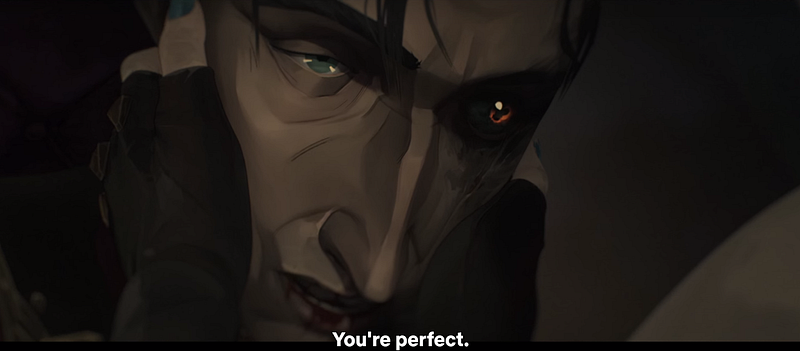
I’ve been studying the game of Go recently. As someone who came from the world of chess, I found the inherent ‘openness’ of Go quite daunting, being as it was a game played from an empty starting board with practically limitless possibilities. Although no solution or “perfect game” has been discovered in chess, the structure and evaluation criteria are clear enough that one can usually understand why certain moves are better than others. In contrast, most moves I played in Go felt like this:
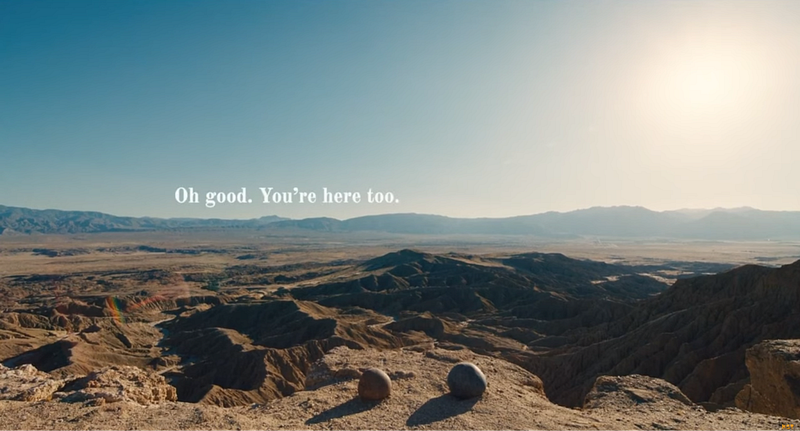
Here’s that awesome memorable scene in its entirety: https://www.youtube.com/watch?v=A_Z3LHSH9Mg
Upon taking up this game, I was quickly drawn into its philosophical implications. After all, Go has been used as a vehicle for enlightenment by practitioners of Zen and other Eastern philosophies for millennia (along with several traditional practices like archery, kendo, etc). I was eager to learn what I could from this game that is considered to exemplify the state of mind sought by all enlightenment seekers.
I came across a book called Buddhist Philosophy and The Game of Go by William Cobb which provides an excellent and concise overview of the core Buddhist concepts that can be expressed through Go. In summary, these include:
Emptiness: this refers to the absence of structures and absolute truths that one normally expects to find; Go exemplifies this by way of an empty board with minimal constraints on choice and possibility
Interconnectedness or non-self: stones in go have very little significance in and of themselves, rather it is the way they connect with other stones that gives them meaning and the ability to radically influence the game
Impermanence: the structures formed by groups of stones during the game are constantly shifting throughout the game, just as the role and significance of any particular stone is constantly changing
Aside from all this, one aspect of the game I found particularly fascinating and useful is the following: the point of playing Go is not to win, but to discover interesting games. This principle is enshrined in Go even more so than in chess and other arenas where sportsmanship and learning are valued but competition is still essential. For example, in Go, it’s customary for the player of higher level to provide a handicap in order to allow for a balanced and interesting game.
I think the underlying value here is not necessarily equality between players, but equality between choices. In other words, every possibility offers the potential for an interesting game or learning opportunity, and thus deserves to be explored in a balanced way. For me, this was an unexpected inspiration for a new understanding of choice and the curse of perfectionism.
The Illusion of Choice
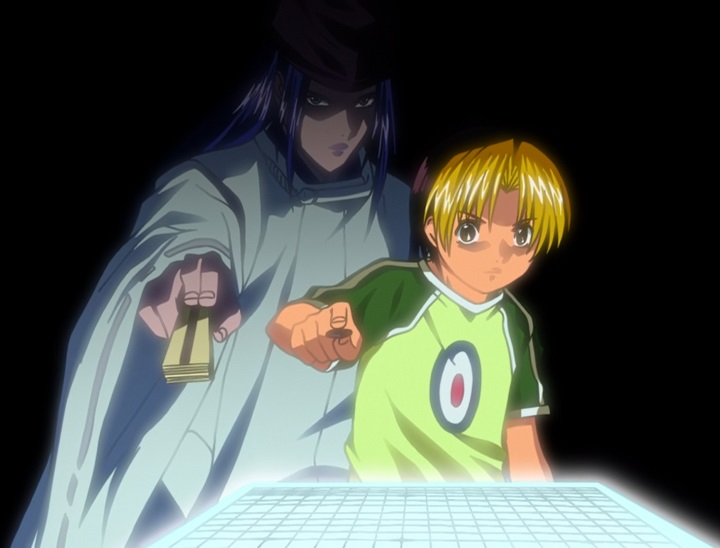
In both Go and in life, we experience the burden of making choices. Whether it’s our second move on an almost empty board (“I still don’t know what I’m going to write about!”), or a critical decision regarding which group of stones (or people) to save, it is normal to feel the weight and possibility of failure, disappointment, and what-if.
Throughout most of my life, I often remember feeling terrified about making decisions, big or small, because it meant the possibility of making suboptimal choices. Deep down, I seemed to really believe that there is a “right” decision, whether that meant making me the happiest, or satisfying the greatest number of people, or whatever other objective metric I could think of.
I would fiddle around so much with menus, playlists, schedules, texts, and other accessories of daily life that I’d get decision fatigue before the day ended. When it came to weightier choices, I’d procrastinate endlessly in the secret hopes that someday, the choice would be made for me, relieving me of that terrible responsibility. Each time as I did this, I could feel some rational part of me whacking me with its Fan of Truth, sniggering that I was spending more time trying to optimize my life than actually living it. And I knew he was right.
One day, I had the most remarkable epiphany. I imagined myself as a spirit existing outside myself, floating in the ethereal realm of pure consciousness, call him “Sai”. From his vantage point, I could “see” my body making choices seemingly without conscious intervention. Throughout that experience, every choice I made seemed simultaneously easy and right, and my experience of each was one of joy. Every item I selected from the menu was exactly what I wanted, every song chosen from my playlist felt exactly right, everything I wrote and said…you get the picture.
It wasn’t like the choices were random and I was merely accepting that fact, far from it. It was more like every choice reflected the desire of something inside me, that wanted to know what it would be like to experience precisely that choice. To the conscious part of me, I was doing nothing more than facilitating that experience.
What I took away from this episode, crazy as it was, is not so much that my choices were predetermined (although I certainly considered it a possibility). It is more that every choice, no matter what, can be experienced as joyful when we approach it with a certain perspective, and so in that sense, choices do not exist, because all “choices” lead to happiness [1]. That is why we experience them as choices to begin with.
Where the Illusion comes from
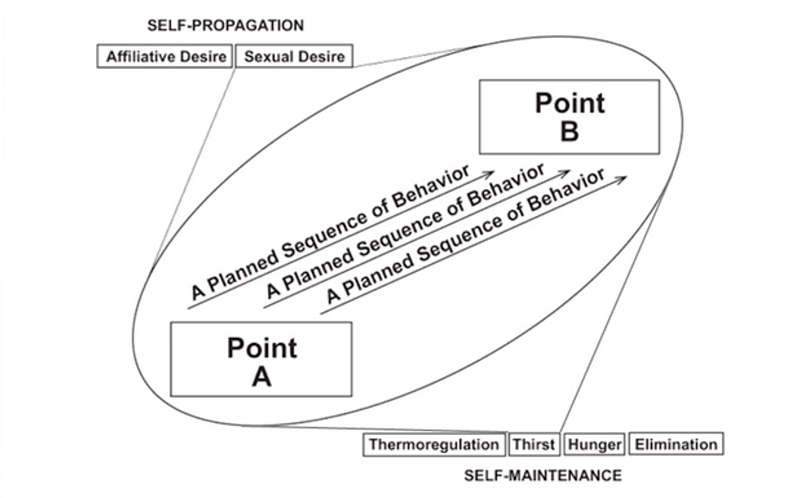
People who have seen Jordan Peterson’s lectures are likely familiar with this diagram. This is the diagram of the primary psychological elements of the goal-directed frame, and is generally the arbiter of value and relevance for the individual self. Things that are beneficial in moving towards the desired goal are accorded value and met with positive emotion, such as hope and joy, while those that hinder progress are met with negative emotion such as frustration and anxiety. Anything else is considered irrelevant and accorded neutral valence — and this typically means that they do not even register in perception.
The reason I mention it here is that this is exactly what circumscribes our choices and gives the illusion that some options are better than others — or to put it even more clearly, the value of an option is determined by how effectively it moves us toward point B. What this effectively does is simplify the world into a particular game with specific rules.
When we impose a game-like structure on the world, that structure defines our values and choices. It also defines what a “perfect” game is and whether that is even attainable. Imagine for a moment that the game you’ve created is something like Tic Tac Toe, a game with a permutation space of only 9. In that case, it’s relatively easy to define good moves and bad moves, since we simply have to eliminate moves that allow the opponent to force a win [2].
On the other hand, if the game structure is that of Go, it will be much harder to find a perfect game, and we will eventually come to accept that a perfect game does not practically exist. Even for a simpler game like chess, there is no such thing as perfect, for the beauty comes from the variations and possibilities. Any chess engine that tells you 1.e4 is objectively better than 1.c4 is bullshitting. (In fact, I’m 99% confident that both choices lead to a draw with “optimal” play, that’s just how chess works. The point is that they offer different but interesting games ).
Even as we move up the scale of complexity, however, the real insight happens when we realize that the True Self is not the thing that is playing any of those games, rather the True Self is what defines the game that is being played. In other words, the True Self is this:
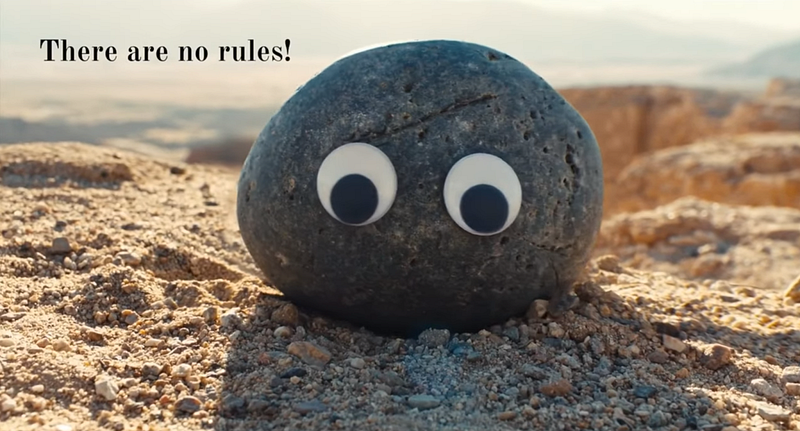
Rather than making choices that are determined by the particular game, what actually happens is that a choice is made, and that choice determines what game is being played. The fundamental existential anxiety of choice comes down to getting this backwards.
Every Choice is Perfect
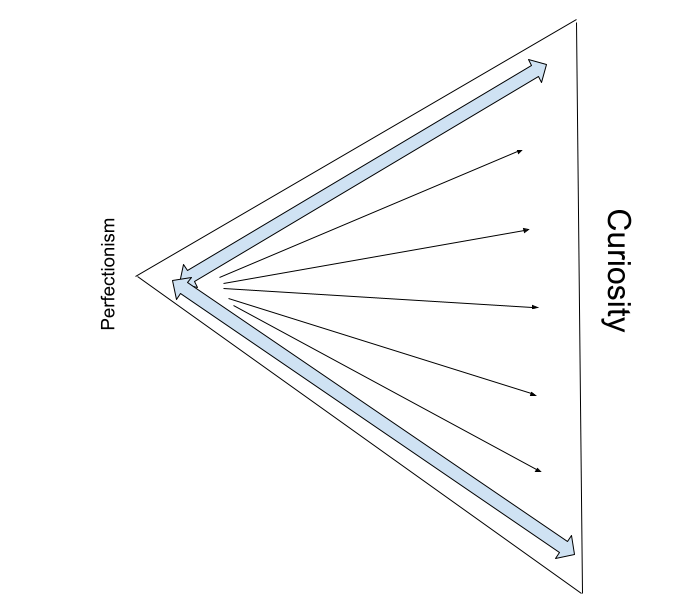
The antithesis of perfectionism is not tolerance or laziness, it is curiosity. Specifically, the curiosity to explore possibilities by making choices, even when they seem suboptimal at first. A rarely mentioned fact is just how essential curiosity is to every breakthrough in science, engineering, business, and art.
When we are free from the bounds of perfectionism, we begin to see that every choice available offers radically unique possibilities and insights. Whereas perfectionism converges all options into a single illusory idea of perfect, curiosity embraces each possibility as perfect in its own right [3, 4]. Somewhat paradoxically, curiosity recognizes that doing one thing, here and now, is just as good as doing everything, everywhere, all at once.
In the end, life is not an optimization problem, it is a story. Every choice, when taken with courage and conviction, is beautiful in its own right, and gives an experience that we will look proudly back on, even if we discover something that makes us change our minds later. That is what a story is. A story is not about characters making best choices. It is about characters making choices work, and perhaps, even for the best.
Footnotes:
[1] As a side note, I am not saying that any possible thing we can do — for example, murder— is equally good. For most of us, such actions are not options we would seriously consider, so again there is no choice to be made. And if for some reason someone would genuinely consider murder to be an option, I would surmise that that person is likely in a situation where the alternatives as they experience them are equally unhappy, so that the choice itself is still likely to lead to equivalent outcomes for them. That is why they experience it as a choice.
[2] Now, there is definitely something to be said about simplifying the world to something like Tic Tac Toe so that choices are rendered easier. That’s the effect of following dogma and narrowly prescribed views of life, so that most options are automatically nullified. However, for those wishing to take a more open-minded, expansive view of life, it is imperative to adopt an equally open-minded view about choices. It is the mismatch between the two that leads to anxiety and existential distress.
[3] This is interestingly paralleled in the classic optimization problem of Exploration vs. Exploitation. Here, to exploit means to choose the option with the greatest known expected value, rather than explore some other possibilities with the hope of gaining information that can be used to make even better decisions in the future. The more confident we are that one particular choice offers more value than the range of other possibilities, the more likely we should be to exploit.
[4] Something I suspect is happening to most of us is that as our needs become more easily satisfied, our brains naturally bias more towards exploitation over exploration, because after all, we are signaling that we’re fully satisfied with where we are. Studies on the effects of fasting have shown it to stimulate neuroplasticity and cognitive flexibility, leading to new learning and habit formation, suggesting that there may be an interesting link between intentional food deprivation and reduction of perfectionism.