
Toxoid
Some vaccines are for bacteria, not viruses
Today’s New York Times Spelling Bee letters:
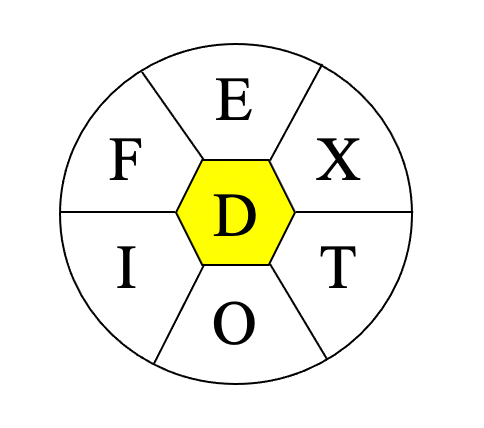
E, F, I, O, T, X, and center D (all words must include D)
Merriam-Webster says…
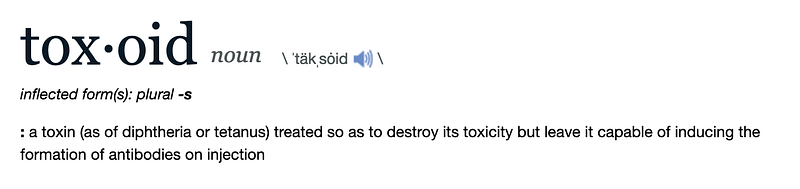
Silly little dictionary! Don’t you know toxoid can’t possibly be a word if the New York Times says it ain’t?
For further fascinating facts, check out the Spelling Bee Master.
What’s your favorite dord* from today’s puzzle?
My Two Cents
It seems sort of pointless to write anything related to vaccines these days. There is an ever-growing percentage of the population that questions their efficacy and decries their use as part of a global “population control” plan / tracking device / autism-generating method.
For example, even with mounting evidence of the results of the Covid vaccination campaign — a drop in overall cases in highly-immunized populations, coupled with much fewer long-term hospitalizations and deaths — people still question.
Now, I’m a retired doctor and I consider myself a scientist who has a healthy dose of skepticism. The foundation of science is questioning the status quo and finding new answers to old questions — and sometimes old answers to new questions. But there is an approach and a method (literally called the “scientific method”) to questioning things, and pulling things out of your posterior is not an accepted one. Unless, of course, you’re actually doing a study on your posterior.
I’ve had recent conversations with doctor friends who admit that the Covid vaccines don’t work like traditional childhood vaccines used to; that is, there is no guarantee you won’t get Covid or pass it on to someone else. But what they mean is that any patient who demands those conditions be met in order to get vaccinated probably will be hard to convince.
And yet, all my doctor friends are getting vaccinated and urging others to do so. Mainly because they work in some of the largest hospitals in Spain (where I live) and have seen, on a first-hand basis, the positive effects of having millions of immunized people over the last few months.
Okay, that’s that as far as my rant is concerned. Let’s move on to our daily dord*.
Not a vaccine for viruses, but for bacteria
The dictionary explains that the word toxoid came to us as part of scientific vocabulary originally formed in Germany by combining the prefix tox- (poison) with the suffix -oid, meaning “resembling a”. So, toxoid means “something resembling a toxin”.
Which is exactly the idea.
A century ago the first natural antibiotic, penicillin, was still several years from being discovered by Alexander Fleming, and synthetic antibacterial agents had just started being developed and commercially sold… with mixed results. It would still take a couple of decades — around World War II — for antibiotics to become widely used and effective.
Finding a way to prevent people from getting infected by bacteria in the first place was a fantastic achievement. In fact, it had (sort of) already been done in the late 19th century, when Emil von Behring, a German physiologist, led the development of the first tetanus vaccine.
Back then, if you got infected by the bacterium Clostridium tetani, there was a good chance you’d end up with tetanus, or lockjaw. This infection causes fever, sweating, headaches, high blood pressure, and spasms. Very intense spasms that might be advantageous if you want to perfect your reverse cobra yoga pose…
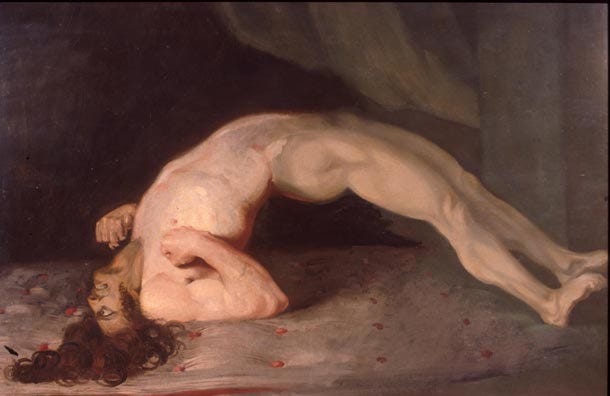
…but otherwise aren’t very useful. In fact, some of the spasms can be so violent that you end up cracking bones and snapping tendons.
So, yeah, creating something to prevent this was a good idea.
Unfortunately, that first tetanus vaccine was effective for only a few weeks. In other words, even if it helped you avoid getting lockjaw after exposure to the bacteria, it couldn’t give you long-term protection.
A few decades later, in 1924, a much more effective version of the vaccine came out. And it was more effective precisely because it used a toxoid. Toxoids are bacterial toxins that have been altered and inactivated just enough to not cause the disease and/or kill you while at the same time help your body create immunity against the bacteria that produced the original toxin.
Toxins are very pretty to look at…
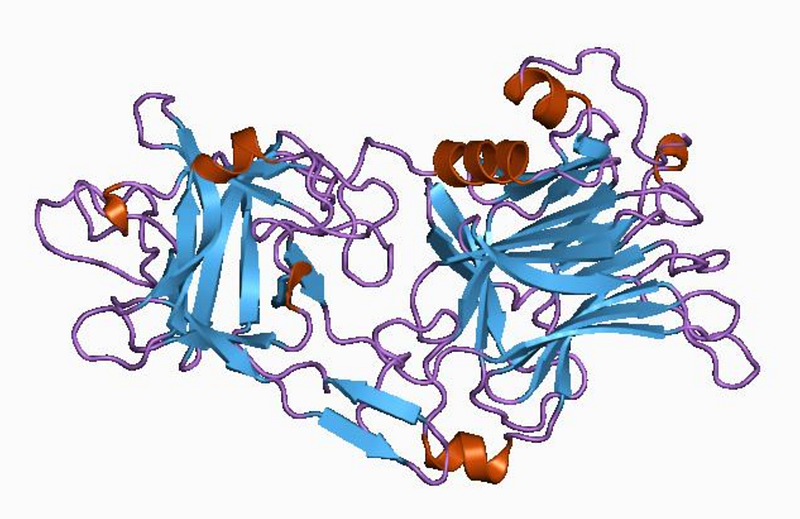
…but not so pretty when you actually experience their effects.
And Toxoids can be used as vaccines because the toxin markers are preserved in them.
Today the tetanus toxoid is given during childhood in a combination vaccine known as the DTPa, DTaP, or TDaP, which works against diphtheria, tetanus, and pertussis (whooping cough). All three are dangerous infections caused by bacteria that produce toxins, and for which toxoids have been developed.
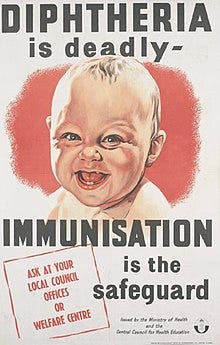
Still, when you’re an adult and you get a nasty cut, doctors will recommend that you get a tetanus shot even if you got the DTPa as a kid. That’s a booster that helps keep you safe, in case the original vaccine has “worn down” a bit over the years.
The longest living pediatrician
One of the key people who worked on the whooping cough vaccine was a pediatrician named Leila Alice Denmark, who was born in Georgia in 1898 and lives until 2012. Yes, 2012! Not only that, she worked as a doctor for 72 years, until she retired in 2001 at age 103.
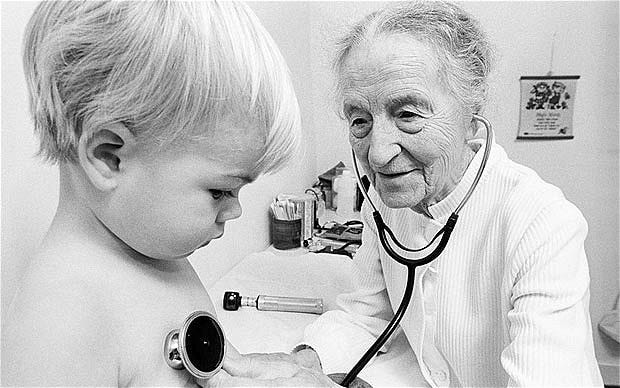
As the National Institutes of Health writes about her:
In 1924, Leila Daughtry enrolled at the Medical College of Georgia as the only woman in a class of 52 students. In 1928, she was the third woman to graduate from the school with a doctor of medicine degree… In 1930 she began a second internship at Children’s Hospital, Philadelphia, and had a daughter, Mary Alice… In 1932 a deadly epidemic of whooping cough swept through the community, prompting Dr. Denmark to begin studying the disease. Over the next six years she published her research in the Journal of the American Medical Association and, with Eli Lilly and researchers at Emory University, developed a successful vaccine.
Dr. Denmark developed an extraordinary familiarity with the health and well-being of children. Her patients reported that she could often determine exactly what was wrong with a child when they first walked into the office, just by looking.
Denmark devoted a substantial amount of her professional time to charity. By 1935, she was a listed staff member at the Presbyterian Church Baby Clinic in Atlanta, while serving at Grady and maintaining a private practice. For her work on the whooping cough vaccine she was awarded the Fisher Prize in 1935.
Denmark discussed her views on child-rearing in her book Every Child Should Have a Chance (1971). She one of the first doctors to rail against adults smoking cigarettes around children and pregnant women using drugs. She also recommended that children and adults should eat fresh fruit rather than drinking fruit juices, and drink only water.
Unfortunately, Leila Denmark’s career and medical contributions do not get enough credit and promotion, in my opinion.
So, after writing all this, I’m very curious as to why toxoid was not included in today’s list of accepted words. I find it hard to believe the editors of the Spelling Bee are anti-vaxxers; even so, it’s clear they think that toxoid is a dord*.
You can check out my previous entry on another dord* here:
*What the heck is a dord, you ask? Here’s the answer: