
Torta
Yes, let them eat cake
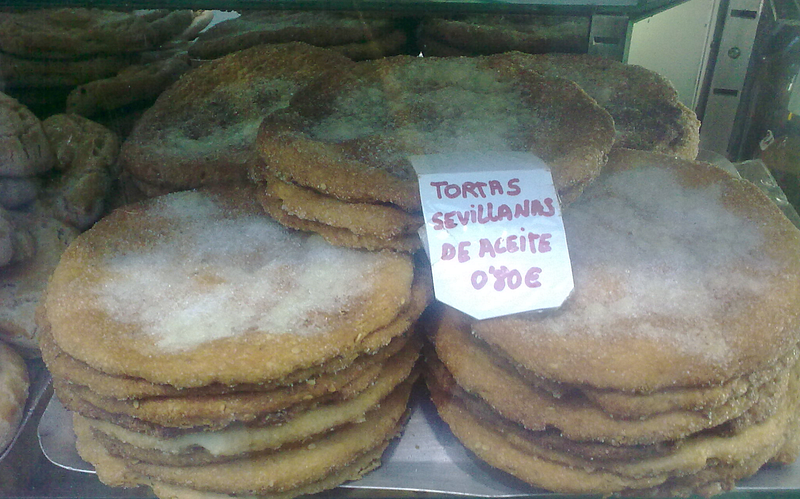
Today’s New York Times Spelling Bee letters:
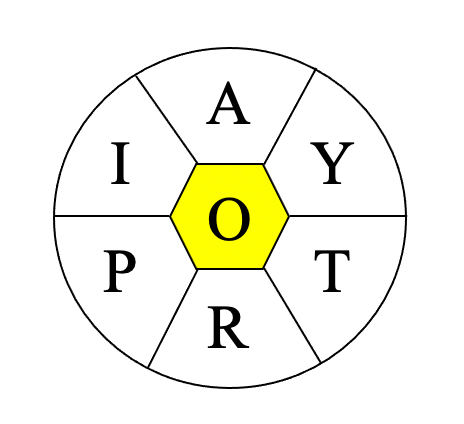
A, I, P, R, T, Y, and center O (all words must include O)
Merriam-Webster says…
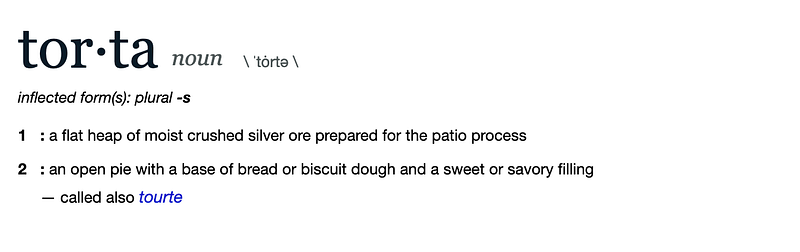
Silly little dictionary! Don’t you know torta can’t possibly be a word if the New York Times says it ain’t?
For further fascinating facts, check out the Spelling Bee Master.
What’s your favorite dord* from today’s puzzle?
My Two Cents
In Spain, where I have been living for several years, the word torta conjures very specific things in the minds of Spaniards. Several are food-related, of course, related to the dictionary’s second definition. The other is this:

Torta and tortazo are slang for “slap on the face”, although tortazo also refers to getting pie throw in your face.
Be forewarned. If you’re in Spain and someone offers you a torta, check whether or not they are smiling before you accept.
I couldn’t find a lot of information about the first definition the dictionary mentions: “a flat heap of moist crushed silver ore prepared for the patio process”, although the use of the word torta in that context has more to do with the flat, round shape in which the silver was spread out on the patios than the actual ore itself. In other words, it was a culinary reference.
Cakes, pies, flatbreads, sandwiches, and…omelets?
Let’s start with the last item on the list above. In the northern part of the Philippines (a former colony of Spain for over 350 years that retained some of its cultural and linguistic influence), torta refers to an egg fritter, or omelet.
One of the typical variations is Tortang Giniling, or ground beef fritter. According to curiouscuisiniere.com, the meat and veggies are first sauteed and then combined with beaten eggs, after which they are fried on a skillet like small pancakes. There are other types of fritters, as well:
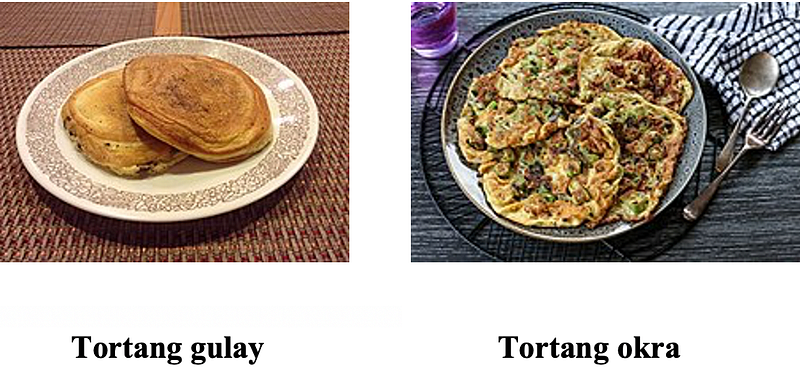
Both of these are veggie versions of the tortang.
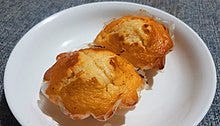
In southern Philippines, however, torta refers to a small sponge cake known as torta mamón.
Most people know what a Mexican tortilla is: the unleavened flatbread made from cornmeal or wheat flour and used in a variety of dishes that have been cheapened by a certain Taco company that I won’t mention but surely rings a Bell.
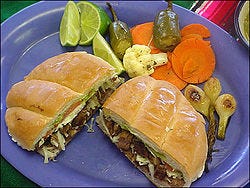
Well, when Mexicans say torta, they are not referring to a flatbread, but rather a regular bread that is cut in half and filled — very much like pita bread, but again, not a flatbread:
However, Mexico is an exception to the rule that the most common use of the word torta across Spanish-speaking cultures is for sweet cakes; for example, the ones baked for birthdays and weddings. In some countries, however, the term pastel is more prevalent when talking about such baked goods. The similar-sounding word tarta, on the other hand, is more or less an equivalent of the English pie. Just be careful and don’t say in Spanish that you want to eat a pie, cause you might end up with a foot in your mouth. Literally. Which is okay, I guess, if you’re a fetishist. Hey, I don’t judge; I appreciate a woman who takes care of her feet.
In Spain, tortas started out as unleavened flatbread, a product considered inferior to bread as expressed in the old saying “A falta de pan, buenas son tortas”, which means “Out of bread? Call 1–800-tortas-for-you”. Or something very similar.
Two examples of these traditional tortas that have stood the test of time are the torta de gazpacho and torta cenceña, both unleavened flatbreads that are very similar to the matzoh eaten by Jews during Passover. Very. Similar. Here, take a look and see if you can distinguish the torta cenceña from a matzoh.
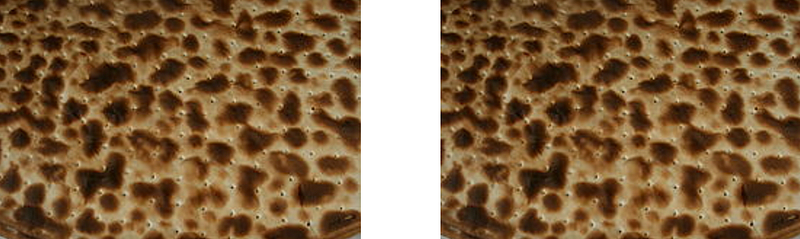
Can you tell which is which? No? That’s because they’re both torta cenceña! Ha! I just wanted to make sure you were paying attention.
The torta de gazpacho and torta cenceña are used to make gazpacho in the central region of Spain known as La Mancha (where the Man is from). Now, that is not the typical gazpacho English speakers think of when they hear the word. This Manchegan gazpacho is made by tearing the torta into small pieces and mixing it with a stew. So it’s a warm dish.
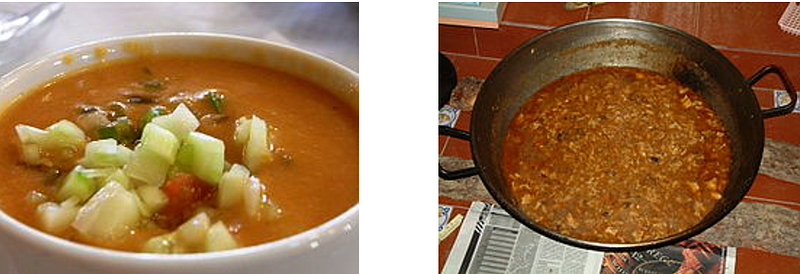
Now can you tell which is which? The warm gazpacho made from torta is on the right. See? I knew you were paying attention!
Casabe, mañoco, yucuta
If none of those three words mean anything to you, that’s okay.
If you were thinking casabe sounds familiar, perhaps related to the word cassava… oooohh, that’s a bingo. Manihot esculenta is commonly called cassava or manioc or yuca (not to be confused with the yucca). It’s a woody shrub native to South America with a very starchy and very edible root:
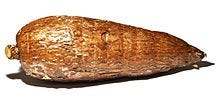
Many South American and Caribbean indigenous people also use the cassava root to make flour, from which they then prepare a flatbread called… casabe. Today casabe is also sold commercially, even in the United States.
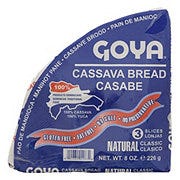
One of the South American countries that has a strong casabe tradition is Venezuela, where I grew up. Which is why the word torta makes me think of casabe, because in Spanish they are often referred to as “tortas de casabe”. And I was fortunate enough to spend some time in the Venezuelan Amazon decades ago, where I was able to taste some really good casabe. The best one I ever had was the Ye’kuana casabe (courtesy of my girlfriend back then, whose father is Ye’kuana).
The Ye’kuana casabe is made from the bitter cassava root, which contains a poison that first needs to be extracted from the pulp. Traditionally, this squeezing is done in a sebucán, an 8 to 12-foot (3.7 m) long, tube-shaped, pressure strainer, woven in a characteristic helical pattern from palm leaves. After that, the poison-free pulp is spread in thin, round cakes about 2 feet (0.61 m) in diameter on a budare, or large flat griddle, to roast or toast.
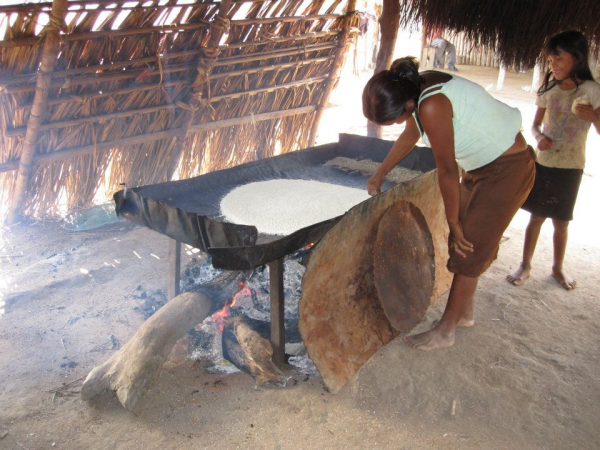
The Ye’kuana casabe is much thicker and harder than regular, commercially available casabe, and it’s recommended that you sprinkle water on it or soak it lightly in water to avoid breaking a tooth or two. Trust me on this advice.
Ye’kuana sometimes eat their casabe with a spicy sauce known as catara (or katara, in English) which contains peppers and giant leafcutter ants of the Atta laevigata species. In Venezuela these are known as hormigas culonas (which literally translates as “big-assed ant”). You can see why:
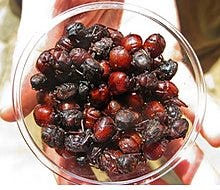
The ants are either ground up into a fine powder that can be sprinkled on food or used to create the sauce, or they can simply be added whole to the sauce itself. Either way, they make casabe taste that much better. Trust me on this advice, too.
Now, aside from making casabe, the pulp of cassava root can be dried and turned into a flour called mañoco.
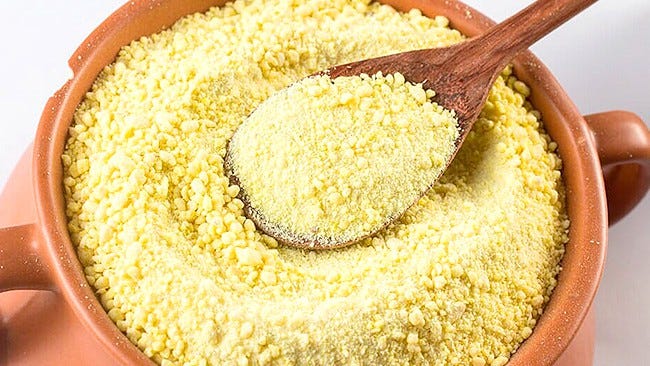
This flour can be sprinkled on food (it’s a fantastic salad topping) and also added to water to make a refreshing drink called yucuta. Now, if you allow the yucuta to ferment, then you get yaraqui, also known as the “manioc beer”.
The word yucuta also brings back memories of those few weeks I spent in the Venezuelan Amazon as a medical student. We were called over to visit an indigenous community that lived down the river from where we were located, the jungle town of Manapiare. We had to take a motorboat to get to the community, a trip that took hours. Once we arrived, we were warmly greeted by the children, who excitedly flocked around me and my colleague as we walked into one of the huts. We were offered some yucuta water, which we indeed found very refreshing after having spent so much time exposed to the elements while traveling downriver.
Then we were taken to another hut, where we examined a woman splayed out on a traditional hammock woven from plant fibers. Unfortunately, although she was very sick, we were not able to convince her to come back to Manapiare with us, from where we would have flown her to the hospital in the capital city of the Amazonas state. Indigenous people — many of whom were not fluent Spanish-speakers — were wary of leaving their communities and traveling to the big cities, where they were often not treated very well.
We had to return empty-handed, so to speak, and feeling very frustrated. What can I say… we were young and naive back then.
After reading about all that food, are you hungry? Good! If you’re reading this today in the U.S., it’s probably dinnertime already. So, bon appétite. Have some torta for dessert, if you can. But don’t tell the editors of the Spelling Bee that you did, because they still think that torta is a dord*.
You can check out my previous entry on another dord* here:
*What the heck is a dord, you ask? Here’s the answer: