
Towering Cacti In the Scorching Arizona Sun
Hiking, exploring, and melting in Saguaro National Park
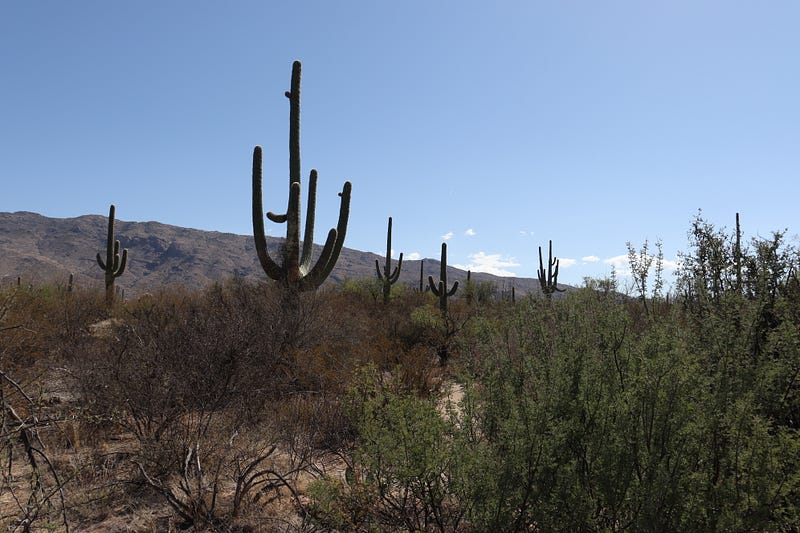
A lot of US national parks are by their nature quite isolated, and require a bit of a commitment to get to. Of course, I don’t mind this — it’s always worth it to see their unspoiled beauty.
However, there are exceptions, and if you are looking for a park that you can visit as a day trip from a city, look no farther than Saguaro National Park in Arizona, which is only about half an hour from Tucson (I should note though that I only visited the eastern section of the park on this occasion; the western portion is just as close but slightly less accessible in terms of paved roads).
For those of you keeping track, this is my 5th park on my way to hopefully visiting all 63. Previously, I have visited and written stories about Yellowstone, Grand Teton, Indiana Dunes, and Great Sand Dunes.
As usual, I started off at the visitor’s center. I always recommend this as it’s a great way to acquaint yourself with the park and what it has to offer, look at maps, and ask the rangers any questions you might have. At Saguaro’s visitor center, they have a short path outside that gives an overview of various cacti and their traditional uses, which I found fascinating. The Native Americans used them for everything from food to medicine to building materials. And of course, the wildlife that live in the desert depend on the cacti for food and shelter, too.
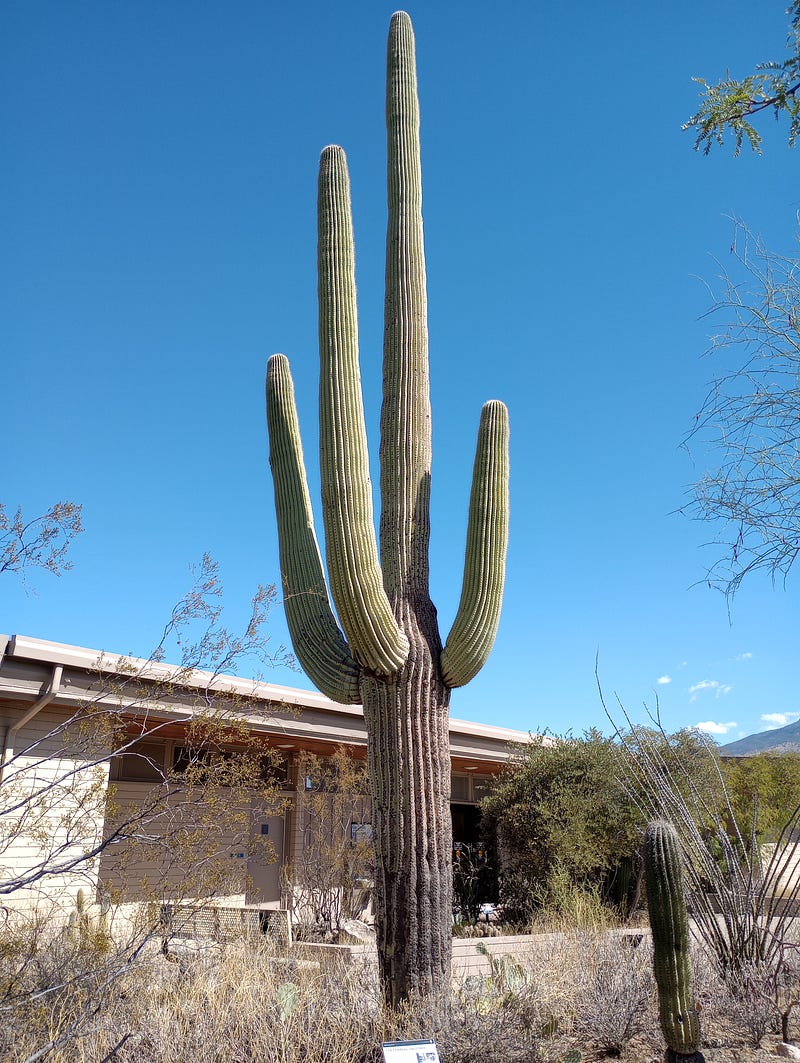
While there are a wide variety of cacti that can be seen throughout the park, the most prominent is (unsurprisingly) the park’s namesake. They are more like trees than cacti, and can live for an extremely long time. The one in the photo above was over 100 years old!
Now, as interesting as Saguaro National Park is, I will say that it has one major drawback — it is HOT. Personally, I would strongly advise against visiting in the summer, or even early autumn. I was there in October, and even then the temperatures were around 100 degrees Fahrenheit with scorching sun. Maybe it isn’t always quite that extreme — I did hear that it was one of their warmest falls on record — but even so, just be aware that if you are there during warmer months, it’s best to do your hiking earlier in the day (and drink plenty of water). Otherwise, you’ll probably feel like you’re in an oven all day long.
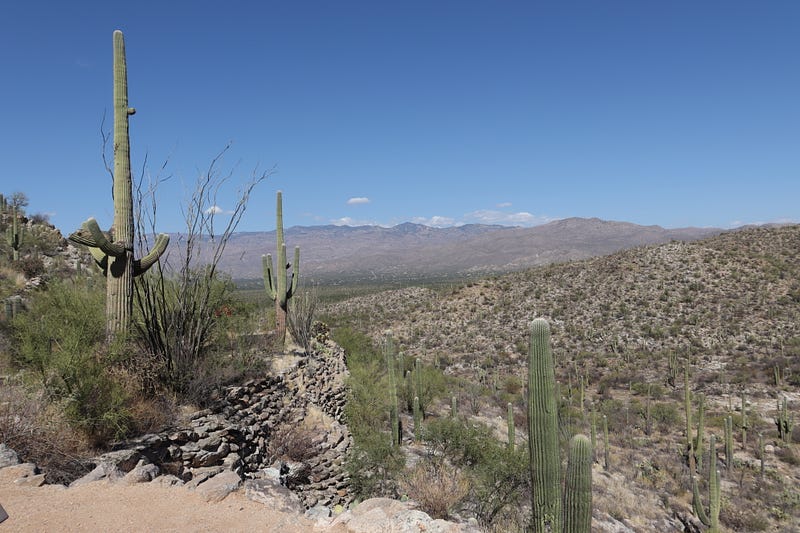
After checking out the visitor’s center, I began the eight-mile scenic drive around the park. It has frequent pullouts, almost all of which I stopped at to see the views. Some of the stops also have hiking trails. I did two short hikes — the Desert Ecology Trail and the Freeman Homestead Trail — but there are longer and more challenging hikes as well if you’re feeling up to it and can brave the heat.
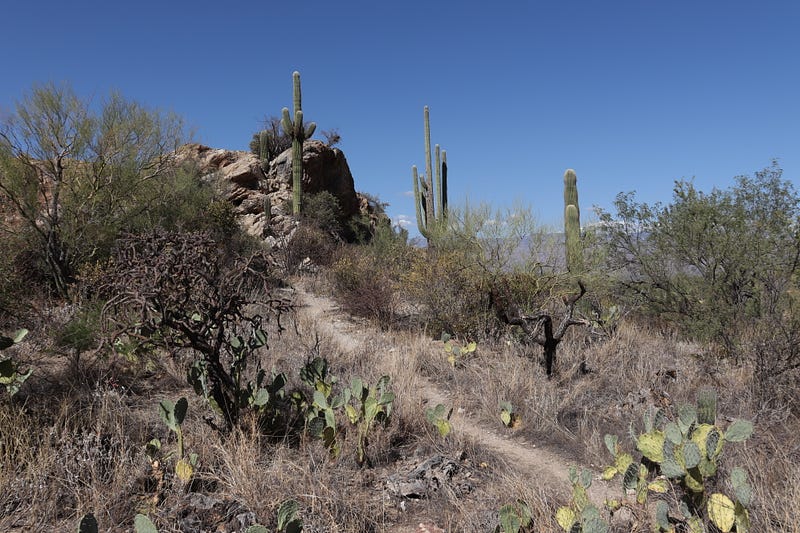
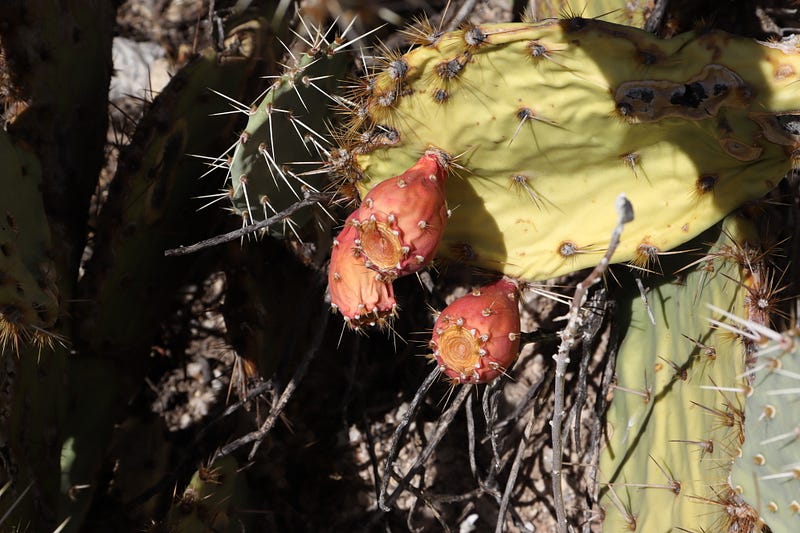
If you visit, do make sure to take your time and notice the small details around you, too. It can be easy to look around and feel overwhelmed by the barren quality, the vastness of it — but there’s a lot of beauty in the little things. For example, I was struck by the colorful fruit on this prickly pear, which is not only pretty but life-sustaining for many of the park’s animal inhabitants:
About a month after I visited Saguaro NP, I heard that they had been classified as an Urban Night Sky Place. There are only eight others in the world, so this is quite a big deal. Sadly, I hadn’t stayed in the park past daylight hours, but I still thought it was pretty cool that they had gotten that certification — and a good reason to revisit someday!


