
Travel, Photography, Culture
Totem Park in Sitka, Alaska
A response to the SNAPSHOTS technology and nature prompt
Ambling through the deep hush of the forest in Sitka, Alaska, it’s hard not to be slightly worried about encountering a bear, especially given the prominent markers announcing the last bear sighting (in our case, that very morning!) placed here and there along the trail.
We’d just spent a week cruising the Inner Passage aboard the Alaskan Dream, a thirty-two person catamaran, and were quite excited about seeing the Fortress of the Bear, the Raptor Center and Totem Park.
Words are, perhaps, the oldest form of technology which we humans possess. Whether etched into stone, papyrus, or wood, symbolic representations of our language and thoughts have endured throughout time in various cultures all over the world.
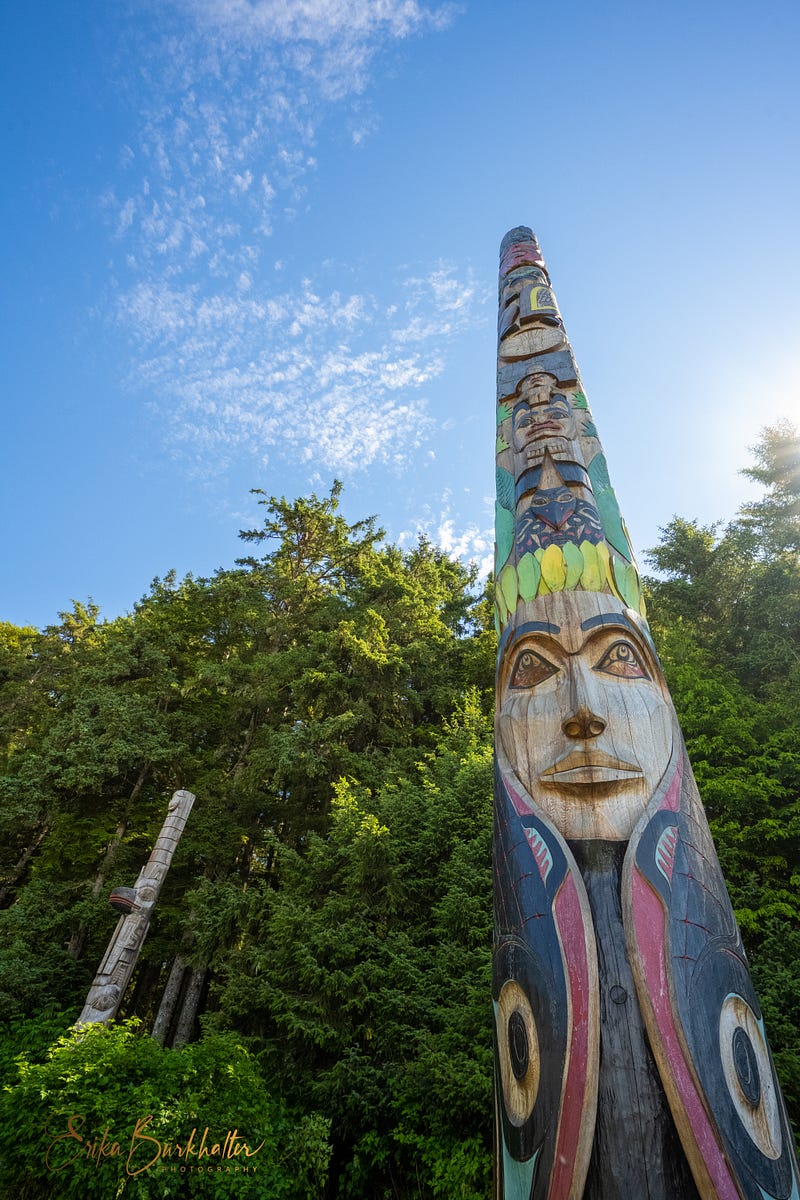
Here, in Alaska and in the Pacific Northwest, entire histories are carved into totem poles. Ravens, eagles and wolves, symbolic of native moieties (or clans) swirl up the trunks of massive cedar trunks.
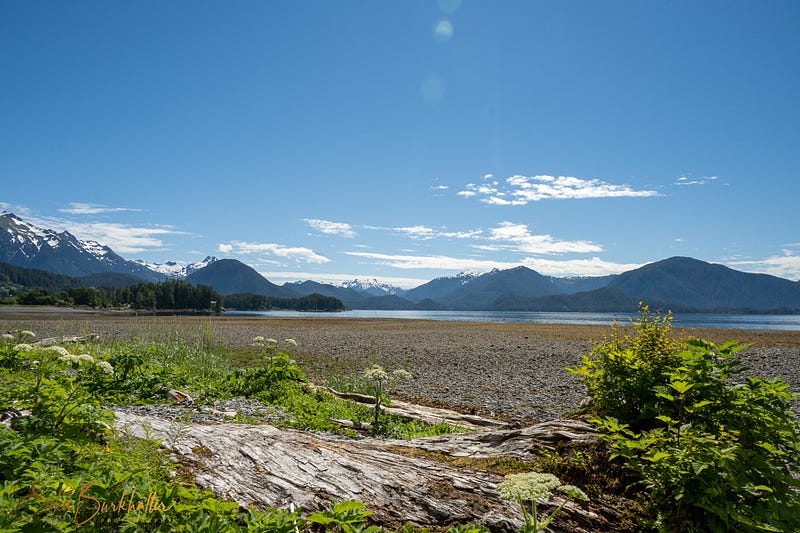
The site of the park (Alaska’s oldest federally designated cultural and historic park) dates back to June 1890 when President Benjamin Harrison set aside the site of the Tlingit fort Shis’kí Noow (Tlingit for “Sapling Fort”). Located near the mouth of the Indian River, this area bears a bloody past. In 1804 the native Tlingit people and Russian fur hunters (accompanied by their Aleut allies) fought a ferocious battle, known today as the Battle of Sitka.
In 1903, District Governor John G. Brady began to acquire totem poles from all over Alaska for display at the park. Most of the poles were from Haida villages located on Prince of Wales Island, while others had been on display at the 1904 Louisiana Purchase Exposition. In 1910, President William H. Taft proclaimed the site and totem pole collection a historical monument to protect them from harm. And in 1969, the Alaska Native Brotherhood assumed control.
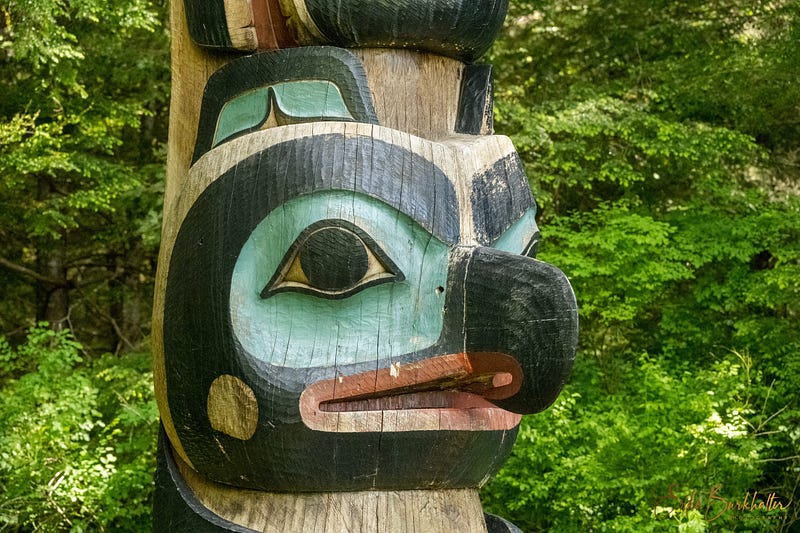
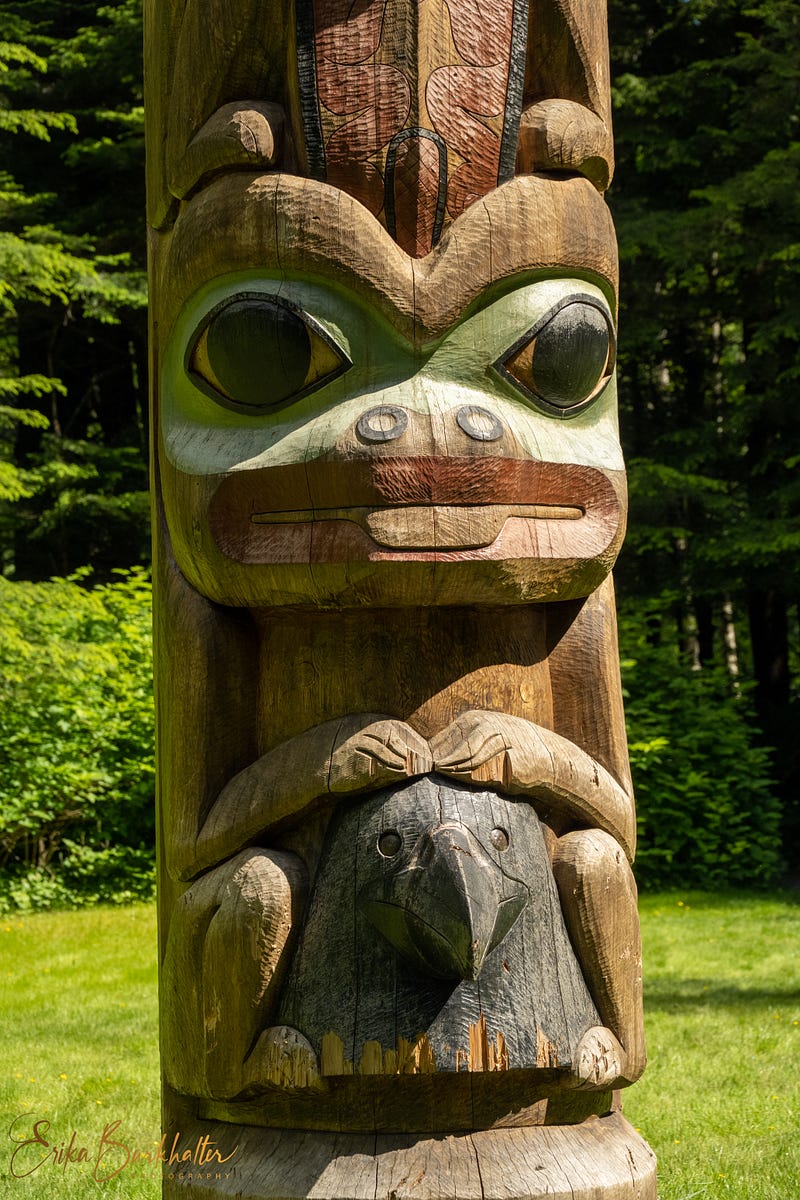
While some of the symbology of the carvings has doubtless been lost to time, some features are fairly easy to understand. This representation of an eagle, distinguished by its hooked beak, represents peace and friendship.
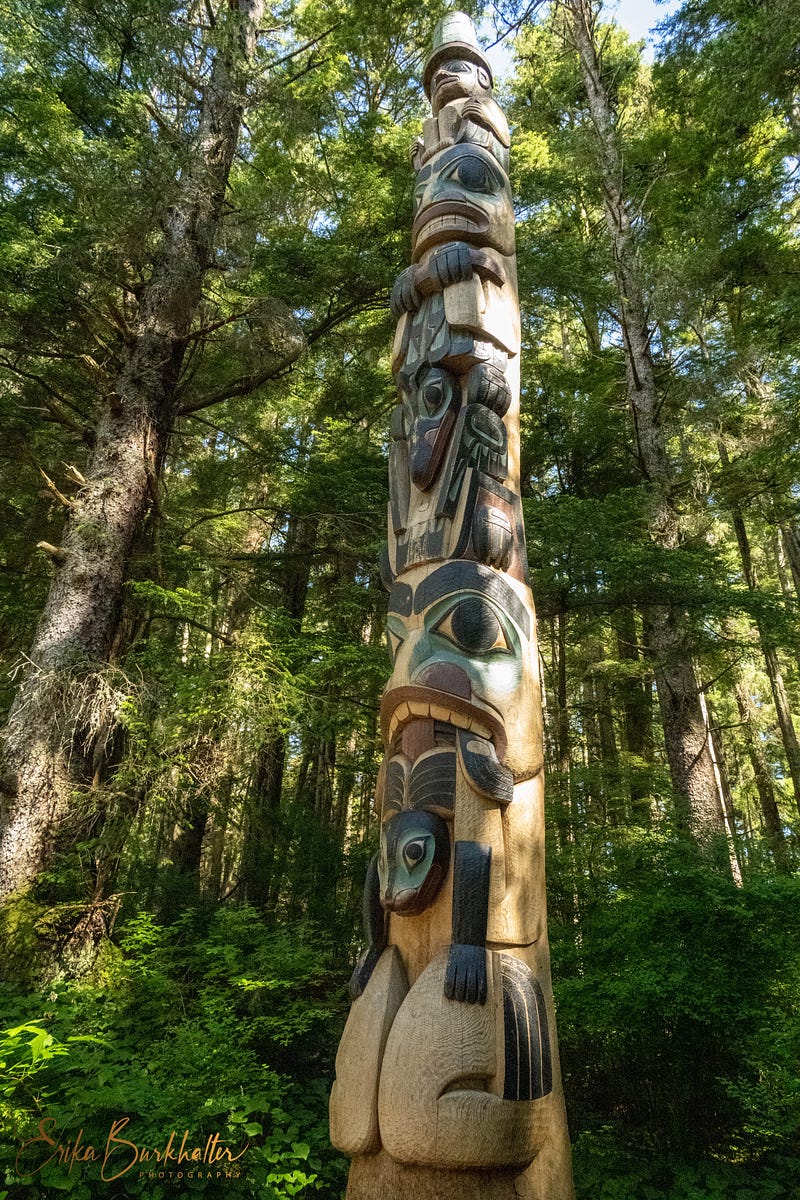
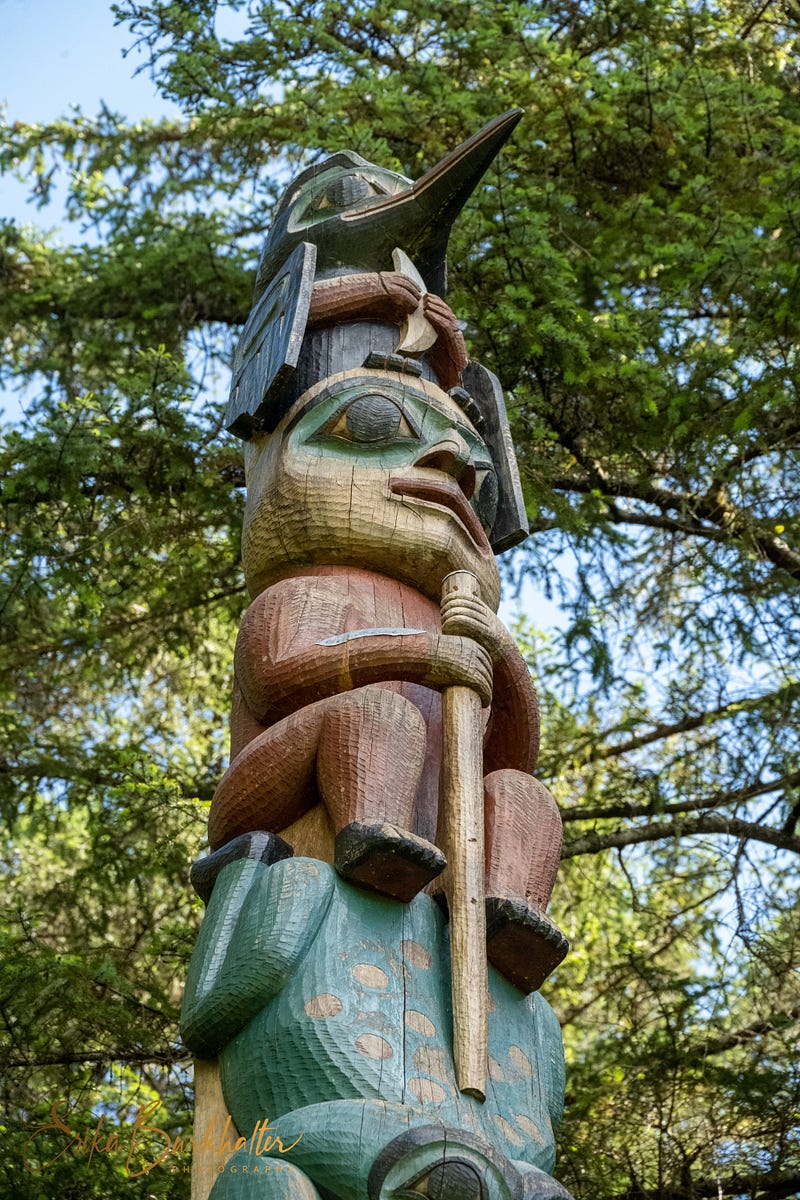
The figures on this replica pole are: the Village Watchman, the Raven in Human Form, a raven, and a bear.
And here, the Raven — signified by his straight beak — presides. He represents the hero’s (or the trickster’s, depending on the tale) role in many of the Tlingit and Haida stories. Capable of changing his form at will, he is considered a symbol of the Creator.
The Beaver can be recognized by his two large front teeth.
Given the preponderance of mosquitos in Alaska, I found it to be quite fitting that this pole depicted one of these annoying little insects.
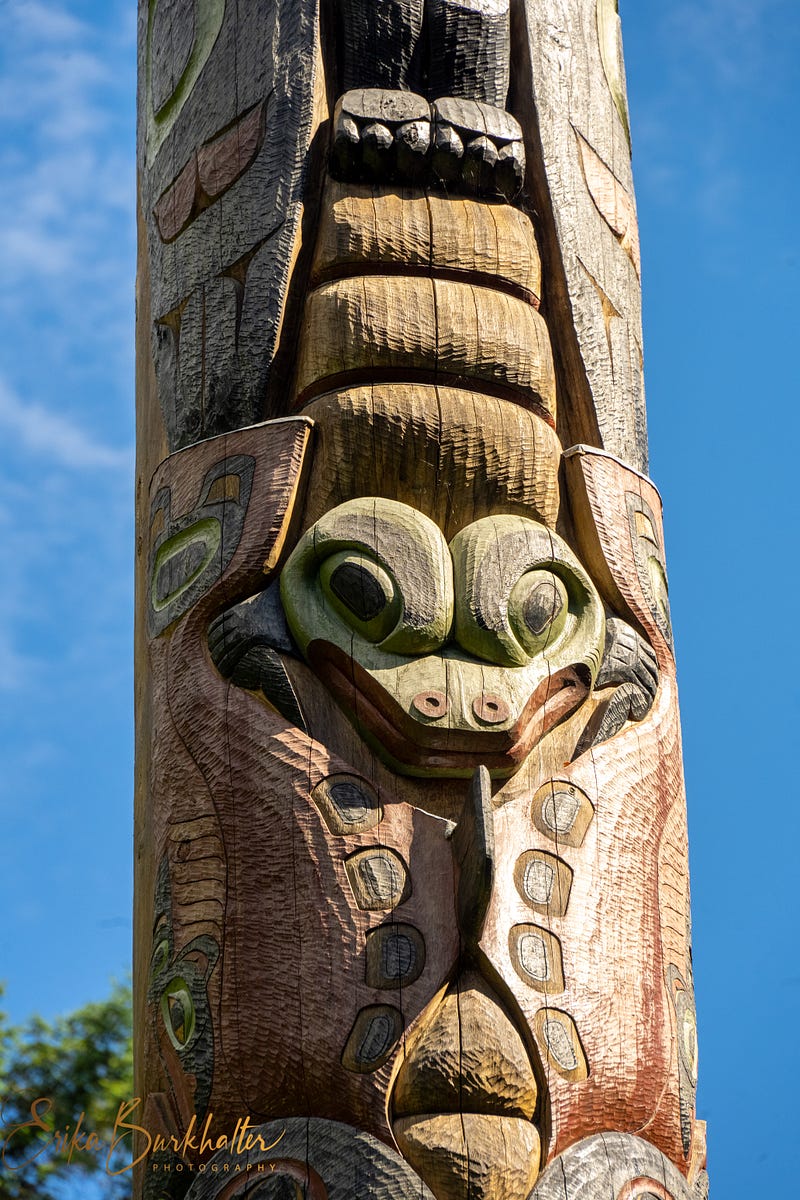
And this, very curious, pole bears a lobster.
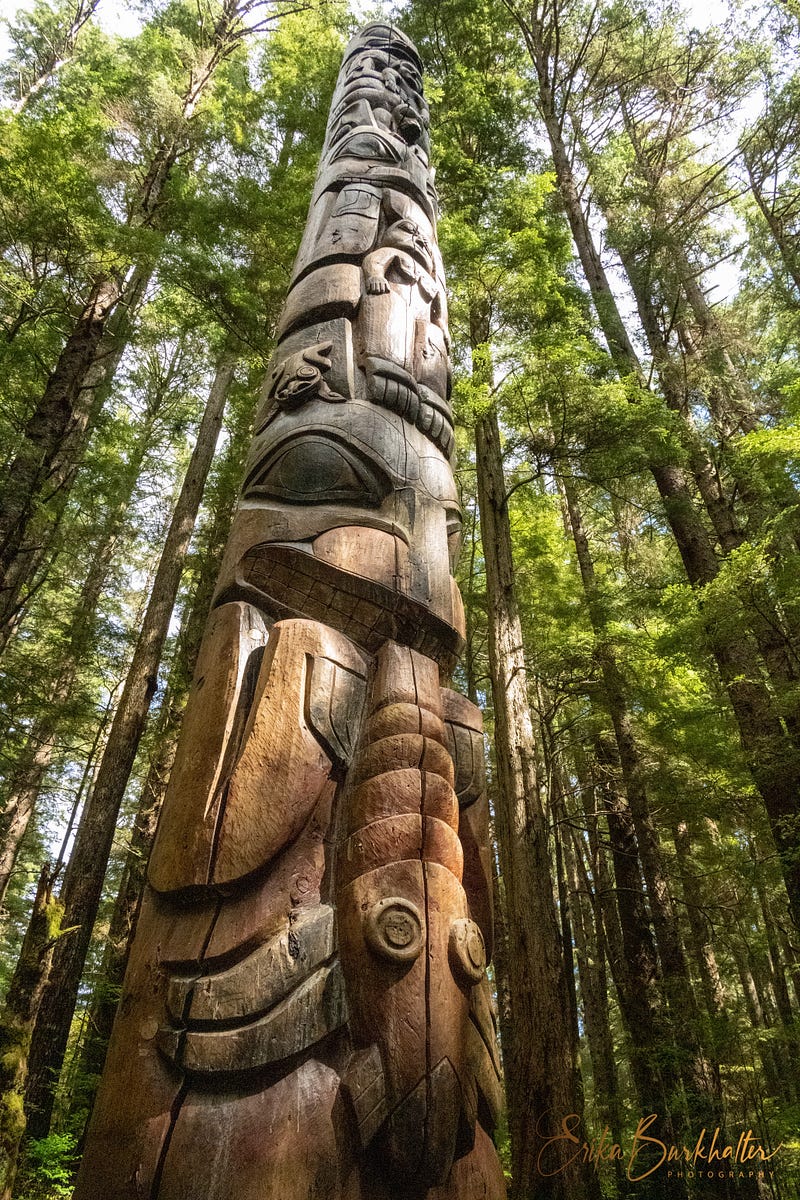
These towering poles peek up through the native spruce, reaching towards the sky, telling tales of years gone by and also of stories still being told of the “Octopus Queen” pulling her lover under the sea, and of the running of salmon, and of the coming of the white men along with the destruction they wrought to the native peoples.
Despite the knowledge of the ferocity of the battle fought on this land, not that very long ago, there is still a sense of peacefulness rippling the woods. Bald Eagles perch in the trees and history whispers in your ears, telling you of tricksters and heroes and creatures of legends. Silent words, etched in wood, linger on long after their creators envisioned how to preserve the stories of the past.
Erika Burkhalter is a yogi, neurophilosopher, cat-mom, photographer, and lover of travel and nature, spreading her love and amazement for Mother Earth’s glories, one photo, poem or story at a time. (MS Neuropsychology, MA Yoga Studies).
You might also enjoy:
If you’re interested in keeping up with my poems, photos and musings, you might consider subscribing to my stories.
Story and photos ©Erika Burkhalter. All rights reserved.
You might also enjoy some challenge pieces by Ian Hanson, Kris Cochran, pockett dessert, Erik Smith, Dennett, Penny Grubb, Christopher Lovelace @ChristopherLovelace, Inge E. Knudsen, Sandra B, K. Barrett, Charlie Cole, Gina Pacelli Jillian Amatt, B.R. Shenoy, Anne Bonfert, Nicole Anders, Mahein Kazi, Bruce Walker, Ronald Smit.


