
Top 5 Best Leadership Lessons From Michelangelo — The Famous Renaissance Artist
The great wisdom of the famous Renaissance painter revealed
.jpg)
“The greater danger for most of us lies not in setting our aim too high and falling short, but in setting our aim too low and achieving our mark” — Michelangelo.
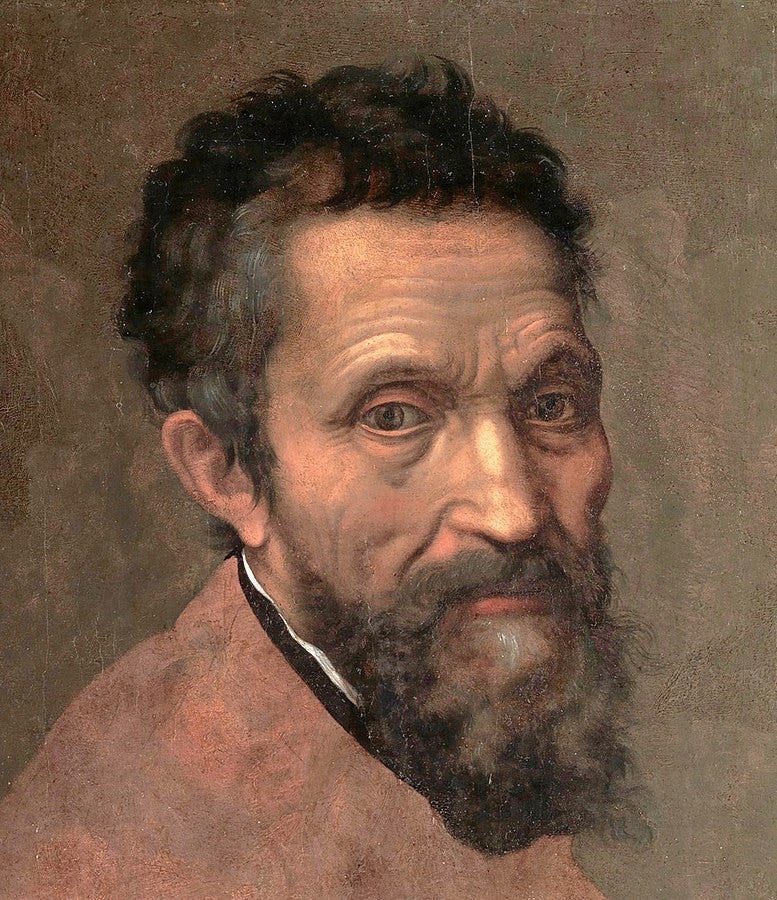
The famous renaissance painter Michelangelo was born in the Republic of Florence on 6 March 1475. His father was a government official in Florence and didn’t like his son’s passion for art. Despite his father’s dislike for art, Michelangelo persisted in following his cherished dreams of becoming a great artist.
He was not only a painter, but a sculptor, architect, and a great poet of the High Renaissance. He lived at a time when the world was passing through a transitionary stage. The old world’s ways were changing, and a new dawn of relearning, discoveries, experiments, humanism, and new art was emerging. The world was opening up in every direction, and modernity was fast approaching, touching every aspect of the lives of the Florentines and the whole of Europe.
He was the great genius of his time. He painted sublime masterpieces such as the Sistine Chapel ceiling. His paintings and sayings inspired millions of people across ages. He was a perfectionist and pushed every limit to produce works of art that were all extraordinary.
His great personal qualities of working hard, persistence, patience, giving his best to realize his achievements can teach many valuable life lessons. His great qualities inspire us and commit us to the best achievements of our goals.
His life gives us insights into many directions of life. Here are the five best leadership lessons from this great Renaissance artist.
1. Great achievement requires patience, hard work and, time
Leaders often have great visions that can lead to greater achievements. But they often get frustrated during the process of implementing those lofty thoughts because they don’t see quick results.
Gaining achievements of higher-order requires time, patience, and hard work. A leader must know that reaching a greater goal takes time, sacrifice, and patience. Above all, it requires immense hard work.
Michelangelo himself said about his wonderful achievements,
“If people knew how hard I worked to get my mastery, it wouldn’t seem so wonderful at all.”
2. Time is a finite source, and one should use it wisely
The biggest hurdle in achieving a goal is the inefficient use of time. Successful entrepreneurs aren’t successful because they have lots of money but because they are goal-oriented and use their waking hours to achieve their goals.
Even in Michelangelo’s time, an artist’s reputation was valued against the last commission he would receive at a specific time. So, the artists constantly used their time to hone their skills and grow their talent.
If an artist fails to utilize his time to achieve more perfection, he will lose the opportunity to get more work.
And this applies to modern world businesses too. If an entrepreneur isn’t directing his time towards his goals, he would never achieve them. So, a wisely spent time can only be a great friend of a leader as the Italian master himself warned us,
“There is no greater harm than that of time wasted.”
3. Your growth is restricted by the limit of your imaginations
The fame of an artist lies in the height of his imaginations. Primarily, it is the belief in their imaginations that they produce awe-inspiring masterpieces. It is the challenge an artist accepts to rise enough above that the ordinary man may stand mesmerized viewing his achievements.
Michelangelo was not viewed as a suitable choice by Rome for painting the Sistine Chapel ceiling because he was primarily known as a great sculptor. Still, he believed in the sublimity of his imaginations and took it as a challenge.
This example shows us that only the lack of our belief in our imagination can limit our growth. Leaders need to be daring enough to accept the daunting challenges that frighten others. And a truly great leader does so because he knows that he can do more than what he thinks can do.
Michelangelo ensures us to believe in our imaginations and accept the challenge,
“Your greatness is measured by your horizons.”
4. Your strengths and talents reside in the same place
Today, life couches and positive psychologists advise us to find our talents by knowing our strengths. But Michelangelo knew this in the early 16th century.
When we align our strengths with our work, it results in greater achievements. Simply put, when your work and passion become one, you can then achieve your masterpieces in anything. This is because we no longer think of work as work but of passion — a thing we value the most in our lives.
Leaders should also know their strengths to find their best talents and become greater leaders. Once they find what works best for them, they can easily align it with their professions and boost productivity and engagements.
Michelangelo also advise modern leaders thus,
“Your gifts lie in the place where your values, passions, and strengths meet. Discovering that place is the first step toward sculpting your masterpiece, Your Life.”
5. Always be different to overcome your fears and challenges
Leaders are the first to face the challenge. It doesn’t matter in which situation of life they work; they have to deal with bigger and unique problems. And to solve them, a leader needs to be different and unique in his approach to overcome them.
When its enemies attacked Florance, the city’s rulers commissioned Michelangelo to sculpt the statue of David, a great Biblical hero who defeated and slew the giant Goliath, as a symbol to defy their enemies.
Actually, people thought that he would create David’s sculpture in a position of slewing the Goliath, but Michelangelo came up with a different idea. He created David’s sculpture as a young man before his encounter with Goliath.
He did so because he wanted to present two choices before David — either confronting Goliath and fighting or running away out of fear. That’s why he said about the sculpture of David,
“This David was the ‘’real’’ David — a vision of a man not paralyzed by fear, but standing up boldly in his hour of ‘’terror’’.”
This also gives us valuable lessons about leadership. A leader has either to confront his challenges and overcome them or become paralyzed by his fears.
Michelangelo added another thing to the statue of David, and he purposefully did that. During the making of the Davids statue, he made his right hand bigger than the left to symbolize his power and ability to control the situation and shape them according to his wish.
Leaders should also practice their abilities and powers to keep the situations under control and direct them toward their goals.
Final Takeaways
The leaders should adopt a different approach to solve the unique problems of the modern world. They can experiment with their own approaches to remove the hurdles in their ways towards progress and prosperity. However, ancient leaders, painters, poets, and other great intellectuals should also be consulted to gain insights into life and its challenges.
In this regard, Michelangelo offers the best leadership lessons to modern leaders. These lessons are as follow:
- If you want to achieve lofty goals, you have to give time, be patient, and work hard enough to reach your goals.
- Time is a finite source. Don’t waste it on trivial things. Instead, direct all your time towards the achievement of your goals. Wise use of time brings greater results.
- Your growth is limited by the fears you harbor in your heart, and it is restricted by the lack of self-confidence and lack of belief in your imaginations.
- Your strengths and talents are almost the same. Know your strengths; it will give you a clue about your talents.
- Approach your problems in a new way. Avoid traditional thinking and actions.
Liked the story! get your membership to read more stories by clicking on the link if you are not a Medium member already. Part of your monthly payment will support my writing.